Yoshitomo Nara
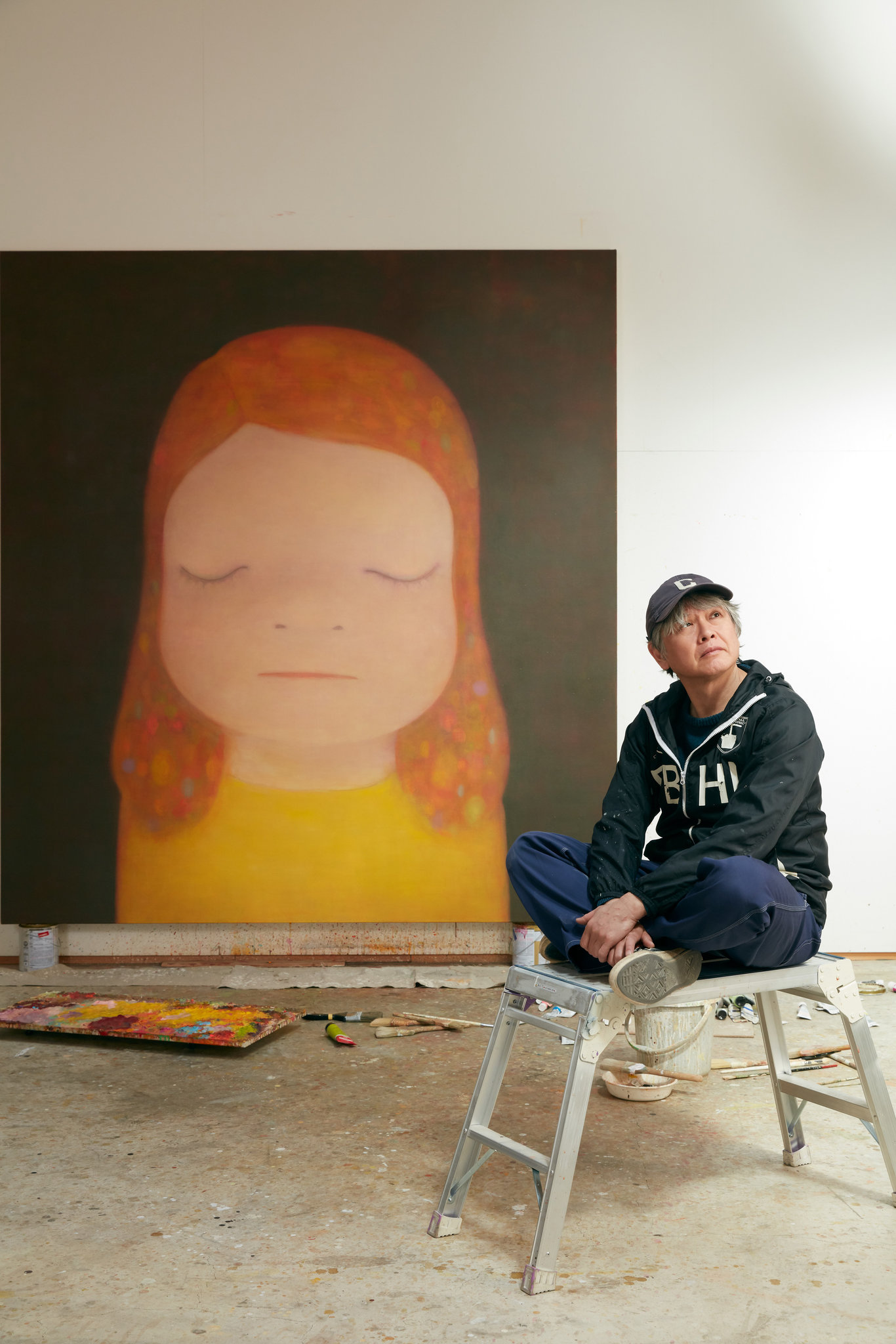
Yoshitomo Nara: The World's Most Beloved Rebel
Artist Spotlight · The Collection Editorial
“I paint to confirm my own existence. The characters I draw are like alter egos.”
Yoshitomo Nara, interview with the Japan Times
In 2023, the art world turned its gaze once again toward Yoshitomo Nara when his works continued to command extraordinary attention at auction houses from Hong Kong to New York, reaffirming what collectors and curators have known for decades: this quietly revolutionary Japanese artist occupies a singular, irreplaceable position in contemporary art. His canvases appear regularly among the top lots at Christie's and Sotheby's, with prices frequently reaching into the tens of millions of dollars. Yet for all the market frenzy that surrounds his name, Nara himself remains a genuinely humble presence, more likely to be found listening to punk records in his Tochigi studio than attending gallery openings. The distance between the global phenomenon and the solitary artist is itself part of what makes him so compelling.

Yoshitomo Nara
This Machine Kills Fascists!, 2022
Nara was born in 1959 in Hirosaki, a small city in the Aomori Prefecture of northern Japan, a region defined by cold winters, deep folklore, and a quietness that shaped his inner life profoundly. He grew up in a household where both parents worked, leaving him to spend long stretches of time alone, immersed in music, picture books, and his own imagination. That particular childhood solitude, neither sorrowful nor bitter but intensely self sufficient, became the emotional bedrock of everything he would later make. He studied at the Aichi Prefectural University of Arts in the early 1980s before making the pivotal decision to move to Düsseldorf, Germany, where he enrolled at the Kunstakademie Düsseldorf in 1988.
Those twelve years in Germany, studying and working far from home, gave him both critical distance from Japanese visual culture and a deep immersion in European art history, a combination that would prove extraordinarily generative. It was during his time in Düsseldorf that Nara's distinctive visual language began to crystallize. Surrounded by the legacy of German Neo Expressionism and the work of artists like Georg Baselitz and A.R.
Yoshitomo Nara
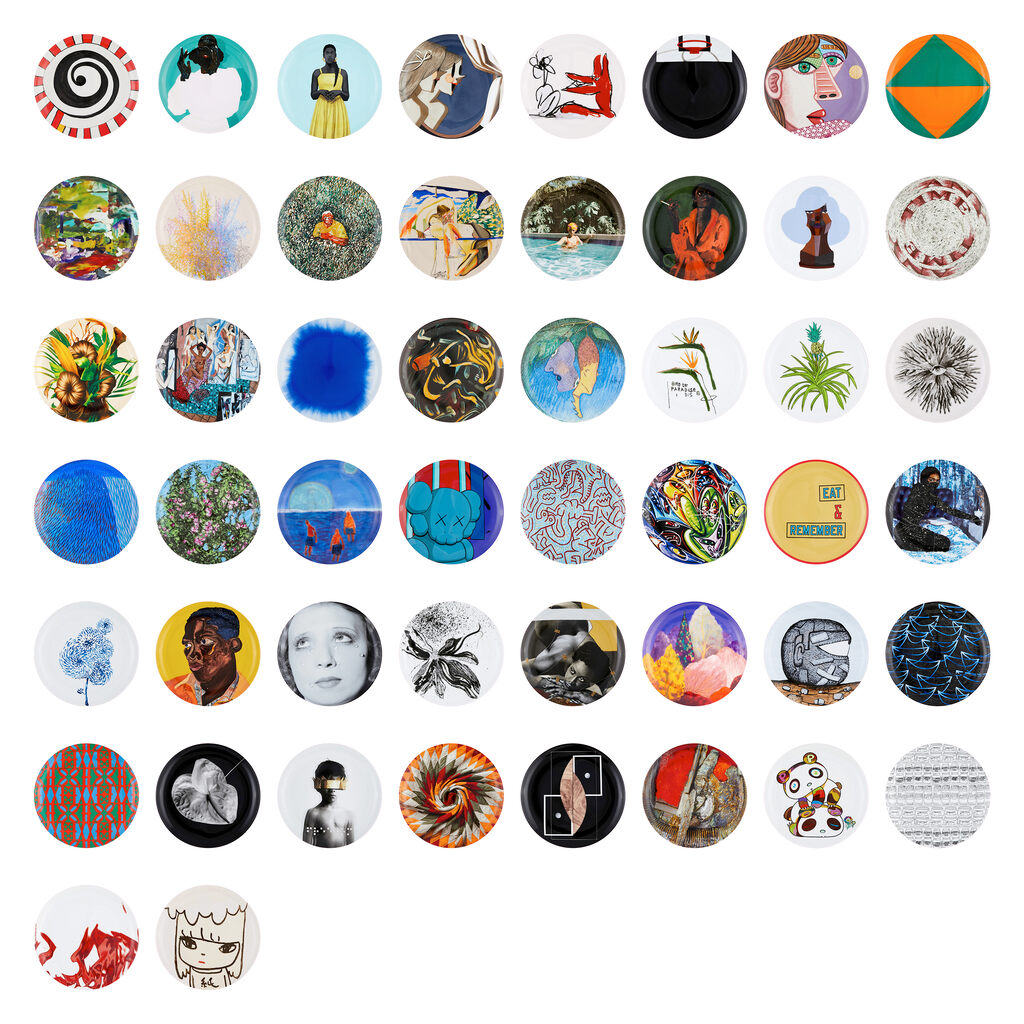
2025 Artist Plate Project Full Set of 50 Plates, 2025
Penck, yet drawing from the manga comics and Japanese pop culture of his youth, he developed an approach that was entirely his own. His figures, lone children with oversized heads, enormous liquid eyes, and expressions hovering between menace and melancholy, arrived not as calculated art world strategy but as a kind of compulsive necessity. He has often spoken of drawing the same face thousands of times, searching for something true rather than something clever. When he returned to Japan in 2000 and settled in Tochigi, his practice deepened further, becoming more personal, more layered, and ultimately more powerful.
“I don't think about the audience when I make work. I think about myself as a child.”
Yoshitomo Nara
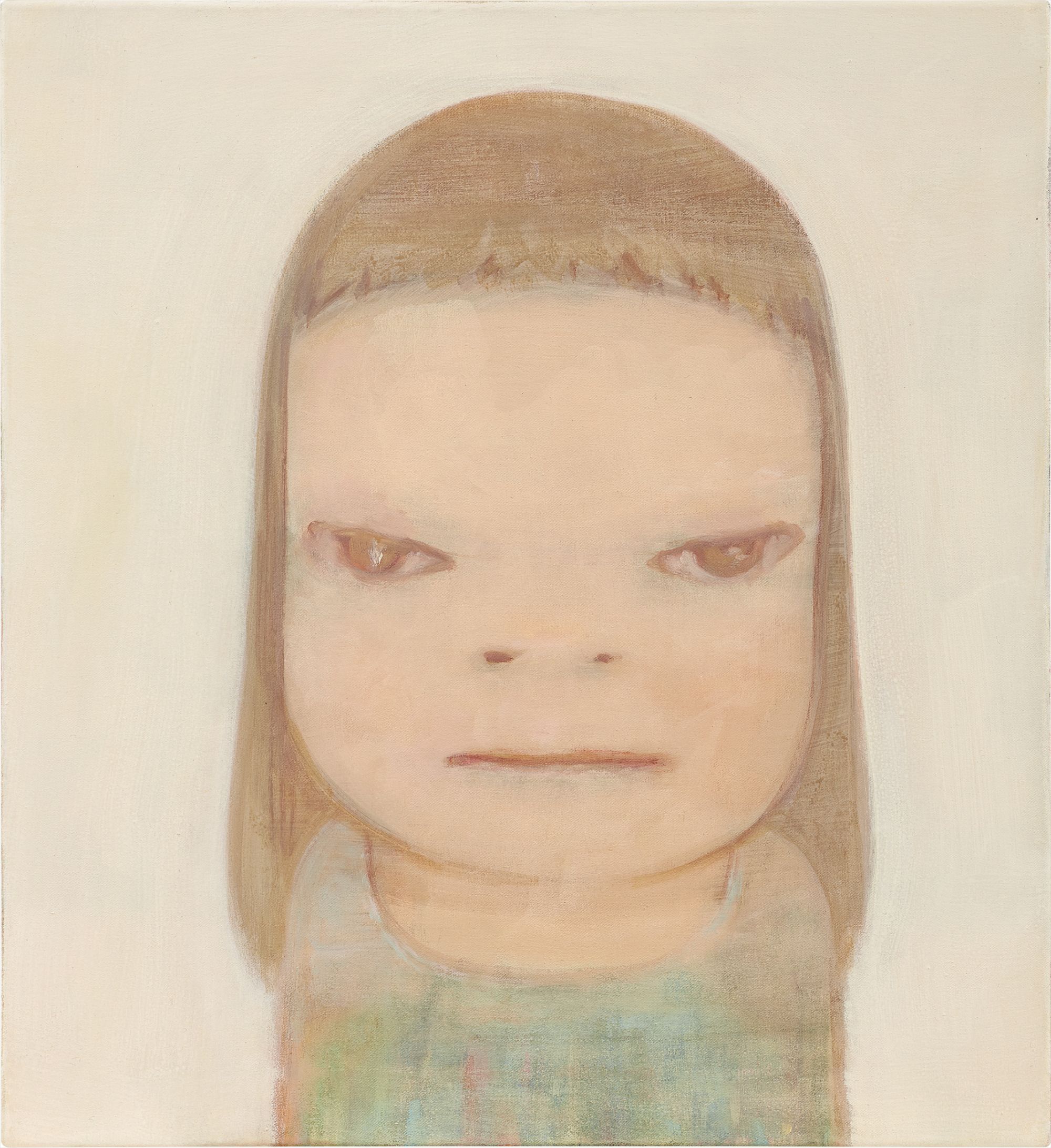
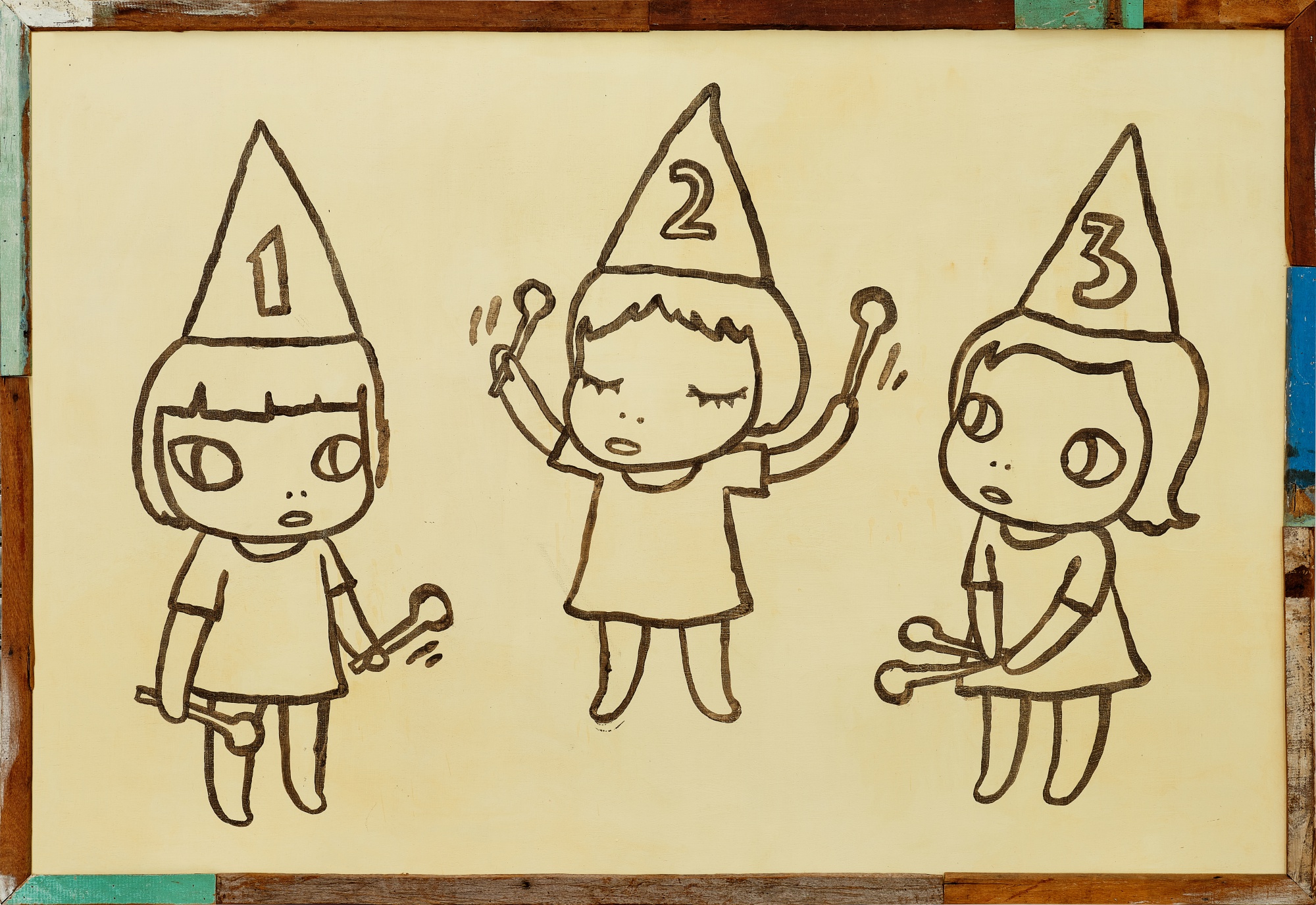
The signature works that define Nara's reputation are both immediately recognizable and endlessly surprising on close inspection. Paintings like "Study for Miss Spring" from 2012 and the early "Be Crushed to Death" from 1993 demonstrate the remarkable range within what might at first seem like a consistent visual formula. His children are never merely cute, they carry genuine psychological weight, embodying a defiant tenderness that speaks to the experience of feeling small in a large and often indifferent world. Works on paper such as "Soldier" reveal his mastery of colored pencil and acrylic in intimate formats, while sculptural projects like "123 Drumming Girls," a complete set of three painted cast vinyl sculptures, show how fluidly his imagery translates into three dimensions.
Yoshitomo Nara
Study for Miss Spring, 2012
His collaboration on Ukiyo e woodcut editions, including the complete set of ten woodcuts on Japanese paper and the striking "This Machine Kills Fascists" from 2022, demonstrates a sustained dialogue with traditional Japanese printmaking that gives his work deep historical roots alongside its punk rock attitude. From a collecting perspective, Nara represents one of the most compelling propositions in the contemporary market. He is represented by major galleries including Pace Gallery and Tomio Koyama Gallery in Tokyo, institutions that have helped steward his career with genuine care and long term vision. Works across all media and scales have performed consistently at auction, and early works on canvas from the 1990s, such as those predating his first major international recognition, are now considered particularly significant by serious collectors.
The breadth of his output across painting, drawing, sculpture, and printmaking means that collectors at various levels can engage meaningfully with his practice. What to look for is emotional directness: the works that hit hardest are those where the child figure holds its gaze steadily, unblinking, asking the viewer to account for themselves. Nara's place within art history becomes clearer when considered alongside the broader movements he helped define. He emerged in the 1990s alongside fellow Japanese artists Takashi Murakami and the loose cultural phenomenon known as Superflat, a movement that celebrated the flat, graphic aesthetics of manga and anime as legitimate and sophisticated artistic languages.
Yoshitomo Nara
1,2,3...
Yet Nara has always resisted easy categorization within that framework. His work is more emotionally raw, more rooted in lived personal experience than in cultural theory. Internationally, his paintings share certain affinities with the Neo Expressionist figure painting of the 1980s, and there are genuine resonances with the emotional directness of artists like Jean Michel Basquiat and Keith Haring. He also invites comparison with artists working at the intersection of popular culture and fine art, from Andy Warhol's pop iconography to the figurative intensity of contemporaries like KAWS, though Nara predates and in many ways preceded the global market enthusiasm for such work.
What makes Nara genuinely matter today goes beyond market performance or cultural cool. His art speaks to a universal experience of childhood not as innocence but as a time of fierce, unresolved feeling, a period when the world's injustices first became visible and the instinct to push back first made itself known. In an era of extraordinary social complexity, his lone defiant girls carry something that feels increasingly necessary: the reminder that resistance can be quiet, that vulnerability and strength are not opposites, and that sincerity in art is never a weakness. Institutions including LACMA and MoMA have recognized this by collecting his work, and major retrospectives across Asia and the United States have brought his vision to new generations of viewers.
Yoshitomo Nara has spent decades making art that feels like a private conversation and somehow reaches everyone. That is the rarest thing.
Explore books about Yoshitomo Nara

Yoshitomo Nara
Nara Yoshitomo
Yoshitomo Nara: Nobody's Fool
Various curators
Yoshitomo Nara: A Little Snow Fairy Sugar
Nara Yoshitomo
Yoshitomo Nara: Paintings, Drawings, and Sculptures
Various contributors
Yoshitomo Nara: We Are the Dead
Nara Yoshitomo
Nara Yoshitomo: Missing in Action
Various curators
Yoshitomo Nara: Cherry Blossoms
Nara Yoshitomo
The Art of Yoshitomo Nara
Takashi Murakami, various editors