Ursula von Rydingsvard
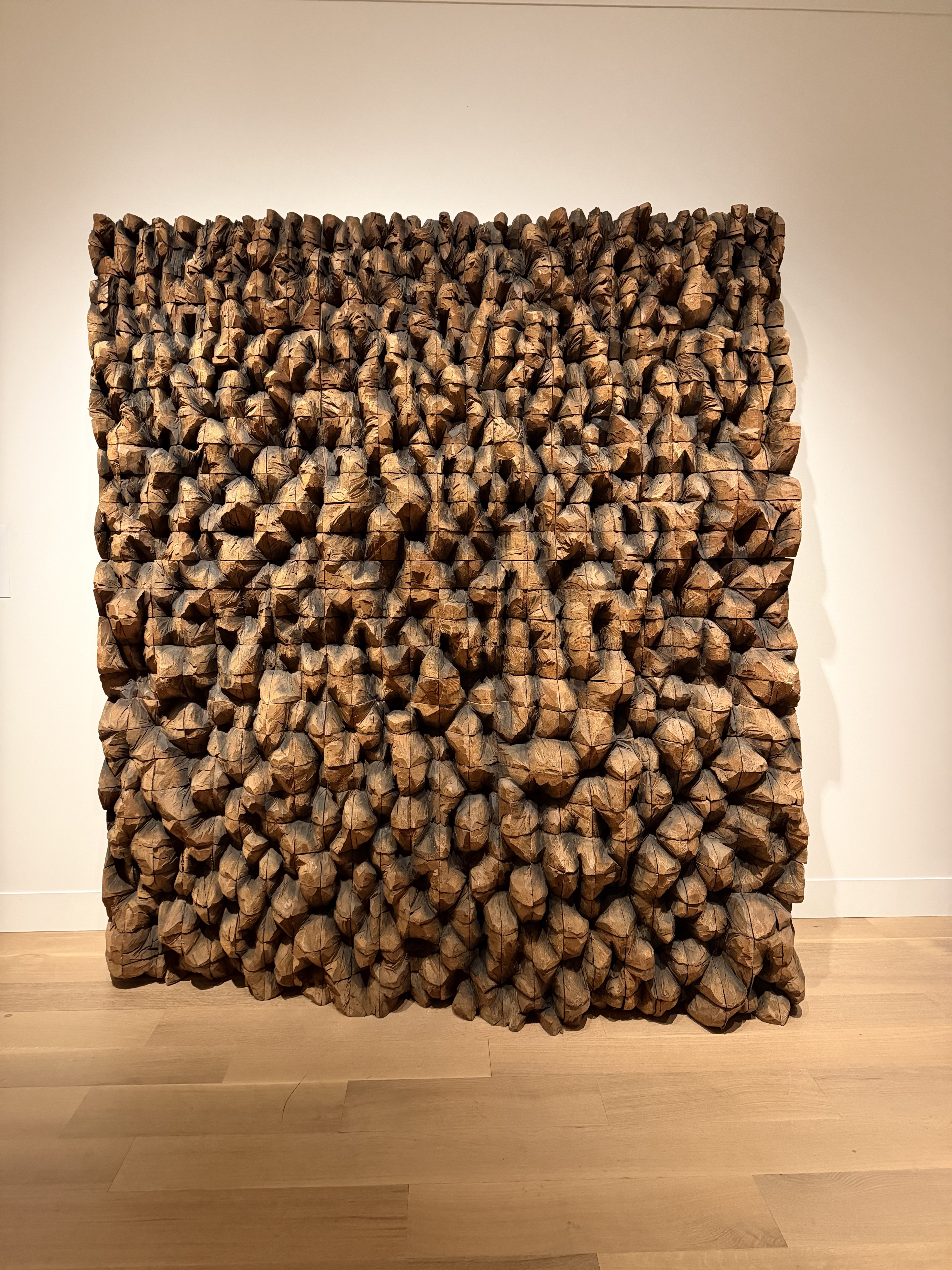
Ursula von Rydingsvard: Sculptor of Memory and Majesty
Artist Spotlight · The Collection Editorial
“I want something that feels as though it came from a human being, that has been touched by a human being.”
Ursula von Rydingsvard, interview with Bomb Magazine
When the Fabric Workshop and Museum in Philadelphia mounted a major survey of Ursula von Rydingsvard's work, visitors encountered something rare in contemporary sculpture: forms that feel simultaneously ancient and entirely of our moment, enormous yet intimate, architectural yet unmistakably alive. Von Rydingsvard has spent more than four decades building one of the most quietly commanding bodies of work in American art, and the recognition has been building steadily to match. Her inclusion in the permanent collection of the National Museum of Women in the Arts in Washington, D.C.
Ursula von Rydingsvard
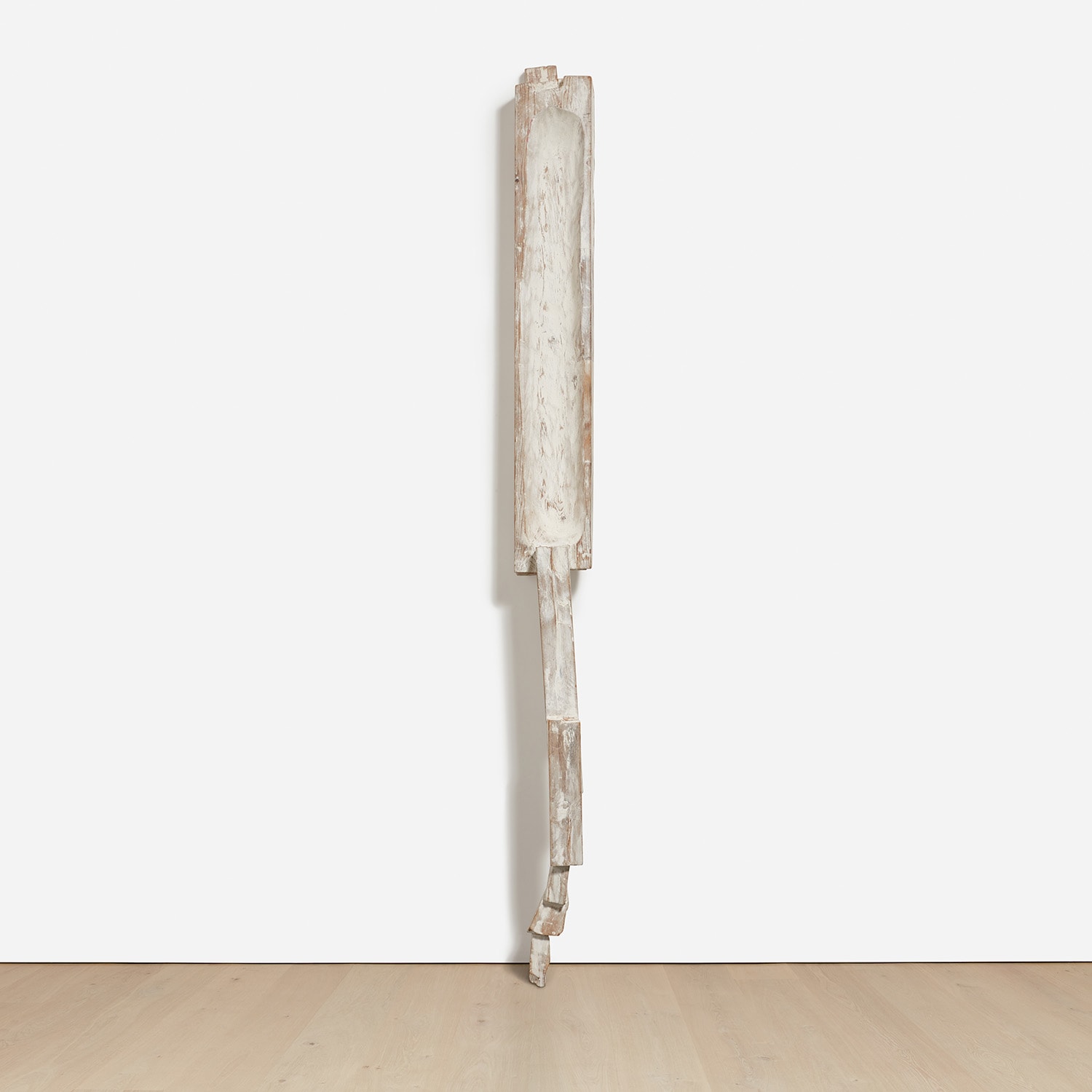
Spoon Shovel, 1991
, and her celebrated public installation at Madison Square Park in New York cemented her reputation not only as a sculptor of great technical ambition but as an artist whose work resonates with something deep in the human experience of place, loss, and belonging. Ursula von Rydingsvard was born in 1942 in Deensen, Germany, to a Polish father and Ukrainian mother, and the early years of her life were shaped by displacement on a profound scale. The family moved through a series of refugee camps across postwar Germany before eventually emigrating to the United States in 1950, settling in Connecticut and later Nebraska. Growing up in those camps, surrounded by improvised structures, makeshift materials, and the labor of survival, von Rydingsvard absorbed lessons about form and function that no art school could replicate.
She eventually earned her MFA from Columbia University in 1975, arriving at sculpture after earlier studies in painting, and bringing to the medium a sensitivity both intellectual and visceral. Her breakthrough came in the late 1970s and through the 1980s, when she began working almost exclusively with cedar beams, the four by four inch lumber that would become her signature material. The choice was deliberate and deeply personal. Cedar carries a particular smell, a warmth, a memory of organic life, and von Rydingsvard exploited these qualities with extraordinary patience and physical commitment.
Ursula von Rydingsvard
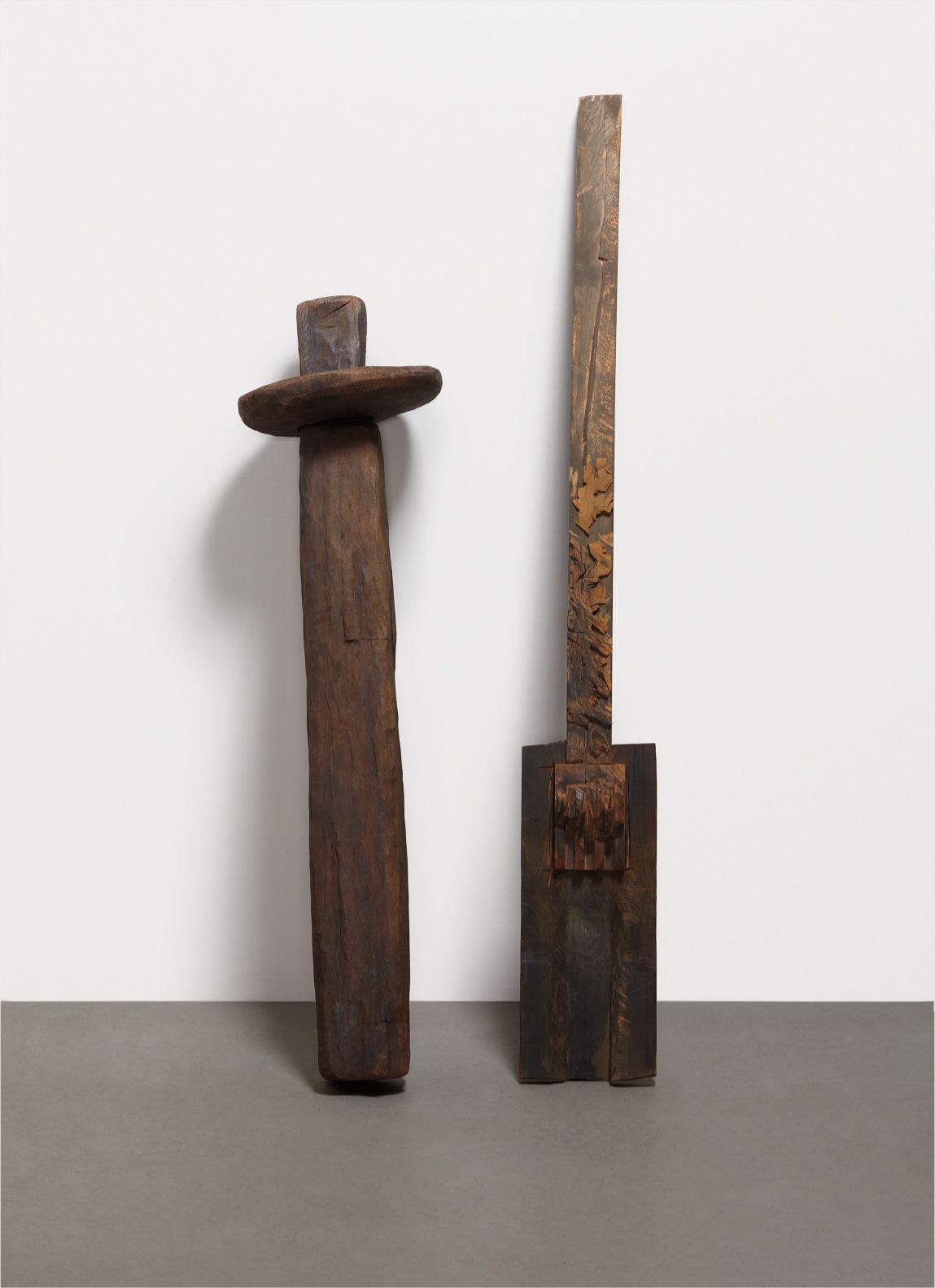
Cedar, stain, graphite, in 2 parts
She and her studio assistants cut, stack, and glue thousands of individual pieces, building forms that rise organically from the floor or extend outward like landscape, before she works the surfaces by hand with a chainsaw and then applies graphite, rubbing it into the wood to create a finish that reads almost like pewter or ancient bronze. The process can take months or years for a single large work. Among the most celebrated works in her catalogue is Droga, created in 2002, a word meaning road or path in Polish, a title that speaks directly to her biography and to the open, traversable quality of the form itself. Heart in Hand from 2014 is another touchstone, a work that balances the monumental and the tender in ways that are characteristic of von Rydingsvard at her most assured.
“The cedar has a smell that is so primitive to me, so basic, so connected to something very old.”
Ursula von Rydingsvard, Fabric Workshop and Museum catalogue
Spoon Shovel from 1991, part of her ongoing exploration of domestic and agricultural implements rendered at overwhelming scale, shows how she transforms the familiar into the mythic. These works never simply illustrate; they accumulate meaning the way geological forms accumulate time, slowly, irresistibly. Her more recent explorations into cast materials including bronze and translucent resin demonstrate that her formal curiosity has never been content to rest. For collectors, von Rydingsvard represents one of the most compelling propositions in the field of contemporary sculpture.
Ursula von Rydingsvard
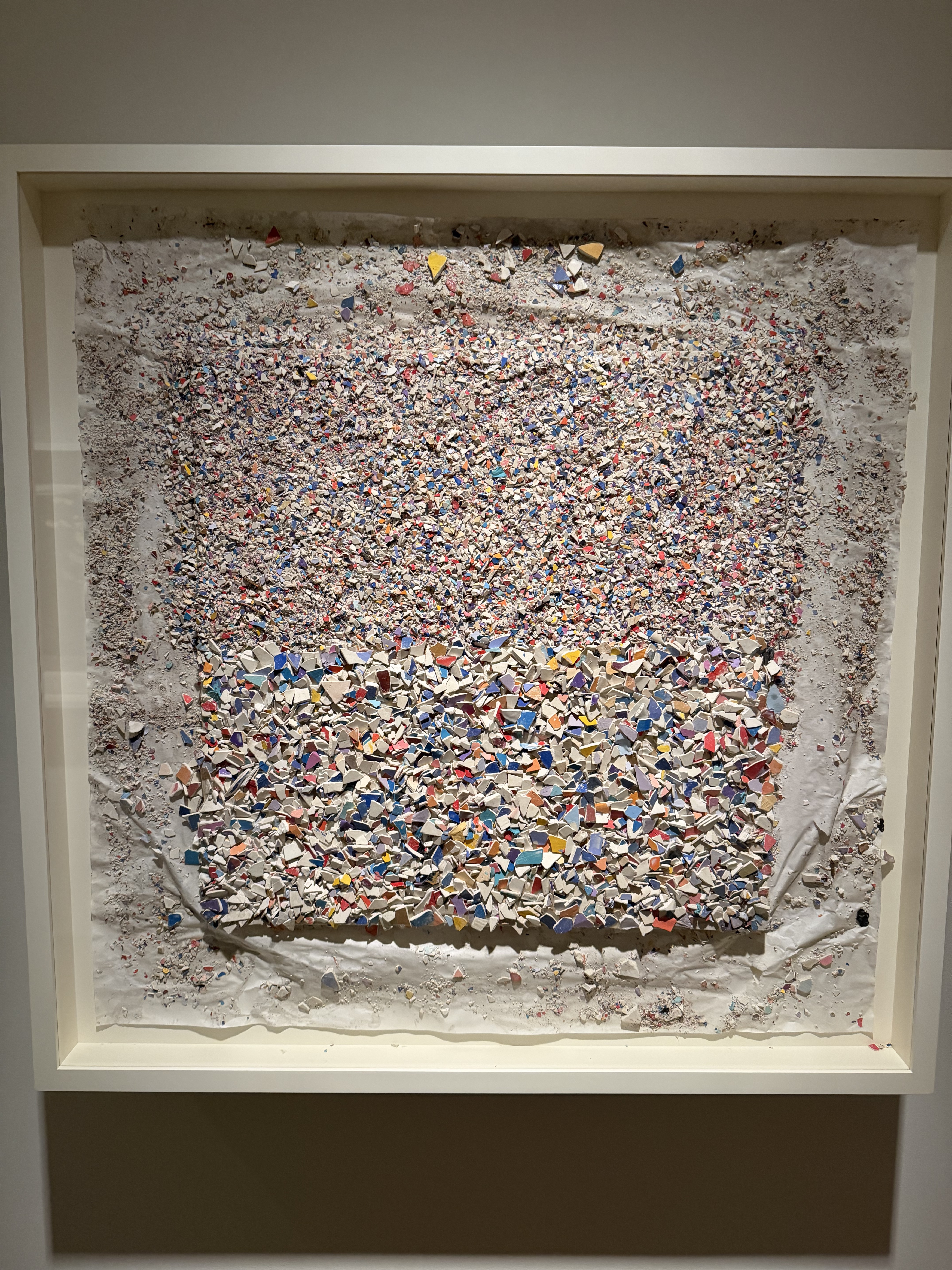
states of becoming
Her work sits at a genuinely rare intersection: she is recognized across the art historical spectrum as a peer of artists like Louise Bourgeois, Eva Hesse, and Nancy Graves, yet her market has remained measured and serious rather than speculative. Works on paper, including her collage and mixed media pieces that incorporate shredded and fragmented materials, offer an accessible entry point to her practice while sharing fully in its conceptual richness. These works on paper are not studies or footnotes; they are independent expressions of the same formal and emotional intelligence at work in the large sculptures. Collectors who have followed her career closely understand that acquiring a von Rydingsvard at any scale is acquiring a piece of one of postwar America's most significant artistic legacies.
Contextually, von Rydingsvard occupies a fascinating position within art history. She emerged during the era of Minimalism and was shaped by it, absorbing its commitment to material honesty and serial process, but she pushed decisively beyond its emotional restraint. Where Donald Judd and Carl Andre pursued the cool logic of industrial form, von Rydingsvard pursued something more interior and more bodily. The more fitting comparisons are to figures like Bourgeois, whose autobiography became sculptural language, or to Ana Mendieta, whose work similarly drew on displacement and the female body as sites of meaning.
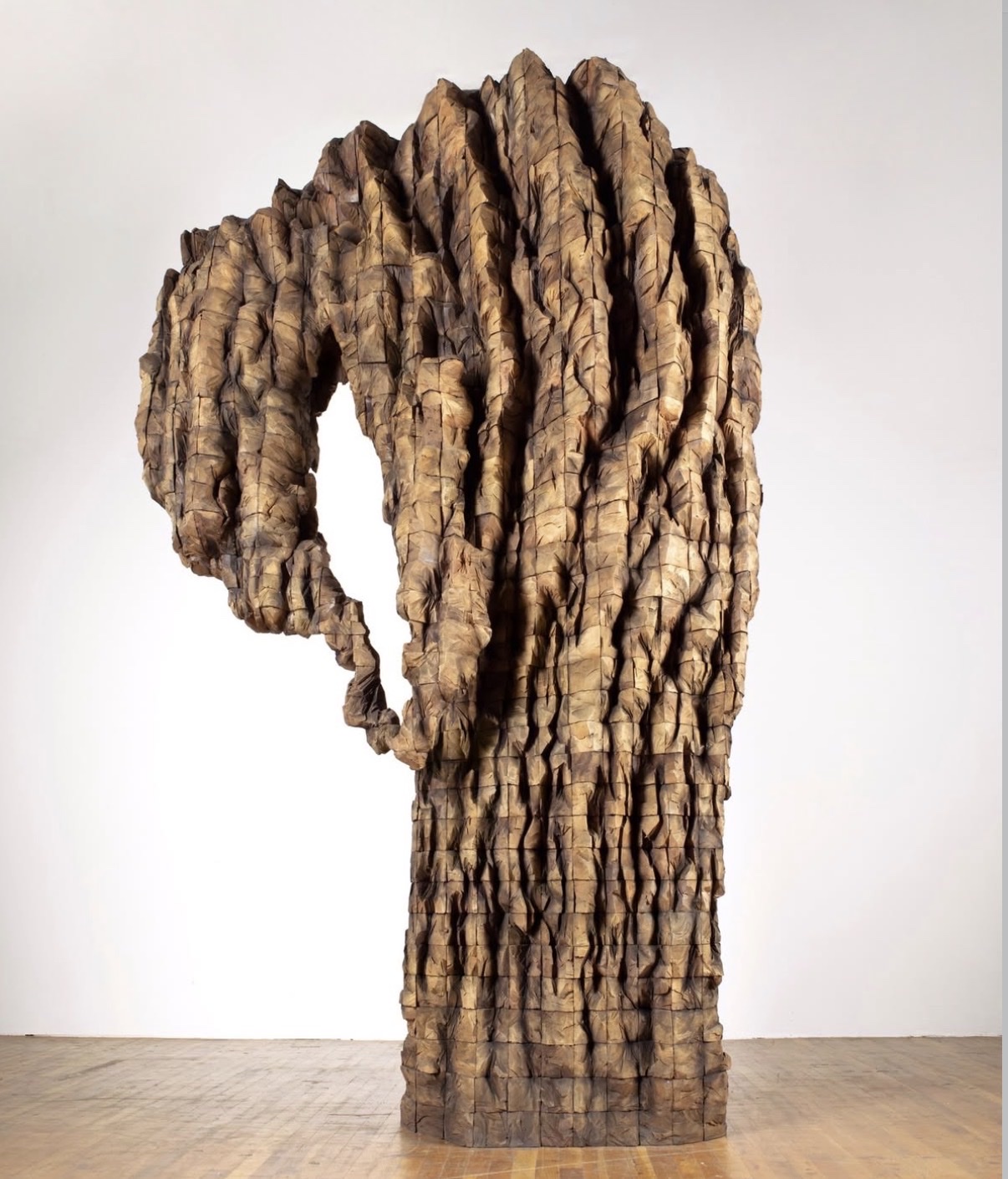
Ursula von Rydingsvard
Heart in Hand, 2014
Von Rydingsvard has also drawn comparison to the land artists for the sheer environmental presence of her largest works, though her relationship to landscape is always filtered through memory and experience rather than pure formal gesture. The legacy of Ursula von Rydingsvard is one that grows more essential with time. In an era when questions of migration, identity, and belonging are at the center of global cultural conversation, her work offers not easy answers but something more valuable: a sustained, embodied meditation on what it means to carry a history in your hands and transform it into something new. She has taught for decades at Yale University and the New York Studio School, influencing generations of younger artists.
Her sculptures stand in public spaces and museum collections across the country and the world, and they repay repeated encounter in the way that only the greatest works do, offering something different each time you stand before them. To engage with von Rydingsvard is to understand that the most powerful art is not made from grand gestures but from accumulated acts of attention, care, and courage.
Explore books about Ursula von Rydingsvard
Ursula von Rydingsvard: Sculpture
Peter Reed
Ursula von Rydingsvard
Robert Storr
Ursula von Rydingsvard: The Space Between
Phong Bui
Ursula von Rydingsvard: Sculpture 1980-2010
Charlotta Kotik