
Ludwig Mies van der Rohe
1
Works
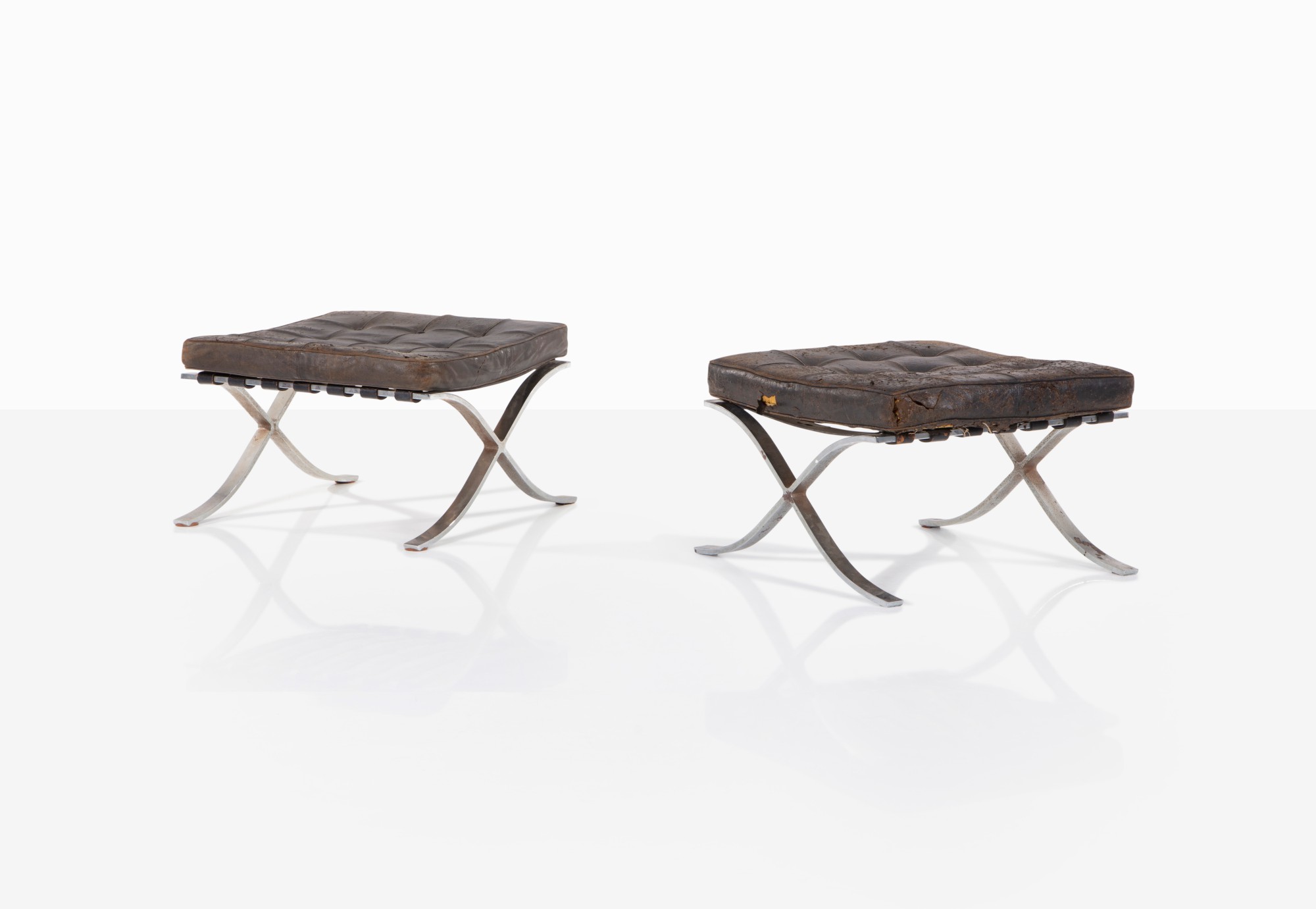
Ludwig Mies van der Rohe was a German-American architect and designer widely regarded as one of the pioneering masters of modern architecture. Born in Aachen, Germany, in 1886, he developed a rigorous architectural philosophy rooted in structural clarity, minimalism, and the expressive use of industrial materials such as steel, glass, and reinforced concrete. His famous dictum 'Less is more' became a defining credo of modernist design, encapsulating his belief that architectural beauty emerges from the precise resolution of structure and space rather than ornamental excess. His early career in Germany culminated in his directorship of the Bauhaus school in Dessau and Berlin from 1930 until its forced closure by the Nazi regime in 1933. Among his most celebrated works are the German Pavilion at the 1929 International Exposition in Barcelona — a landmark of spatial fluidity and material refinement, reconstructed in 1986 — and the Farnsworth House in Plano, Illinois (1951), a transparent glass-and-steel residence that epitomizes his reductive aesthetic. After emigrating to the United States in 1938, Mies became director of the architecture program at the Illinois Institute of Technology (IIT) in Chicago, where he also masterplanned and designed the campus. His Seagram Building in New York City (1958), co-designed with Philip Johnson, stands as a definitive achievement of the International Style and set the standard for the modern corporate skyscraper. Mies van der Rohe's influence on twentieth-century architecture and design is immeasurable. His furniture designs, including the Barcelona Chair and the Brno Chair, remain canonical works of modernist design still in production today. He transformed the urban skylines of Chicago and New York and shaped generations of architects through his teaching and built work. His legacy is preserved in institutions worldwide, and his projects are studied as foundational texts of architectural modernism. He received the Presidential Medal of Freedom in 1963 and the AIA Gold Medal in 1960, cementing his status as one of the most consequential architects in history.
Artists in conversation