Gisela Colón
Gisela Colón Sculpts Light Into Living Form
Artist Spotlight · The Collection Editorial
Something is shifting in the way we understand sculpture, and Gisela Colón is at the center of it. In 2025, the Puerto Rican American artist released some of the most arresting work of her career, including pieces that seem less fabricated than grown, less placed in a room than arrived there from somewhere beyond it. Her newest sculptures pulse with chromatic energy, catching and refracting light in ways that feel genuinely new, even within a tradition that has spent decades perfecting the art of visual seduction. Colón is not merely continuing a conversation.
Gisela Colón
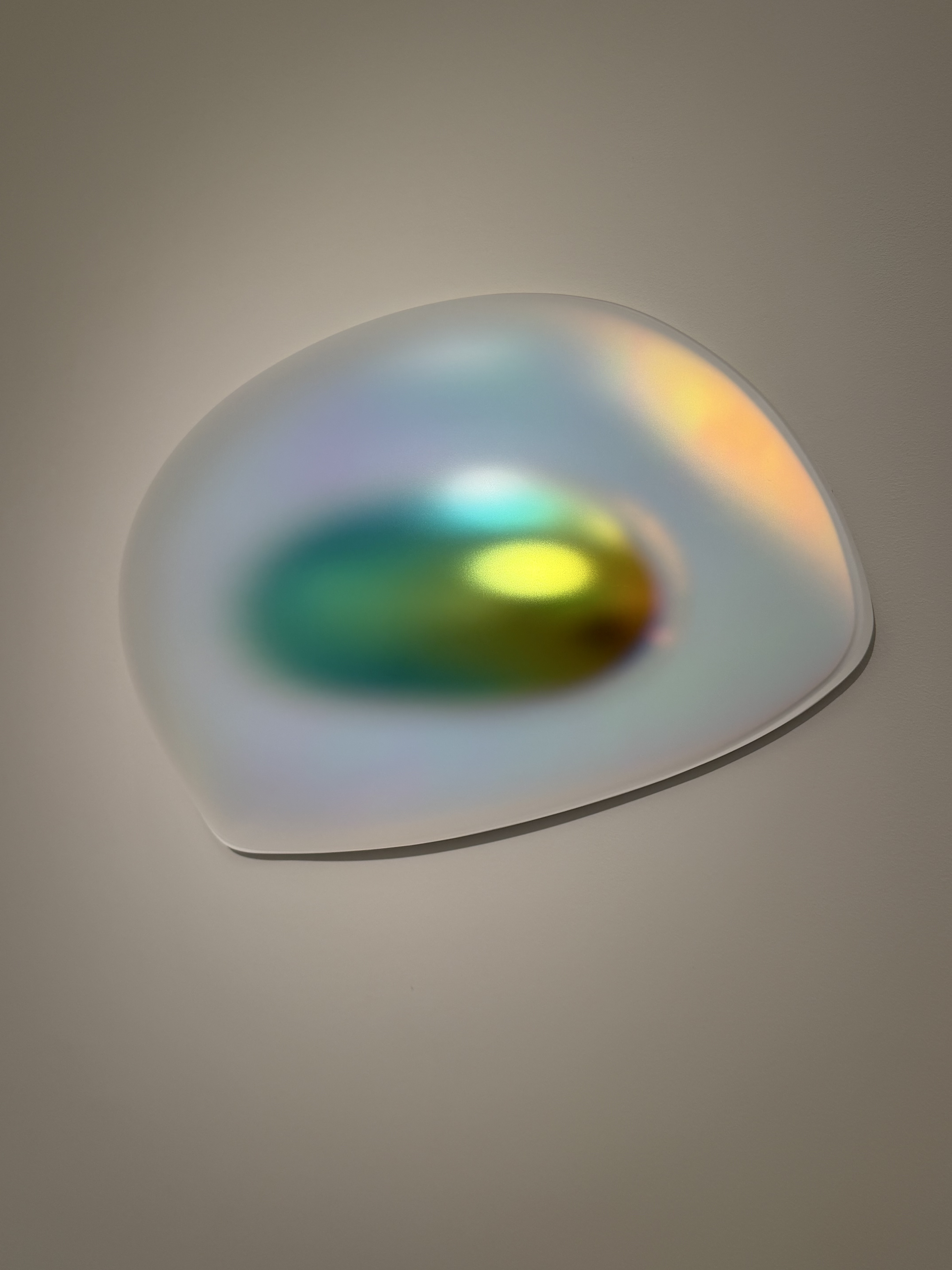
Scalene Earthoid (Calisto), 2025
She is expanding it into territory that feels urgent, cosmological, and deeply personal. Colón was born in 1966, and her formation was shaped by the dual inheritance of Puerto Rican identity and the expansive visual culture of the American Southwest. The island landscape of Puerto Rico, with its tropical luminosity, its dense rainforests, and the particular quality of Caribbean light filtering through dense canopy, left a permanent imprint on her sensibility. That sensibility would later find its formal language in Los Angeles, where the Southern California art world offered both a community and a methodology.
The Light and Space movement, which flourished in the region from the 1960s onward, gave Colón a framework for what she had always instinctively understood: that perception itself is the subject of art, and that materials can be instruments of consciousness. Her development as an artist followed a path that was rigorous and deliberate. She immersed herself in the legacy of the Finish Fetish movement, a Southern California phenomenon that elevated industrial fabrication and flawless surface treatment to the level of fine art. Artists like Craig Kauffman, Larry Bell, and DeWain Valentine had demonstrated that resins, acrylics, and reflective coatings could carry the same emotional and philosophical weight as marble or bronze.
Gisela Colón
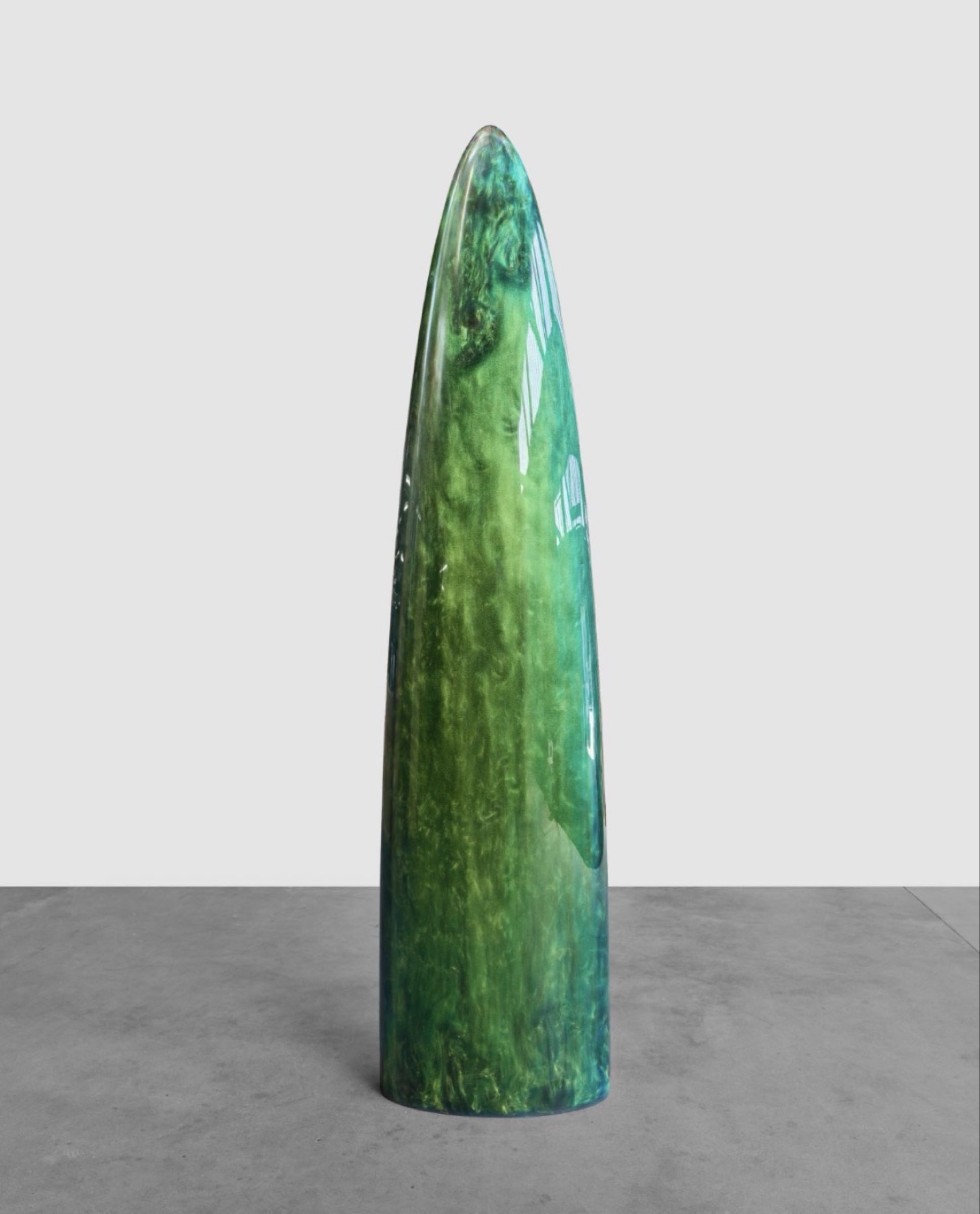
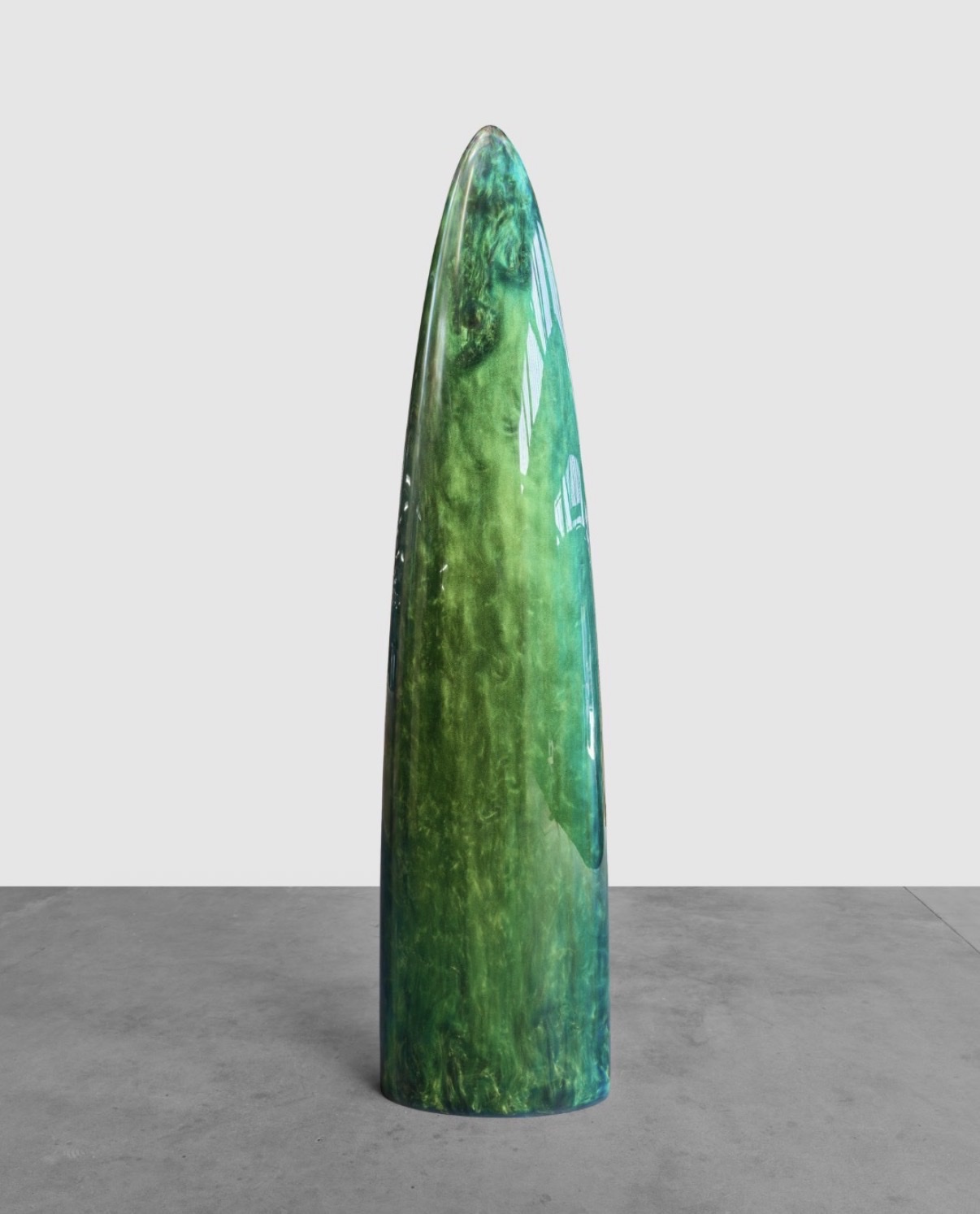
Monolito Parabólico Phytoplankton (Cuenca Hidrográfica del Bosque Tropical de El Yunque, Luquillo, Puerto Rico), 2025
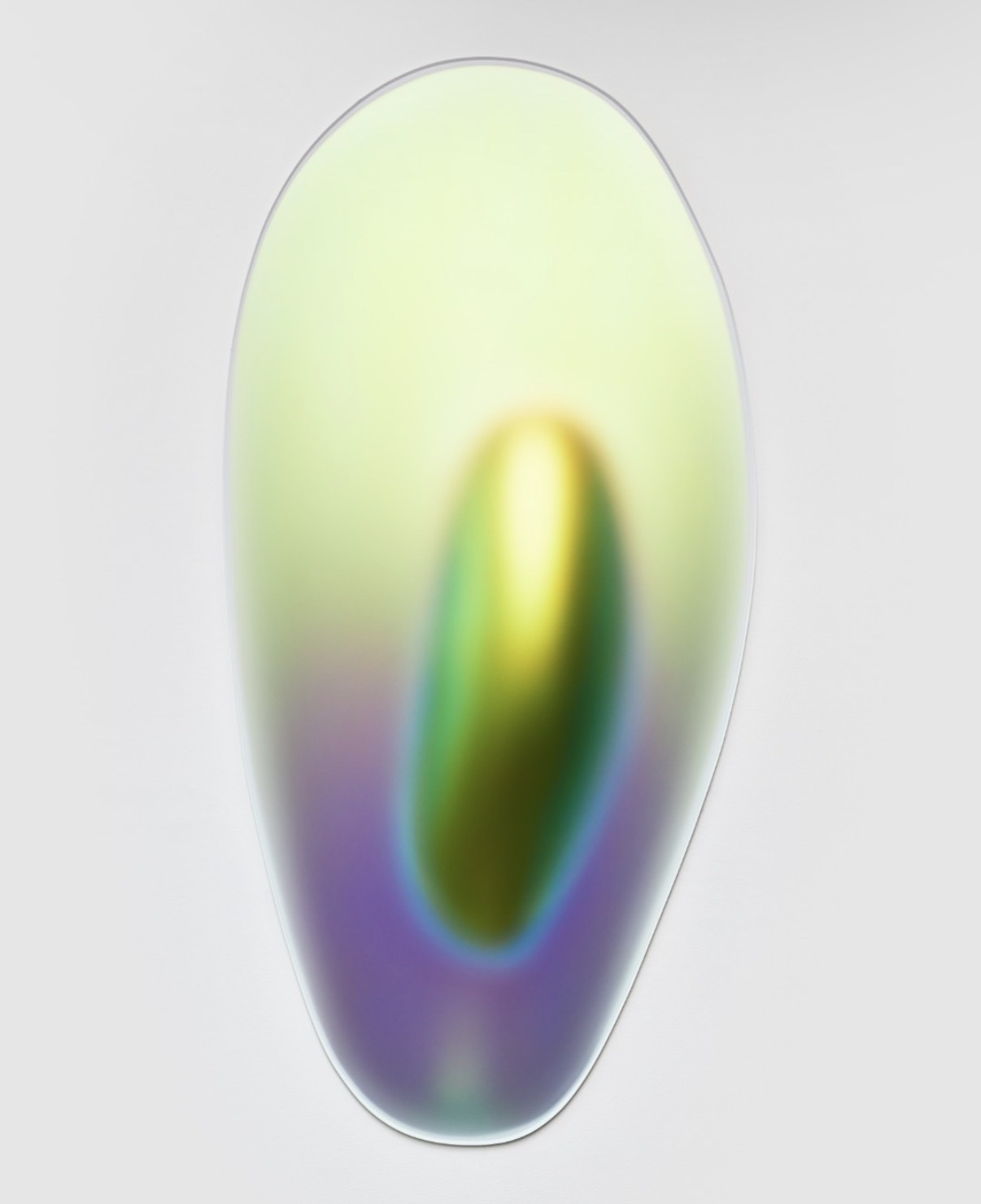
Colón absorbed these lessons and then moved further, incorporating aerospace grade materials and blow molding techniques that had no precedent in fine art contexts. The result was a body of work that felt simultaneously futuristic and ancient, technological and organic. The sculptures themselves resist easy categorization, which is precisely their power. Works like Plasmatic Rhomboid (Mercury), completed in 2024 using blow molded acrylic, demonstrate Colón's mastery of form and surface in equal measure.
The piece seems to breathe. Its geometry is precise yet biomorphic, calling to mind both the forms of deep sea organisms and the sleek geometry of spacecraft components. The surface shifts in color depending on where the viewer stands, enacting in real time the phenomenological argument that all perception is relational and in motion. There is no single correct view of a Colón sculpture.
Gisela Colón
Plasmatic Rhomboid (Mercury), 2024
There is only the ongoing experience of looking. Her 2025 work Scalene Earthoid (Calisto) extends this inquiry into even more ethereal territory. Named for one of Jupiter's moons, the piece uses blow molded acrylic to create a form that seems to hover between states, neither fully solid nor fully luminous. It is the kind of object that makes a room feel different simply by being in it.
Then there is the extraordinary Monolito Parabólico Phytoplankton, subtitled with a dedication to the watershed of El Yunque tropical forest in Luquillo, Puerto Rico. This work represents perhaps the most explicit bridge Colón has yet built between her Caribbean roots and her cosmological ambitions. Its listed materials read like a prose poem: aurora particles, stardust, cosmic radiation, intergalactic matter, ionic waves, organic carbamate, earth matter, gravity, energy, and time. The work insists that Puerto Rican land and interstellar space are part of the same continuum, that the local and the cosmic are not opposites but mirrors.
For collectors, Colón's work occupies an increasingly coveted position in the contemporary market. Her sculptures are demanding to live with in the best possible sense. They require space, light, and a willingness to let an object change what you see and feel in a room. Institutions have recognized this quality as well.
The Palm Springs Art Museum has exhibited her work, placing her in conversation with the broader legacy of West Coast sculpture and optics based art. Collectors who have followed her practice over time note that each new body of work deepens rather than repeats the concerns of what came before. That consistency of vision, combined with ongoing material innovation, is exactly what the most discerning collections are built around. Within art history, Colón belongs to a distinguished lineage while remaining entirely herself.
The Light and Space movement provides the deepest context for understanding her practice. James Turrell's manipulation of atmospheric light, Robert Irwin's dissolving perceptual fields, and Helen Pashgian's luminous resin forms all represent related investigations. But Colón brings something those artists did not: the specific cultural weight of a Puerto Rican American identity, a postcolonial awareness of land and cosmos, and a willingness to name her materials in ways that are almost incantatory. She is not just making beautiful objects.
She is making arguments about who gets to claim the universe as subject matter. Colón's legacy is still being written, and that is part of what makes this moment so exciting for those paying attention. She is an artist in full command of her vision, producing work at the highest level of ambition and craft, with a growing institutional presence and a collector base that understands the rarity of what she offers. Her sculptures do not age in the conventional sense.
They change with every hour of daylight, every season, every viewer who stands before them. That quality of aliveness is perhaps the most honest definition of great art. Gisela Colón has built a practice around it, and the field is richer for her commitment.