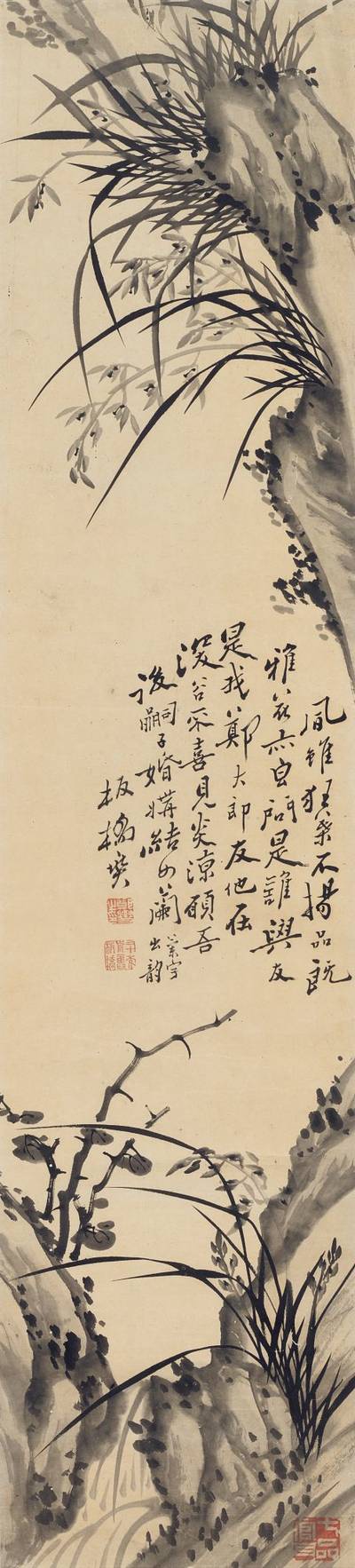
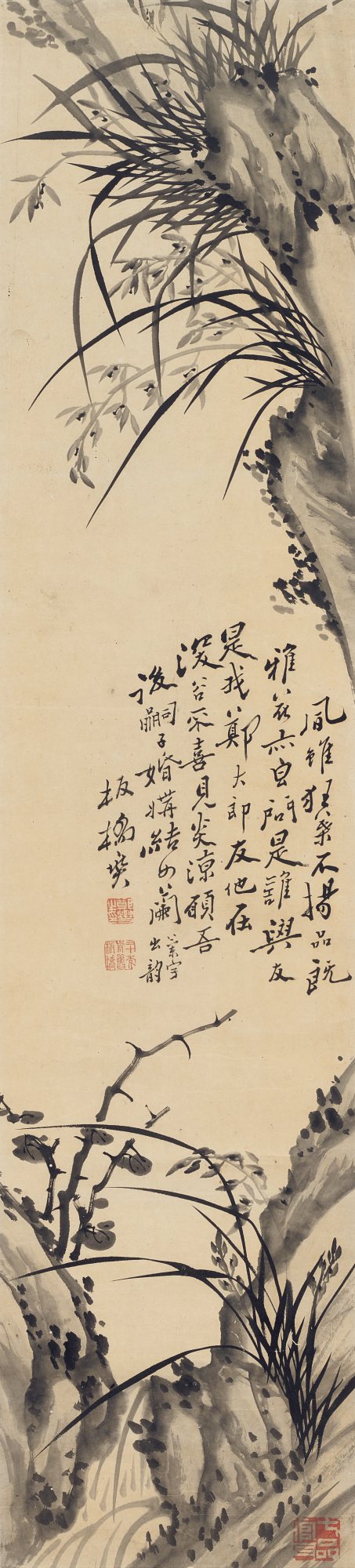
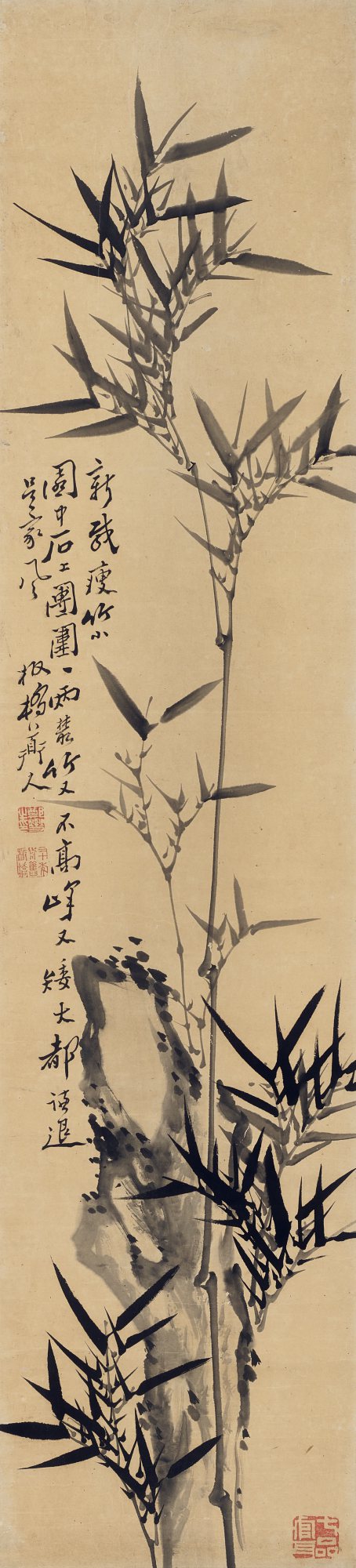
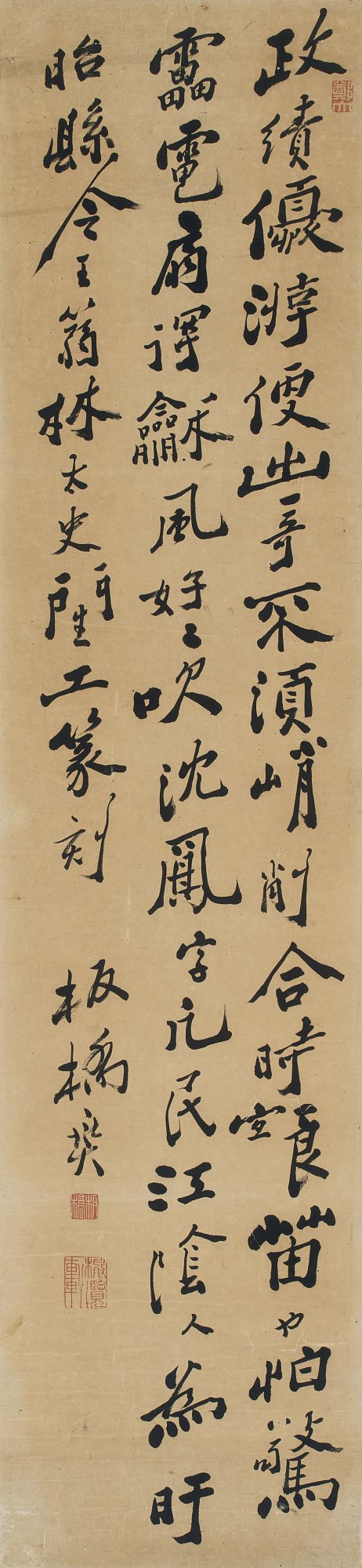
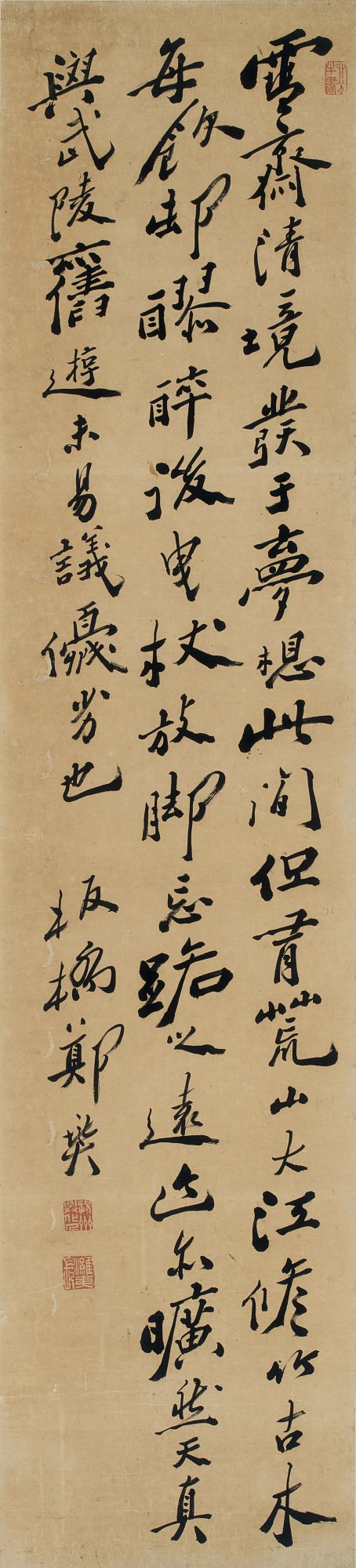
There is a moment, standing before a hanging scroll of ink on paper, when the brushwork stops being marks and becomes something alive. This is the experience that generations of scholars, collectors, and museum visitors have described when encountering the work of Zheng Xie, the Qing Dynasty master whose paintings of bamboo and orchids remain among the most quietly revolutionary achievements in the history of Chinese art. Today, as interest in classical Chinese literati painting reaches new heights among international collectors and institutional curators alike, Zheng Xie occupies a place of singular importance. His works appear at major auction houses including Christie's and Sotheby's, where fine examples in good condition and with solid provenance regularly attract competitive bidding from collections across Asia, Europe, and the Americas. Zheng Xie was born in 1693 in Xinghua, Jiangsu Province, into a family of modest means but genuine scholarly ambition. His early years were marked by hardship, and he lost his mother at a young age, an experience that is said to have deepened the introspective quality that would later define his art. He pursued the traditional path of Confucian scholarship, eventually passing the jinshi examination in 1736, which earned him an official appointment as a county magistrate, first in Shandong Province at Fan County and later at Weifang. It was an unlikely foundation for one of China's most celebrated artist personalities, and yet the tension between official duty and artistic freedom would animate his entire career. The intellectual and cultural environment of Yangzhou during the eighteenth century was unlike anywhere else in China. The city was a prosperous trading hub, home to salt merchants of considerable wealth who patronized the arts with an enthusiasm and openness that the more rigid court culture of Beijing rarely permitted. Into this fertile atmosphere came a generation of painters who would be remembered collectively as the Eight Eccentrics of Yangzhou, a loose grouping of individualist artists who challenged the orthodoxies of the dominant painting academies. Zheng Xie was the most celebrated of this group, and his friendship and rivalry with fellow eccentrics such as Jin Nong and Huang Shen helped to sharpen the distinctive voice he was developing in both painting and calligraphy. At the heart of Zheng Xie's practice is the bamboo, a subject he returned to throughout his life with an obsessive focus that transformed a well established literati subject into something entirely personal. Where earlier painters had treated bamboo as an exercise in refined elegance, Zheng Xie brought to it a directness, even an urgency, that made his brushwork feel unprecedented. He famously described his approach by saying that he saw the bamboo growing outside his window, felt it enter his heart, and then allowed his hand to transform it into something different from what he had observed. This triangulation of observation, internalization, and transformation is what gives his bamboo paintings their extraordinary vitality. The ink moves across the paper with a confidence that never tips into arrogance, each stalk and leaf placed with the precision of a calligrapher and the spontaneity of a poet. Zheng Xie was equally celebrated in his own time as a calligrapher, and his invention of a personal script style he called liufenshu, or the script of six and a half tenths, cemented his reputation as a genuine innovator. This hybrid style combined elements of standard script, clerical script, and running script into something that resisted easy categorization. Works such as the "Calligraphy in Running Script" that appear in important private collections today demonstrate this restless formal intelligence at its most compelling. The ink strokes feel simultaneously ancient and deeply personal, as though the weight of the entire Chinese literary tradition has been filtered through a single, irreducibly individual sensibility. For collectors who appreciate the intersection of visual art and literary culture, a Zheng Xie calligraphy scroll represents one of the most rewarding objects in the entire classical Chinese canon. Among the paintings attributed to Zheng Xie, "Orchid and Stones" and "Bamboo" stand as especially instructive examples of his mature style. The orchid, like the bamboo, was a deeply loaded subject in the literati tradition, associated with moral integrity and refined scholarship. In Zheng Xie's hands, the flowers emerge from the ink with a freshness that transcends allegory and becomes direct sensation. The stones that accompany the orchids in many of his compositions are rendered with a roughness that contrasts beautifully with the delicate plant forms, a pairing that speaks to his broader understanding of how tension between elements generates visual energy. These works are not decorations but arguments, made in ink, about how a person of integrity should inhabit the world. For collectors approaching the market for Zheng Xie, the category of attributed works requires particular attention and care. As with many celebrated masters of the Chinese classical tradition, the fame of Zheng Xie generated a substantial body of works produced by followers, admirers, and later copyists. Auction catalogues routinely distinguish between works fully accepted as autograph, works carrying a traditional attribution, and works described simply as in the manner of the artist. Understanding these distinctions is essential, and serious collectors are advised to work with specialists who have deep experience in Qing Dynasty painting and calligraphy. The notation "Attributed to Zheng Xie" on a work indicates that it has been considered within the orbit of the artist's hand and period, and such works can offer a meaningful point of entry into this tradition at a range of price levels. The artists with whom Zheng Xie is most naturally compared include his fellow Yangzhou Eccentrics, but his influence extends outward into the broader history of East Asian art. The emphasis on personal expression over academic convention, the integration of calligraphic brushwork into painting, and the elevation of humble natural subjects to vehicles of philosophical meaning all connect his work to later developments in Chinese art and even to aspects of twentieth century abstraction that Western critics were slow to recognize as parallel. Collectors who hold Zheng Xie alongside works by Jin Nong or Luo Ping find that the grouping tells a coherent and compelling story about the creative possibilities of a particular historical moment. Three centuries after his birth, Zheng Xie endures not simply as a historical figure but as a living presence in the rooms where his works hang. There is something in the directness of his line, the intelligence of his composition, and the sheer pleasure he seems to have taken in the act of making, that speaks across time with remarkable clarity. To collect him is to participate in one of the great conversations of Chinese intellectual history, and to place his work in a contemporary setting is to discover that modernity, as Zheng Xie understood it, has always been about the courage to see freshly and to mark the paper as though it truly matters.