Anselm Kiefer
Anselm Kiefer: A Titan Reshaping Art History
Artist Spotlight · The Collection Editorial
“I have so many weaknesses, and I like to indulge them. Art for me is a way of living.”
Anselm Kiefer, interview with The Guardian
In 2022, the Palazzo Ducale in Venice hosted a monumental exhibition of Anselm Kiefer's work, timed to coincide with the 59th Venice Biennale, drawing vast international audiences into rooms charged with the artist's signature intensity. That same year, a major retrospective at the Centre Pompidou in Paris reaffirmed what curators and collectors have long known: Kiefer is among the most consequential living artists of our time. His presence in the cultural conversation has never felt more vital, his work speaking across generations and geographies with a force that very few artists ever achieve. Kiefer was born in Donaueschingen, Germany, in March 1945, in the final weeks of the Second World War.
Anselm Kiefer
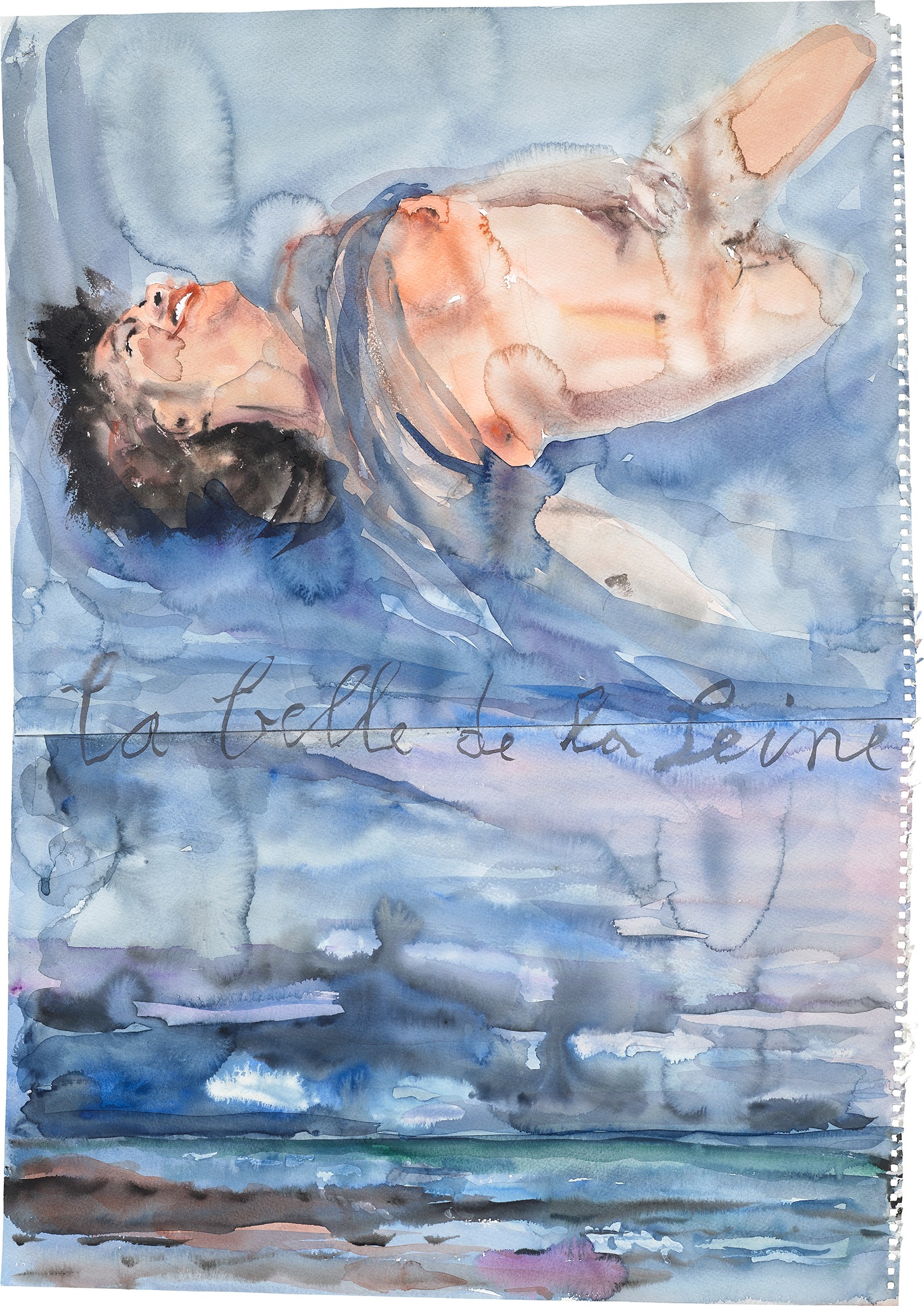
La belle de la Seine (The Beauty of the Seine), 2013
The timing of his birth is not merely biographical detail but something closer to artistic destiny. He grew up in a country struggling to reconcile the catastrophic weight of its recent past, raised amid the silences and evasions that defined postwar German culture. He studied law and languages before turning decisively to art, eventually studying under Joseph Beuys at the Kunstakademie Düsseldorf in the early 1970s. Beuys, himself a transformative figure working through personal and national mythology, proved a formative influence, encouraging Kiefer to pursue the grand, the uncomfortable, and the historically charged without apology.
Kiefer's emergence as a significant voice coincided with one of the most charged moments in postwar German cultural life. In 1969, while still a student, he created his early photographic series "Occupations," in which he photographed himself performing the Nazi salute at various European locations. The work was deliberately provocative, designed not to celebrate but to confront and expose, to drag repressed history into the daylight. German critics were deeply unsettled.
Anselm Kiefer
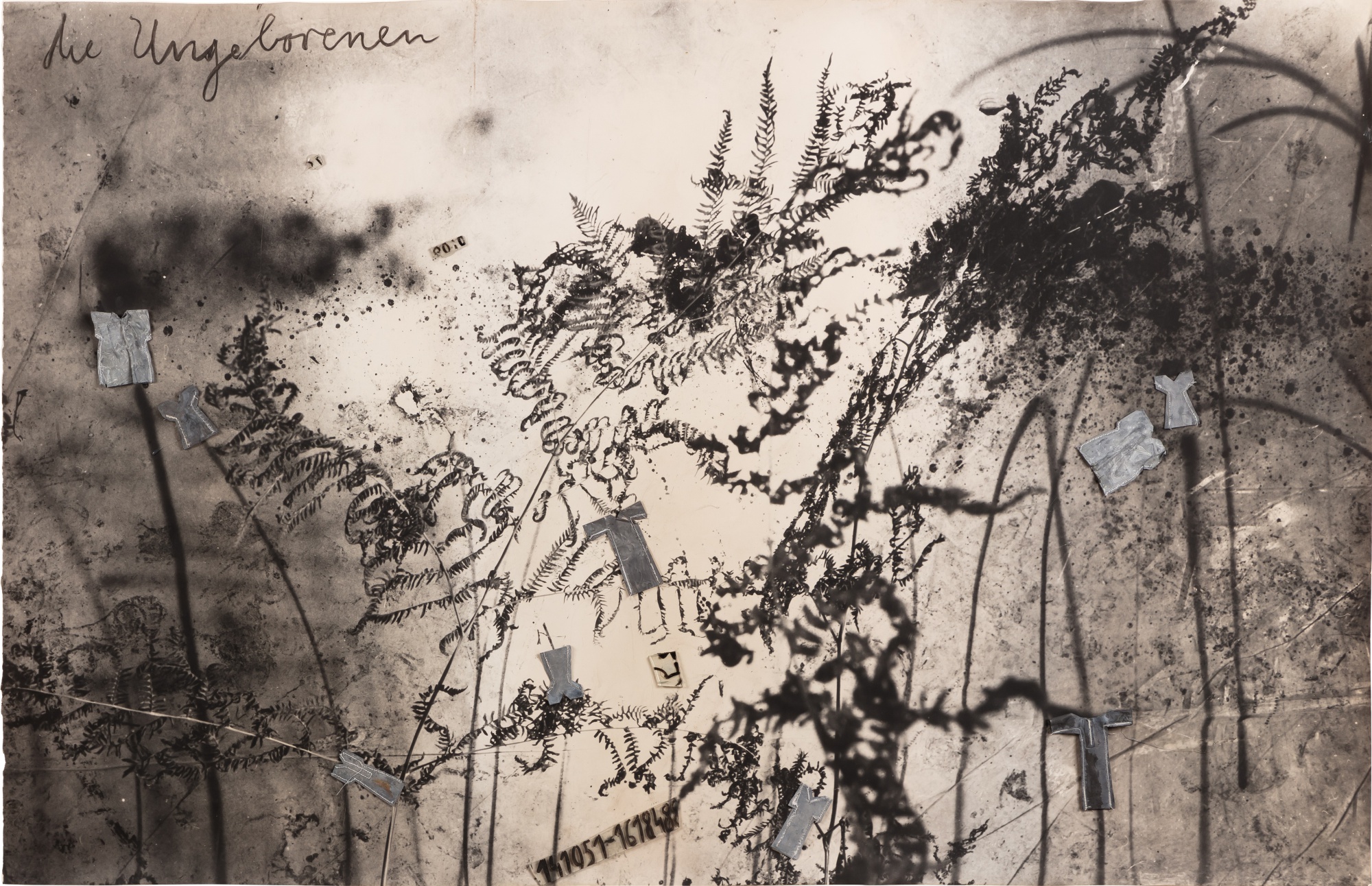
Die Ungeborenen, 2002
International curators began to pay close attention. By the time he participated in documenta 7 in Kassel in 1982, his reputation had crystallized into something both celebrated and debated: here was an artist willing to go exactly where others feared to tread. At the core of Kiefer's practice is a relentless investigation of memory, myth, and the long shadows cast by history. His paintings are less paintings in the conventional sense and more excavations.
“We can learn from history, but we cannot escape it. It is always with us.”
Anselm Kiefer, interview with Der Spiegel
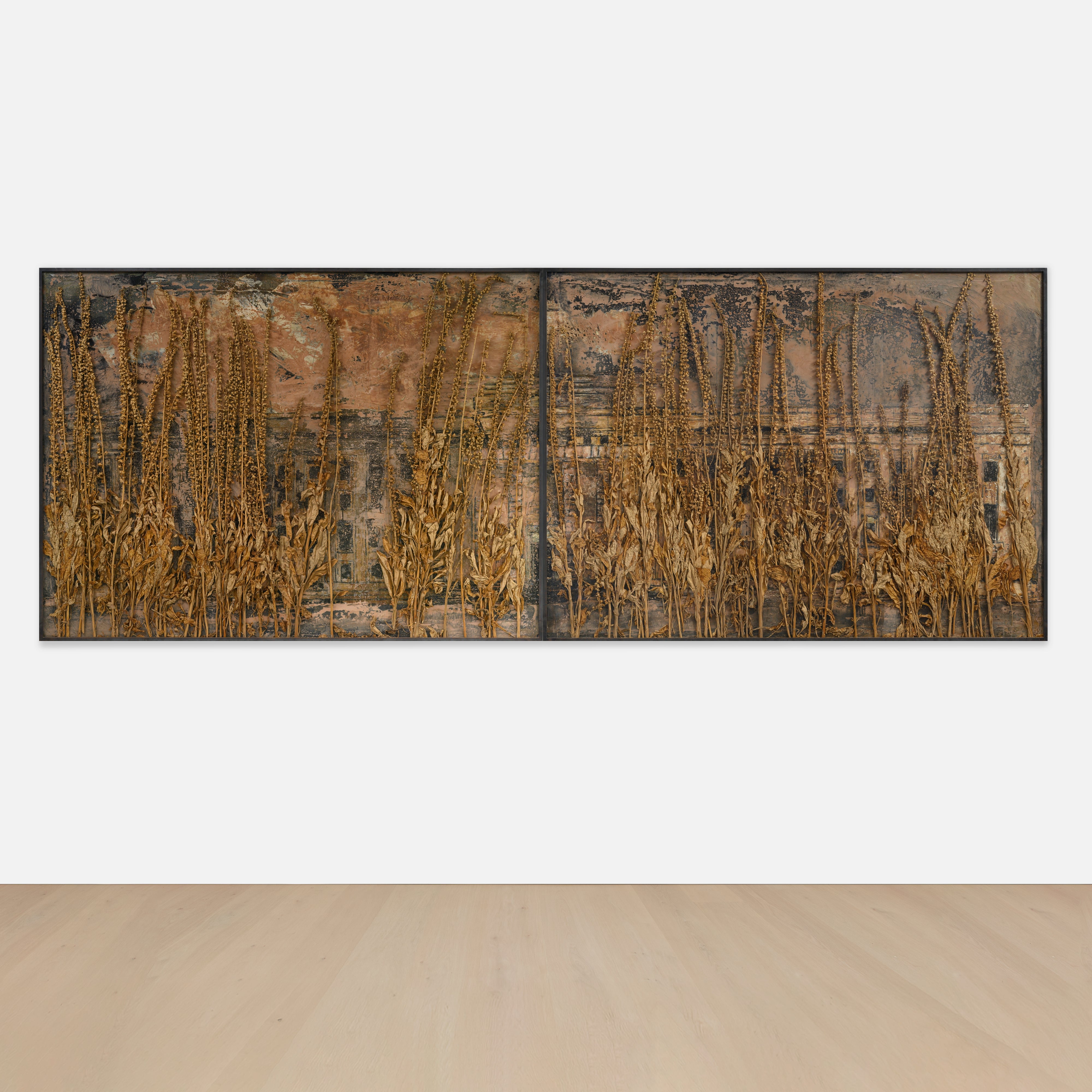
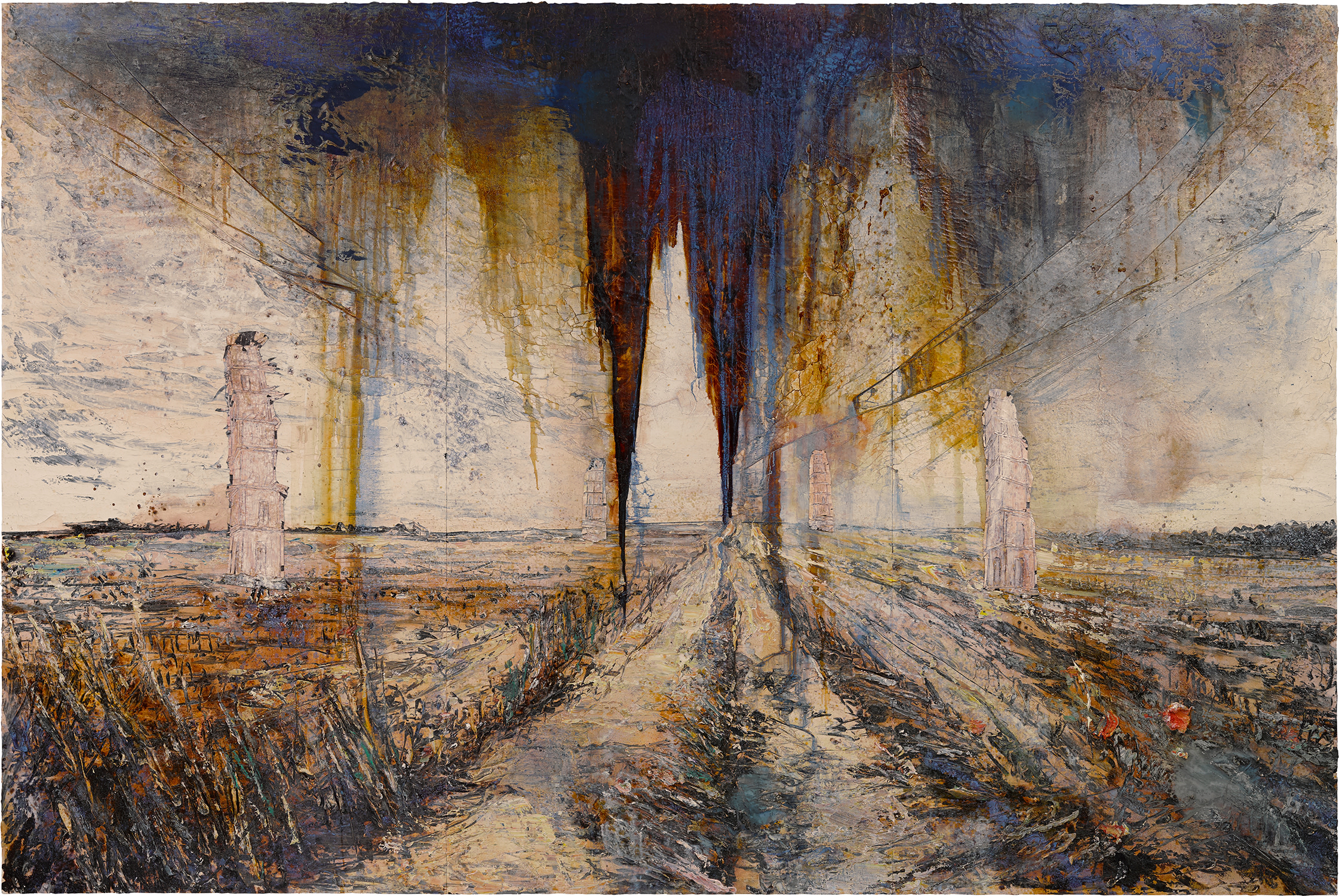
He layers oil paint, acrylic, shellac, lead, straw, sand, ash, and photography onto enormous canvases, building surfaces of extraordinary physical density that seem to carry geological time within them. Works like "Walhalla" from 2016, rendered in oil, acrylic, emulsion, and shellac on a monumental three part canvas, draw on Norse mythology to meditate on civilizational grandeur and its inevitable ruin. "Die Sefiroth" from 1996, worked on burlap in emulsion, acrylic, and charcoal, engages with Jewish Kabbalah, reflecting the profound and sustained interest Kiefer has developed in Jewish mystical thought as both spiritual inquiry and ethical reckoning with the Holocaust. "Yggdrasil" from 1985, in which lead is applied directly over a photographic base, compresses mythology, materiality, and image into a single arresting object.
Anselm Kiefer
Walhalla, 2016
These are works that reward time and return. They open the more you inhabit them. On paper, Kiefer demonstrates an equally compelling range. "La belle de la Seine" from 2013 is a luminous watercolour rendered across two adjoined sheets, deceptively intimate for an artist associated with massive scale.
"Die Brücken" from 2004 combines watercolour, gouache, ink, and leather collage, the physical collision of materials evoking the bridges of German poetry and philosophy as much as literal architecture. "Für Ossip Mandelstamm das Rauschen der Zeit" from 2011, dedicated to the Russian poet who perished under Stalin, incorporates a boat propeller and lead alongside oil and acrylic on canvas, a tribute at once tender and ferocious. These works illuminate the range of Kiefer's empathy. He mourns not only Germany's victims but all those crushed by totalitarian power throughout the twentieth century.
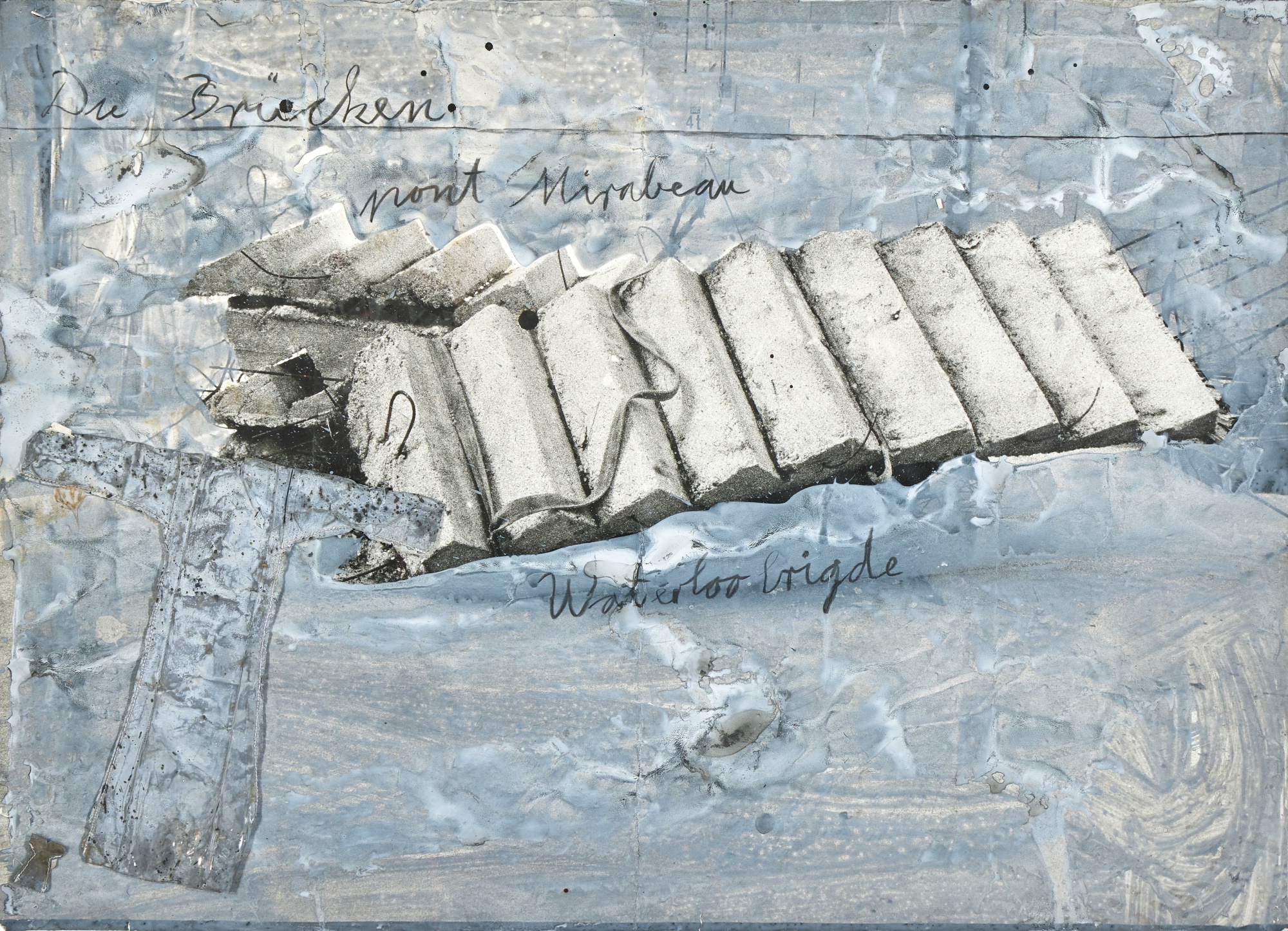
Anselm Kiefer
Die Brücken, 2004
For collectors, Kiefer occupies a position of exceptional distinction within the contemporary market. His work is represented globally by Gagosian Gallery and White Cube, two of the most powerful platforms in the international art world, and major institutions including the Museum of Modern Art in New York, Tate Modern in London, the Musée d'Art Moderne de la Ville de Paris, and the Neue Nationalgalerie in Berlin hold significant examples of his work in their permanent collections. At auction, his large scale paintings regularly achieve results in the millions, with particular strength observed at Christie's and Sotheby's across both New York and London sales. Collectors are drawn not only to the visual authority of his canvases but to their intellectual seriousness.
Owning a Kiefer is a commitment to an ongoing conversation with history, myth, and the deepest questions of human experience. Kiefer invites comparison with a distinguished cohort of artists who similarly used painting as a vehicle for historical and philosophical inquiry. Georg Baselitz and Sigmar Polke, both contemporaries within the West German neo expressionist generation, share his appetite for rupture and provocation. Cy Twombly, with whose gestural surfaces and literary references Kiefer's work shares a certain affinity, offers another productive parallel.
Further back, the legacy of Paul Klee's symbolic density and the grand historical ambition of Caspar David Friedrich inform how we understand Kiefer's place in the longer arc of German image making. He is also deeply in dialogue with literature and philosophy, having engaged seriously with the writings of Paul Celan, Ingeborg Bachmann, and Martin Heidegger, among others. His work does not exist in isolation but rather at the intersection of visual art, poetry, theology, and political thought. What Kiefer's work ultimately offers is something rare in contemporary art: a genuine confrontation with the largest questions.
He has spent more than five decades asking what it means to inherit a catastrophic history, how a culture rebuilds its mythology after destruction, and what role beauty can play in the presence of atrocity. His move to France in the 1990s, settling eventually in Barjac in the Languedoc region where he created an extraordinary private landscape of studios and installations, represents not an escape from these questions but a deepening of them. Now working from Paris, he continues to produce at a pace and ambition that would exhaust artists half his age. To engage with Anselm Kiefer's work is to engage with the full moral and imaginative weight of the age we have inherited.
There is no more essential conversation in art today.
Explore books about Anselm Kiefer