Alicia Penalba

Artist Spotlight · The Collection Editorial
```json { "headline": "Alicia Penalba, Sculptor of Sacred Forms", "body": "In the grand central hall of the Kröller Müller Museum in Otterlo, one of Alicia Penalba's towering bronze forms stands in permanent collection, its upward reaching silhouette catching light with the quiet authority of something both ancient and absolutely modern. It is a fitting place for her work to live. Penalba spent her career making sculptures that feel simultaneously prehistoric and futurist, as though they had always existed just beneath the surface of the earth, waiting to be found. Renewed scholarly and curatorial interest in postwar European abstraction has brought her name back into serious conversation, and collectors who encounter her work for the first time invariably describe the same sensation: a recognition, as though they have met something they already knew.
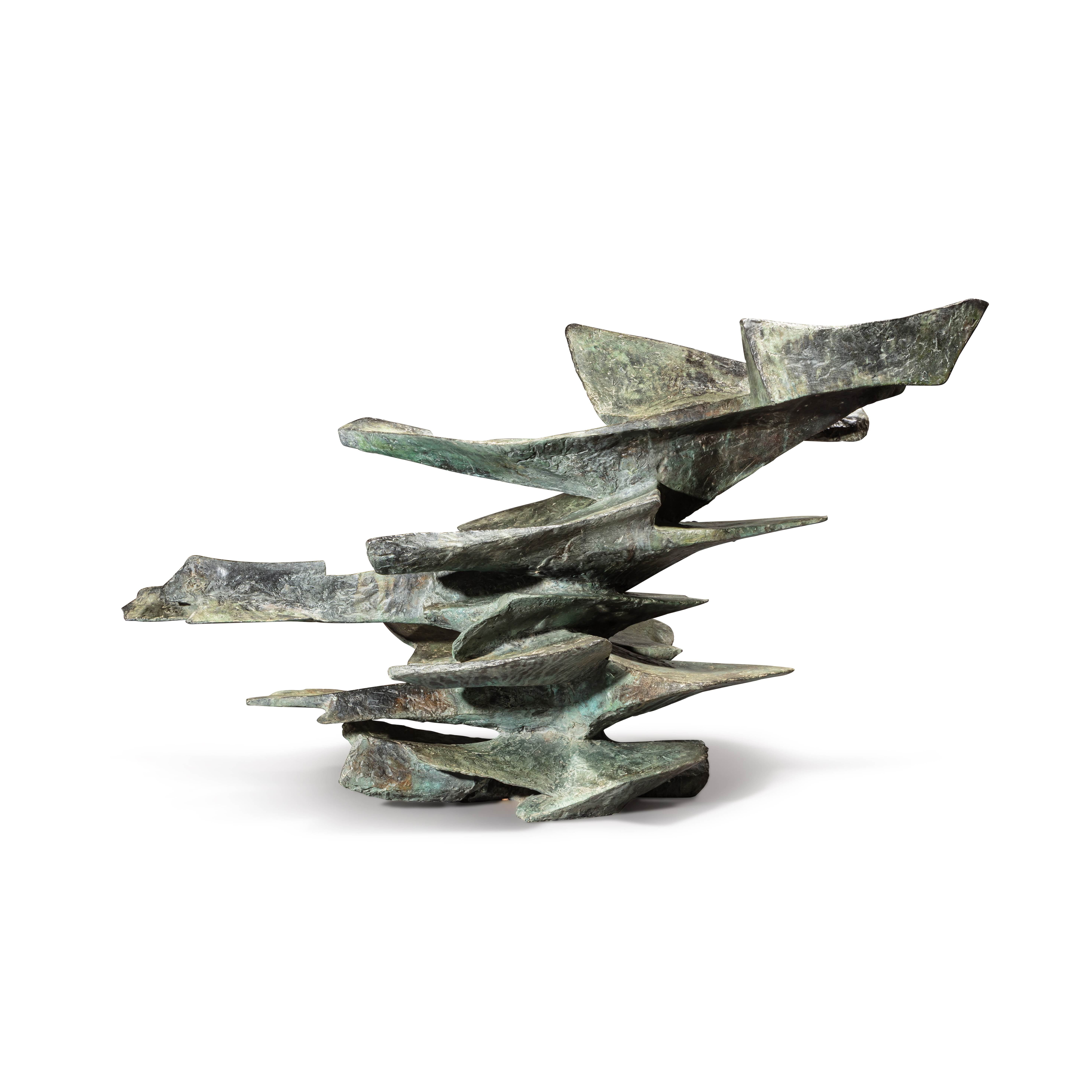
Alicia Penalba
Grande Ailée, 1960
", "Born in San Pedro, in the Buenos Aires province of Argentina in 1913, Penalba grew up in a world far removed from the European avant garde that would eventually claim her as one of its most distinctive voices. She came to art through a circuitous path, arriving in Paris in 1948 at the age of thirty five, a mature woman beginning entirely anew. She enrolled at the École des Beaux Arts and entered the studio of Ossip Zadkine, the Cubist influenced sculptor whose workshop had already shaped a generation of postwar artists. Under Zadkine, Penalba absorbed the formal language of modernist sculpture while finding in it a vocabulary she could bend toward something entirely her own.
Paris in those years was electric with possibility, and she threw herself into it completely, becoming a French citizen while never severing her deep connection to Latin America.", "Her early figurative work gave way, through the early 1950s, to a body of abstraction that drew on sources both universal and deeply personal. She was fascinated by organic growth, by the forms of seeds, wings, bones, and blossoming things, and she found in bronze a material that could hold the tension between weight and flight. Her forms began to cluster and rise, suggesting altars, totems, and ritual objects from cultures she had absorbed through reading and travel.
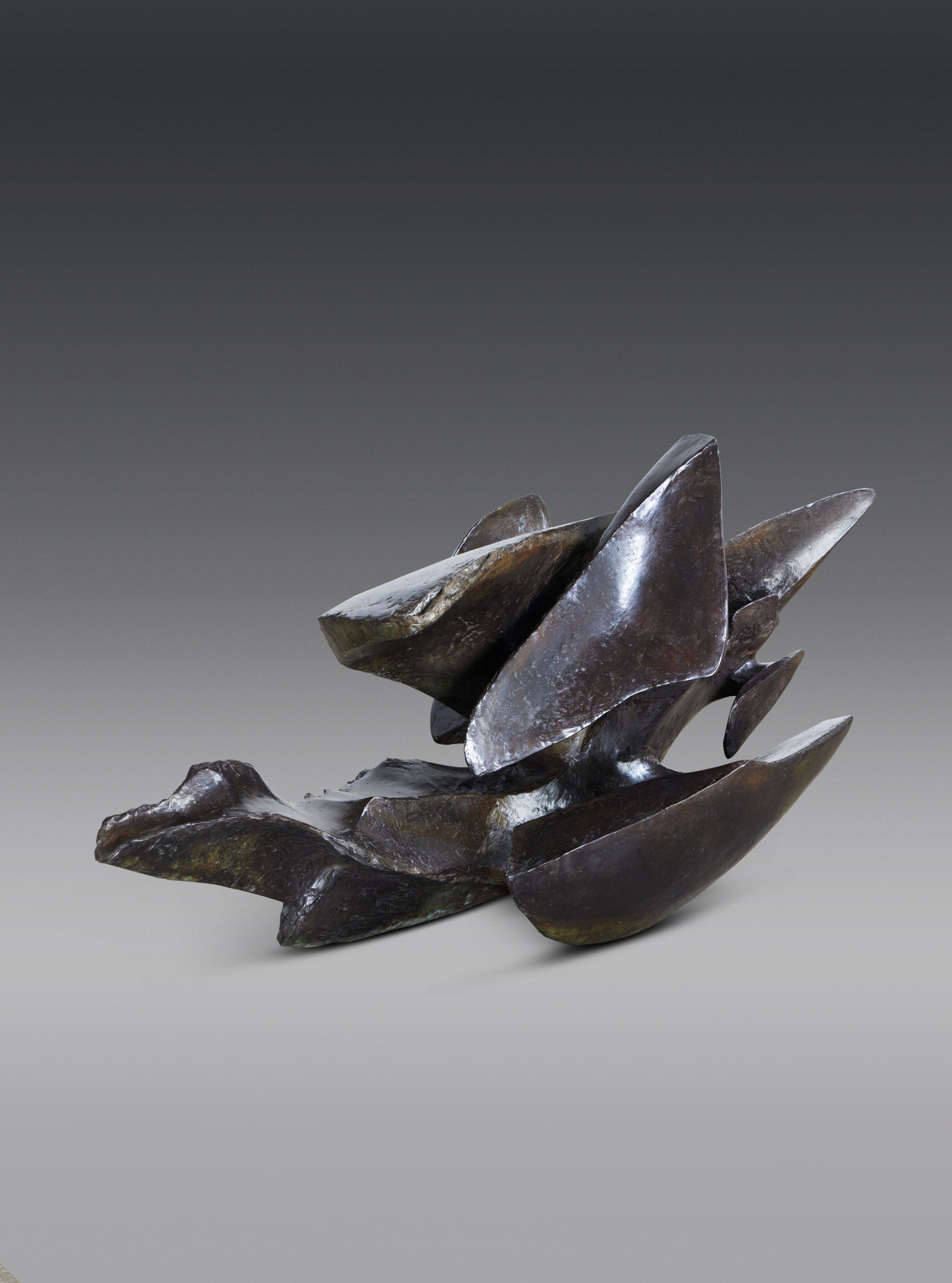
Alicia Penalba
Grande Annonciatrice, 1965
By the late 1950s, she had developed a fully mature visual language that placed her alongside artists such as Eduardo Chillida, Hans Hartung, and Henri Georges Adam as a central figure in European abstract sculpture. The 1958 Venice Biennale brought her significant international recognition, and her work entered institutional collections across Europe.", "Among her most celebrated works, Grande Ailée from 1960 stands as a masterpiece of her middle period. Cast in bronze, the piece rises in a configuration of wing like forms that seem to strain upward without ever losing their rootedness in the earth below.
The title, meaning large winged one, captures the essential paradox that runs through all her best work: a creature or force aspiring toward the aerial while remaining entirely, magnificently material. Grande Annonciatrice from 1965 carries a more ceremonial presence, its upright form suggesting a herald or messenger, something poised at the threshold between the seen and unseen worlds. Hommage à César Vallejo, created in 1957, reveals the depth of her engagement with Latin American literary and cultural life, a tribute to the great Peruvian poet cast in the same bronze that she used for her most formally ambitious pieces. Oiseau lunaire, the lunar bird of 1969 with its rich brown patina, shows how far her language had traveled by that point, into territory that feels at once mythological and purely abstract.
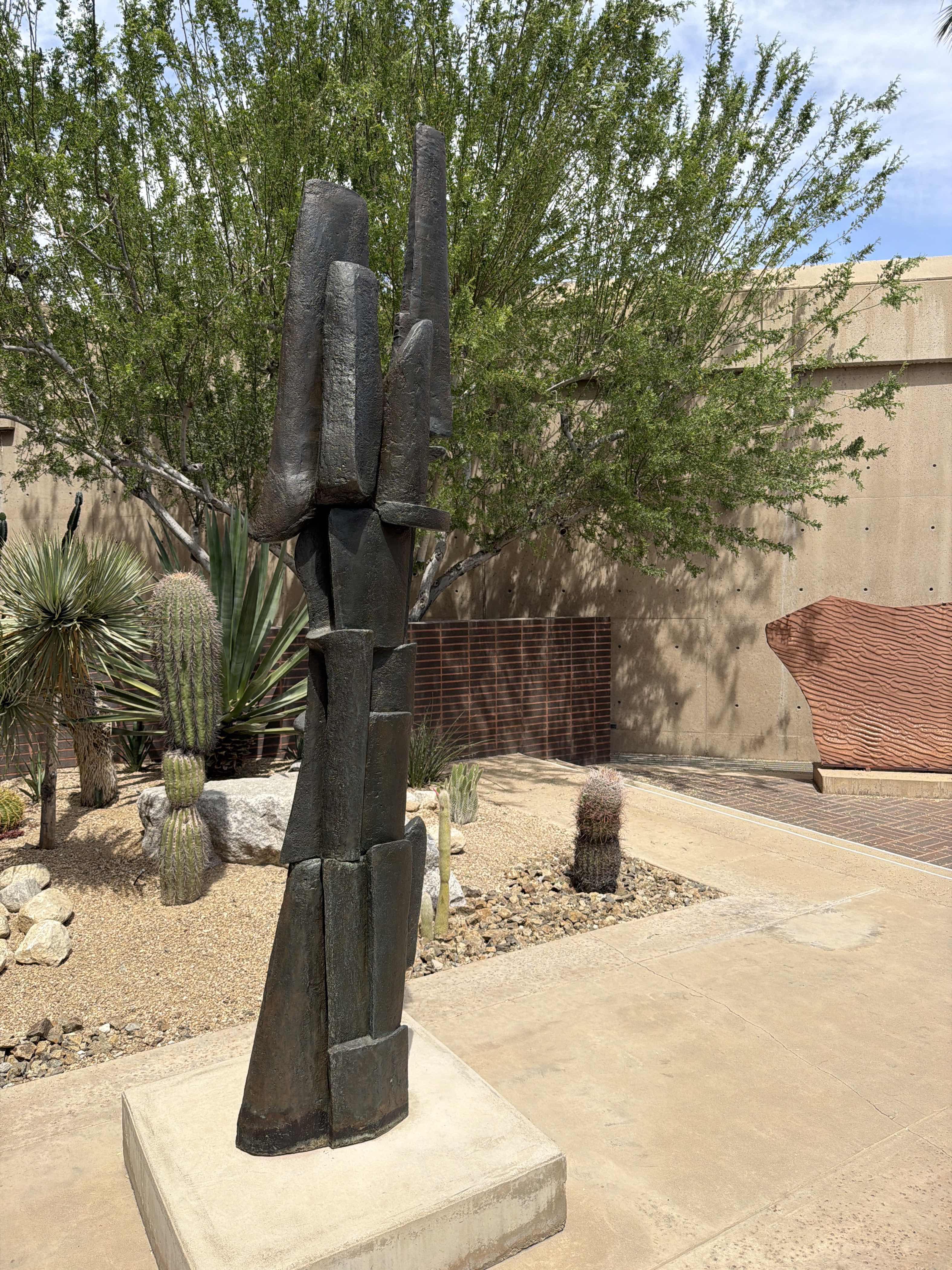
Alicia Penalba
Hommage à César Vallejo, 1957
", "For collectors, Penalba represents one of the most compelling propositions in postwar European sculpture. Her work sits at an intersection that is historically significant and still undervalued relative to her male contemporaries of equivalent stature. During her lifetime she exhibited widely, including at the Galerie du Dragon in Paris, and her public commissions brought her work into corporate and civic spaces across Europe and the United States. Works by female sculptors of her generation, including Barbara Hepworth and Louise Bourgeois, have seen extraordinary market appreciation over the past two decades, and serious collectors have increasingly recognized that Penalba belongs in that conversation.
Her bronzes, with their impeccable casting and powerful formal presence, reward close attention and live beautifully in both interior and outdoor settings. The relatively limited number of works that come to market makes each appearance a genuine opportunity.", "Placing Penalba within art history requires thinking across borders in a way that suits her biography perfectly. She shared with her teacher Zadkine a love of forms that seem to have been hollowed or opened by force, and she shared with the COBRA group an interest in primal, totemic energy, though her work is more formally refined than theirs.
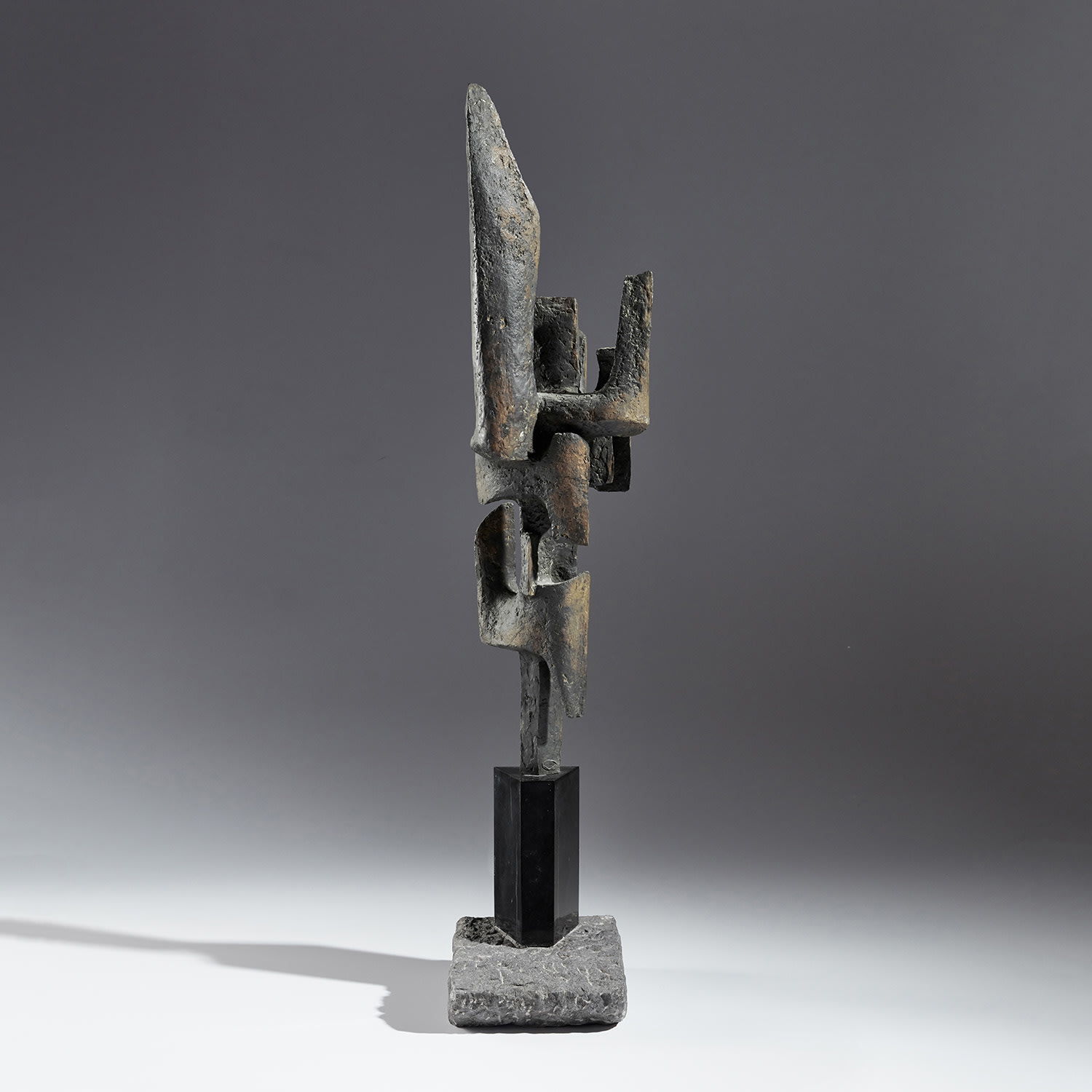
Alicia Penalba
Oiseau lunaire, 1969
Her closest affinities may be with the Spanish sculptor Chillida, whose engagement with mass and void parallels hers, and with the Swiss sculptor Bernhard Luginbühl. Her Latin American roots also place her in dialogue with artists such as Joaquín Torres García and Matta, whose own negotiations between European modernism and South American cultural identity produced some of the twentieth century's most original art. She was a bridge figure in the best sense, someone who carried multiple worlds within her practice and made something new from all of them.", "Penalba died in Paris in 1982, leaving behind a body of work that has taken decades to receive its full due.
The renewed energy around postwar abstraction, combined with a long overdue reassessment of the contributions of women artists to twentieth century sculpture, has positioned her for a significant reappraisal. Her work is held in major European and American museum collections, and her estate continues to steward her legacy with care. To encounter a Penalba bronze is to feel the presence of an artist who understood that sculpture at its best is not decoration but invocation, not object but event. She made things that seem to breathe.
In an art world that can feel oversaturated and exhausting, that quality is rare and quietly thrilling, and it is why her work continues to find new admirers who sense immediately that they are in the presence of something that genuinely matters.