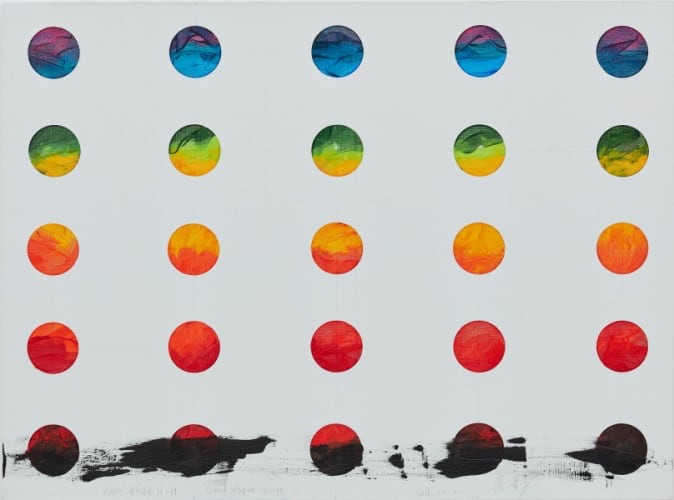
Erased Utopia #16-11
2016
This vibrant painting by Korean artist Kim Yong-Ik features a grid of 25 colorful circles arranged in five rows, transitioning from cool purples and blues at the top through greens and warm oranges to deep reds and finally to dark partially obscured forms at the bottom, where gestural black brushstrokes sweep across the lower register. The work belongs to the artist's ongoing Erased Utopia series, exploring themes of color, memory, and the gradual disappearance of form. Presented at Art Basel Hong Kong 2017 by Kukje Gallery and Tina Kim Gallery, this large scale canvas demonstrates Kim's distinctive approach to chromatic gradation and repetition. It is a compelling example of contemporary Korean painting with strong presence in the international art market.
- Medium
- Mixed media on canvas
- Dimensions
Notes
Exhibited at Art Basel Hong Kong 2017. Kunstwerk Grosse dimensions: 97.0 x 130.5 cm / 38.2 x 51.4 inches. Ownership status: spotted.
More by Kim Yong-Ik
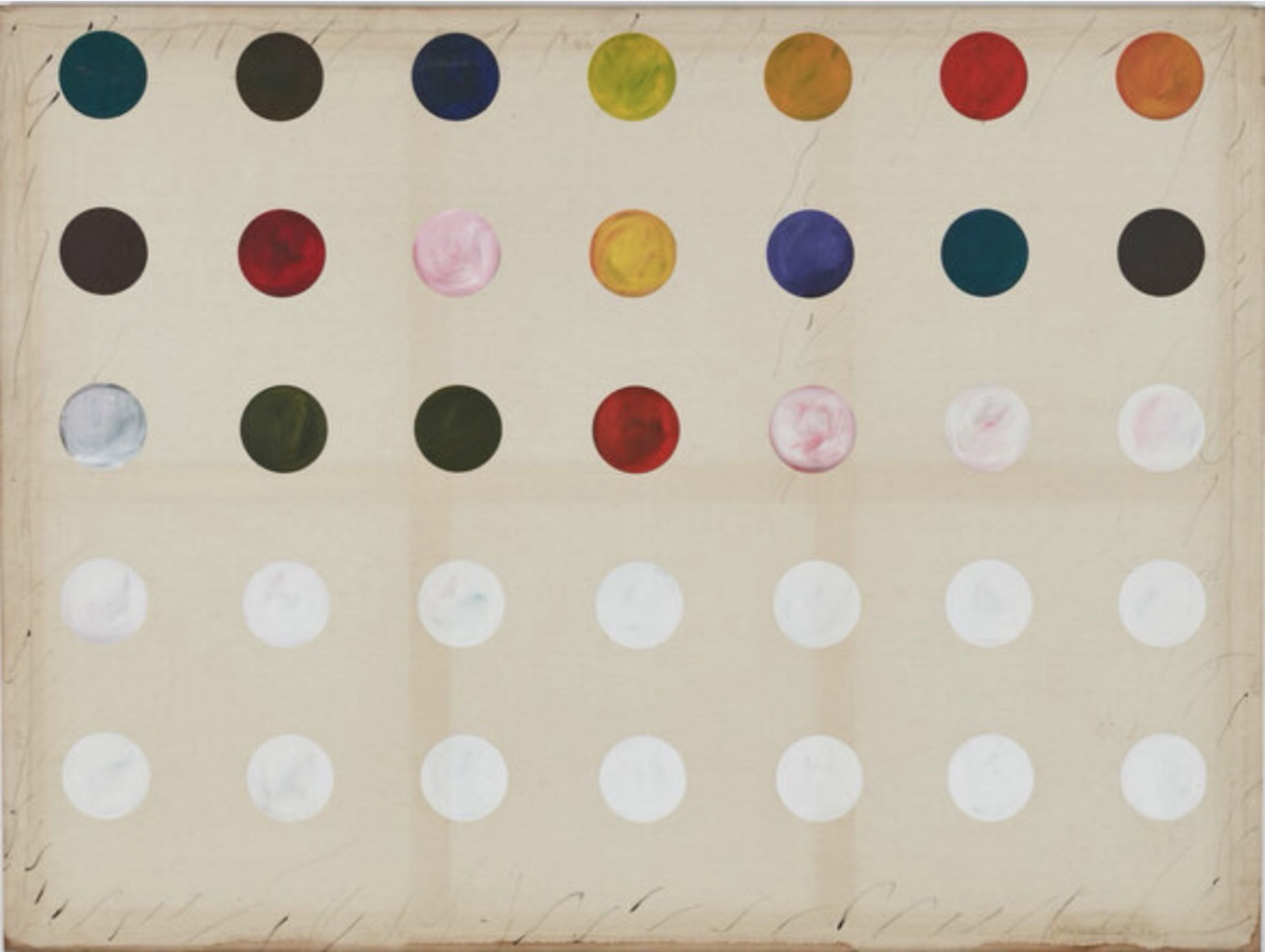
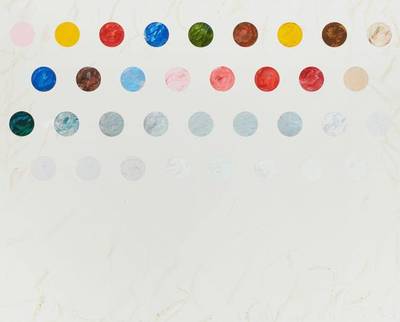
Spotted works by Kim Yong-Ik
Artists in conversation
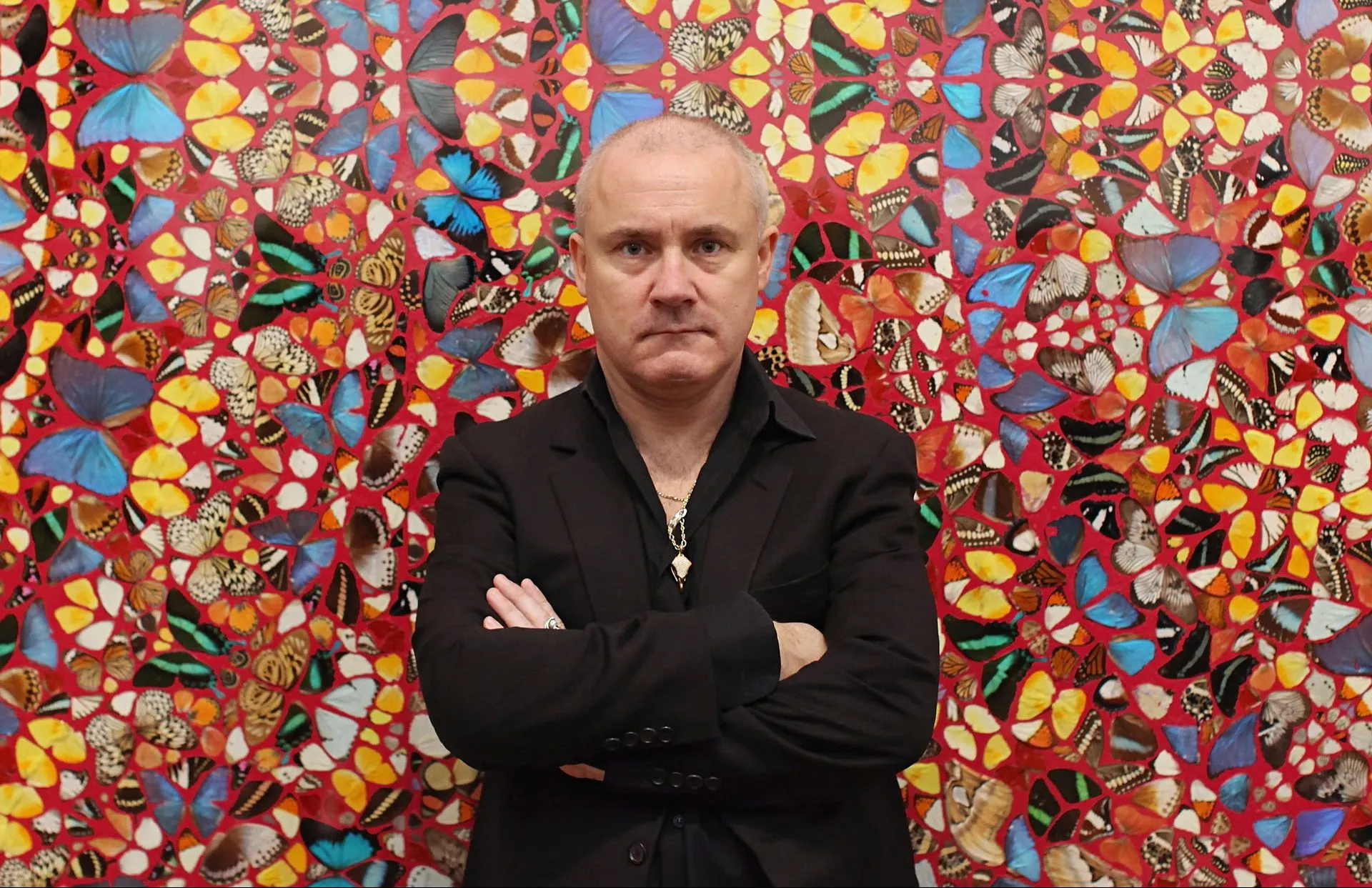
Damien Hirst
British · b. 1965
Hirst's iconic Spot Paintings feature grids of uniformly sized colored circles arranged in systematic rows, directly mirroring Kim's grid of 25 circles. Both artists use the circle as a primary unit of visual language to explore color relationships and seriality within a contemporary abstract framework.
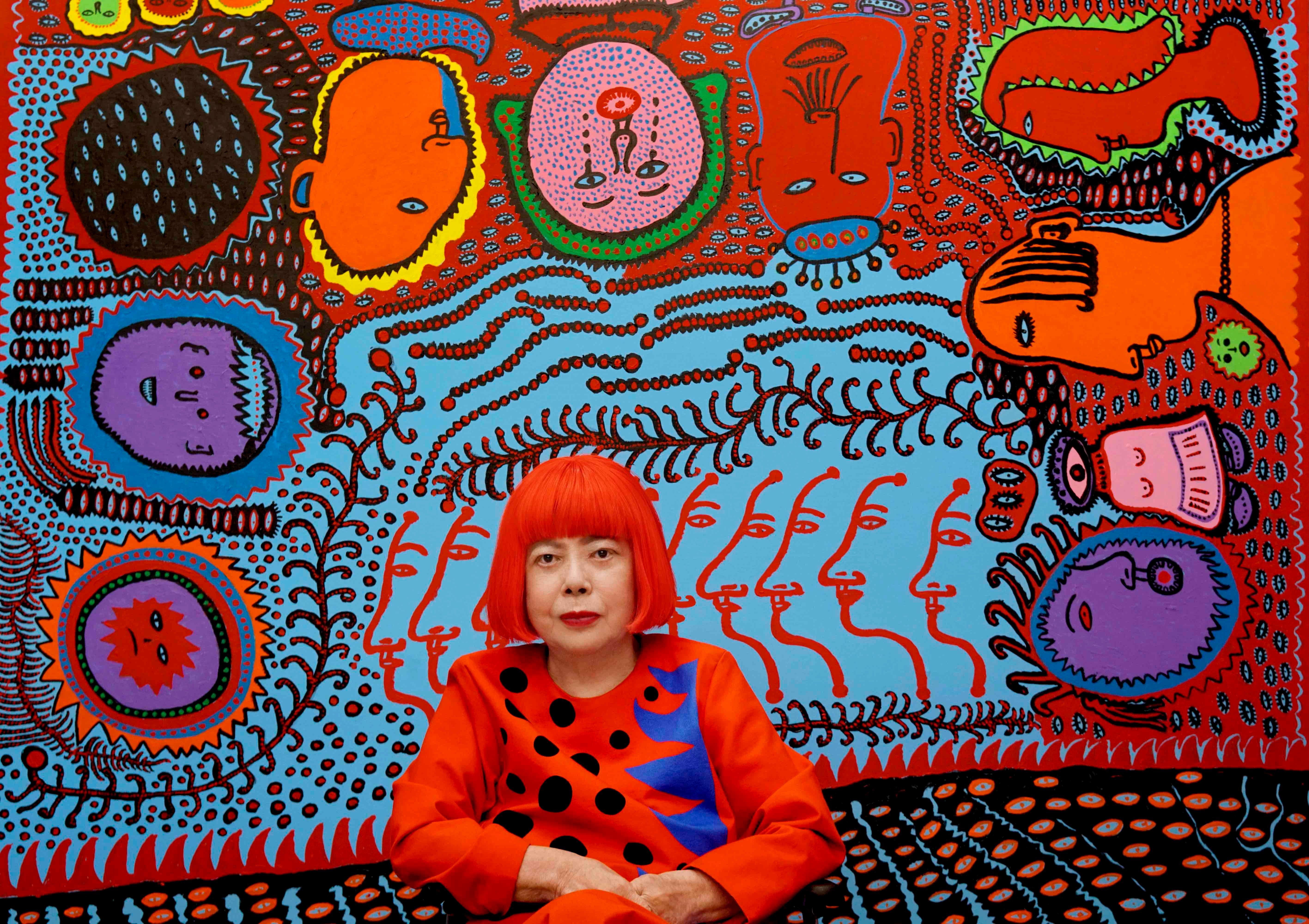
Yayoi Kusama
Japanese · b. 1929
Kusama's obsessive use of polka dots and circular forms arranged across large format canvases with vibrant color progressions closely parallels Kim's grid of colorful circles. Both artists use repetitive circular motifs as a vehicle for exploring psychological and perceptual themes including memory and dissolution of form.

Gerhard Richter
German · b. 1932
Richter's Color Chart paintings systematically arrange grids of colored squares or circles with deliberate chromatic progressions, sharing Kim's structured grid format and exploration of color gradients from cool to warm tones. His gestural squeegee works also echo the sweeping black brushstrokes that obscure forms in the lower register of Kim's piece.
Start the Discussion
Request access to join the discussion