Wolfgang Tillmans
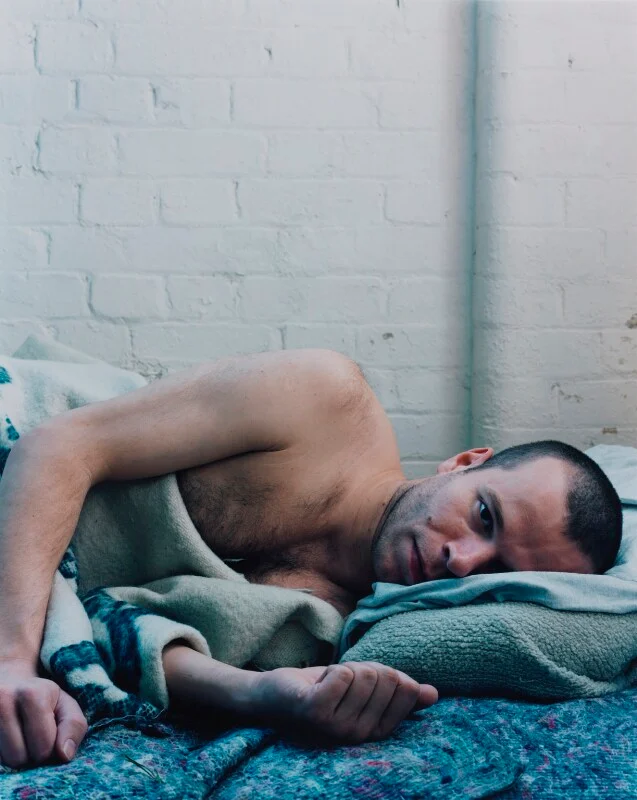
Wolfgang Tillmans: Life Seen With Radical Tenderness
Artist Spotlight · The Collection Editorial
“I never felt that photography was a lesser medium. I always thought it was the medium of our time.”
Wolfgang Tillmans, interview with Tate Modern, 2017
In 2025, Wolfgang Tillmans continues to command the full attention of the contemporary art world, with new works entering collections and his practice remaining as vital and formally inventive as ever. His latest inkjet prints, including works from his ongoing series produced with his characteristic combination of rigor and spontaneity, demonstrate an artist who refuses to settle into any single mode of address. At a moment when photography as a medium is being interrogated from every direction, Tillmans remains the figure who most convincingly expanded what the photograph can do, where it can live, and what it can mean. Born in Remscheid, Germany in 1968, Tillmans came of age during a period of profound social and cultural transformation in Europe.
Wolfgang Tillmans
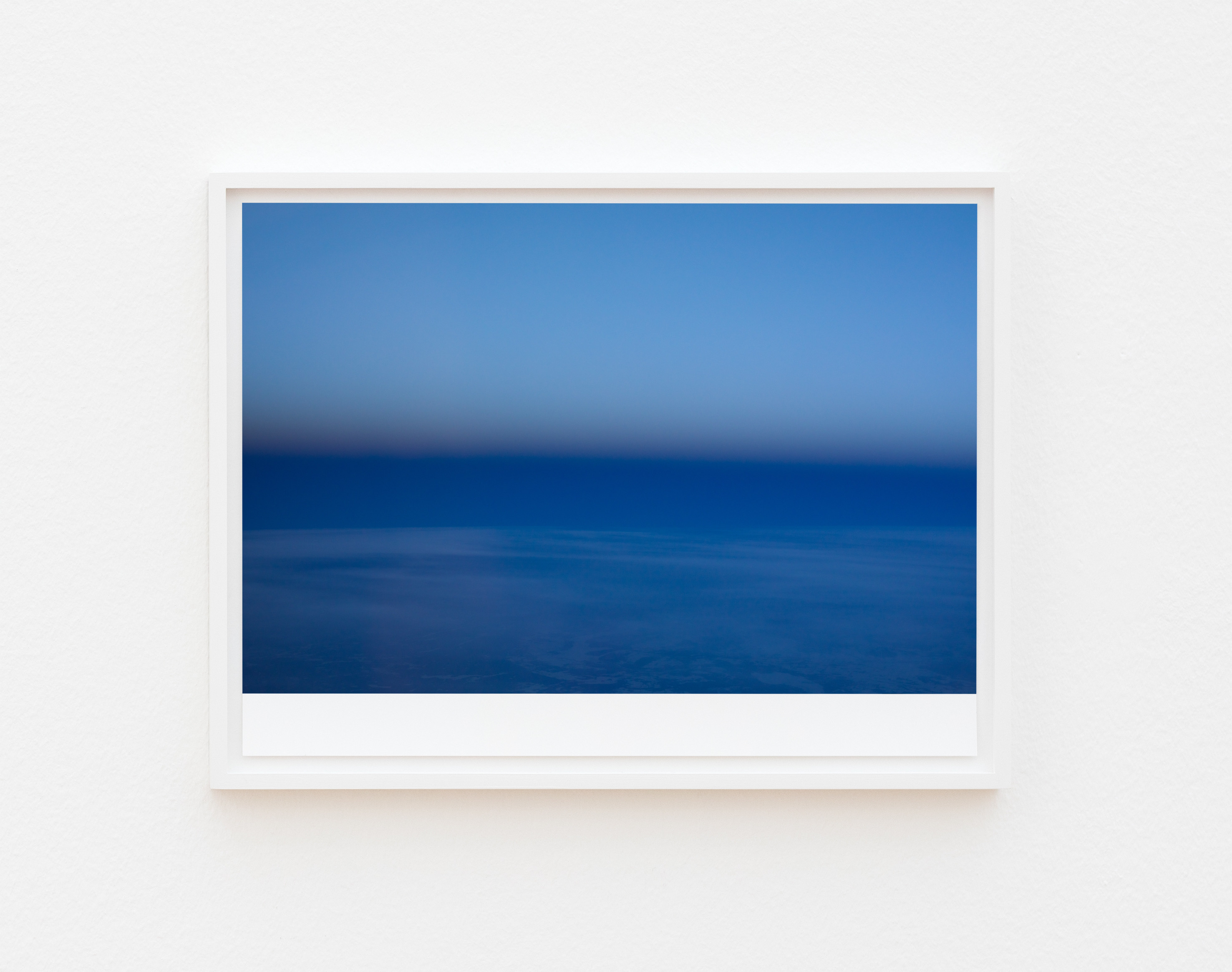
Tag/Nacht (Horizontal), 2023
He moved to Hamburg as a young man and then to Bournemouth, England, in the late 1980s to study at Bournemouth and Poole College of Art and Design, graduating in 1992. It was in England, and specifically in the orbit of London's club and queer communities, that his early visual language took shape. He began contributing photographs to i D magazine and other publications, embedding himself in a youth culture that was electric with possibility and urgency. That proximity to subcultural life was never mere documentation; it was a form of deep participation, and it gave his early work an intimacy that felt entirely new.
Throughout the 1990s, Tillmans developed a practice that defied easy categorization. He worked simultaneously in portraiture, still life, landscape, and pure abstraction, refusing the hierarchy that would place any one of these above the others. His exhibition installations became a signature in themselves: photographs of wildly different scales and subjects pinned directly to walls, framed and unframed, placed on the floor or taped at unexpected heights. This approach treated the exhibition space as a kind of score to be performed, with each arrangement unique and unrepeatable.
Wolfgang Tillmans
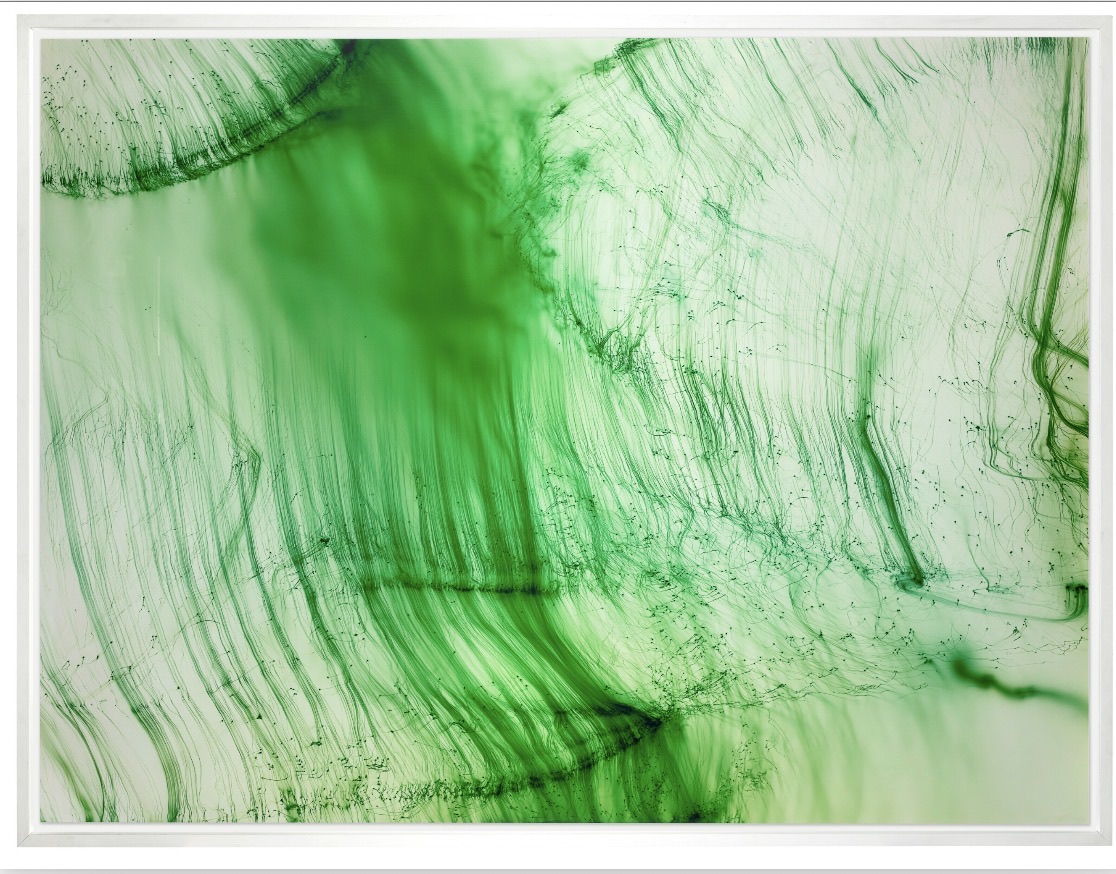
Freischwimmer 39, 2004
By the time he won the Turner Prize in 2000, the first photographer to receive the award, he had already fundamentally altered the terms on which photography was discussed in relation to contemporary art. His body of work spans several distinct but interconnected series, each one a sustained meditation on perception and materiality. The Freischwimmer series, begun in the early 2000s, produced some of the most compelling abstract images in recent photographic history. Works such as Freischwimmer 39 from 2004, a C print mounted on Dibond in the artist's frame, were made without a camera, by exposing photographic paper directly to light in the darkroom.
“Every picture has a reason to exist. It has to justify itself in a way that I find convincing.”
Wolfgang Tillmans, Frieze magazine
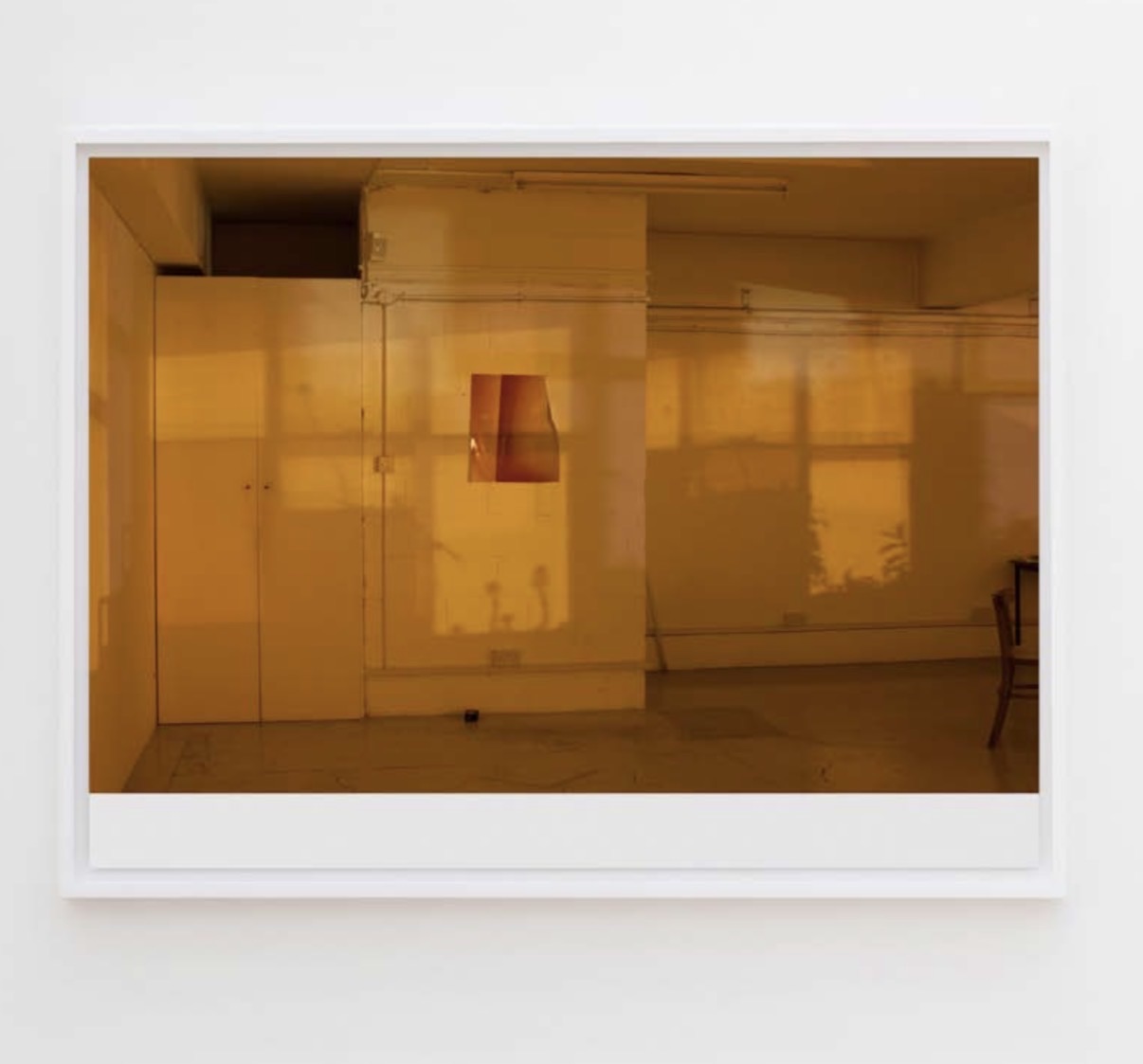
The results are luminous, atmospheric fields of color that seem to breathe and shift, images that are entirely of photography and yet unlike any photograph made in a conventional sense. The series title, which translates roughly as freestyle swimmer or free floater, captures the sense of liberation and drift that animates these works. His later production has continued to push at the limits of what the inkjet print can achieve. Works such as Filled with Light, c from 2011 and the Tag/Nacht (Horizontal) prints from 2023 show an artist acutely alive to the possibilities of light as both subject and material.
Wolfgang Tillmans
Filled with Light, c, 2011
The Tag/Nacht works, with their cool gradations and sense of temporal suspension, speak to Tillmans's ongoing fascination with the threshold moments of experience: dawn, dusk, the passage between states. His 2024 work The Glove That Fits and the 2025 series Time Flows All Over demonstrate that his formal invention shows no signs of slowing. These recent inkjet prints on paper, often mounted on Dibond aluminium and presented in the artist's own designed frames, arrive as complete objects, fully considered from image to housing. For collectors, Tillmans represents one of the most coherent and intellectually serious bodies of work in the blue chip photography market.
His works have been acquired by major institutional collections worldwide, including Tate Modern, the Museum of Modern Art in New York, and the Art Institute of Chicago. His major retrospectives at Tate Modern in 2017 and MoMA consolidated his standing as one of the defining artists of his generation, and those exhibitions introduced his installation methodology to new audiences on both sides of the Atlantic. On the secondary market, his prints have appreciated steadily, with strong results at Christie's, Sotheby's, and Phillips. Collectors drawn to Tillmans often speak of the way his works function across different scales and contexts: a small chromogenic print such as Blushes 105 from 2000 carries as much presence and emotional weight as his largest abstract works.
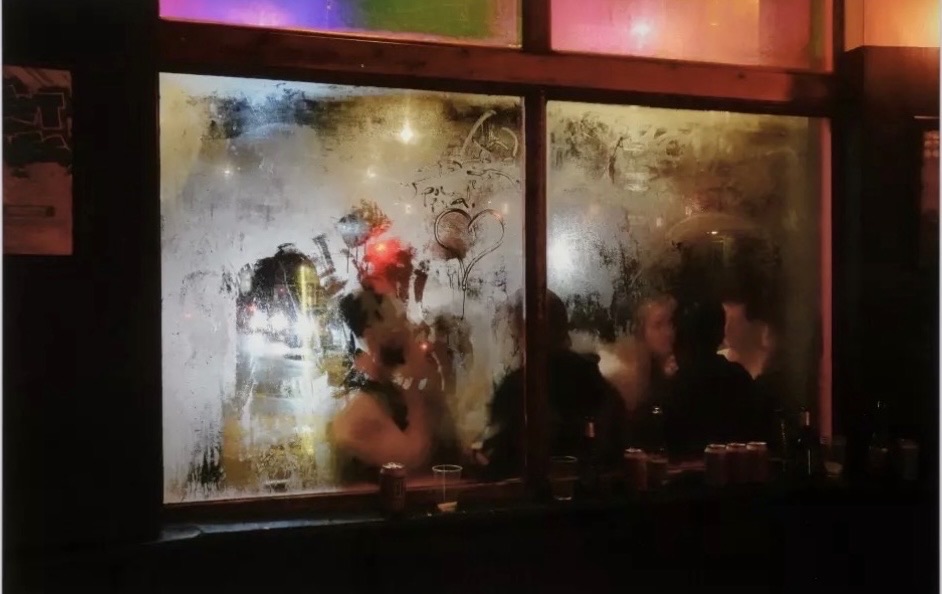
Wolfgang Tillmans
The Glove That Fits, 2024
To understand Tillmans fully, it helps to place him within a broader constellation of artists who have interrogated photography's relationship to time, identity, and the body. His sensibility has points of contact with the lyrical documentary of Nan Goldin, the installation thinking of Felix Gonzalez Torres, and the formal investigation of artists such as Walid Raad and Thomas Demand. Yet his voice is unmistakably his own: warmer, more polymorphous, and more insistently connected to the pleasures and textures of daily life. He has also been a committed political voice, producing works and public campaigns around Brexit, LGBTQ+ rights, and democratic participation, always finding ways to bring that urgency into dialogue with formal beauty rather than sacrificing one for the other.
What ultimately distinguishes Tillmans is his refusal to separate the ethical from the aesthetic. Every decision in his practice, from the scale of a print to the height at which it is hung, is freighted with care for the viewer and for the world the work addresses. His is a practice built on the conviction that looking carefully at the world is itself a political act, that tenderness and rigor are not opposites but allies. For collectors and institutions alike, acquiring a Tillmans is to bring into one's space not merely a beautiful object but an invitation to see differently.
In a career now spanning more than three decades, he has never stopped extending that invitation with generosity, intelligence, and remarkable grace.
Explore books about Wolfgang Tillmans
Wolfgang Tillmans
Wolfgang Tillmans, Peter Halley
Wolfgang Tillmans: IF ANYTHING HAPPENS TO ME I LOVE YOU
Wolfgang Tillmans
Wolfgang Tillmans: Concorde
Wolfgang Tillmans
Wolfgang Tillmans: truth study center
Wolfgang Tillmans, Lynne Cooke
Wolfgang Tillmans: Abstract Pictures
Wolfgang Tillmans
Wolfgang Tillmans: Neue Welt
Wolfgang Tillmans
Wolfgang Tillmans: The State We're In
Wolfgang Tillmans, Okwui Enwezor