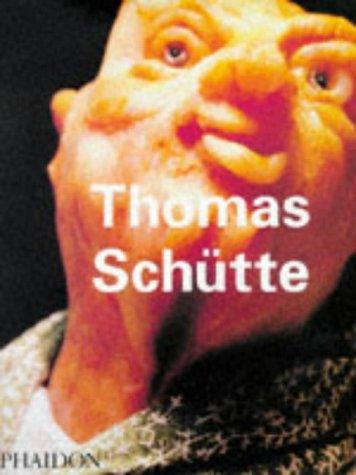
Thomas Schütte

Thomas Schütte: A Sculptor Who Shapes Humanity
Artist Spotlight · The Collection Editorial
“I am not interested in making monuments. I am interested in making things that are alive.”
Thomas Schütte
In 2023, the Kunstmuseum Basel mounted a landmark survey of Thomas Schütte's work, drawing visitors from across Europe and cementing his reputation as one of the most searching and formally daring sculptors working today. That same year, his bronze figures continued to command serious attention at international auction, with major institutions and private collectors competing for works that embody his singular ability to hold comedy and tragedy in the same breath. Schütte occupies a rare position in contemporary art: beloved by curators, admired by fellow artists, and increasingly recognized by collectors as a defining voice of the postwar German tradition that extends from Beuys through to the present moment. Thomas Schütte was born in Oldenburg, Germany, in 1954, and came of age during a period of intense cultural renegotiation in the Federal Republic.
Thomas Schütte
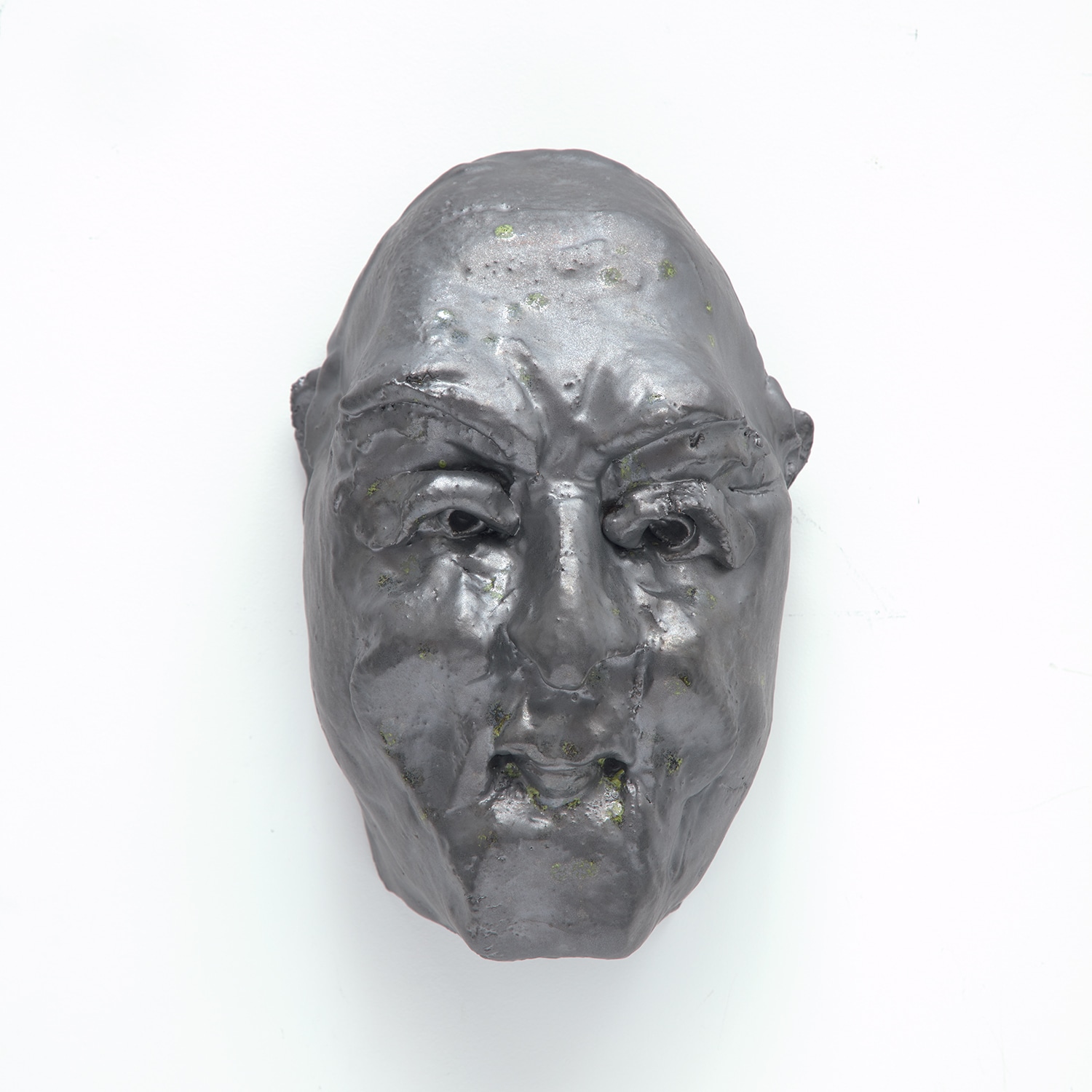
Basler Maske, 2014
He studied at the Kunstakademie Düsseldorf from the mid 1970s under Gerhard Richter, an experience that proved formative not because Schütte imitated his teacher but because it gave him the conceptual rigor to resist imitation altogether. The Düsseldorf academy at that moment was a crucible of ideas, and Schütte absorbed its commitment to questioning the nature and purpose of art without surrendering the pleasure and discipline of making things with his hands. His early work in the 1980s engaged with architecture and installation in ways that felt playful but carried genuine intellectual weight. He produced small scale architectural models and site specific interventions that asked what it meant to construct a public space, who it was for, and what values it enshrined.
A 1986 work such as Ohne Titel, which combines acrylic on paper laid on canvas with seven ceramic vases, reveals the breadth of his thinking even at this stage: the pairing of painting and ceramic object disrupts easy categorization, insisting that the domestic and the monumental can coexist within a single proposition. This refusal to settle into a single medium or mode has remained a constant throughout his career. By the 1990s, Schütte had moved decisively toward the figure, producing a body of sculpture that drew on sources ranging from classical antiquity to fairground puppetry to the grotesque traditions of Northern European art. United Enemies, a 1994 series realized in various materials including bronze, presents pairs of bound human figures, their features distorted into masks of ambivalence and unease.
Thomas Schütte
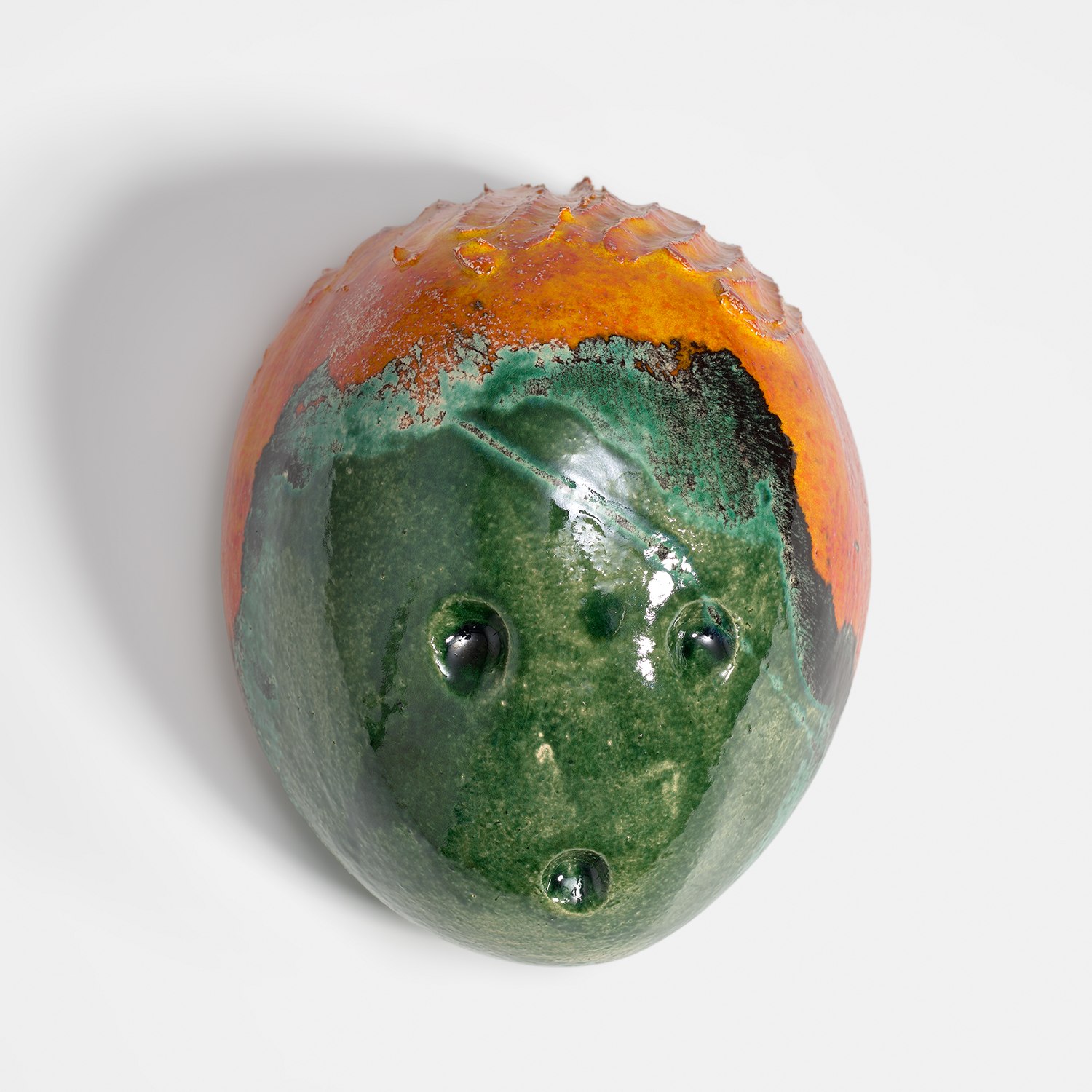
Reborn as a Stone, 2015
The work is simultaneously funny and disturbing, which is precisely its point: Schütte has always understood that the deepest truths about human social life resist simple emotional labeling. His Kleiner Geist of 1995, cast in aluminium, shows his ability to produce a sense of presence and psychological density in a relatively compact form, the little ghost figure hovering between the endearing and the uncanny. His ceramic practice deserves particular attention and has attracted some of the most discerning collectors of contemporary sculpture. Works such as Basler Maske from 2014 and Reborn as a Stone from 2015 demonstrate how Schütte approaches the ancient medium of glazed ceramic with the full weight of his conceptual and technical development behind him.
The masks especially carry a theatrical force, evoking ritual and performance while remaining resolutely objects of the present. The surfaces of his ceramics, with their pooled and layered glazes, suggest a deep familiarity with the history of the medium while refusing the preciousness that sometimes afflicts ceramic art. These are objects that seem to have been lived in, worried over, and finally released into the world. Schütte's drawings and works on paper represent another dimension of his practice that rewards close attention.
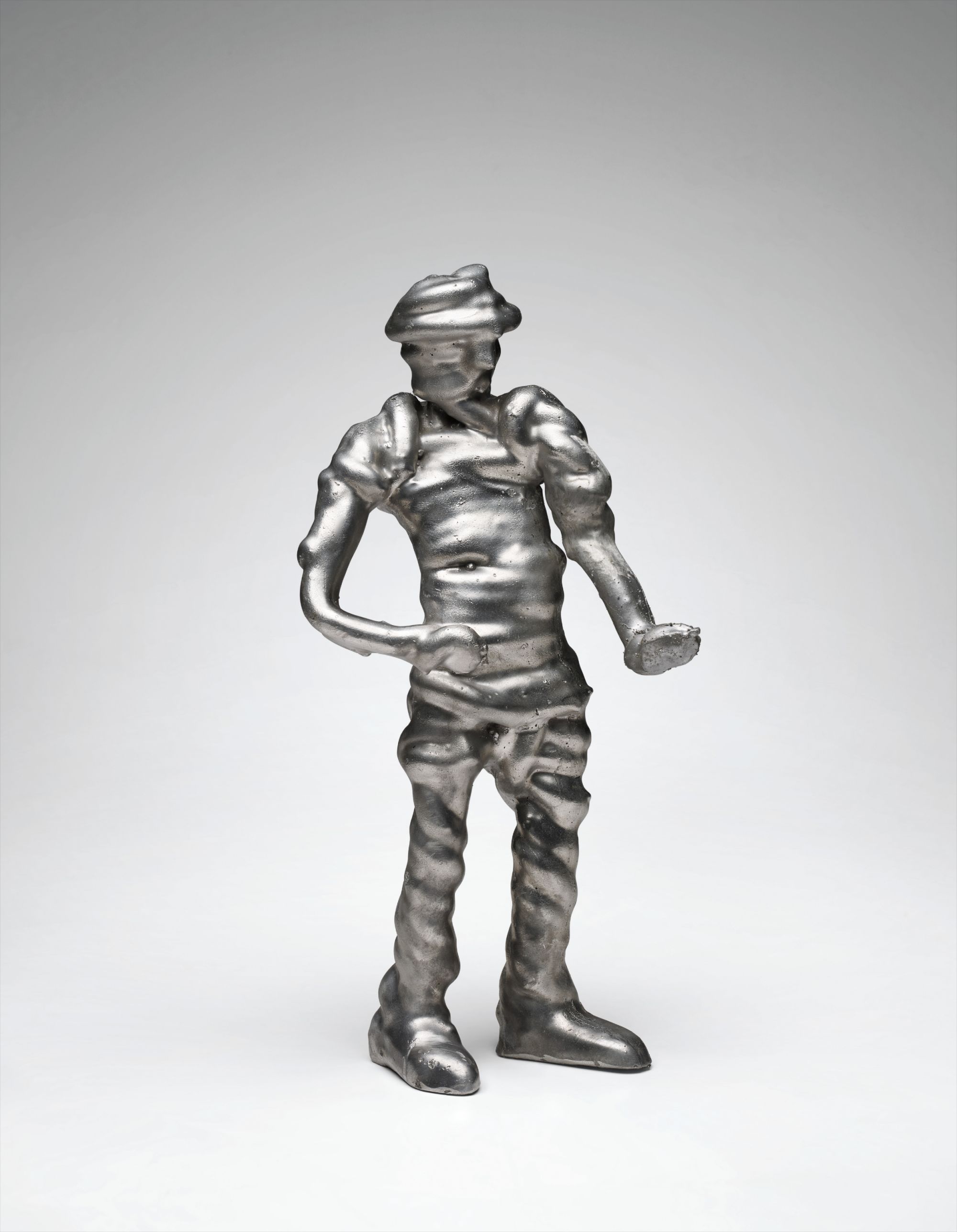
Thomas Schütte
Kleiner Geist, 1995
Nach Empfindung, a 1995 watercolor and ink work on Arches handmade paper, shows the sensitivity and speed of his mark making, a hand that is trained but never mechanical. His works on paper often function as a kind of thinking aloud, capturing imaginative states that the larger sculptures then crystallize and make permanent. For collectors, these works offer an intimate view of a great artist's process, and they remain comparatively accessible entry points into a practice of considerable historical significance. Within the broader landscape of postwar and contemporary sculpture, Schütte belongs to a distinguished lineage that includes Georg Baselitz, Sigmar Polke, and his own teacher Gerhard Richter, artists for whom the pressures of German history created both a burden and a set of extraordinary creative resources.
He is also productively compared to artists such as Kiki Smith and Tony Cragg in his willingness to treat the human body as a site of both vulnerability and resilience. His work has been exhibited at the most significant venues in the world, including the Museum of Modern Art in New York, the Tate galleries in London, and the Venice Biennale, where he received the Golden Lion for best pavilion in 2005, a recognition that placed him firmly at the center of international contemporary art. For collectors approaching Schütte's work, a few guiding principles are worth holding in mind. His practice is genuinely multidisciplinary, and understanding the full arc of his work across sculpture, ceramics, drawing, and architectural models deepens appreciation for any individual piece.
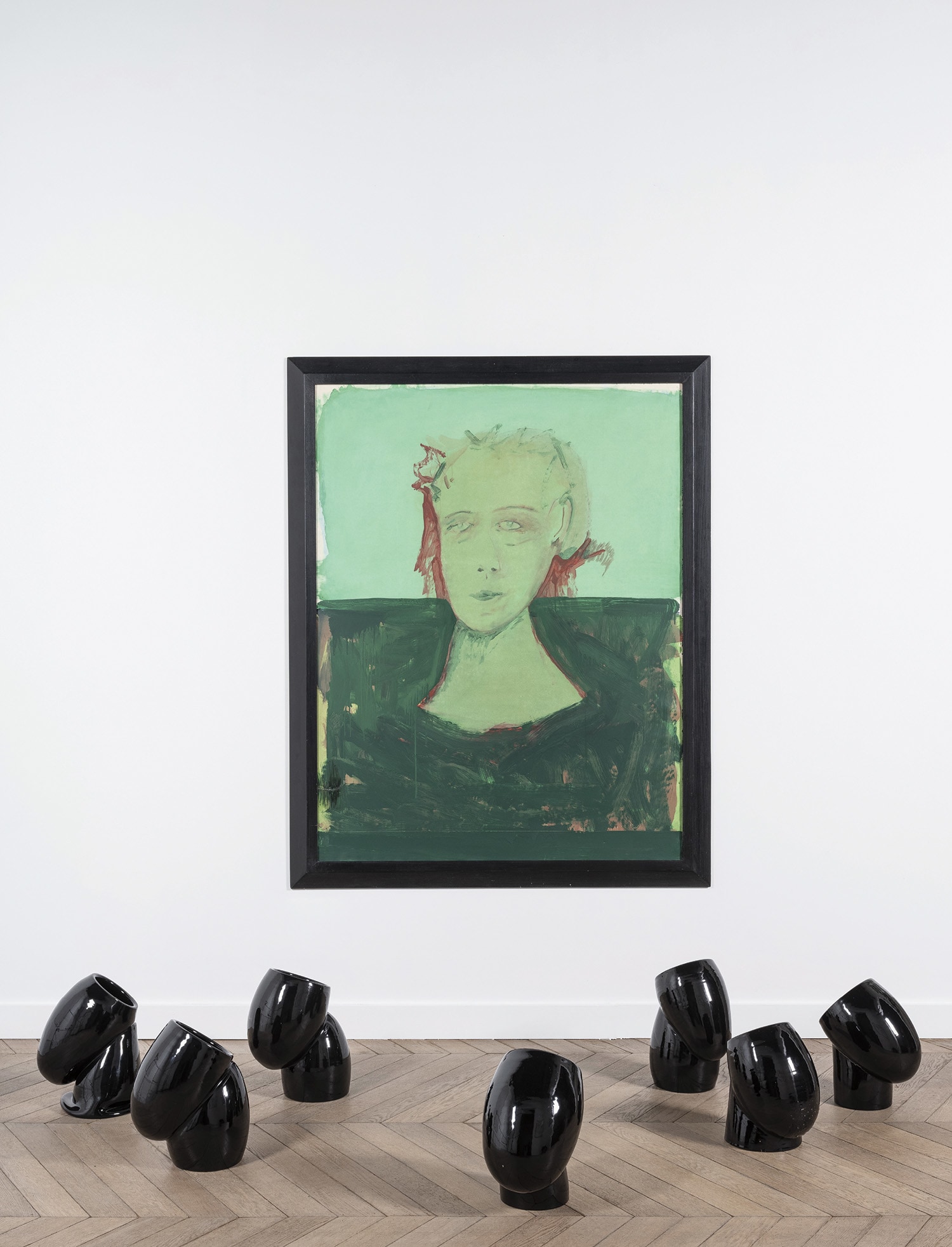
Thomas Schütte
Ohne Titel, 1986
The ceramic works of the 2010s are particularly compelling as collecting propositions: they combine the intimacy of a handmade object with the conceptual ambition of a major artistic intelligence, and they sit beautifully within collections that value material culture and art historical continuity. His bronze editions, including works such as Mann im Wind III, bring the outdoor, monumental quality of public sculpture into the private sphere, a rare achievement that few artists manage with such ease. Thomas Schütte's legacy is still very much in formation, which is part of what makes collecting his work so rewarding. He is an artist who has never allowed himself to become a brand, who continues to take risks and surprise his audience, and whose best work asks something genuine of the viewer in return.
In a market and a culture that often reward legibility and ease, Schütte's insistence on complexity, on the value of ambiguity and the strange consolations of the grotesque, feels not only admirable but necessary. To live with his work is to live with a more honest and more generous picture of what it means to be human.
Explore books about Thomas Schütte