Sarah Lucas

Sarah Lucas: Wit, Body, and Brilliant Nerve
Artist Spotlight · The Collection Editorial
“I am interested in how something quite simple can be so loaded with meaning.”
Sarah Lucas, interview with Tate
Few artists have shaped the visual language of contemporary British art quite like Sarah Lucas, and her relevance shows no sign of fading. In 2015, Lucas represented Great Britain at the Venice Biennale with her exhibition INCORPORATED, filling the British Pavilion with her signature cigarette sculptures, bronzed forms, and sprawling neon works in a presentation that drew enormous critical attention and confirmed her place among the most important artists of her generation. The show was irreverent, sensual, and deeply assured, a crystallisation of everything that makes Lucas so vital. She arrived in Venice not as a provocateur seeking shock value but as a mature artist entirely in command of her own visual vocabulary, one she has been developing since the late 1980s.
Sarah Lucas
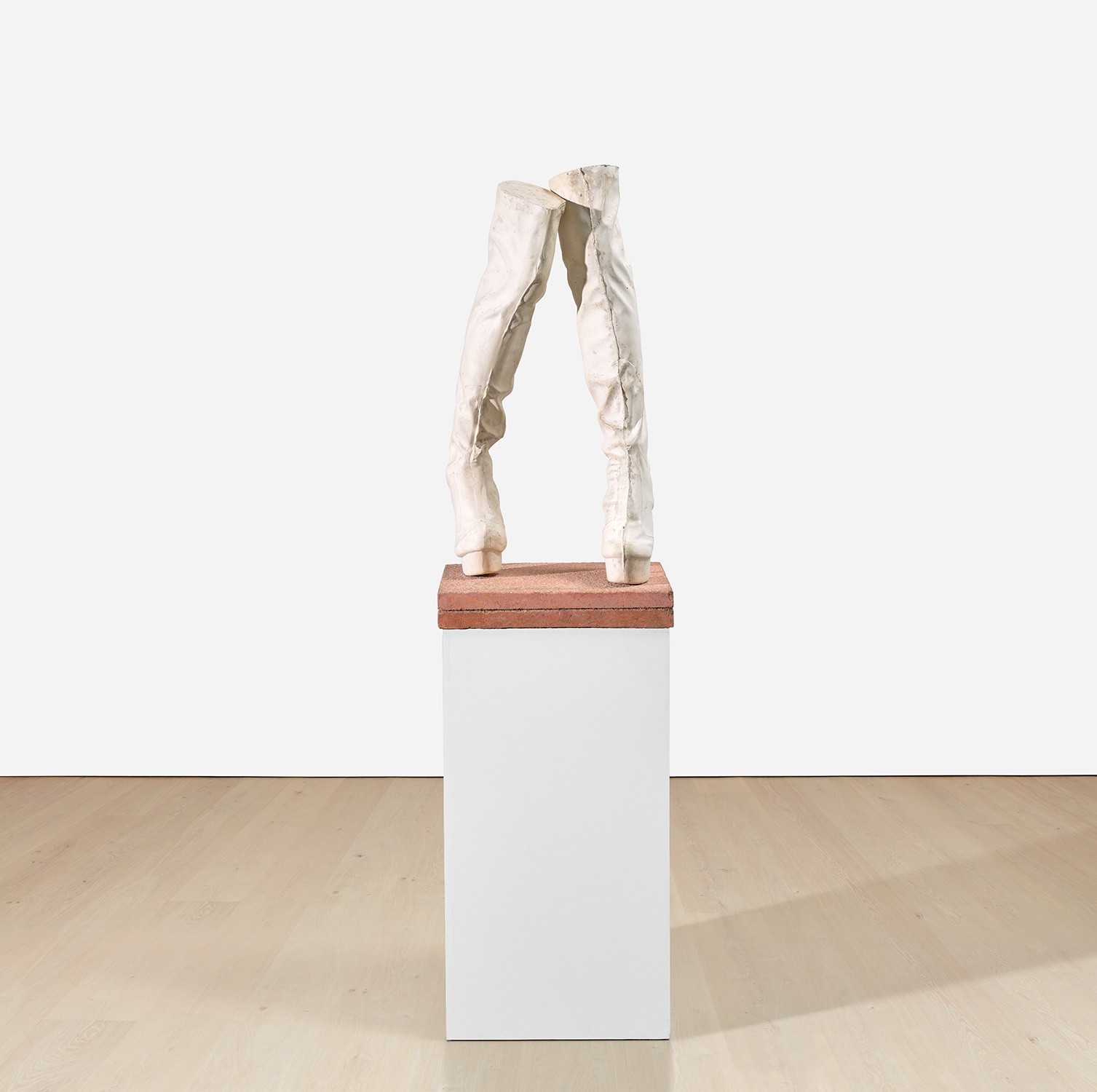
Jubilee, 2013
Lucas was born in London in 1962 and grew up in Holloway, north London, a working class neighbourhood whose textures and energies left a permanent mark on her sensibility. She studied at the Working Men's College before enrolling at Goldsmiths, University of London, graduating in 1987. Goldsmiths in the late 1980s was a crucible of ambition and experimentation, and Lucas found herself alongside a cohort that would come to define a generation: Damien Hirst, Tracey Emin, Gary Hume, and Michael Landy, among others. The school nurtured a spirit of rigorous self questioning combined with a fierce refusal to be precious, and those qualities became bedrock for Lucas.
Her early reputation was forged in the crucible of the Young British Artists movement, a loose but galvanising cultural phenomenon that emerged around the landmark 1988 student exhibition Freeze, which Hirst organised in a Docklands warehouse. Lucas was part of the wave of shows and gallery openings that followed, including the celebrated group exhibitions at Saatchi Gallery that brought YBA work to wider public consciousness. In 1993, she and Tracey Emin opened The Shop in Bethnal Green, selling T shirts, photographs, and small multiples from a rented space, an act that was both entrepreneurial and conceptually charged. It positioned everyday commercial exchange as a valid site for artistic activity and announced Lucas as someone who would always resist the conventional gallery world on her own terms.
Sarah Lucas
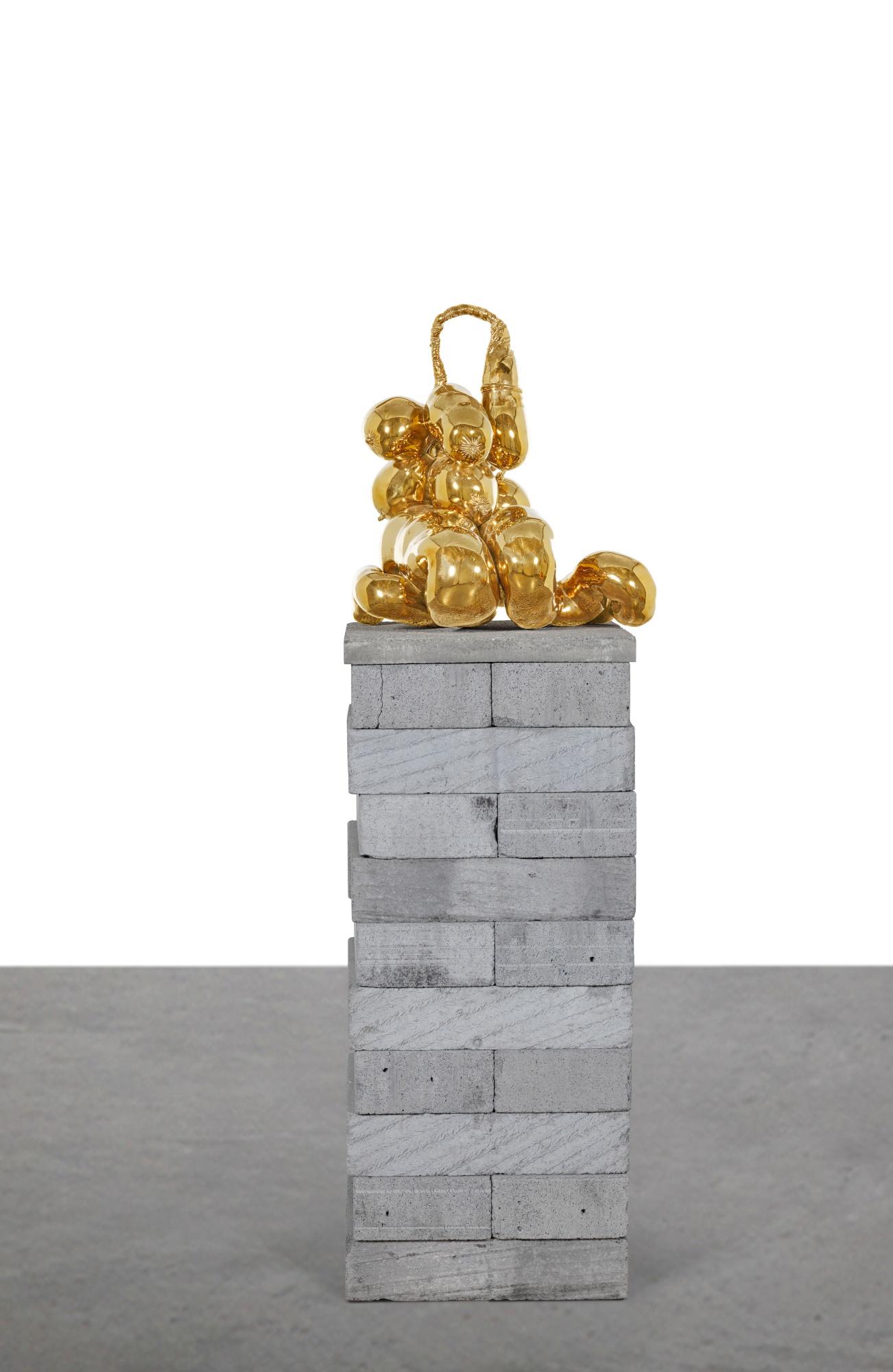
Lupe, 2014
The works from the early 1990s remain among the most electrifying of her career. Rose Bush from 1993, constructed from beer bottles, wire, and painted cardboard in eight parts, demonstrates her instinct for transforming the mundane into something philosophically loaded. The beer bottle, like so many of Lucas's chosen materials, carries enormous cultural weight, associated with masculinity, leisure, and a certain rawness of experience. Her self portraits from the same period, in which she appears seated, staring directly at the lens, wearing workmen's clothes and holding or surrounded by objects with sexual connotations, became iconic images of feminist art in Britain.
“I think humour is really important. It disarms people and then you can get something else across.”
Sarah Lucas, The Guardian
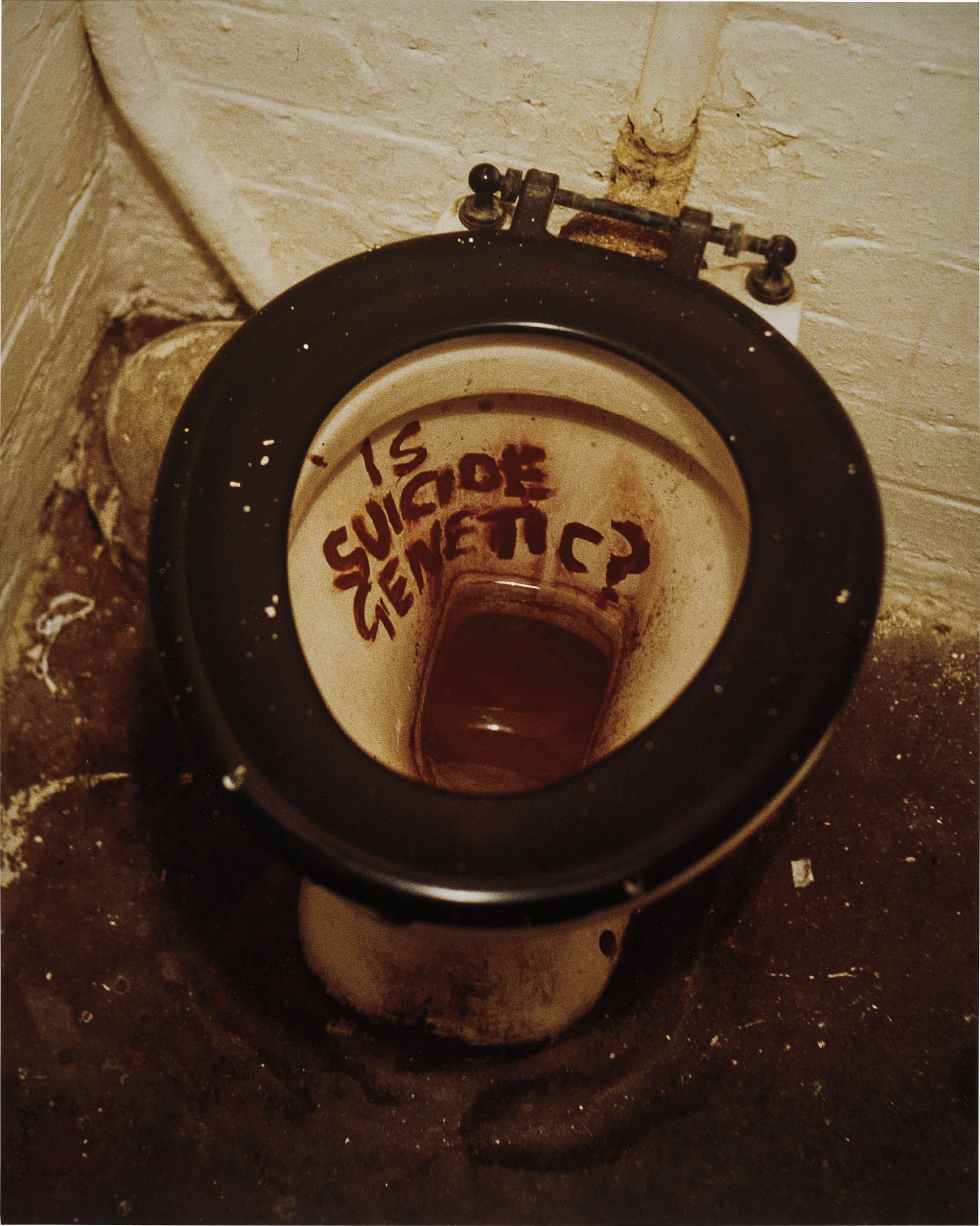
The series Self Portraits 1990 to 1998, published by Sadie Coles HQ in London in 1999, brought these images together in a definitive edition and remains a coveted collector's item, a document of an artist thinking through identity, gender, and the gaze with total clarity and considerable wit. Lucas has long worked across photography, sculpture, and installation with a consistency of purpose that belies the apparent casualness of her materials. Works like Is Suicide Genetic from 1996 reveal her appetite for language as both material and provocation, drawing on tabloid headlines and the blunt grammar of public discourse. Her sculptures made from cast bronze, such as Lupe from 2014, translate her interest in the body into something permanent and gleaming, the polished surfaces contrasting with the rawness of her earlier found object assemblages.
Sarah Lucas
Is suicide genetic?, 1996
Jubilee from 2013, with its plaster forms, steel rods, concrete slabs, and MDF plinth, occupies a different register entirely, monumental and austere yet charged with the same inquiry into form, body, and presence that animates all her work. The bronze Perceval from 2006 and the more recent Obsidiana from 2012 demonstrate the range of her sculptural ambition across materials and scale. For collectors, Lucas represents a genuinely compelling proposition. Her works appear regularly at the major auction houses and in secondary market sales, where demand has remained strong across different formats and price points.
Works on paper and photographic editions, including chromogenic prints and polymer gravure etchings, offer entry points at more accessible levels, while her sculptures and unique works command significant attention. The Fag Show, a body of work centred on cigarette sculptures, has become particularly emblematic, and prints and photographs associated with that project are sought after by serious collectors of British art. Lucas is represented by Sadie Coles HQ in London and Gladstone Gallery in New York, both of which have maintained sustained, thoughtful programmes around her work. Buyers are drawn to the sheer intellectual coherence of her practice as much as to its visual force: a Lucas work always belongs unmistakably to a larger body of thought.
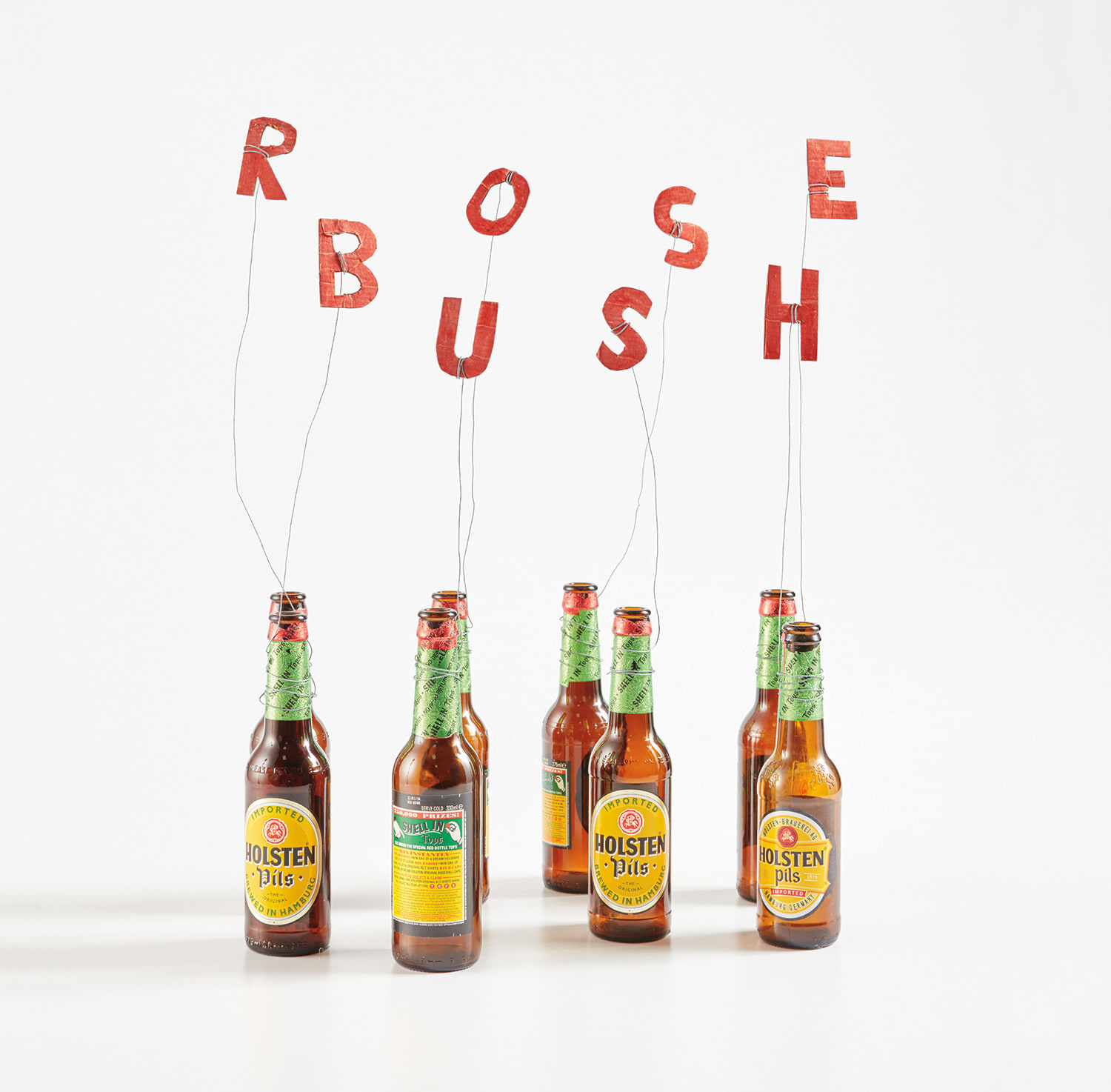
Sarah Lucas
Rose Bush, 1993
In terms of art historical context, Lucas sits in a rich and fascinating position. Her engagement with everyday objects and vernacular culture connects her to a British tradition running from Richard Hamilton through to Gilbert and George, while her feminist reframing of the body places her in dialogue with artists like Cindy Sherman, Jana Sterbak, and Louise Bourgeois. Within the YBA generation, she is often compared to Tracey Emin, with whom she shares a commitment to autobiography and the unguarded self, though Lucas tends toward a cooler, more sardonic register. Her work also resonates with that of Carol Rama and Meret Oppenheim, artists who used the object world to unsettle assumptions about gender and desire.
What makes Lucas so enduringly important is her refusal to be tidied up. She has never settled into a comfortable signature style or allowed her work to become decorative. Each new series asks something of the viewer: to sit with discomfort, to laugh and then reconsider why, to look at familiar things including bodies, furniture, food, and language, as if for the first time. Her influence on younger British artists is considerable and still growing.
Museums including Tate and the Museum of Modern Art in New York hold her work in their permanent collections, and the critical literature around her practice continues to deepen. To own a work by Sarah Lucas is to hold something genuinely charged, made by an artist who has always trusted her instincts absolutely and whose instincts have rarely let her down.
Explore books about Sarah Lucas