Roy Lichtenstein
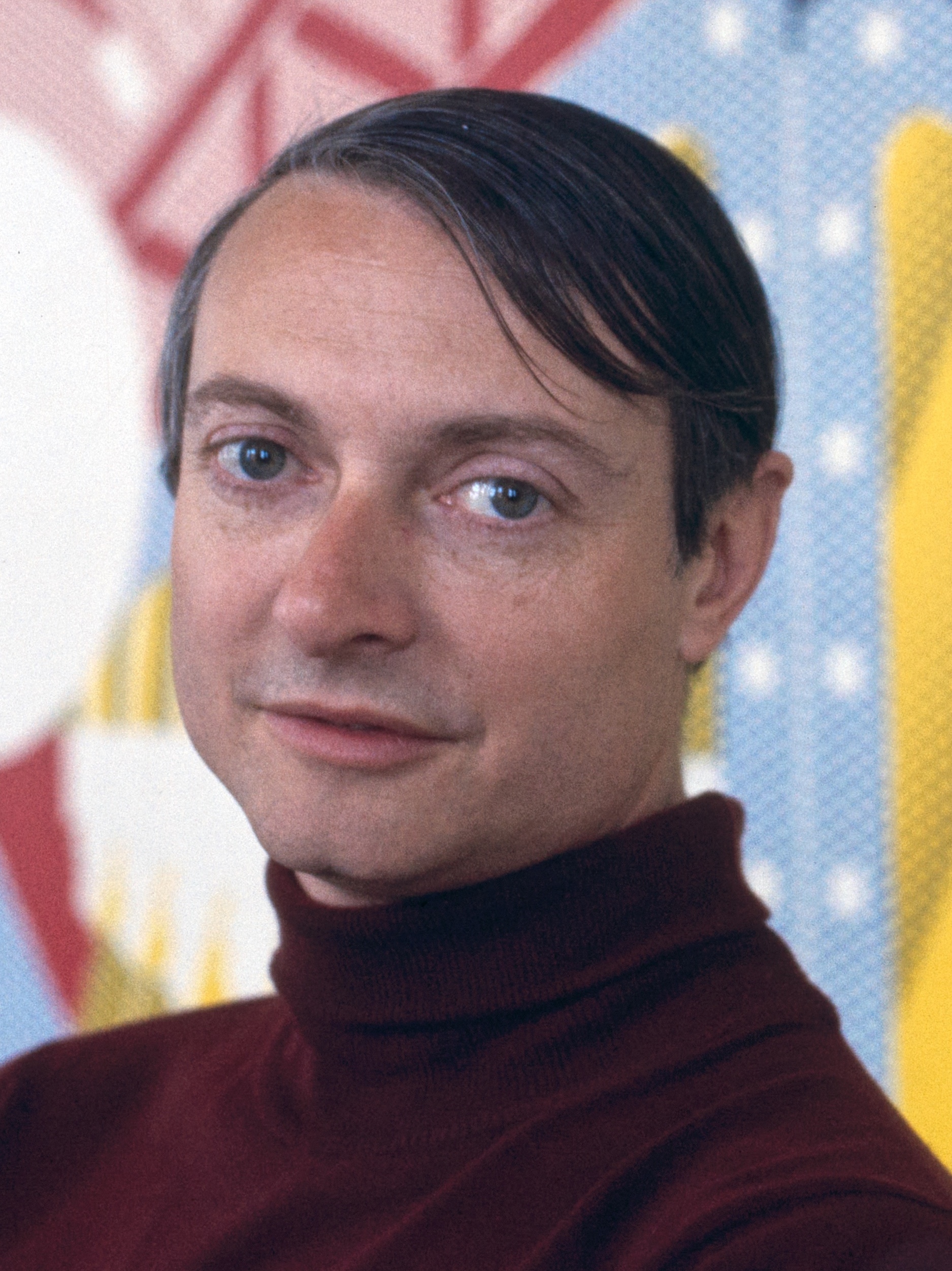
Roy Lichtenstein, The Dot That Conquered Art
Artist Spotlight · The Collection Editorial
“I want my work to look programmatic, and industrial, as if it could be done by a machine.”
Roy Lichtenstein, interview with Gene Swenson, Art News, 1963
When the Whitney Museum of American Art mounted its landmark Lichtenstein retrospective in 2012, the queues stretched around the block and critics reached for their most extravagant superlatives. The show, which traveled to the Art Institute of Chicago and the National Gallery of Art in Washington, reminded a new generation what collectors and curators had known for decades: that Roy Lichtenstein had accomplished something genuinely rare. He had taken the visual language of the everyday, the throwaway, the disposable, and elevated it into some of the most formally rigorous and emotionally resonant paintings of the twentieth century. The retrospective drew over a million visitors in total, a testament to the enduring magnetism of his vision.
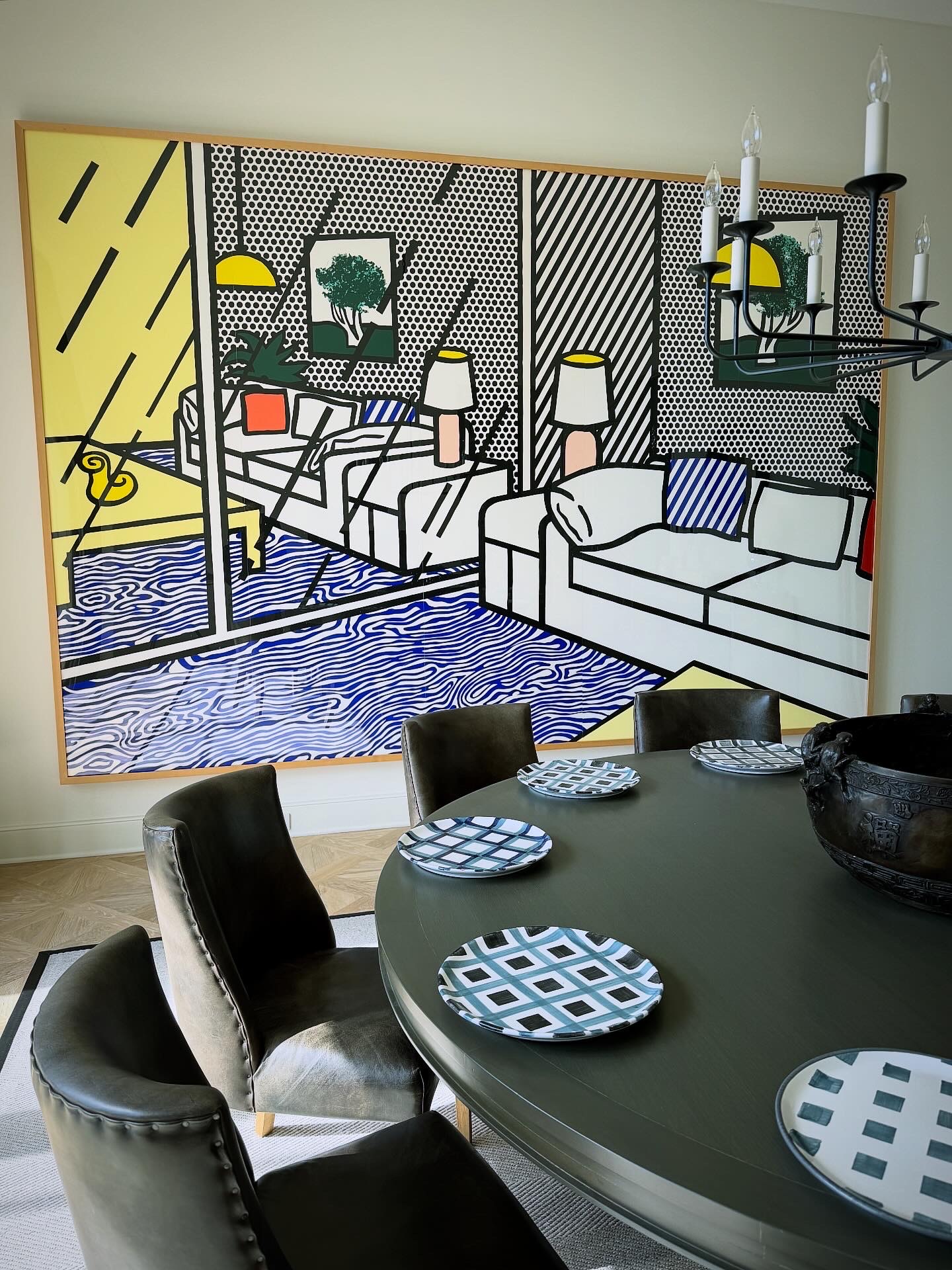
Roy Lichtenstein
untitled
Lichtenstein was born in New York City in 1923, into a comfortable middle class family in Manhattan. He showed an early aptitude for drawing and jazz, two passions that would quietly inform his later sense of rhythm and composition. He studied under Reginald Marsh at the Art Students League before enrolling at Ohio State University, where he eventually completed his MFA in 1949. His formative years coincided with the dominance of Abstract Expressionism, and his early work reflected that influence, moving through a period of loosely handled painterly abstraction and even a brief engagement with American history subjects drawn from the frontier tradition.
These early canvases are rarely discussed, but they reveal an artist in genuine search, probing the possibilities of painting with curiosity and discipline. The transformation arrived in 1961 with almost startling abruptness. Lichtenstein was teaching at Rutgers University in New Jersey, where his colleague Allan Kaprow was pioneering Happenings and a circle of artists was actively questioning the boundaries between high and low culture. Challenged by his young son, who pointed to a Mickey Mouse comic book and reportedly said something to the effect of proving that his father could not paint as well as that, Lichtenstein produced Look Mickey, a canvas that changed the trajectory of his career entirely.
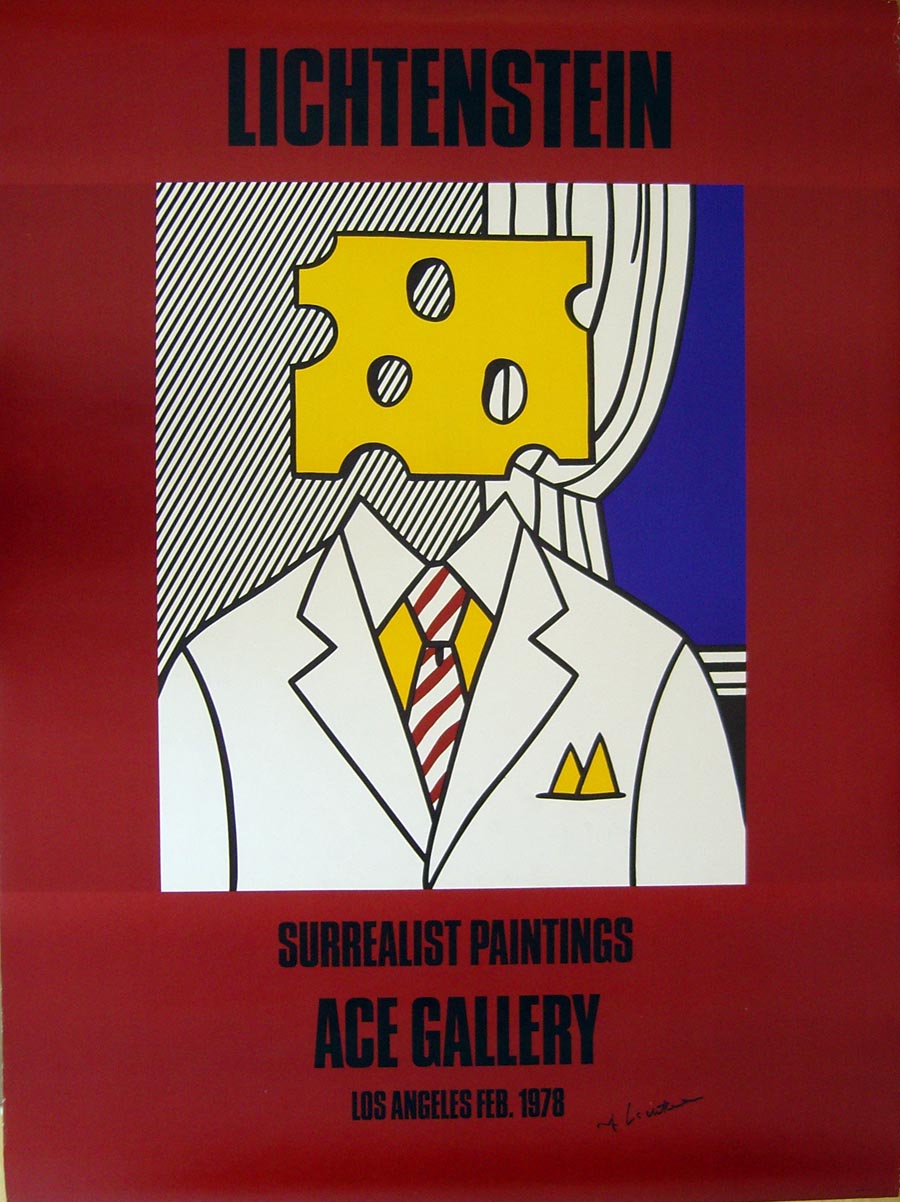
Roy Lichtenstein
Poster: Ace Gallery, 1978
The painting appropriated the flat, graphic language of commercial printing: bold black outlines, unmodulated primary colors, and the tiny uniform dots known as Ben Day dots that newspaper and comic book printers used to simulate shading and tone. Lichtenstein had found his method and his subject simultaneously. His breakthrough came quickly. By 1962, Leo Castelli had given him a solo show in New York, the same gallery that represented Jasper Johns and Robert Rauschenberg.
“I take a cliché and try to organize its forms to make it monumental.”
Roy Lichtenstein, quoted in The New York Times, 1969
The works sold out before the opening, purchased in part by collectors who recognized that something genuinely new was happening. Over the following decade Lichtenstein produced the paintings that would define him permanently: Whaam (1963), a monumental diptych depicting a jet fighter destroying an enemy aircraft, now in the Tate Modern in London; Drowning Girl (1963), a close cropped portrait of a weeping woman that hangs in the Museum of Modern Art in New York; and a sustained series of domestic melodramas drawn from romance comics, in which weeping women and brooding men played out their emotions in immaculately controlled graphic fields. The tension in these works, between the cool detachment of the technique and the heightened emotion of the subject matter, was not accidental. It was the whole point.
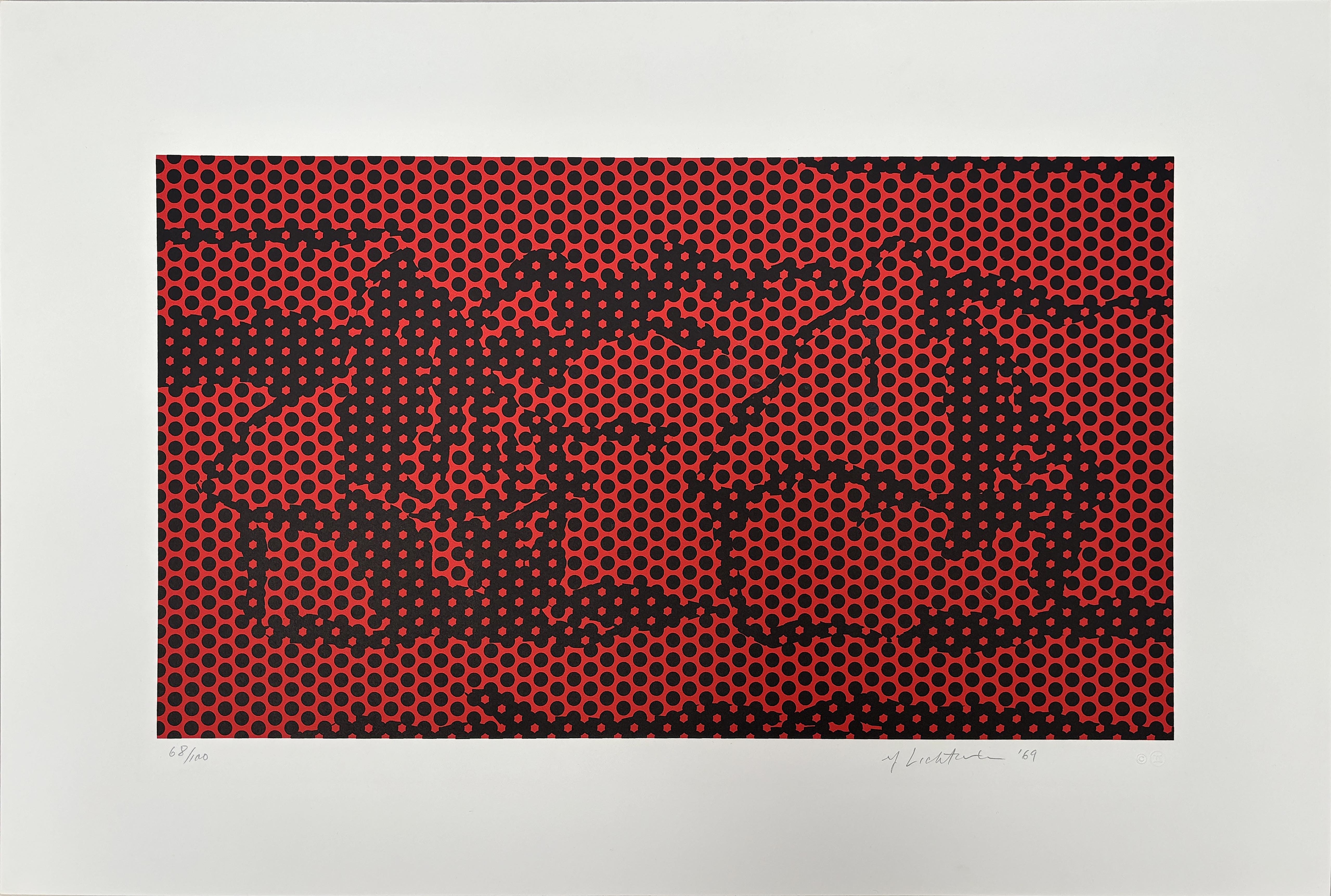
Roy Lichtenstein
Haystack #6, 1969
What made Lichtenstein singular among his Pop Art contemporaries was his absolute seriousness as a formalist. Where Andy Warhol embraced seriality and surface, and Claes Oldenburg pursued the sculptural and the theatrical, Lichtenstein remained committed to the fundamental problems of painting: how line relates to color, how scale transforms meaning, how composition directs the eye. His Ben Day dots, applied originally with a dog grooming brush and later with hand made metal screens, were not mere quotation of a printing process. They were a pictorial system as rigorous as any in the history of abstraction.
“Organized perception is what art is all about.”
Roy Lichtenstein
His ongoing dialogue with Cézanne, Mondrian, and Picasso, visible in his Brushstroke series of the 1960s and his later Mirrors, Entablatures, and Reflections series, demonstrates an artist in sustained conversation with the entire Western tradition he appeared on the surface to be mocking. For collectors, the range of Lichtenstein's output offers remarkable points of entry. His print practice was as serious and sustained as his work on canvas, and editions such as Haystack No. 6 from 1969, produced as a lithograph on Rives BFK paper, reveal his ability to translate the subtleties of light and surface into the graphic medium with total authority.
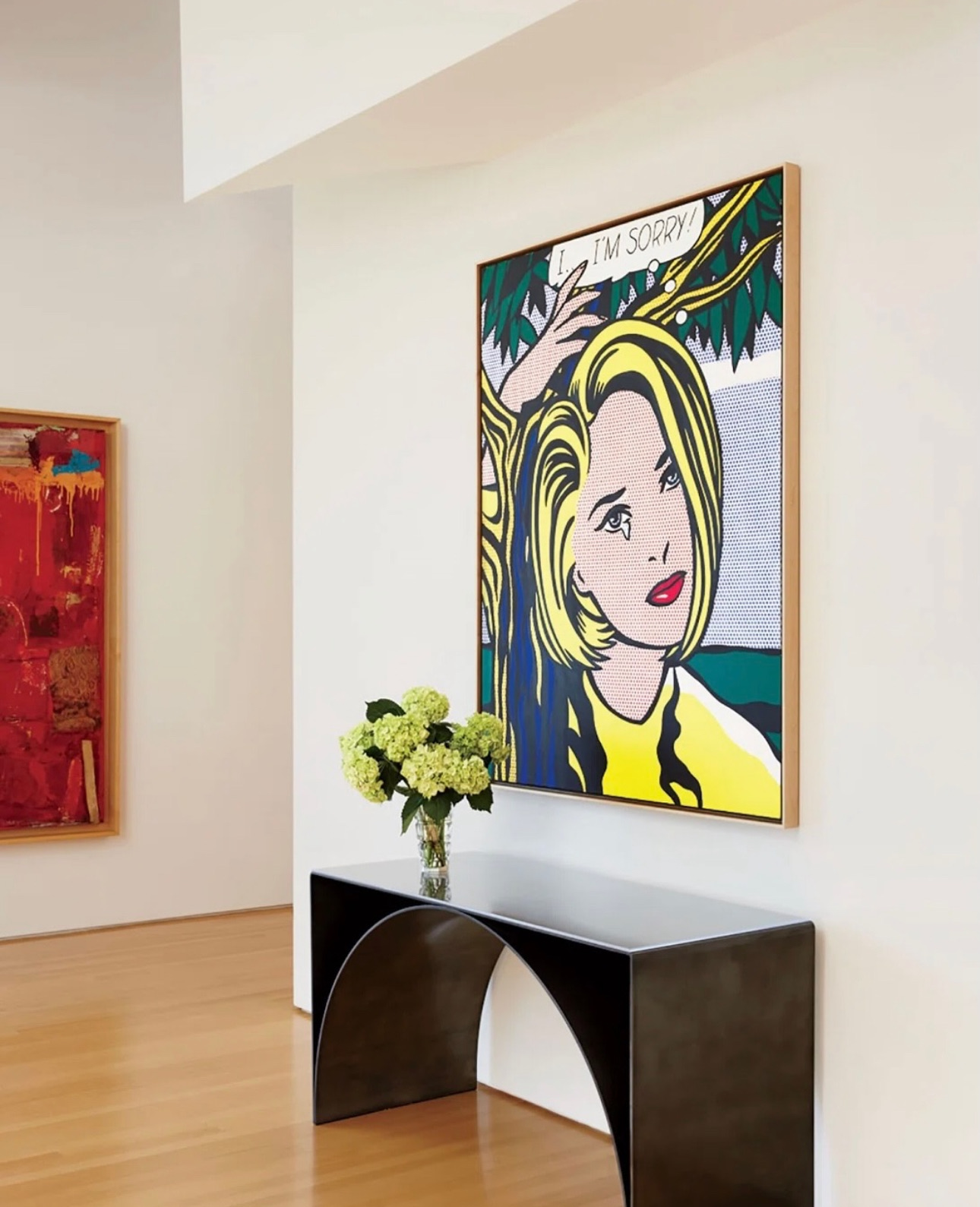
Roy Lichtenstein
I'm Sorry!, 1965
The Haystacks series, a direct homage to Monet, demonstrated that his appropriation was always an act of love as much as critique. Later works such as the Nude With Blue Hair relief print of 1994 and the Art Critic screenprint of 1996, produced near the end of his life, show an artist still fully engaged, still pushing at the edges of his own language with wit and precision. These prints are among the most collectible works on the secondary market today, offering access to Lichtenstein's vision at a range of price points. At auction, Lichtenstein's major canvases consistently achieve eight and nine figure results.
Nurse sold at Christie's New York in 2015 for over 95 million dollars, setting a record for the artist at the time and confirming his position in the very top tier of the postwar market. But sophisticated collectors have long understood that the breadth of his practice, spanning oil and magna paintings, lithographs, screenprints, woodcuts, ceramics, and sculpture, means that engagement with Lichtenstein's work does not require a nine figure budget. The posters, the prints, and the multiples represent not a lesser version of his achievement but a different facet of an artist who believed deeply in the democratic potential of reproducible images. In this sense, the prints are not secondary works but philosophically central ones.
Lichtenstein belongs to a constellation of artists who collectively redefined what American art could be in the postwar decades. His dialogue with Warhol is the most discussed, but his connections to Jasper Johns, in their shared interest in sign systems and cultural codes, and to Ed Ruscha, in their mutual fascination with the visual language of American commercial culture, are equally illuminating. He also invites comparison with European figures such as Sigmar Polke, whose own engagement with printing processes and mass media imagery paralleled Lichtenstein's from across the Atlantic, and with the earlier Dadaist tradition of Marcel Duchamp, whose readymade established the philosophical framework that Pop Art would later inhabit. Roy Lichtenstein died in New York in 1997, of pneumonia, at the age of seventy three.
He left behind a body of work that has only grown in stature and resonance in the decades since. At a moment when questions about authorship, appropriation, and the relationship between fine art and popular culture feel more urgent than ever, his paintings and prints speak with undiminished clarity and force. To live with a Lichtenstein, whether a monumental canvas or a perfectly realized print, is to live with one of the great visual intelligences of the twentieth century, one who looked at the world's most disposable images and found within them a permanent and enduring beauty.
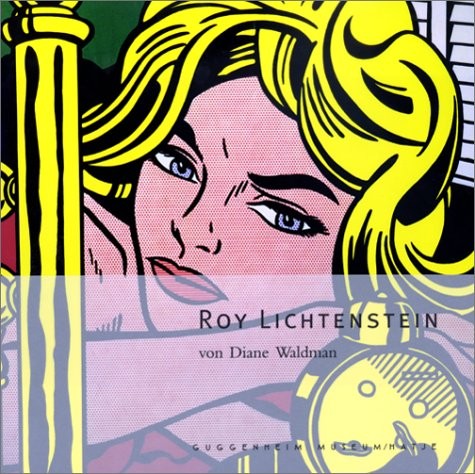
Explore books about Roy Lichtenstein