Otto Herbig
Otto Herbig, Painter of Luminous German Light
Artist Spotlight · The Collection Editorial
There is a particular quality of morning light that falls across the Central European countryside in early autumn, a silvery, diffuse glow that turns ordinary fields and tree lines into something almost sacred. Otto Herbig spent a lifetime chasing that light. Working in Germany during the first decades of the twentieth century, he brought to his canvases and works on paper a patient, searching attentiveness to the natural world that places him firmly within one of the most generative periods in German art history. To encounter his work today is to be reminded of what painting, at its most honest, can do.
Otto Herbig
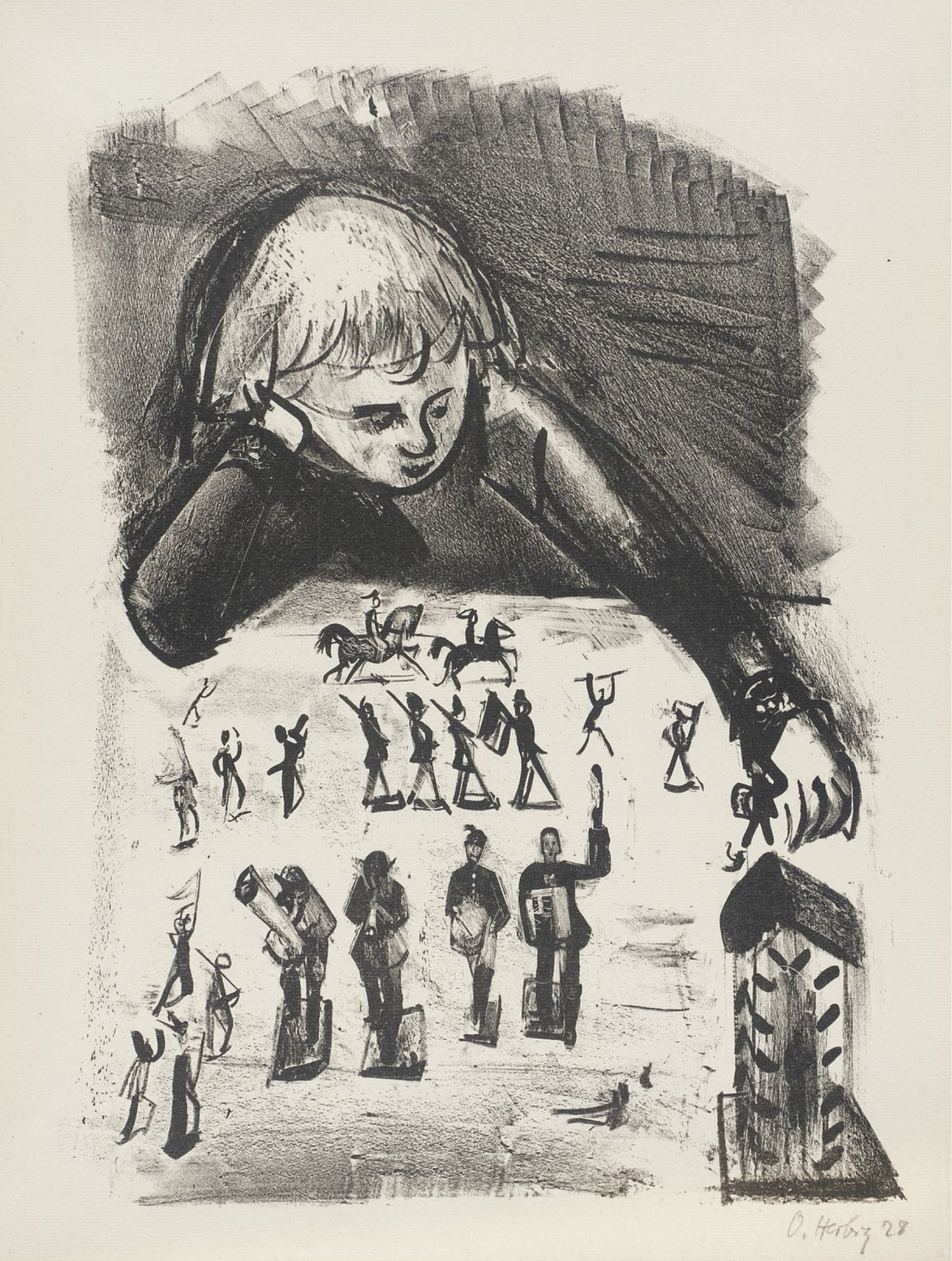
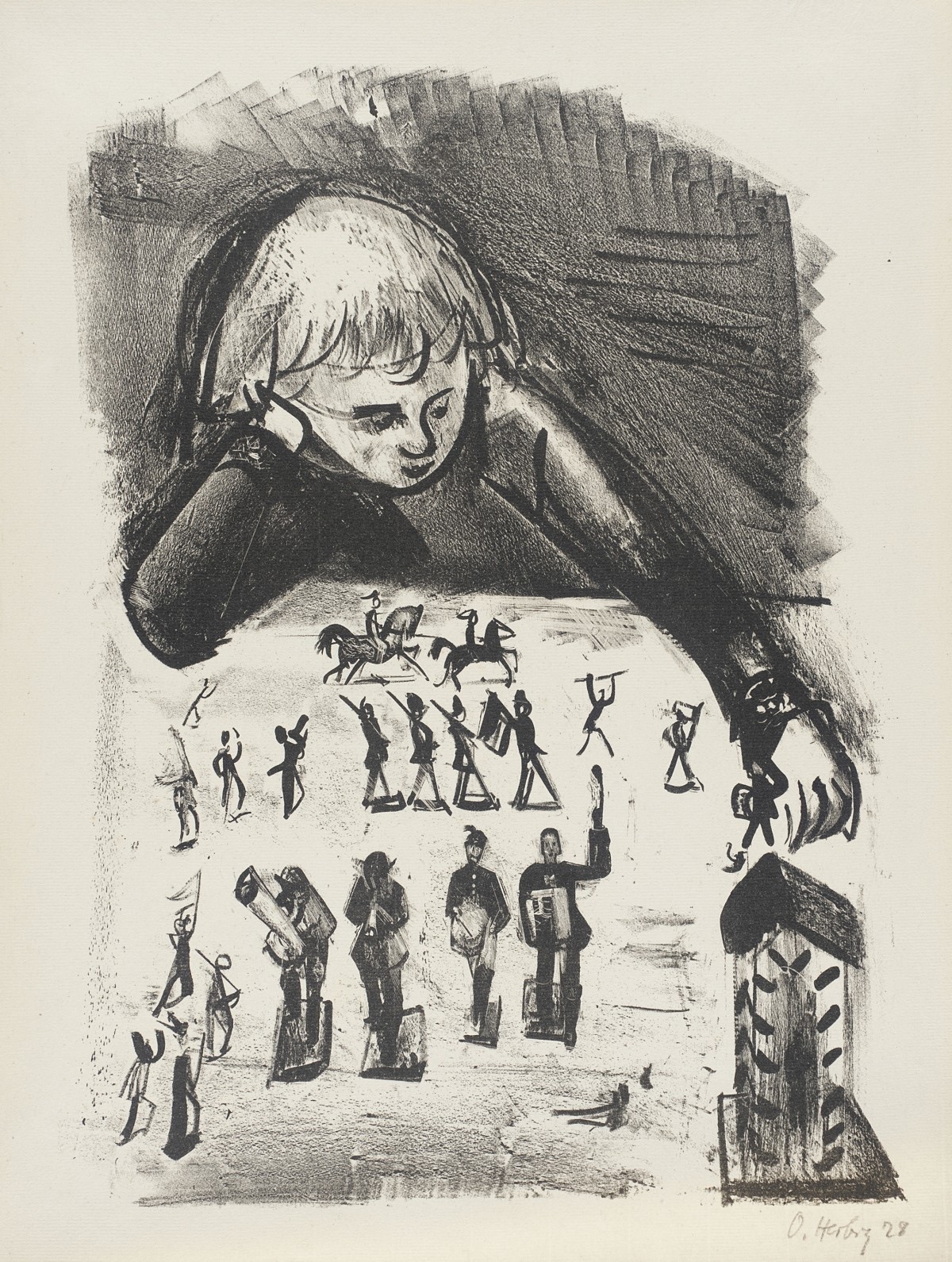
Lead Soldiers, 1928
Herbig was born in 1879, entering a Germany that was rapidly industrializing yet still deeply attached to its romantic traditions of landscape and nature. The tension between those two forces, the modern and the pastoral, would quietly animate much of German art in the decades that followed. Herbig came of age during a period when artists across Central Europe were absorbing the lessons of French Impressionism while simultaneously reaching back toward distinctly German artistic values, a sense of spiritual weight in the landscape, an emphasis on atmosphere over strict observation. These were the currents swirling through academies and artists' colonies from Munich to Berlin, and Herbig was formed within them.
The broader movement known as German Impressionism was never a single, unified school so much as a shared orientation, an openness to the expressive possibilities of light and brushwork that filtered through the work of painters like Lovis Corinth, Max Slevogt, and Max Liebermann. Herbig absorbed these influences with care. His practice, rooted in landscape and figurative painting, shows the influence of that generation without being merely derivative of it. He found his own register, quieter perhaps than Corinth's bravura, more attentive to the rhythms of ordinary rural life than to grand statement.
Among the works that offer the clearest window into Herbig's range is his 1928 lithograph "Lead Soldiers." The choice of subject is quietly revelatory. Toy soldiers, those small, cold objects of childhood play, carry within them the entire weight of the era in which Herbig was working. Germany in 1928 was a country still processing the trauma of the First World War, politically volatile, economically strained, and culturally restless.
That Herbig turned to such a subject in this moment, rendering it with craft and intention in the demanding medium of lithography, suggests an artist whose eye was not confined to the pastoral alone. "Lead Soldiers" rewards close attention, and it stands as one of the more resonant objects to have emerged from German graphic art in that decade. Lithography as a medium held particular importance in the German art world of the early twentieth century. From the Expressionists to the artists associated with the Neue Sachlichkeit, printmaking offered a way to reach broader audiences while also demanding a directness and economy of means that painting sometimes allowed artists to avoid.
Herbig's engagement with the medium speaks to a seriousness of purpose and a willingness to work within its constraints. The result, in "Lead Soldiers," is an image that feels both intimate and considered, the kind of work that reveals more the longer one spends with it. For collectors approaching Herbig today, the appeal is layered. There is, first, the art historical interest: here is a German painter working across precisely the decades, from the late Wilhelmine period through the Weimar Republic, that have attracted sustained scholarly and market attention in recent years.
German art of the 1920s in particular has seen significant reappraisal, with auction houses and institutions alike revisiting figures who were once treated as peripheral to the canonical story of European modernism. Works on paper from this period, especially lithographs with documentary and cultural resonance, represent a compelling collecting proposition. They offer entry points into a world of artistic seriousness and historical depth without requiring the kind of expenditure that major oil paintings from the period command. Herbig offers that entry point with genuine quality behind it.
It is also worth situating Herbig within the ecology of artists working around him. The German Impressionists mentioned earlier, Liebermann, Slevogt, and Corinth, form one pole of reference. But collectors drawn to Herbig might also look toward contemporaries working in a similarly contemplative register, painters attentive to regional landscape and to the textures of everyday German life in the early twentieth century. Artists associated with the various German artists' colonies of the period, groups that gathered in places like Worpswede and Dachau, shared with Herbig a commitment to close observation of the natural world and to painting as a form of sustained looking.
Understanding Herbig within that broader community enriches the experience of his individual works. Herbig died in 1944, his life ending within the catastrophic closing years of the Second World War. That biographical fact casts a long shadow, as it does for so many German artists of his generation. And yet what strikes one most forcefully when encountering his work is not the darkness of the historical moment but the persistence of a clear and genuine artistic vision.
He continued to paint and make work through decades of upheaval, through war and its aftermath, through the extraordinary volatility of the Weimar years, and through the gathering catastrophe of the 1930s. That persistence is itself a form of testimony. The rediscovery of artists like Herbig is one of the genuinely rewarding activities available to collectors working in the space of early twentieth century German art. Major institutions have in recent decades devoted increasing attention to this period, and the scholarly literature continues to grow.
What was once treated as a second tier of European modernism is now understood as a rich and complex field in its own right. Herbig stands within it as a figure of quiet but real distinction: a painter whose attentiveness to light and atmosphere and whose willingness to engage with the subjects of his moment produced a body of work that continues to speak clearly across the decades.