Maureen Elizabeth Dougherty
Maureen Dougherty Paints Life With Tender Honesty
Artist Spotlight · The Collection Editorial
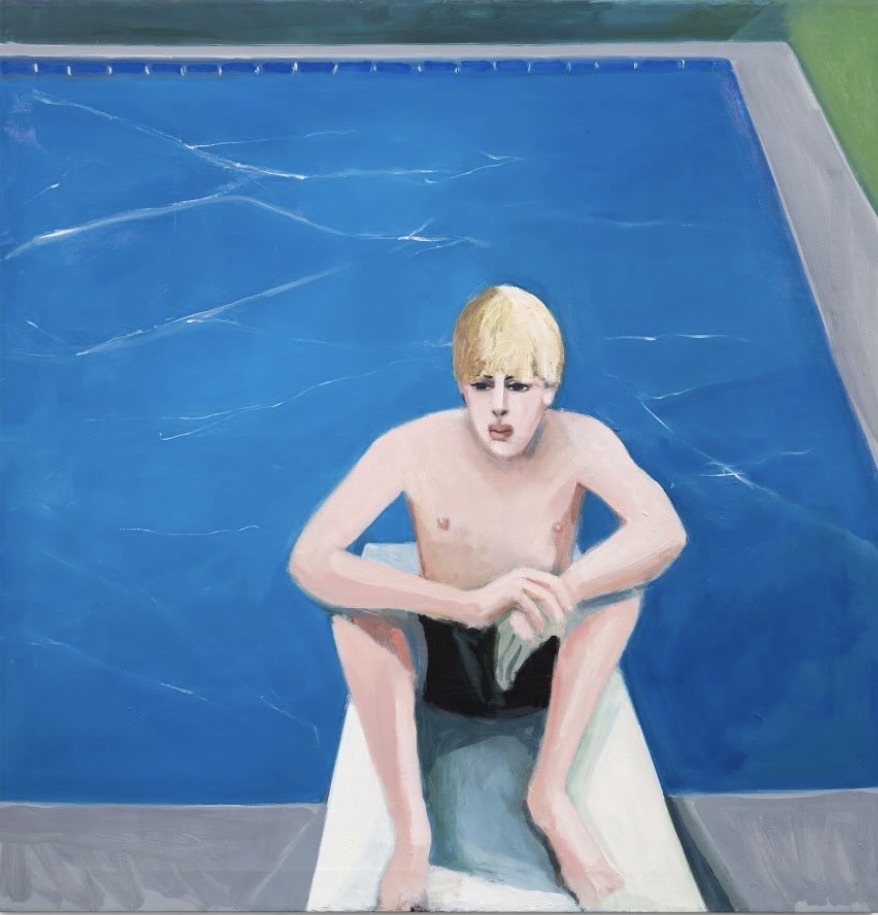
There is a particular kind of painter who does not announce herself loudly but whose work, once encountered, lingers in the memory with quiet insistence. Maureen Elizabeth Dougherty is that kind of painter. Her 2025 oil on canvas titled "Boy on Board" has drawn the attention of discerning collectors on the platform collctn.art, where it stands as a testament to her ability to locate something universal within a single, carefully observed human moment.
Maureen Elizabeth Dougherty
Boy on board, 2025
In a broader art landscape that so often rewards spectacle, Dougherty's practice offers something rarer and more sustaining: genuine feeling rendered through patient, skilled attention to the world as it actually is. The tradition Dougherty works within is one of the oldest and most demanding in Western painting, the figurative oil on canvas, and yet her engagement with that tradition feels entirely alive and of the present moment. Oil paint, with its long history of depicting the human form and the textures of daily life, is a medium that requires deep commitment. It rewards the painter who is willing to work slowly, to revise, to look again and again at the subject until something true emerges from the surface.
Dougherty has clearly made that commitment, and it shows in the way her work carries the particular warmth that only comes from sustained looking and genuine care. "Boy on Board," completed in 2025, offers an immediate sense of what distinguishes Dougherty's sensibility as an artist. The work centers on a youthful figure, and in doing so it participates in a rich lineage of painting that takes childhood and adolescence as a subject worthy of serious artistic attention. Think of the way Winslow Homer captured boys at play along the New England coast, or the tender intimacy Thomas Eakins brought to his depictions of young athletes and students.
Dougherty's painting belongs to that tradition of American figuration that sees the young human body and spirit not as sentimental subject matter but as a genuine site of meaning, movement, and becoming. The choice of such a subject in 2025 feels deliberate and quietly courageous. What strikes a viewer encountering Dougherty's work is the quality of attentiveness at its core. Oil painting at its best is a practice of sustained noticing, of recording not just the outward appearance of a figure but the particular quality of light falling across a moment, the specific weight and gesture that makes one instant different from every other.
Painters in the realist and figurative traditions, from Fairfield Porter to Alice Neel to the quieter corners of the Bay Area Figurative movement, have long understood that the seemingly ordinary subject, a person in a room, a child in motion, a figure caught in the midst of something small and real, can carry as much emotional and intellectual weight as any grand historical composition. Dougherty's practice sits comfortably and confidently within this understanding. For collectors approaching Dougherty's work, the appeal is rooted in something fundamental to the best figurative painting: the sense that the artist has genuinely seen something and found the means to share that vision. Works like "Boy on Board" reward close and repeated looking, revealing new details and emotional registers the longer one spends with them.
This is the quality that distinguishes painting that endures in a collection from painting that merely decorates. Collectors who are drawn to contemporary figurative artists such as Henry Taylor, Bo Bartlett, or the quieter domestic realism of Lois Dodd will find in Dougherty a sympathetic sensibility, one that trusts the human subject to be interesting enough, moving enough, and real enough to hold the viewer's gaze without theatrical elaboration. The market for thoughtful, skilled figurative painting by emerging and developing artists is one of the most active and genuinely exciting corners of the contemporary art world right now. Galleries from New York to Los Angeles to London have spent the past decade rediscovering and championing painters who work in oil, who care about craft, and who bring an honest emotional intelligence to their subjects.
Collecting such artists at this stage of their careers, before the critical apparatus has fully caught up with their talent, is one of the great pleasures and genuine opportunities available to a discerning collector today. Dougherty represents exactly this kind of opportunity: a painter whose commitment to her practice is evident in every square inch of her canvas. In the context of contemporary American figurative painting, Dougherty's work invites comparison with artists who have chosen quietness and specificity over loudness and abstraction. The painters who feel most relevant as points of reference are those who have trusted the power of the observed world, who have believed that a single figure, rendered with honesty and skill, can say something essential about what it means to be alive at a particular moment in time.
This is the tradition of Alice Neel's unflinching psychological portraits, of Fairfield Porter's sunlit domestic scenes, of Bo Bartlett's monumental and deeply felt figurations of American life. Dougherty works in this lineage with a confidence and naturalness that suggests she has thought deeply about what painting can do and what she wants it to do. What Maureen Elizabeth Dougherty offers the collector, the viewer, and the broader culture is something that painting at its best has always offered: a way of seeing that makes the world feel more present, more meaningful, and more worthy of attention. "Boy on Board" is a beginning and a statement of intent, a work that announces a painter who is serious about her craft and genuinely interested in the human beings she depicts.
As her practice continues to develop and as more of her work finds its way into collections and public view, it seems clear that Dougherty is an artist whose contribution to contemporary figuration will be lasting and genuinely valued. To collect her work now is to be among the first to say: we saw it, and it was real.