Martin Johnson Heade
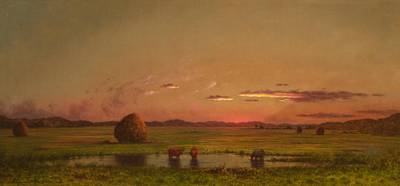
Light, Marsh, and Magnificent Obsession
Artist Spotlight · The Collection Editorial
There is a particular quality of late afternoon light over a New England salt marsh that most people never truly see. The sky turns a bruised, luminous gold, the grasses go silver at their tips, and the water lying flat between the hummocks becomes a mirror for something almost too beautiful to name. Martin Johnson Heade spent decades trying to capture exactly that moment, and the paintings he made in pursuit of it now hang in the Metropolitan Museum of Art, the Smithsonian American Art Museum, the Museum of Fine Arts in Boston, and in the hands of collectors who understand that this quiet, singular American artist was one of the great painters of light the nineteenth century produced. In recent years, Heade has enjoyed a sustained and well deserved reassessment.
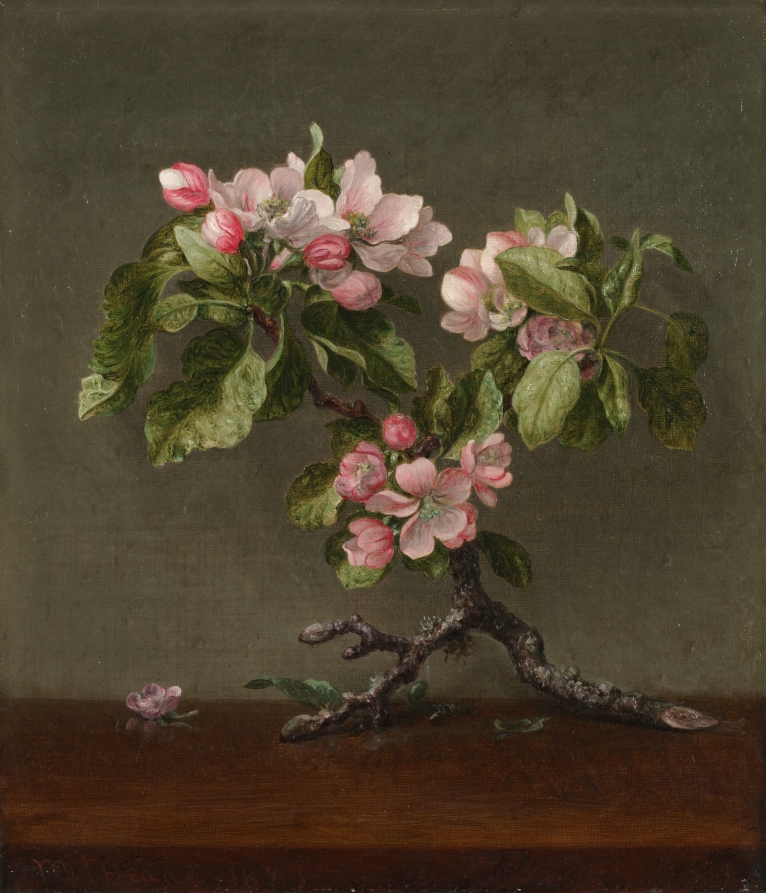
Martin Johnson Heade
Apple Blossoms, 1873
The landmark 1999 retrospective organized by the Museum of Fine Arts in Houston, accompanied by a comprehensive catalogue by Theodore Stebbins, did much to cement his reputation among serious collectors and scholars. Since then, his work has performed with remarkable consistency at major auction houses, with salt marsh compositions and tropical canvases routinely attracting significant competitive bidding. For a painter who was largely overlooked during much of his own lifetime, the arc of his recognition is now one of the more gratifying stories in American art. Heade was born in 1819 in Lumberville, Pennsylvania, a small town along the Delaware River north of Philadelphia.
His early artistic formation came through exposure to the portraitist Edward Hicks, a family friend and neighbor, who gave the young Heade his first lessons. This early contact with a painter of deeply spiritual conviction and meticulous observation left its mark. Heade traveled to Europe in his twenties, studying in Rome, Paris, and London, absorbing the great traditions of landscape and still life painting before returning to the United States with an eye sharpened by the old masters and a restlessness that would define his entire career. What followed was a life of extraordinary geographic range.
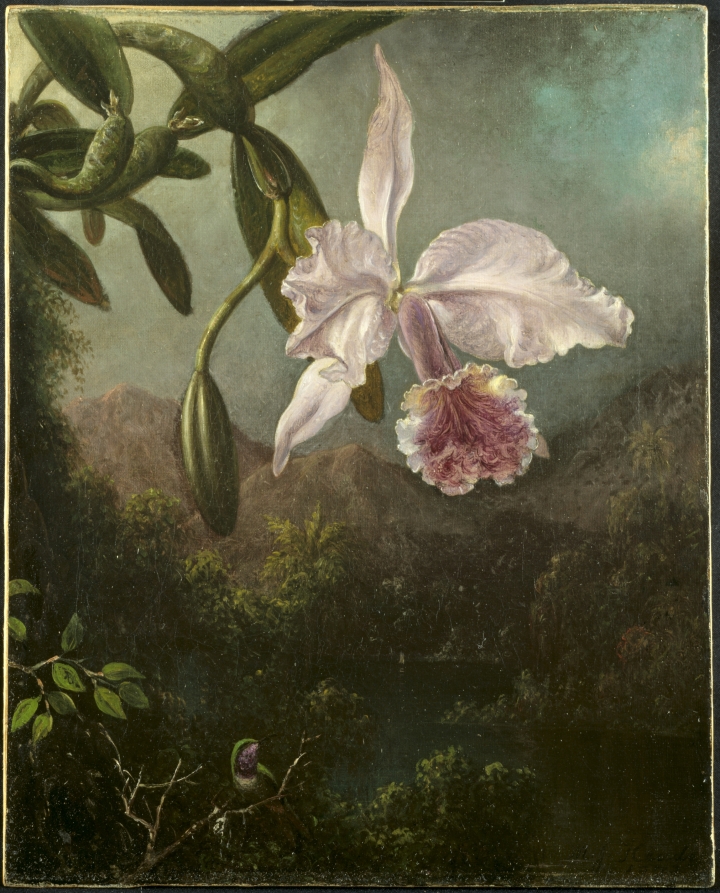
Martin Johnson Heade
Orchid Blossoms, 1873
Heade worked in studios in New York, Philadelphia, and Boston, and developed close friendships with fellow painters of the Hudson River School, including Frederic Edwin Church, with whom he shared studio space in the famed Tenth Street Studio Building in New York. Yet even as he moved among the luminaries of that celebrated movement, Heade was quietly developing an approach that set him apart. Where Church and Albert Bierstadt pursued the sublime through scale and grandeur, Heade was drawn to the intimate and the atmospheric, to the thin horizontal band of light where sky meets water, to the stillness just before a storm breaks. His breakthrough as a mature artist came through his obsessive engagement with the salt marshes of the New England coast, particularly those around Newburyport, Massachusetts, and the coastlines of Rhode Island and New Jersey.
Beginning in the 1860s and continuing for two decades, he produced a body of marsh paintings of remarkable depth and consistency. Works such as High Tide on the Marshes, painted in 1872, and his Rhode Island seascapes including Point Judith, Rhode Island from 1867, demonstrate his mastery of what has come to be called Luminism, a tendency in American landscape painting characterized by serene, glassy light, precise atmospheric observation, and a suppression of visible brushwork in favor of smooth, almost photographic surfaces. These canvases are horizontal in their geometry, meditative in their mood, and quietly radical in their refusal of drama for its own sake. Paralleling his landscape work, and in many ways even more distinctive, was Heade's sustained fascination with tropical flora and fauna.
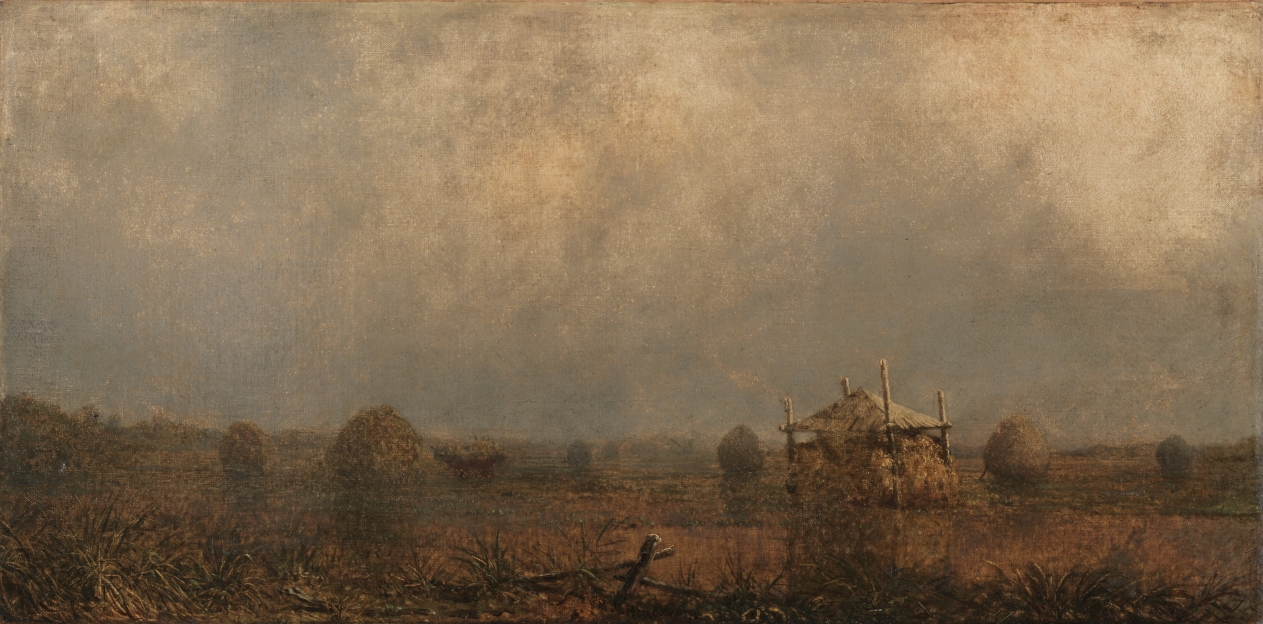
Martin Johnson Heade
High Tide on the Marshes, 1872
Beginning in 1863, he made the first of three journeys to Brazil, ostensibly to produce an illustrated book on hummingbirds in collaboration with the naturalist and geographer Louis Agassiz. The book was never completed, but the paintings that emerged from these expeditions rank among the most unusual and beautiful works produced by any American artist of the period. His canvases of hummingbirds hovering among orchids and passionflowers in dense, jewel colored jungle settings occupy a space between natural history illustration and pure painterly enchantment. The orchid paintings he continued to produce well into his later career, including the luminous Orchid Blossoms from 1873, belong to this same sensibility: precise, voluptuous, and wholly unlike anything else being made in American studios at the time.
Heade's still life practice, which includes works such as Apple Blossoms from 1873 and Still Life of Roses from 1878, offers yet another dimension of his achievement. These works share the intimate scale and exquisite surface quality of his best landscapes, bringing the same devotion to light and atmosphere to arrangements of flowers that reward extended looking. The roses in particular possess a softness and warmth that feels almost anticipatory of the symbolist sensibility that would emerge in Europe in the following decades. Collecting across these three bodies of work, the marshes, the tropical paintings, and the floral still lifes, gives a full picture of an artist whose range was far wider than his reputation once suggested.
Martin Johnson Heade
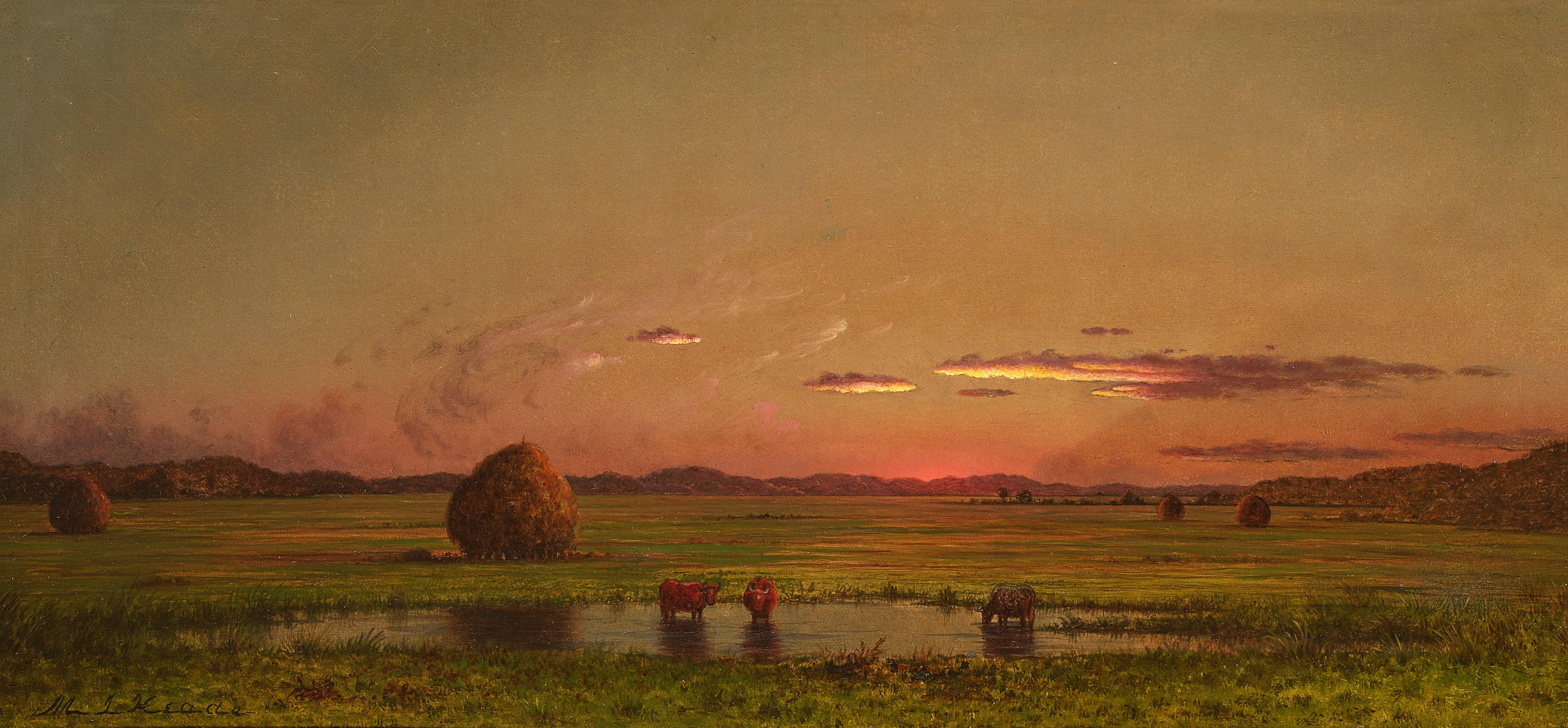
Sunset Landscape, Cattle Drinking, 1876
For collectors approaching Heade today, the market reflects genuine scholarly and cultural consensus about his importance. Works that unite his two great preoccupations, dramatic light and botanical or avian subject matter, tend to attract the strongest interest, though his marsh and coastal compositions, including Sunset: Sky and Marsh and Sunset Landscape, Cattle Drinking from 1876, demonstrate that his purely landscape mode is equally worthy of serious attention. Provenance matters here as in all areas of the American nineteenth century market, and works with clear institutional exhibition histories carry particular weight. Comparable figures in the collecting context include Fitz Henry Lane, John Frederick Kensett, and Sanford Robinson Gifford, all painters associated with the Luminist tendency, as well as Church and George Inness, whose later atmospheric landscapes share something of Heade's contemplative spirit.
What makes Heade matter now, more than a century after his death in St. Augustine, Florida in 1904, is precisely what made him difficult to categorize in his own time. He was not a joiner. He did not fit the dominant narratives of American expansion and nationalist landscape painting, even as he worked alongside those who did.
He was, instead, a painter of attention, of the specific quality of light in a specific place at a specific hour, of the iridescent throat of a hummingbird and the waxy glow of an orchid petal and the way storm light turns a New England marsh into something otherworldly. That kind of attentiveness is its own form of greatness, and Heade's long, restless, uncommonly beautiful career is one of the enduring gifts of the American artistic tradition.
Explore books about Martin Johnson Heade
Martin Johnson Heade
Theodore E. Stebbins Jr.
The Life and Work of Martin Johnson Heade
Robert G. McIntyre
Martin Johnson Heade: A Critical Essay with a Catalogue Raisonné
Theodore E. Stebbins Jr.
Luminous Landscape: The American Study of Light, 1860-1875
Bruce Robertson
Martin Johnson Heade: Painter of Light
Kevin J. Avery and Franklin Kelly