Mark Rothko
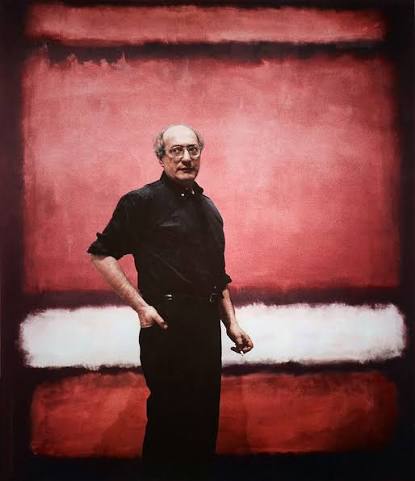
Mark Rothko: Light That Never Stops Speaking
Artist Spotlight · The Collection Editorial
“I am not an abstractionist. I am not interested in the relationship of color or form or anything else.”
Mark Rothko, interview with Selden Rodman, 1956
Stand in front of a Rothko long enough and something shifts. It happened famously at the Tate Modern in London, where visitors have been known to weep without quite understanding why, and it continues to happen at the Museum of Modern Art in New York, at the Rothko Chapel in Houston, and at the National Gallery of Art in Washington, where his works hold permanent pride of place. In 2023, a renewed wave of scholarly and curatorial attention brought Rothko's painting back to the center of global conversation, with exhibitions in Europe and major catalog essays reexamining the spiritual and philosophical dimensions of his mature canvases. For collectors and cultural institutions alike, the question is no longer whether Rothko matters.
Mark Rothko
Four Darks in Red, 1958
It is how to live well with the enormity of what he made. Marcus Rothkowitz was born in 1903 in Dvinsk, a city in the western reaches of the Russian Empire now known as Daugavpils in Latvia. He was the youngest of four children in a Jewish family that felt the full weight of political instability and antisemitic persecution in early twentieth century Russia. His father, a pharmacist named Jacob Rothkowitz, made the decision to send his sons to America ahead of the rest of the family, and Marcus arrived in Portland, Oregon in 1913 at the age of ten.
His father died shortly after the family reunited, and young Marcus was left to navigate adolescence in a country whose language and customs were still new to him. That experience of displacement and longing, of being perpetually between worlds, would surface again and again in his art, in images that seem always to be reaching toward something just beyond articulation. Rothko won a scholarship to Yale University in 1921, where he encountered the intellectual ferment of the American Ivy League but found the social atmosphere cold and the academic environment limiting. He left Yale without a degree and moved to New York City in 1923, eventually enrolling at the Art Students League under Max Weber, a painter who had studied in Paris and brought the influence of Cézanne and Cubism to his American students.
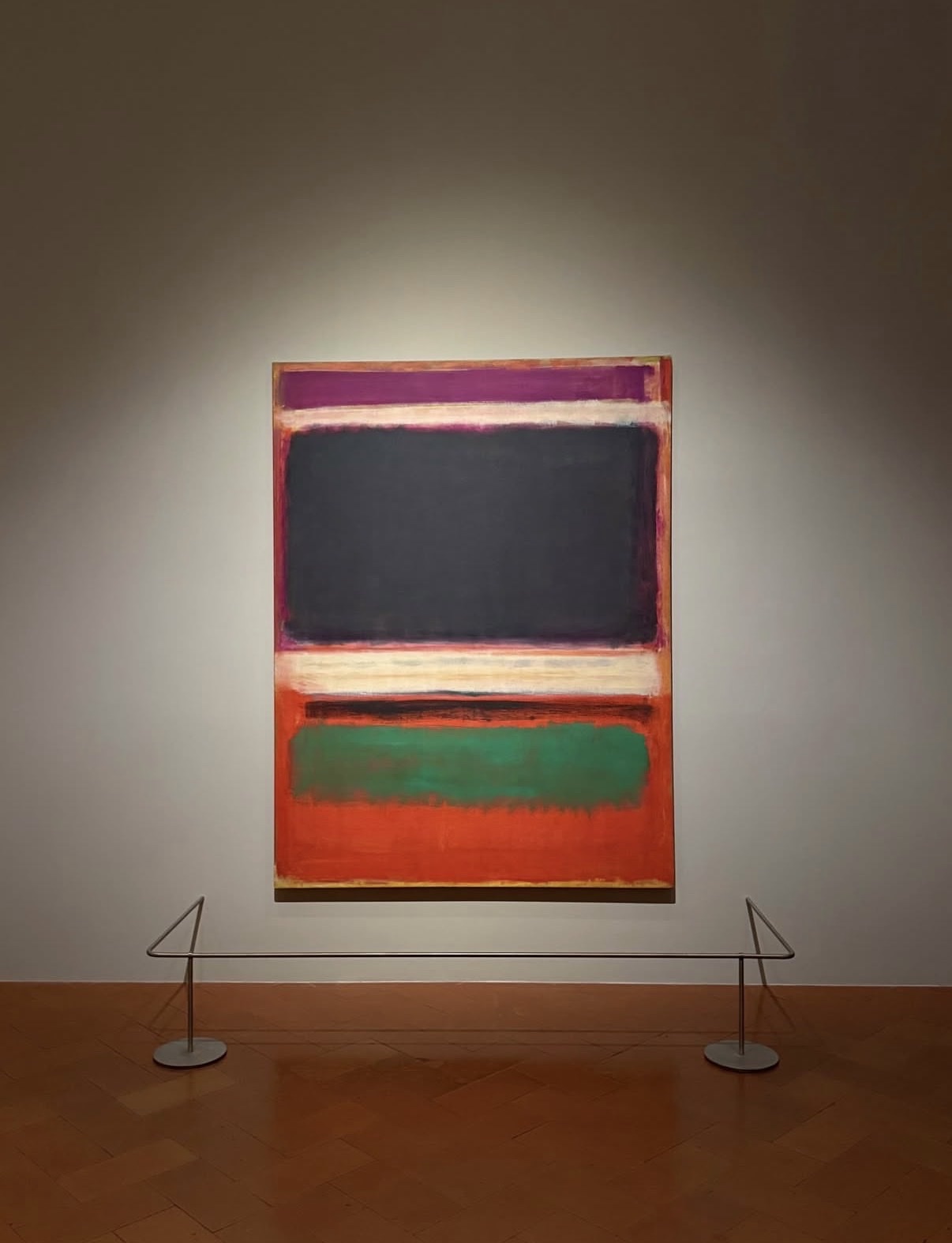
Mark Rothko
Four Darks in Red, 1958
New York in the 1920s and 1930s was a city thick with immigrant ambition and avant garde energy, and Rothko found his people among painters, writers, and philosophers who gathered in downtown studios and cafes. He became close friends with Milton Avery, whose luminous color harmonies and flattened forms would leave a lasting mark on Rothko's evolving visual language, and he co founded the artists group known as The Ten, which exhibited work that challenged the prevailing American realism of the period. The 1940s were years of profound transformation. Rothko moved through Surrealism and mythological abstraction, producing works that drew on Nietzsche, Greek tragedy, and Jungian psychology.
“A picture lives by companionship, expanding and quickening in the eyes of the sensitive observer.”
Mark Rothko, The Tiger's Eye, 1947
These paintings, dense with biomorphic shapes and archaic symbolism, were his way of reaching for what he called the tragic experience, a confrontation with primordial human emotion. By the late 1940s, the figures had dissolved entirely. What remained were luminous, hovering rectangles of color, softly edged and trembling with interior light. This was the breakthrough that would define the rest of his career.
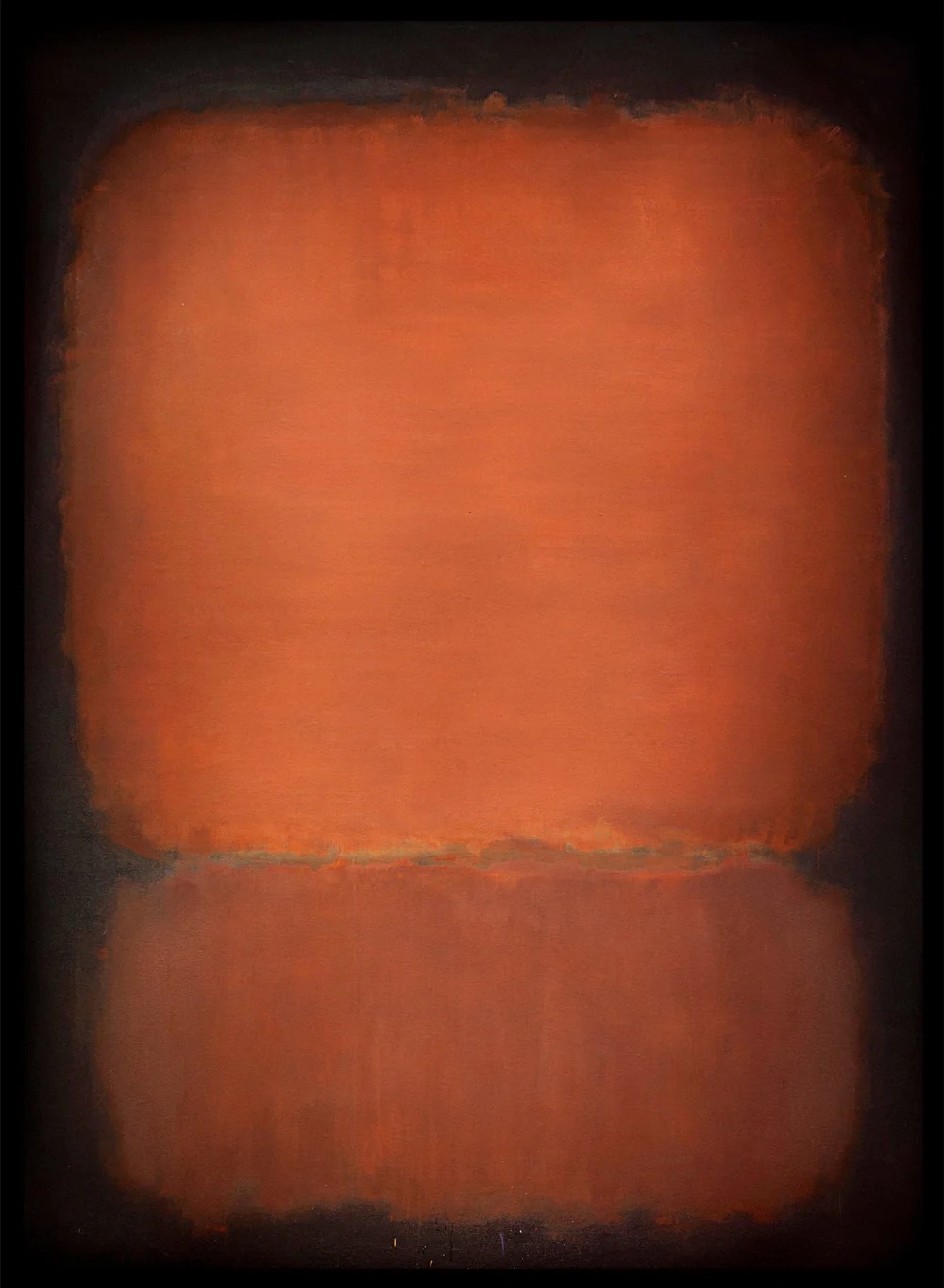
Mark Rothko
No. 10, 1958
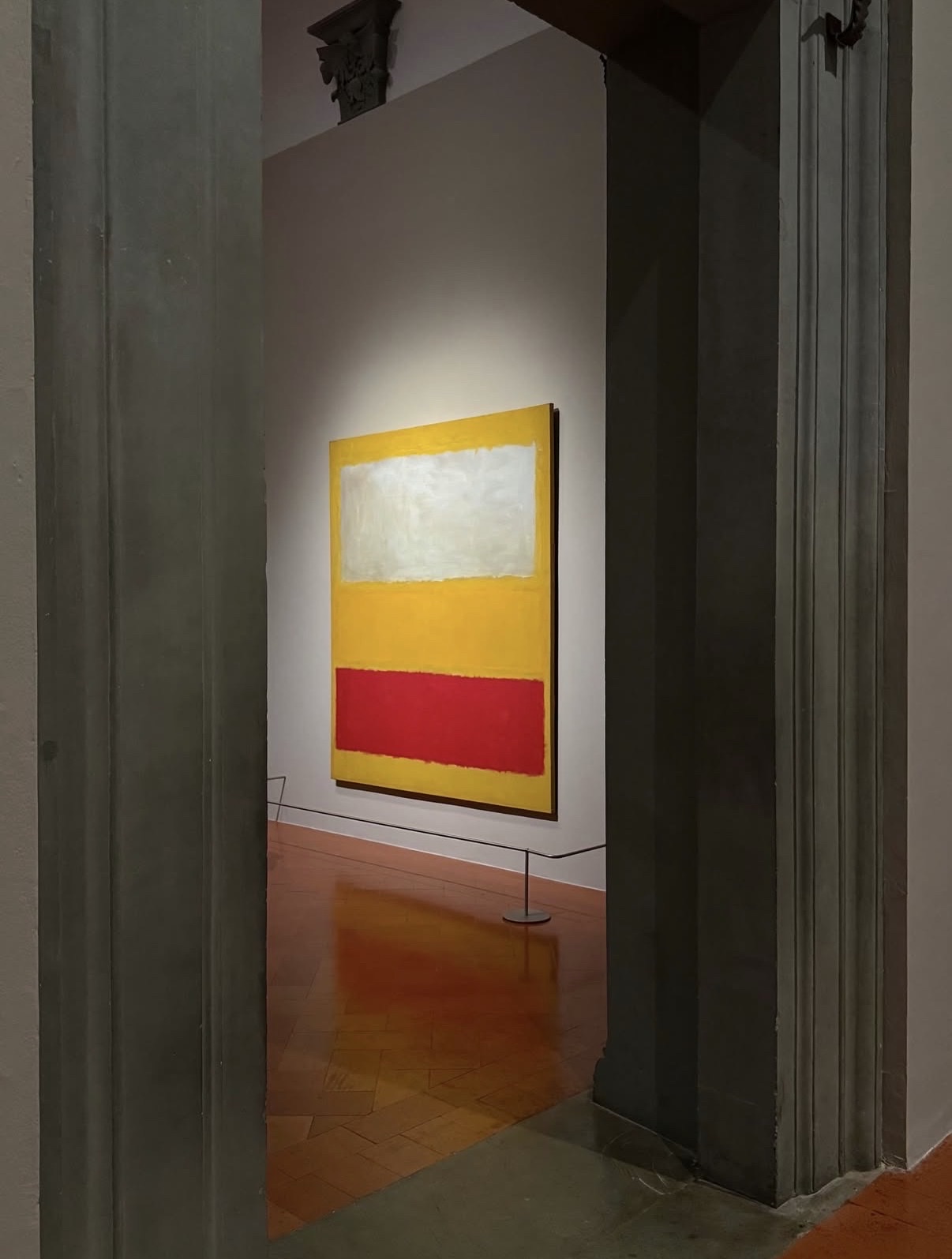
The so called multiforms gave way to the mature color field paintings by around 1949 and 1950, and Rothko never looked back. He had found the form that could carry everything he wanted to say, and say it without a single borrowed image or inherited symbol. The works from 1957 to 1969 represent the full flowering and the searching evolution of that vision. "White Center" from 1957 is among the most beloved paintings of the postwar era, a radiant stack of soft warm tones that pulses with an almost physical warmth.
“Silence is so accurate.”
Mark Rothko
"Four Darks in Red" from 1958 is monumental and grave, its deep burgundies and near blacks pressing against each other with an intensity that feels almost confrontational. "No. 10" from the same year shows the painter working at the height of his powers, orchestrating color relationships with the precision of a composer and the intuition of a mystic. Then there are the late works, the "Untitled (Black and Gray)" series from 1969, painted in the final year of his life, which strip away warmth entirely in favor of a hushed, austere dialogue between shadow and near shadow.
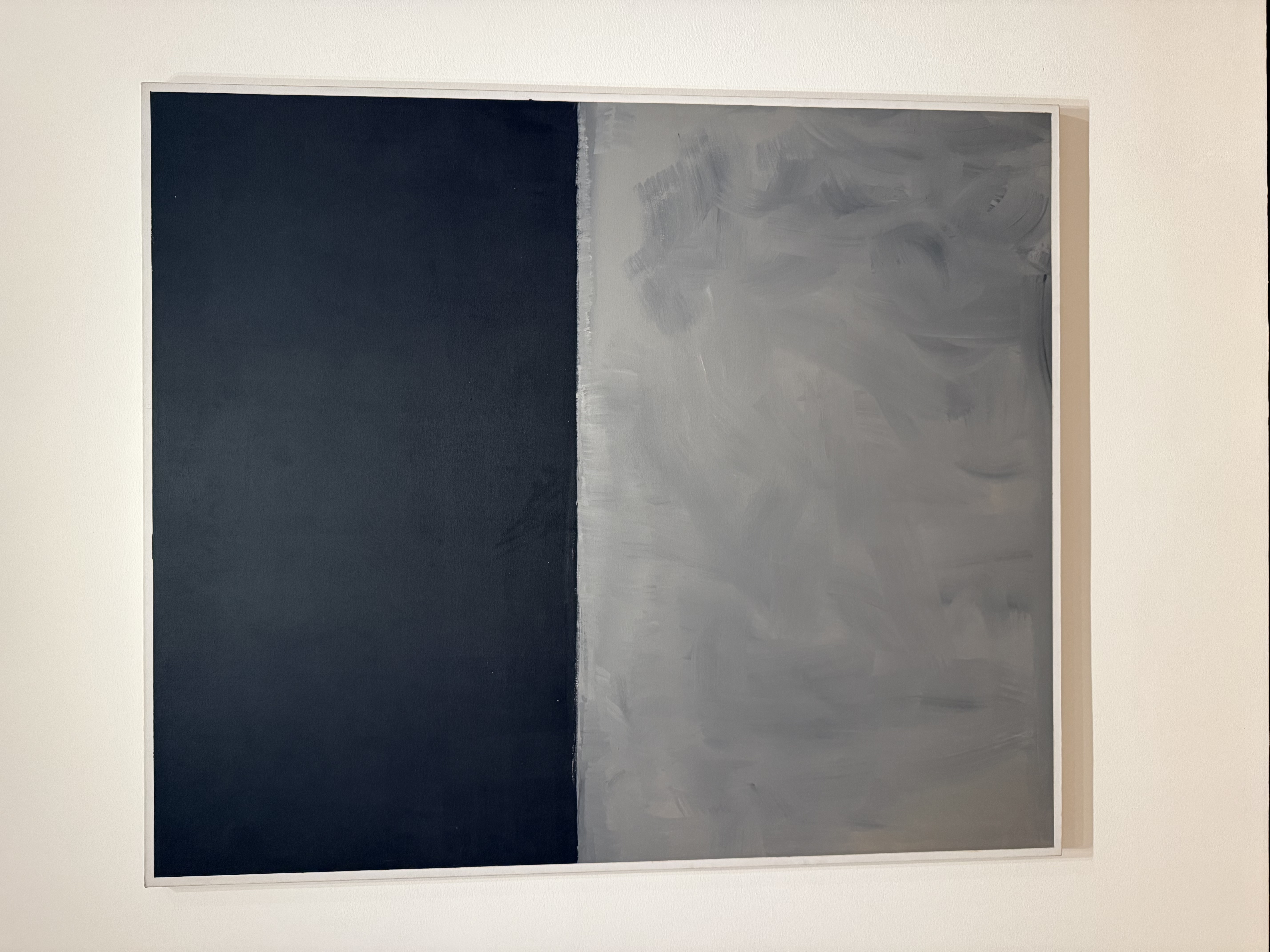
Mark Rothko
Untitled (Black and Gray), 1969
These canvases are among the most searching and quietly radical works of the twentieth century, and they continue to find devoted collectors and institutional champions around the world. For collectors, Rothko occupies a singular position in the market. He is among the most consistently sought after blue chip artists of the postwar period, and his auction records reflect not just financial demand but a deep cultural conviction about the enduring relevance of his work. "White Center (Yellow, Pink and Lavender on Rose)" set a landmark record when it sold at Sotheby's New York in 2007 for over 72 million dollars, at the time among the highest prices ever achieved for a postwar work.
Works on paper, early figurative drawings, and transitional pieces from the 1940s offer entry points for collectors building toward the iconic mature canvases. What to look for is the quality of the color relationships, the luminosity of the surface, and above all the sense that the painting is generating its own light from within rather than reflecting what falls upon it. When those conditions are met, a Rothko is among the most transformative objects a collector can live with. Rothko exists in art history alongside a remarkable generation of painters who collectively redefined what painting could aspire to be.
His peers in Abstract Expressionism, among them Barnett Newman, Clyfford Still, Franz Kline, and Willem de Kooning, shared his ambition to make art that operated on the scale of myth and emotion. But where Newman pursued the stark geometry of the zip and de Kooning embraced gestural turbulence, Rothko stayed faithful to a softer, more enveloping mode of address. His closest spiritual kin may be the color field painters who followed in his wake, artists like Morris Louis and Helen Frankenthaler, who took the primacy of color as their inheritance. Yet no one has replicated the particular atmosphere of a Rothko, that combination of grandeur and intimacy, of weight and weightlessness, that makes standing before one feel like a private conversation conducted at the highest possible volume of feeling.
Rothko died in New York in 1970, and the decades since have only deepened the world's understanding of what he gave us. The Rothko Chapel in Houston, completed the year of his death and opened in 1971, remains one of the most visited sites of contemplative art in the world, a non denominational sanctuary whose fourteen large scale paintings function as a sustained meditation on silence, mortality, and transcendence. Museums from the Kunstmuseum Basel to the National Gallery in Washington continue to build and refine their Rothko holdings, recognizing that his work belongs not to a moment but to the long arc of human expression. For collectors who encounter his paintings on The Collection, the invitation is the same one he extended to every viewer: come closer, stay longer, and let the color do what it was always meant to do.
Explore books about Mark Rothko
Mark Rothko: A Biography
James E. B. Craig
Mark Rothko
David Anfam
Rothko: The Color Field Paintings
Miguel López-Remiro

The Rothko Chapel
Dominique de Menil
Mark Rothko: Toward the Light in the Chapel
Brian O'Doherty
Rothko
Jeffrey Weiss
Mark Rothko: Paintings 1948-1969
Bonnie Clearwater