Mark di Suvero
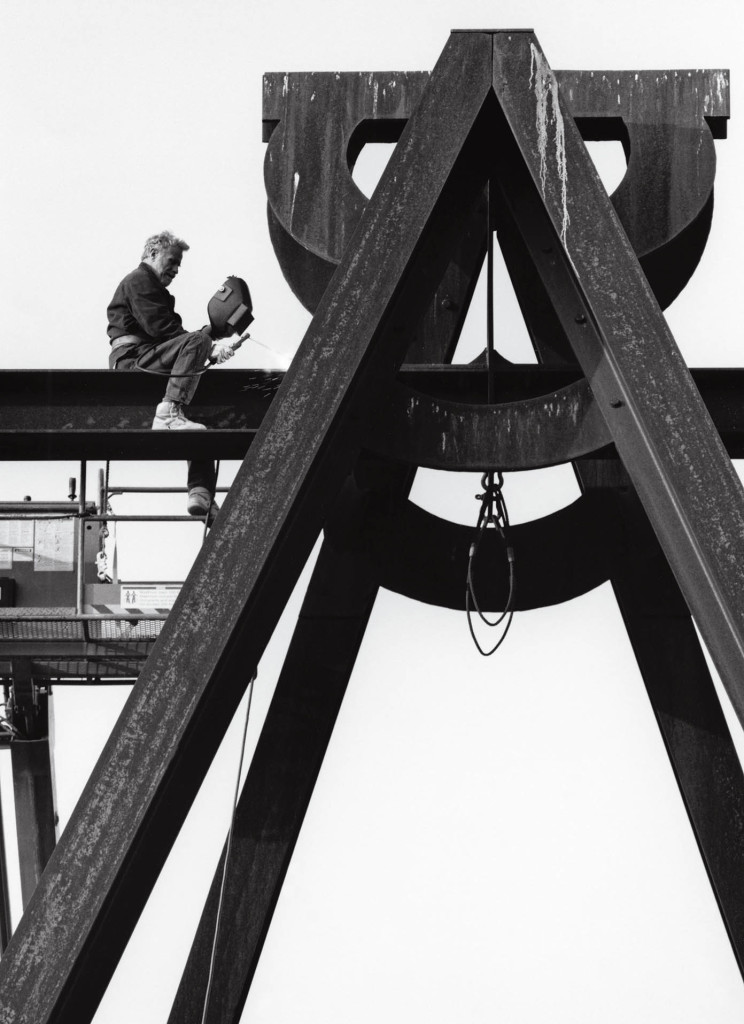
Mark di Suvero: Steel, Sky, and Wonder
Artist Spotlight · The Collection Editorial
“I want the viewer to be able to walk into my work, to be inside the energy of the piece.”
Mark di Suvero, interview
Standing before a Mark di Suvero sculpture is an experience that rewires the senses. His towering constructions of steel I beams and cables do not merely occupy space; they conduct it, pulling the eye upward and outward while grounding the body in something primal and immediate. In recent years, institutions from the Smithsonian to the San Francisco Museum of Modern Art have reaffirmed his place at the center of the American sculptural tradition, and the ongoing presence of his work in public plazas across New York, Chicago, and cities throughout Europe ensures that di Suvero remains one of the most encountered serious artists of the twentieth and twenty first centuries. For collectors, the moment to look closely at his work across all scales and media has never felt more alive.
Mark di Suvero
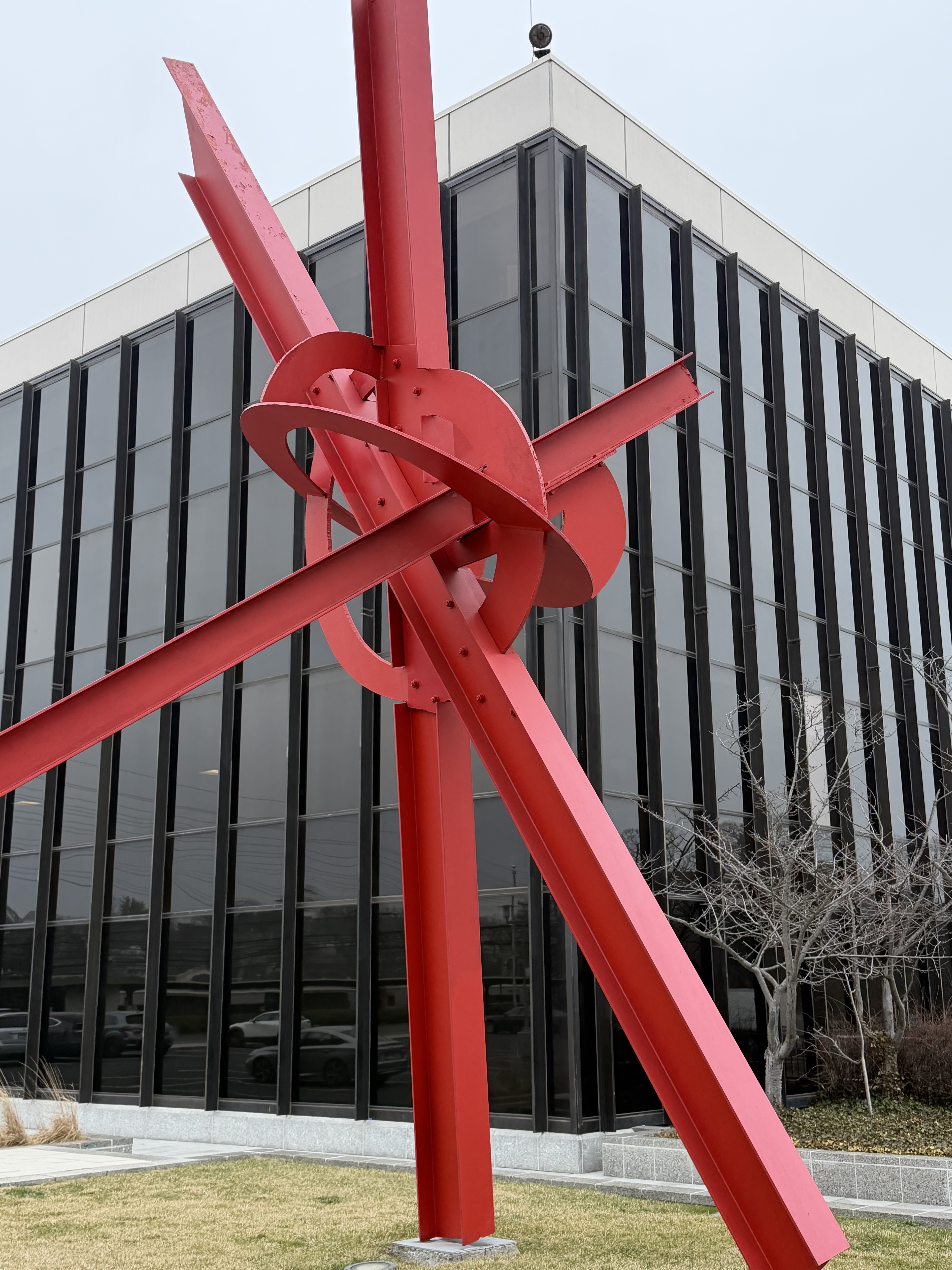
Borealis
Di Suvero was born in Shanghai in 1933 to Italian parents, a origin story that already speaks to a life lived between cultures and in motion. His family relocated to California when he was a child, and it was on the West Coast that he absorbed the physical grandeur of the American landscape and developed an early love of building and making. He studied philosophy and art at the University of California, Santa Barbara and later at UC Berkeley, where he encountered the intellectual currents of postwar thought alongside a hands on engagement with materials. That combination of philosophical inquiry and physical labor would define his sensibility for decades to come.
Di Suvero arrived in New York in the late 1950s and immediately immersed himself in the downtown arts community that was then remaking American culture. He found kindred spirits among the painters of Abstract Expressionism, responding to their gestural energy not with brushwork but with timber, rope, and salvaged industrial debris. His early exhibitions at the Green Gallery in the early 1960s announced a startlingly original vision: sculpture that felt improvised and urgent, stacked and cantilevered in ways that seemed to defy physics while honoring the raw reality of urban material life. A serious construction accident in 1960 left him temporarily wheelchair bound, yet rather than diminishing his ambition, the experience deepened his commitment to making work that was fully, boldly physical.
Mark di Suvero
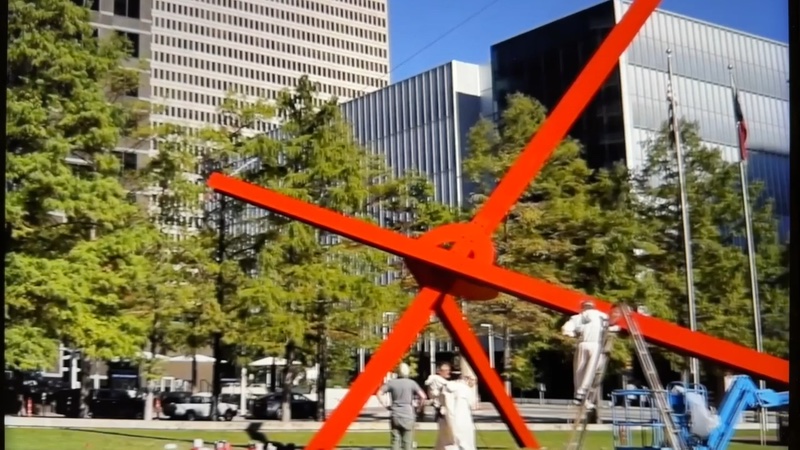
Ave
Through the 1960s and into the 1970s, di Suvero's practice expanded into the monumental register that would become his signature. He began working with industrial steel, acquiring I beams and heavy plate from shipyards and construction sites and welding them into soaring open compositions that could stand forty or fifty feet tall. Works like Declaration from the early 1970s and the celebrated installations he organized through the collective Athena Foundation demonstrated that large scale sculpture could be both intellectually rigorous and genuinely democratic, placed in parks and public spaces where anyone could walk among them. His 1975 retrospective across multiple outdoor sites in New York, organized while he was living and working in Europe as a form of protest against the Vietnam War, became a landmark moment in the history of American public art.
The works available through The Collection offer a rare window into the full range of di Suvero's output. Borealis and Ave represent the welded and painted steel vocabulary at the heart of his reputation: dynamic, asymmetric, and charged with a sense of arrested movement. Mayakovsky from 1976, in rusted steel, carries the particular gravitas of work made during his most politically engaged period, named for the Russian Futurist poet and carrying something of that tradition's faith in art as a force for social transformation. From Antarctica from 2008 demonstrates how his formal language continued to evolve well into the twenty first century, combining steel and stainless steel to create effects of weight and lightness in productive tension.
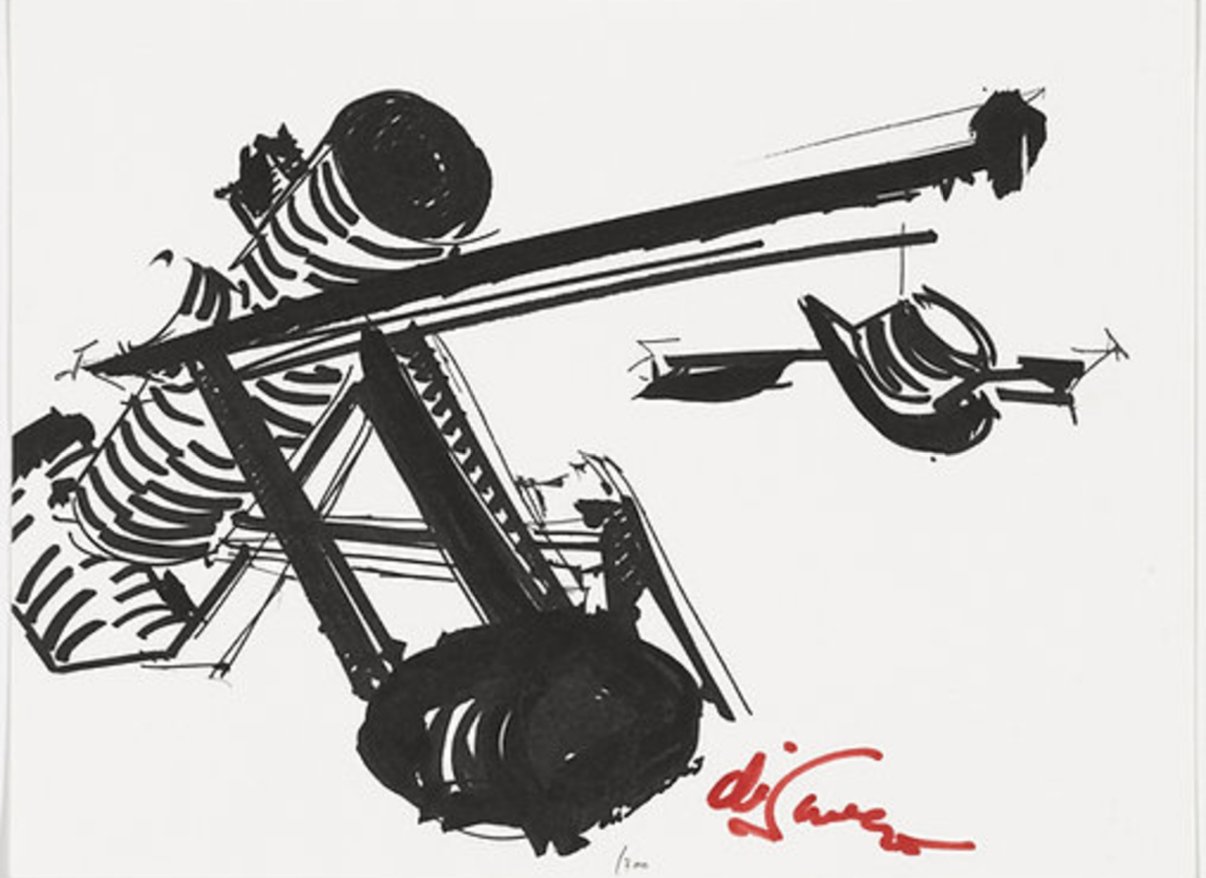
Mark di Suvero
Untitled from The New York Collection for Stockholm, 1973
Even the multiples, including Moon Dog in nickel plated aluminum and Rising for Walt Whitman in copper plated aluminum, carry the essential di Suvero charge: an expansive optimism expressed through material intelligence. For collectors, di Suvero occupies a rare position in the market. He is among a small number of postwar American sculptors whose work commands serious institutional attention while remaining genuinely collectible across a range of scales and price points. Works on paper, prints, and multiples provide entry points that reward close attention, and the screenprint Untitled from The New York Collection for Stockholm dating to 1973 connects the collector to one of the most significant curatorial projects of that era.
At the upper end of the market, major welded steel sculptures have achieved significant results at auction, and museum quality works that come to market rarely remain available for long. The advice of experienced advisors is consistent: di Suvero is an artist whose work repays long term commitment. In the broader landscape of postwar and contemporary sculpture, di Suvero belongs to a lineage that includes David Smith, whose pioneering use of industrial steel opened the path di Suvero would walk and extend. His work also resonates with that of Alexander Calder, particularly in the way both artists engaged with movement and the outdoor environment, and with Richard Serra, whose investigations of weight and material share a philosophical seriousness if not di Suvero's warmer, more lyrical sensibility.
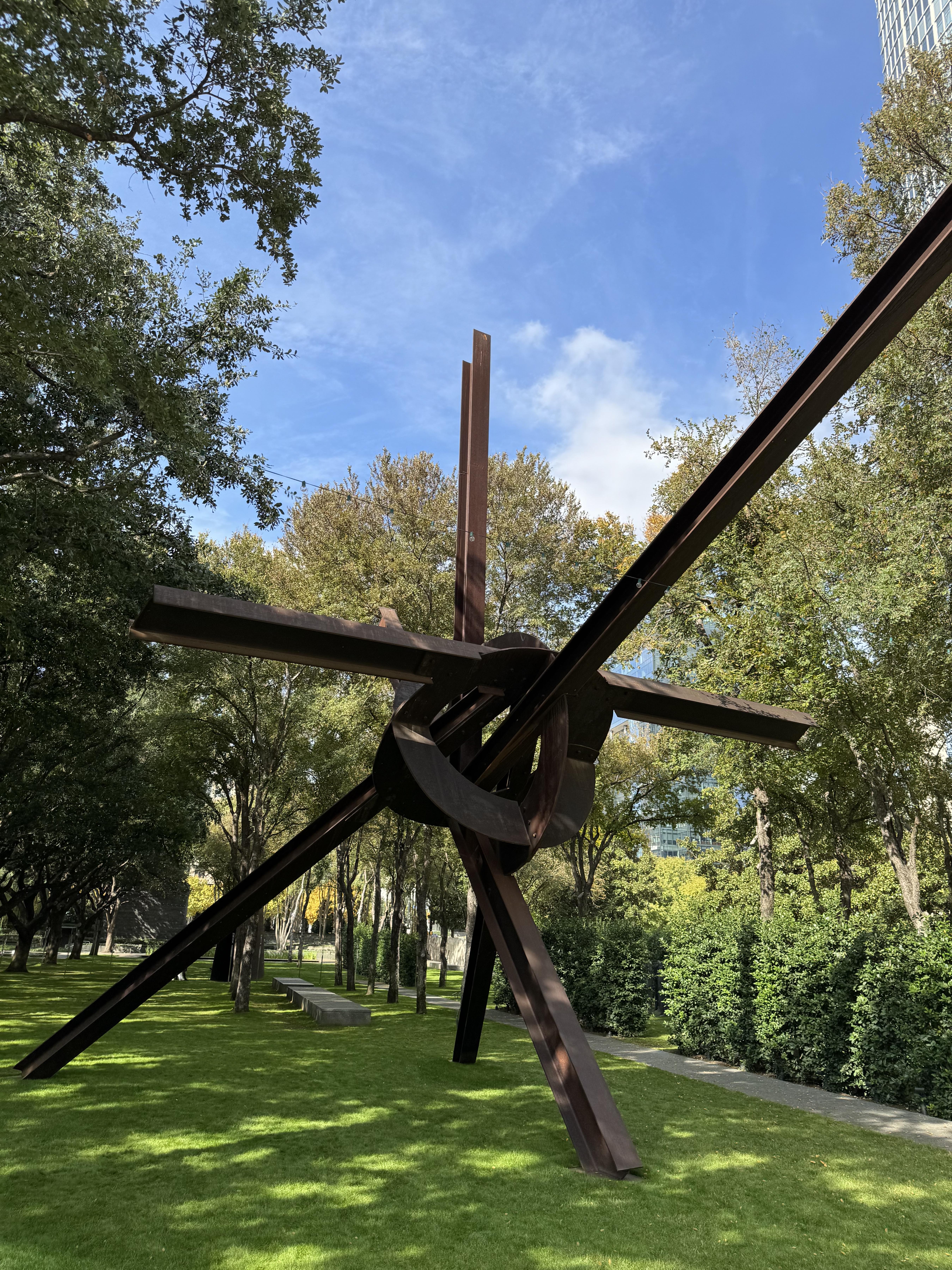
Mark di Suvero
Untitled
Internationally, his practice connects to Arte Povera and to the Constructivist tradition that named Mayakovsky as a hero. Understanding di Suvero means understanding the full arc of sculpture as it moved from the studio into the world. What makes di Suvero matter today, beyond the biographical achievement and the market fundamentals, is the quality of feeling his work consistently produces. In an era of screens and miniaturization, his insistence on the large, the physical, and the durably made carries a quiet radicalism.
His sculptures ask viewers to use their bodies, to walk around and beneath and between, to feel the shadow of steel on their skin. That invitation, extended now for more than six decades, speaks to something enduring in the human need to encounter beauty at a scale that insists on its own reality. To collect di Suvero is to align oneself with that faith, and with one of the most consequential artistic visions the twentieth century produced.
Explore books about Mark di Suvero