Lucian Freud
Lucian Freud: The Gaze That Reveals All
Artist Spotlight · The Collection Editorial
“The painter must give a completely free rein to any feelings or sensations he may have and reject nothing.”
Lucian Freud, Some Thoughts on Painting, 1954
When the National Portrait Gallery in London staged its landmark Lucian Freud retrospective in 2022, marking a decade since the painter's passing, the queues stretched around the building. Visitors came not merely to pay respects to a titan of British art but to stand before works that still crackle with an almost unbearable vitality. Freud's paintings do not hang quietly. They insist.
Lucian Freud
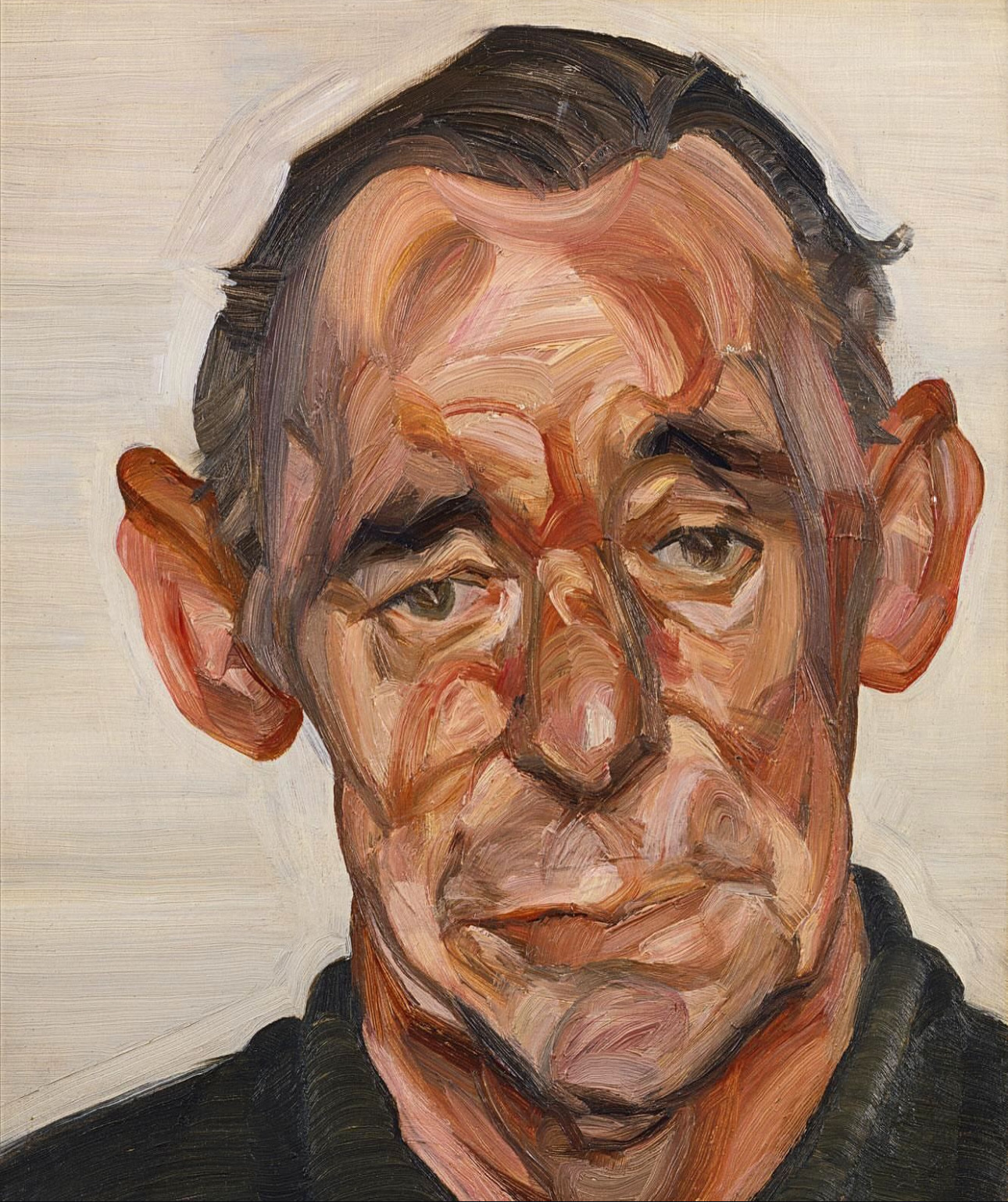
John Deakin, 1964
They demand you look back with the same unblinking honesty with which they were made, and in that mutual confrontation lies the enduring power of one of the twentieth century's most singular artistic visions. Lucian Freud was born in Berlin in 1922, the grandson of Sigmund Freud and the son of architect Ernst Freud. The family's intellectual pedigree was formidable, their social world saturated with ideas about the interior life, desire, and the hidden architecture of the human psyche. When the family relocated to London in 1933, fleeing the rise of National Socialism, the young Lucian absorbed the particular atmosphere of a city that was both refuge and stage.
He studied at the Central School of Arts and Crafts and later at Goldsmiths College, before spending time at the East Anglian School of Painting and Drawing under Cedric Morris, an experience he later described as foundational. Britain gave Freud a home, a community, and eventually a mythology, and he repaid the gift with a body of work that redefined what British painting could be. Freud's early canvases betray a clear fascination with Surrealism, with the closely observed strangeness of ordinary objects and faces rendered with a taut, almost hallucinatory precision. Works from the late 1940s and early 1950s show smooth, enamel like surfaces and an intensity of focus that recalls the Northern European masters he admired, particularly Dürer and the early Flemish painters.
Lucian Freud
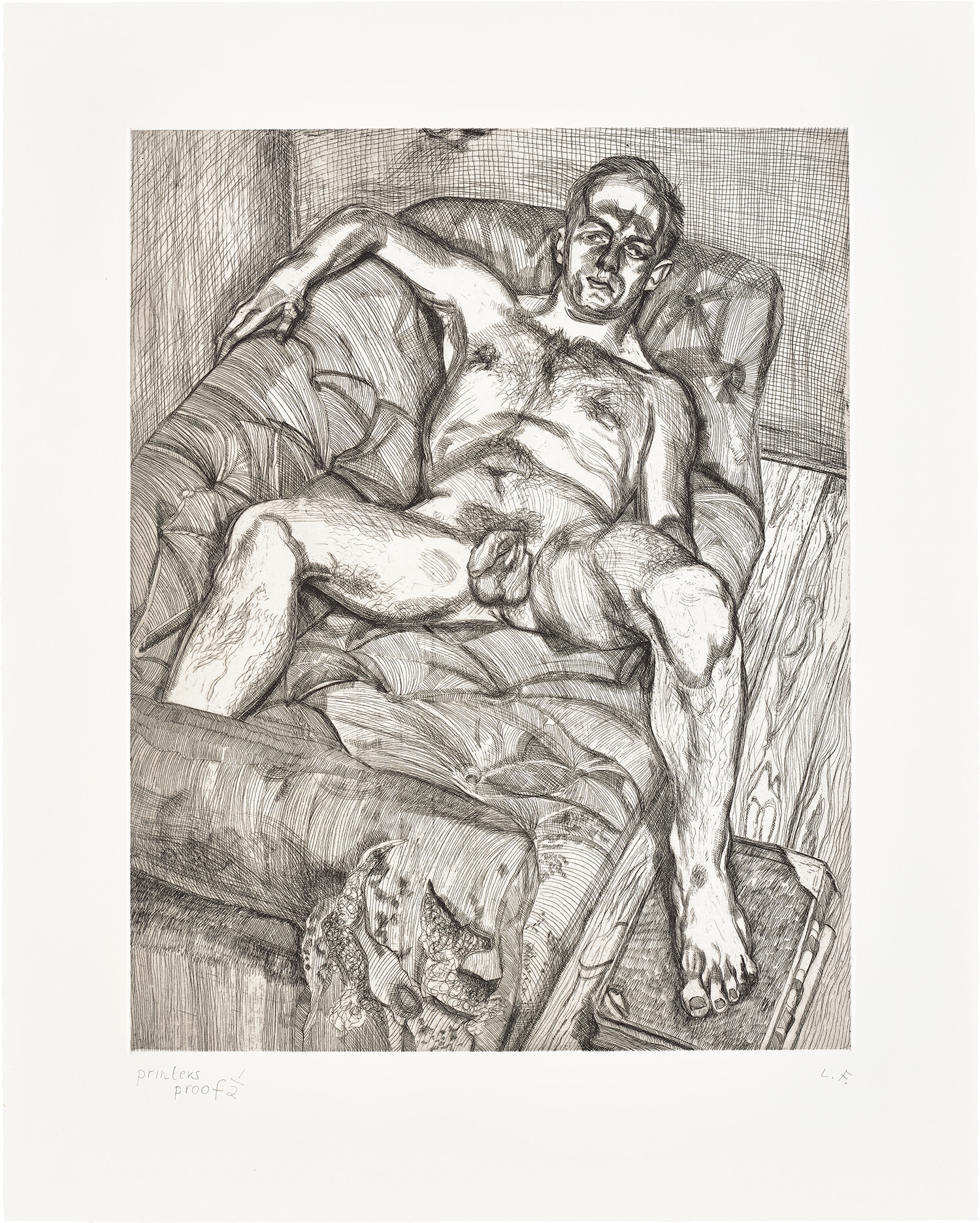
Man Posing (H. 27, F. 44, T. 37)
The shift toward his mature style came gradually through the 1950s and accelerated into the 1960s. He began loading his brush with more pigment, allowing paint to accumulate and heap upon itself, building surfaces that mirrored the weight and texture of living flesh. This was not merely a technical evolution. It was a philosophical one, a deepening commitment to the idea that painting could make visible the full, complicated reality of a human being.
“I want paint to work as flesh. I want it to feel like a person, not like a painting of a person.”
Lucian Freud, interview with William Feaver
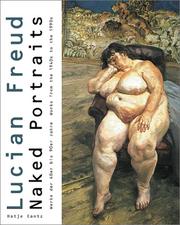
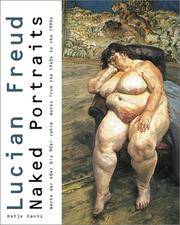
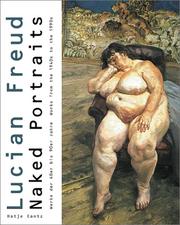
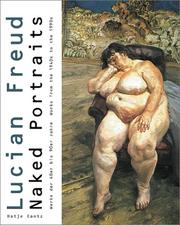
By the time Freud completed works like the majestic Benefits Supervisor Sleeping in 1995, featuring his longtime model Sue Tilley and sold at Christie's New York in 2008 for 33.6 million dollars, a record for a living artist at that moment, his reputation was beyond question. The painting is everything Freud stood for: monumental in scale, tender in attention, and completely without condescension. His subjects were friends, lovers, family members, fellow artists, and strangers drawn into his studio on Notting Hill and later in Holland Park, where sessions could last months or even years.
Lucian Freud
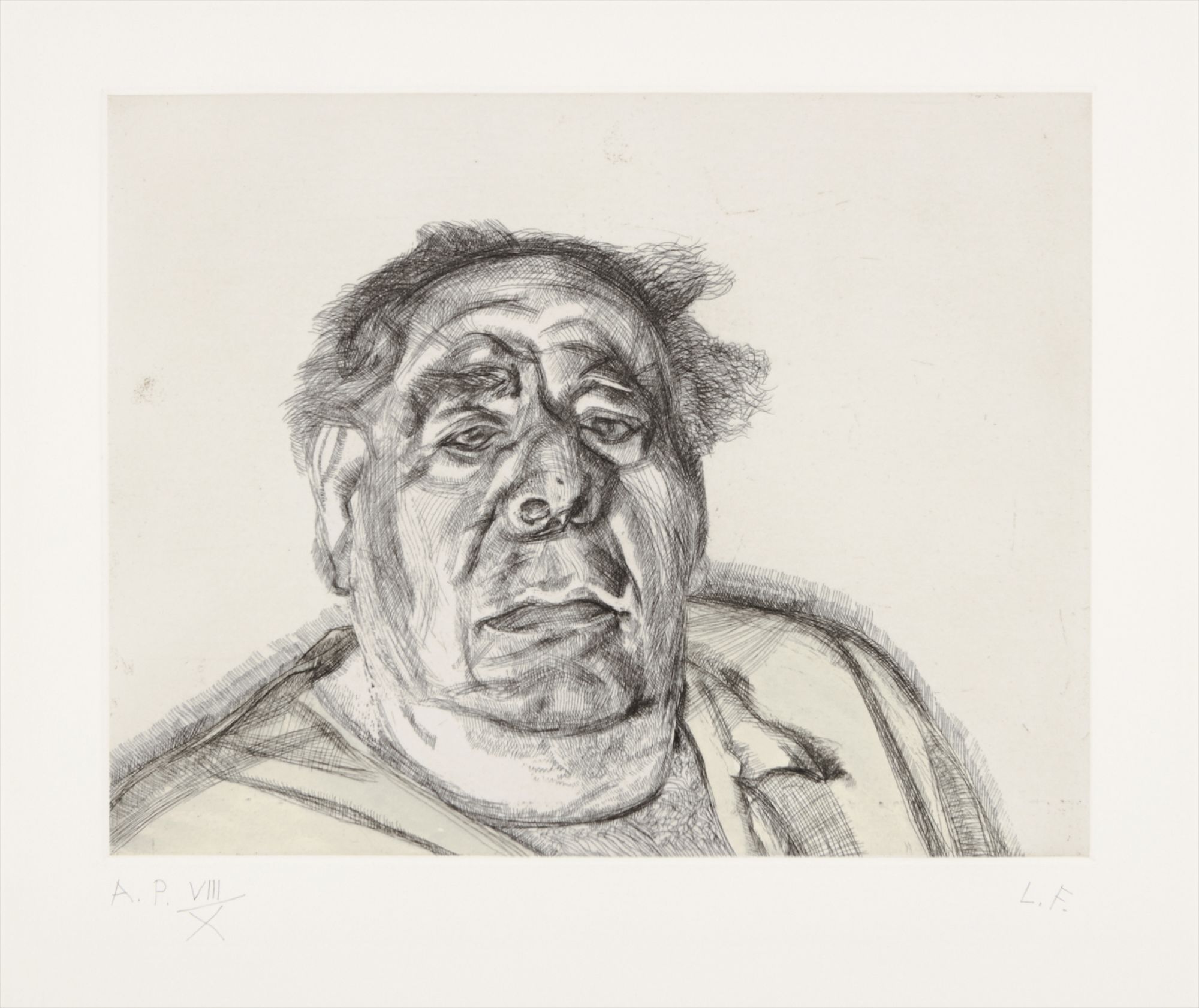
Lord Goodman in His Yellow Pyjamas
The painter and model shared a kind of devotional time together, and the resulting canvases carry that accumulated duration inside them like a charge. Among the finest examples of his printmaking practice are works such as John Deakin from 1964, a portrait of the celebrated Soho photographer and habitué of the Colony Room, rendered with a ferocious psychological acuity that reveals the subject's fragility and force simultaneously. For collectors, Freud presents one of the most compelling propositions in the postwar British canon. His oils are held in the greatest public and private collections in the world, from the Tate and the Museum of Modern Art to the holdings of major European and American foundations.
But it is Freud's prints and etchings that offer a particularly rewarding point of engagement for the discerning collector. Working with the printer Marc Balakjian at Studio Prints in London, Freud produced a body of etchings of remarkable intimacy and authority. Works such as Small Naked Portrait from 2005, Girl Holding Her Foot, Esther, and The New Yorker demonstrate that he brought the same psychological intensity to the etching needle that he applied to the loaded brush. These works on paper, often issued in modest editions on fine Somerset or Rives BFK papers, allow the collector to enter into Freud's practice at an approachable level while acquiring objects of genuine historical significance.
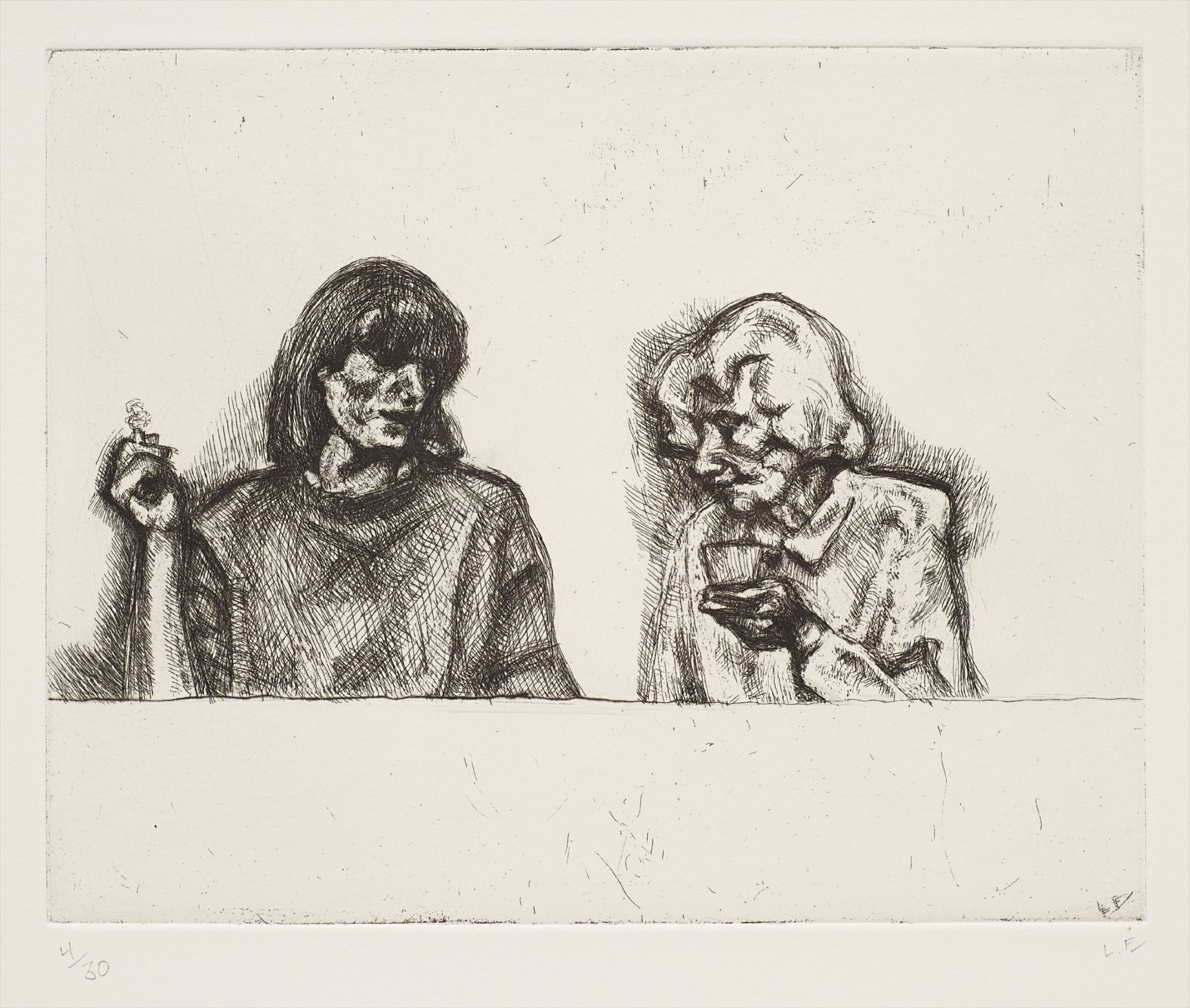
Lucian Freud
Conversation
The hand coloring found in exceptional impressions such as Lord Goodman in His Yellow Pyjamas adds another dimension entirely, bridging the distance between the reproductive and the unique. Freud occupies a complex and fascinating position within the broader map of postwar figurative painting. He is inevitably discussed alongside Francis Bacon, his close friend and rival during the extraordinary years of the 1950s and 1960s, when both men haunted Soho's drinking clubs and pushed British painting toward an existential rawness it had never previously known. Yet Freud's project is in crucial ways distinct from Bacon's.
Where Bacon dissolved the figure into sensation and smear, Freud held the figure steady and looked harder. His affinities extend to Frank Auerbach and Leon Kossoff, fellow painters of the so called School of London whose commitment to representation in the face of abstraction's dominance now looks not like conservatism but like courage. International comparisons can be drawn with Balthus, with the German Neo Expressionists, and with Eric Fischl, whose American figurative practice shares Freud's interest in vulnerability and domestic space. The legacy of Lucian Freud is both vast and still unfolding.
His influence on younger generations of figurative painters, from Jenny Saville to Cecily Brown, is direct and acknowledged. More broadly, he demonstrated that painting the human body with absolute seriousness was not a retreat from modernity but one of its most demanding frontiers. He was made a Companion of Honour in 1983 and received the Order of Merit in 1993, recognitions that placed him in the company of artists and thinkers who had genuinely altered the culture. He worked until the last months of his life, completing The Painter Surprised by a Naked Admirer shortly before his death in London in July 2011.
That image of the artist caught mid act, brush in hand, paint on his coat, slightly bewildered by the world pressing in, feels like the perfect final self portrait. He gave everything to the work, and the work gave everything back.
Explore books about Lucian Freud
Lucian Freud
Lawrence Gowing
Lucian Freud: Paintings
William Feaver
Lucian Freud: The Self-Portraits
Catherine Lampert
Lucian Freud
Robert Hughes
Lucian Freud: A Life
Michael Peppiatt
Lucian Freud: Nudes
Catherine Lampert
Lucian Freud: Works on Paper
William Feaver
Lucian Freud and the Kitaj Circle
Catherine Lampert