Louise Bourgeois

Louise Bourgeois: Art's Most Fearless Inner Life
Artist Spotlight · The Collection Editorial
“Art is a guarantee of sanity. That is the most important thing I have said.”
Louise Bourgeois
In 2022, the Tate Modern in London staged a landmark survey of Louise Bourgeois that drew record audiences and reaffirmed what the art world has known for decades: this is one of the defining artistic visions of the modern era. Her giant bronze and steel spider, Maman, continues to preside over the museum's Turbine Hall in cultural memory, a totemic image that has become synonymous with the power of art to transform private grief into universal feeling. Bourgeois died in 2010 at the age of ninety eight, yet her presence in the market, in museum programming, and in the hearts of collectors has only grown more urgent with time. She is one of those rare figures whose biography and output feel genuinely inseparable, and whose relevance to our conversations about identity, gender, and psychological truth seems to deepen with every passing year.
Louise Bourgeois
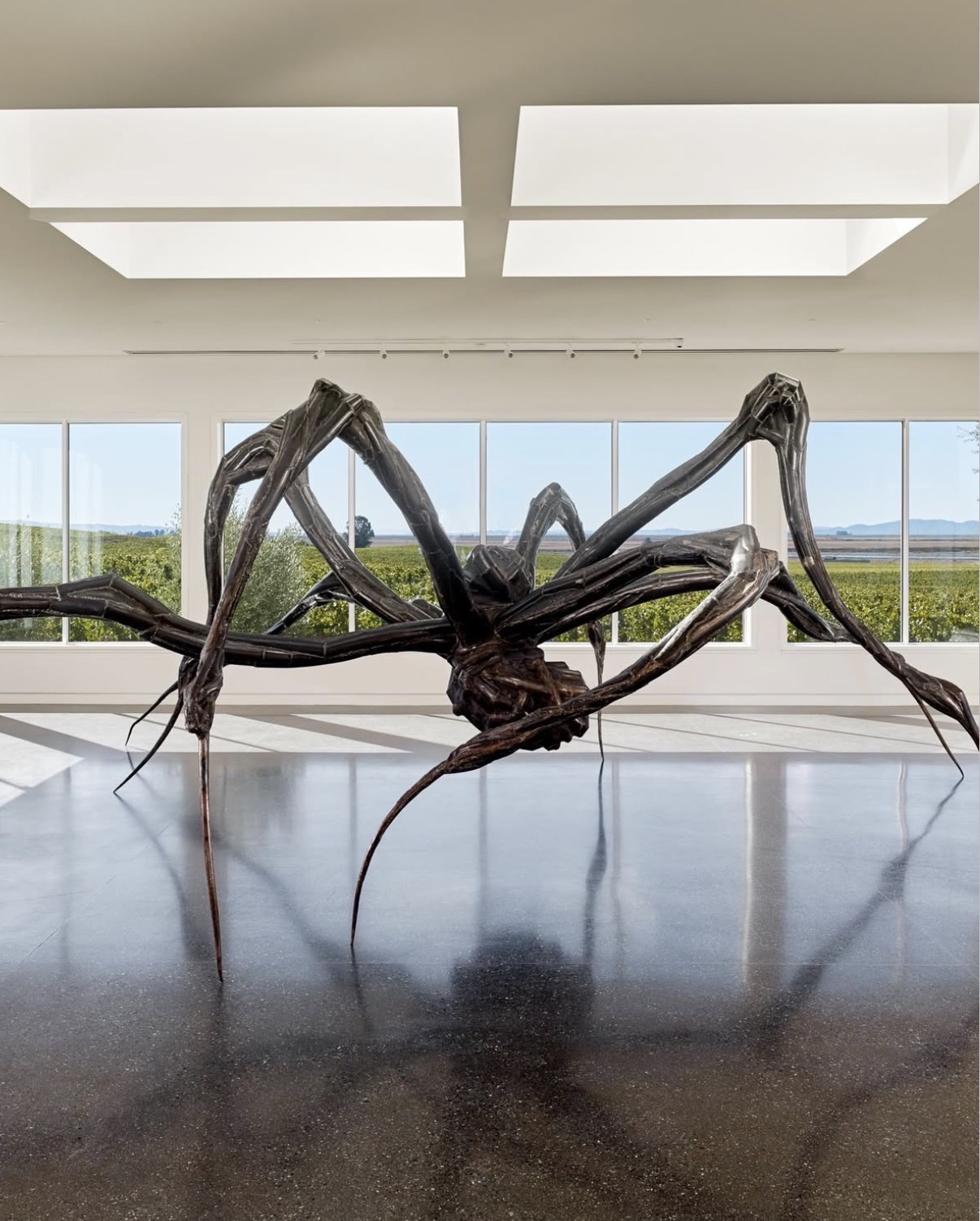
Crouching Spider, 2003
Louise Bourgeois was born in Paris on 25 December 1911, the second child of a family whose livelihood depended on the restoration and weaving of antique tapestries. Her childhood was spent among the languorous, laborious rhythms of the workshop, and from a very young age she understood that making things with one's hands was a form of both labor and love. The domestic world she inhabited was also one shadowed by betrayal: her father Louis conducted a decade long affair with her English tutor, Sadie Gordon Richmond, who lived under the family roof. This wound, which Bourgeois would return to again and again across seven decades of work, became the psychic engine of her entire practice.
She studied mathematics at the Sorbonne before turning to art history and then painting, training in Paris under Fernand Léger among others before making the decisive move that would shape her future. In 1938 Bourgeois married the American art historian Robert Goldwater and relocated to New York, a city whose energy and intellectual ambition suited her perfectly. She immersed herself in the émigré art world of wartime Manhattan, encountering Surrealism at close range through figures such as André Breton and Marcel Duchamp. Though she absorbed their interest in the unconscious and in the erotic charge of objects, she was never content to simply adopt their methods.
Louise Bourgeois
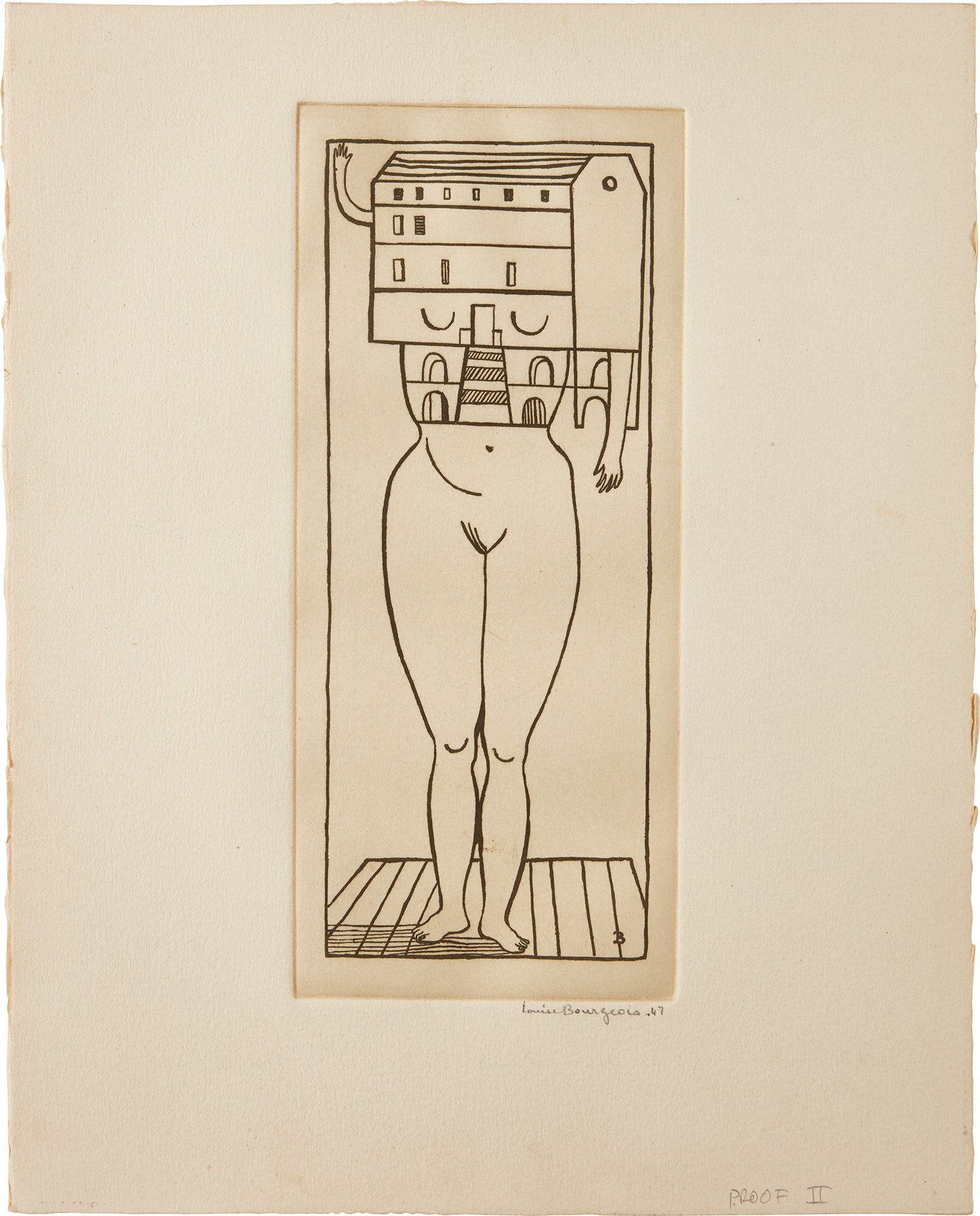
Femme Maison (see MoMA 548.2)
Her early paintings and prints of the 1940s, including the haunting Femme Maison series begun around 1945 to 1947, in which female figures are depicted with houses replacing their heads and torsos, announced a vision that was distinctly her own: intimate, formally inventive, and alert to the traps that domesticity and expectation set for women. These works were quietly radical at the time and are now recognized as foundational texts of feminist art history. Her mature sculptural practice emerged through the 1950s and 1960s with her wooden Personage sculptures, totemic vertical forms that recalled both Brancusi and African sculpture while remaining deeply personal. It was not until a major retrospective at the Museum of Modern Art in New York in 1982, organized when Bourgeois was already seventy one years old, that the broader art world fully recognized what had been quietly accumulating across four decades.
“I am not what I am. I am what I do with my hands.”
Louise Bourgeois
The exhibition was revelatory. Her Cells installations of the 1990s, enclosed architectural environments filled with objects, mirrors, doors, and scent, demonstrated an artist working at the absolute height of her powers, able to make viewers feel simultaneously observed and exposed. The spider sculptures that culminated in the monumental Maman of 1999 synthesized everything: maternal power, architectural scale, psychological menace, and tenderness held in perfect equipoise. For collectors, Bourgeois offers an extraordinary range of entry points across medium and scale.
Louise Bourgeois
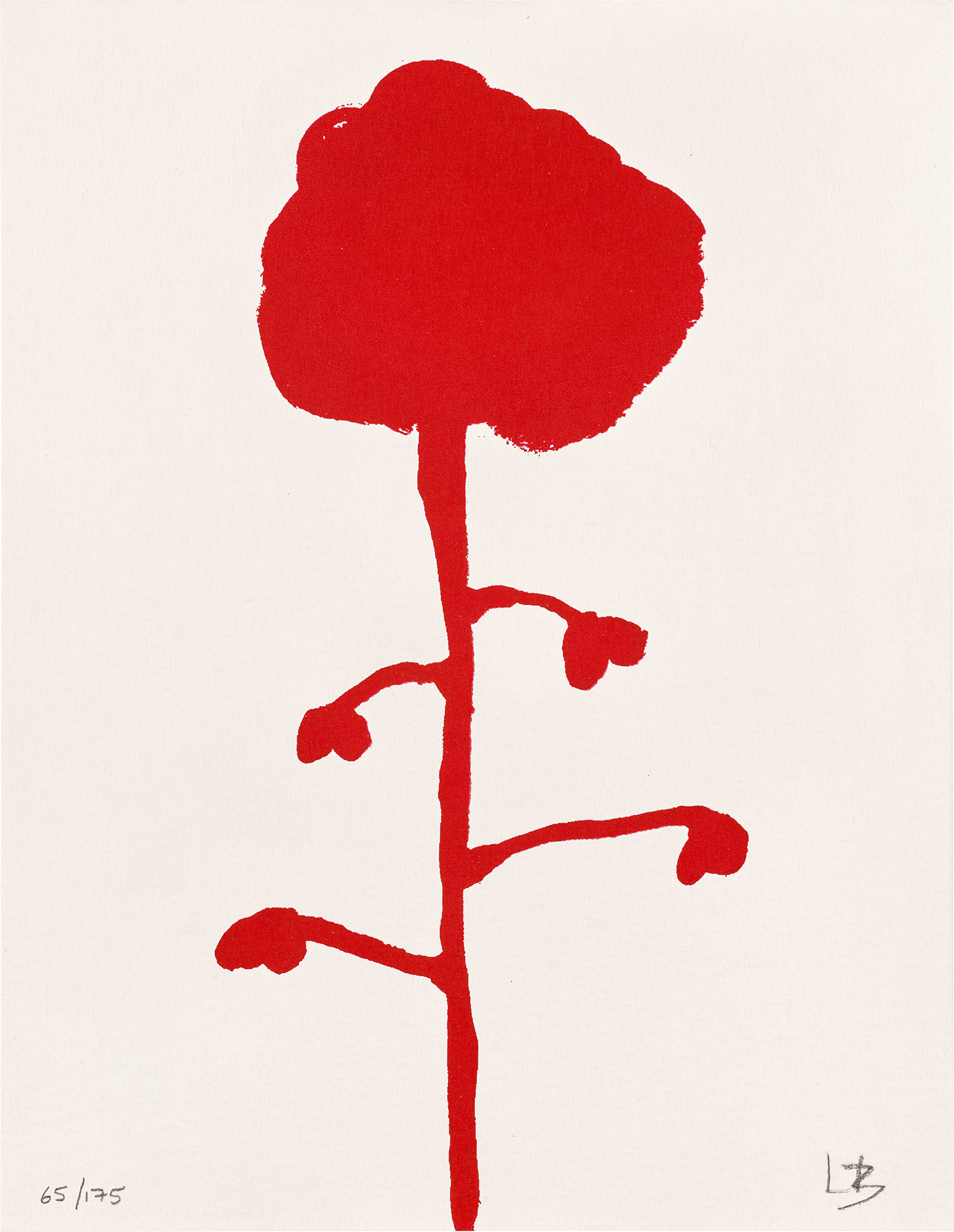
Les Fleurs (MoMA 698)
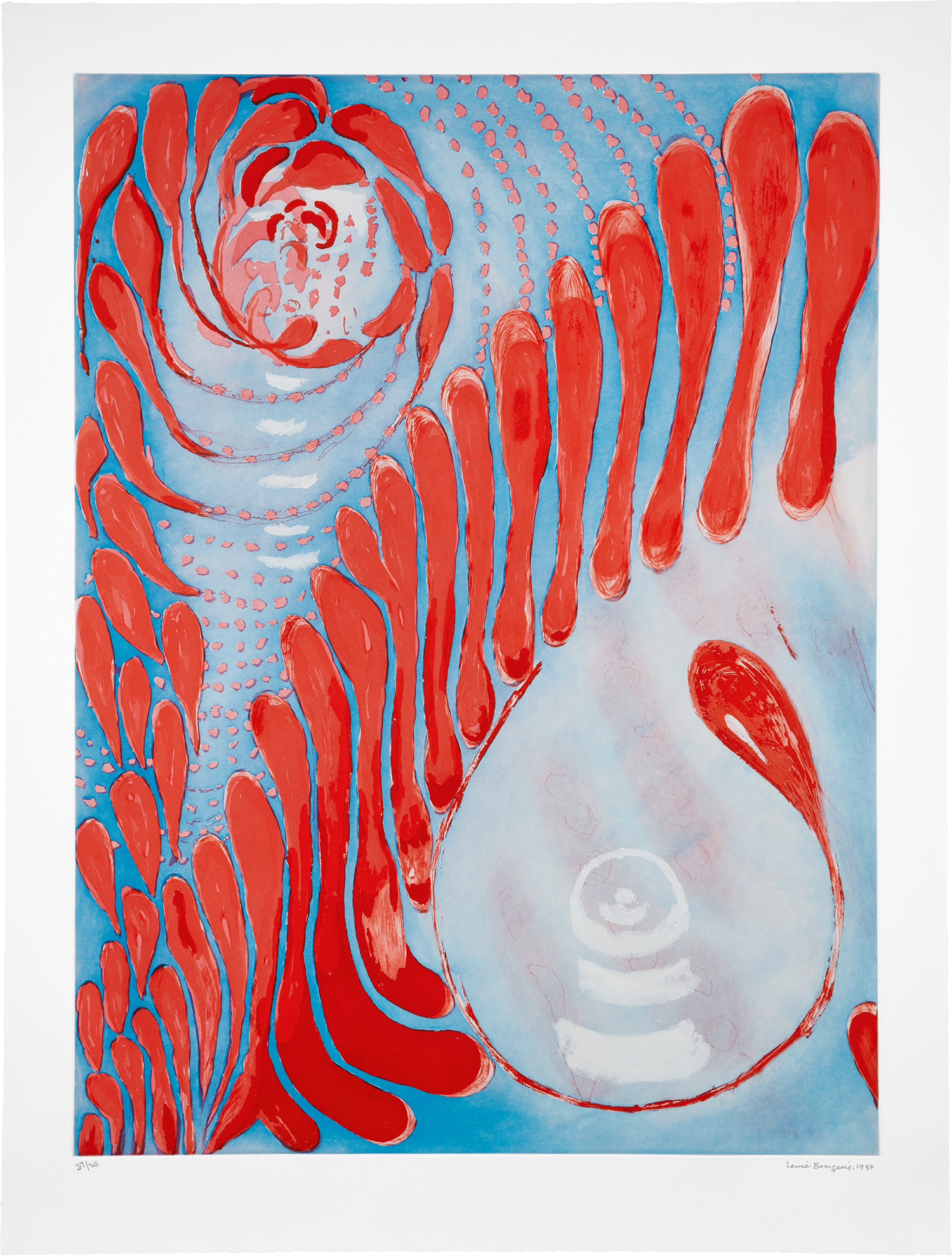
Her printmaking practice, sustained over many decades, produced works of exceptional beauty and conceptual weight. The Femme Maison prints, including the rare 1984 proof editions that preceded the published edition of 1990 by Lelong Éditeur in Paris, are among the most sought after works on paper by any postwar artist. Her Paris Review etchings and aquatints, produced in the Surrealist tradition of artist contributions to literary journals, display her graphic intelligence at its most refined. Textile works such as Couple from 2002, which encases fabric forms in an aluminium, glass, and wood vitrine, show how tenderly and unexpectedly she could deploy the domestic materials of her childhood.
“The spider is an ode to my mother. She was my best friend.”
Louise Bourgeois
The bronze Crouching Spider of 2003 represents one of the most powerful and collectible expressions of her spider mythology, a work that carries the full emotional authority of the monumental Mamans but at a scale accessible to private collections. Within art history, Bourgeois occupies a singular position precisely because she resists easy categorization. She is claimed by Surrealism, by feminism, by Minimalism, and by Expressionism, yet belongs completely to none of these movements. Collectors drawn to her work often find themselves drawn also to the charged psychological object making of Eva Hesse, whose early death in 1970 cut short a practice that rhymed powerfully with Bourgeois's exploration of organic form and vulnerability.
Louise Bourgeois
Paris Review (MoMA 567)
The confessional autobiographical intensity of her work anticipates artists such as Tracey Emin and Kiki Smith, both of whom have acknowledged her influence. Her insistence on the body, on memory, and on the subversive potential of domestic materials connects her to a broader constellation of artists who understood that the personal is always already political. What makes Louise Bourgeois so moving, and so important to have in a collection, is the quality of her courage. She made work about things that were not supposed to be spoken: sexual desire, parental betrayal, rage, longing, and the complicated textures of family love.
She did this not with confession for its own sake but with rigorous formal intelligence and an unrelenting commitment to finding the right material for each feeling. The result is a body of work that ages beautifully, growing richer and more resonant as the culture around it evolves. To live with a Bourgeois is to live with a presence that asks something of you, that refuses passivity, and that rewards sustained attention with ever deepening layers of meaning. In a market where the term blue chip can sometimes feel like a purely financial designation, Bourgeois reminds us that the greatest art earns its status by being genuinely necessary.
Explore books about Louise Bourgeois
Louise Bourgeois
Robert Storr
Maman
Louise Bourgeois and Christophe Cherix
Louise Bourgeois: Writings and Interviews
Louise Bourgeois, Christophe Cherix, Pandora Tabatabai Asbaghi
The Lair of the Bourgeois
Marie-Laure Bernadac
Louise Bourgeois: An Unfolding Portrait
Douglas Dreishpoon

Phobia
Louise Bourgeois and Dore Ashton
The Return of the Repressed
Hal Foster