Jules de Balincourt
Jules de Balincourt Paints the World Dreaming
Artist Spotlight · The Collection Editorial
There is a particular kind of painting that stops you mid stride, the kind that feels simultaneously familiar and utterly foreign, grounded in the recognizable world yet tilted just enough to reveal something truer underneath. Jules de Balincourt has been making that kind of painting for over two decades, and the art world has taken notice in a sustained, deepening way. His continued representation by Victoria Miro, one of the most respected galleries operating across London and Venice, places him in august company, and recent years have seen collectors and institutions alike returning to his work with renewed appetite, drawn by its prescience and its peculiar emotional warmth. Born in Paris in 1972, de Balincourt came of age between two cultures, carrying a French sensibility into an American context that would prove enormously generative.
Jules de Balincourt
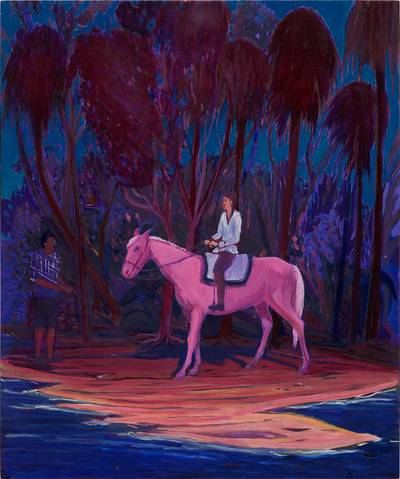
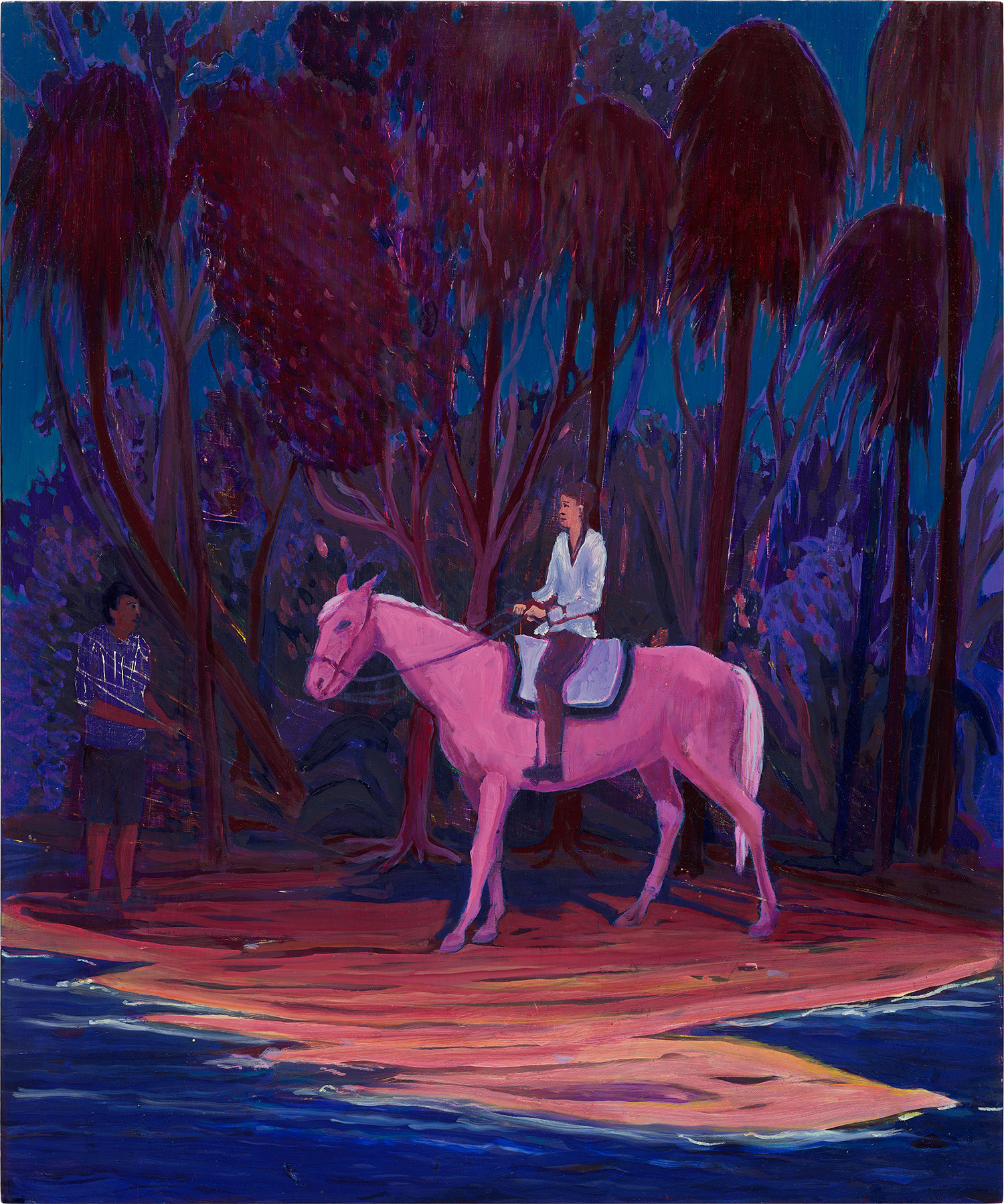
Wondering and Wandering Islanders, 2019
He eventually settled in New York, where he trained and developed his practice, absorbing the energies of a city perpetually negotiating its own contradictions. That bicultural formation gave him a useful distance from both worlds, the ability to observe American social rituals and collective anxieties with the slightly cocked head of an outsider who is also, undeniably, an insider. It is a position that has shaped everything from his compositional choices to the wry, tender intelligence that pulses through his titles. De Balincourt began attracting serious attention in the mid 2000s, a moment when painting was reasserting itself in contemporary discourse and a younger generation of artists was searching for ways to carry the medium forward without simply recycling its recent past.
He found his footing quickly and distinctively. Working primarily on panel rather than canvas, he developed a surface that rewards close looking, oil paint built up and worked back, enamel and spray paint introduced in earlier works to create textures that hover between the handmade and the mass produced. A work like Youth Nationalism from 2004, combining oil, enamel, and spray paint on board, already showed his ambition to fold multiple visual languages into a single, coherent image. The work that followed through the late 2000s and into the 2010s solidified his reputation as one of the most thoughtful painters of collective life working anywhere.
Jules de Balincourt
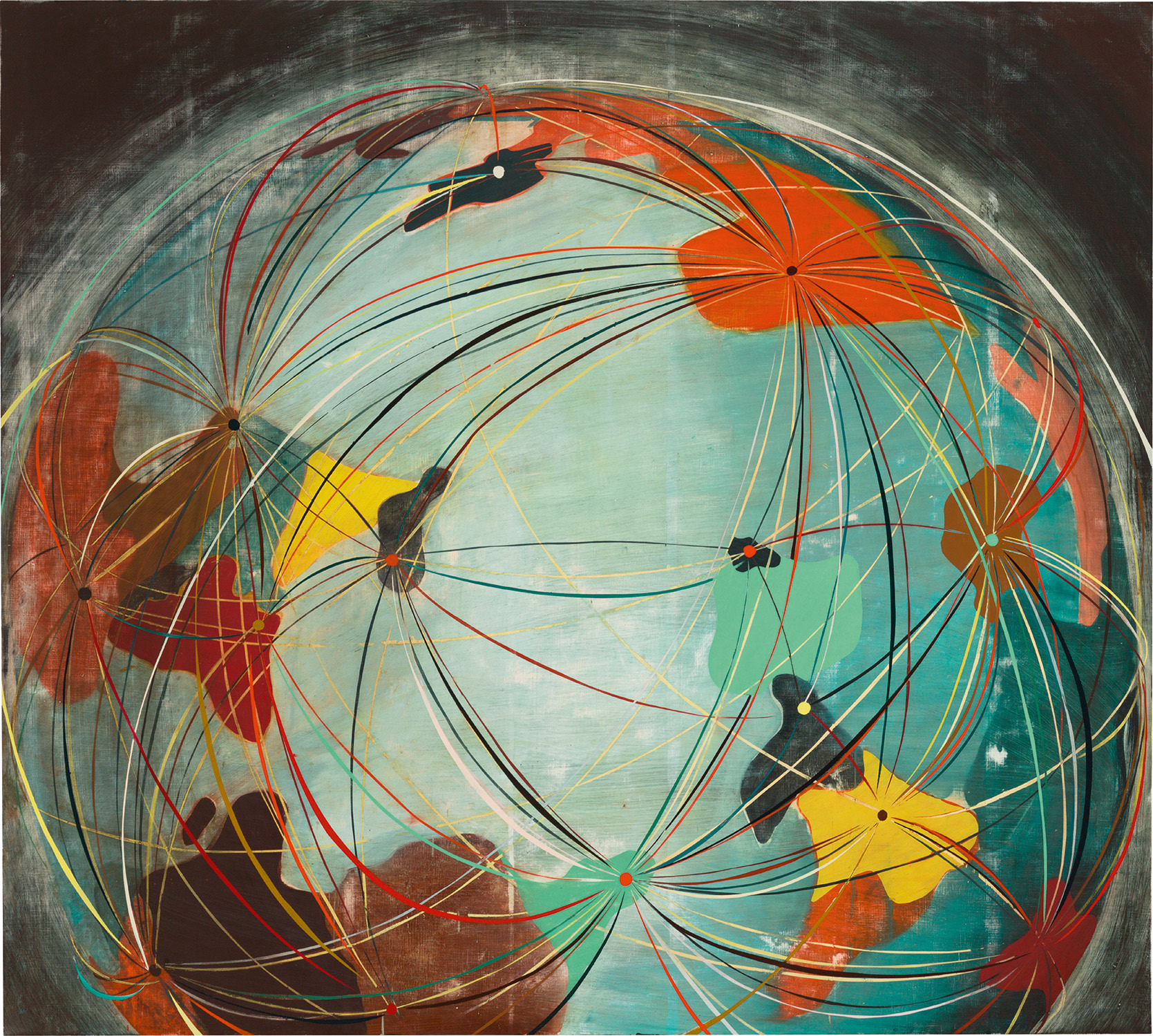
Jet Setters Nightmare, 2011
Coming and Going from 2008 exemplifies his approach: figures move through compressed, maplike spaces where the aerial view and the ground level perspective merge into something dreamlike and precise at once. The flattened color and simplified forms owe debts to folk art traditions and to the vernacular imagery of cartography, yet the overall effect is entirely his own. Healing to Die You from 2009, rendered in oil and acrylic, shows his willingness to push his palette into stranger territory, colors that feel simultaneously toxic and beautiful, a visual metaphor for the world he is describing. The 2011 works represent something of a concentrated flowering.
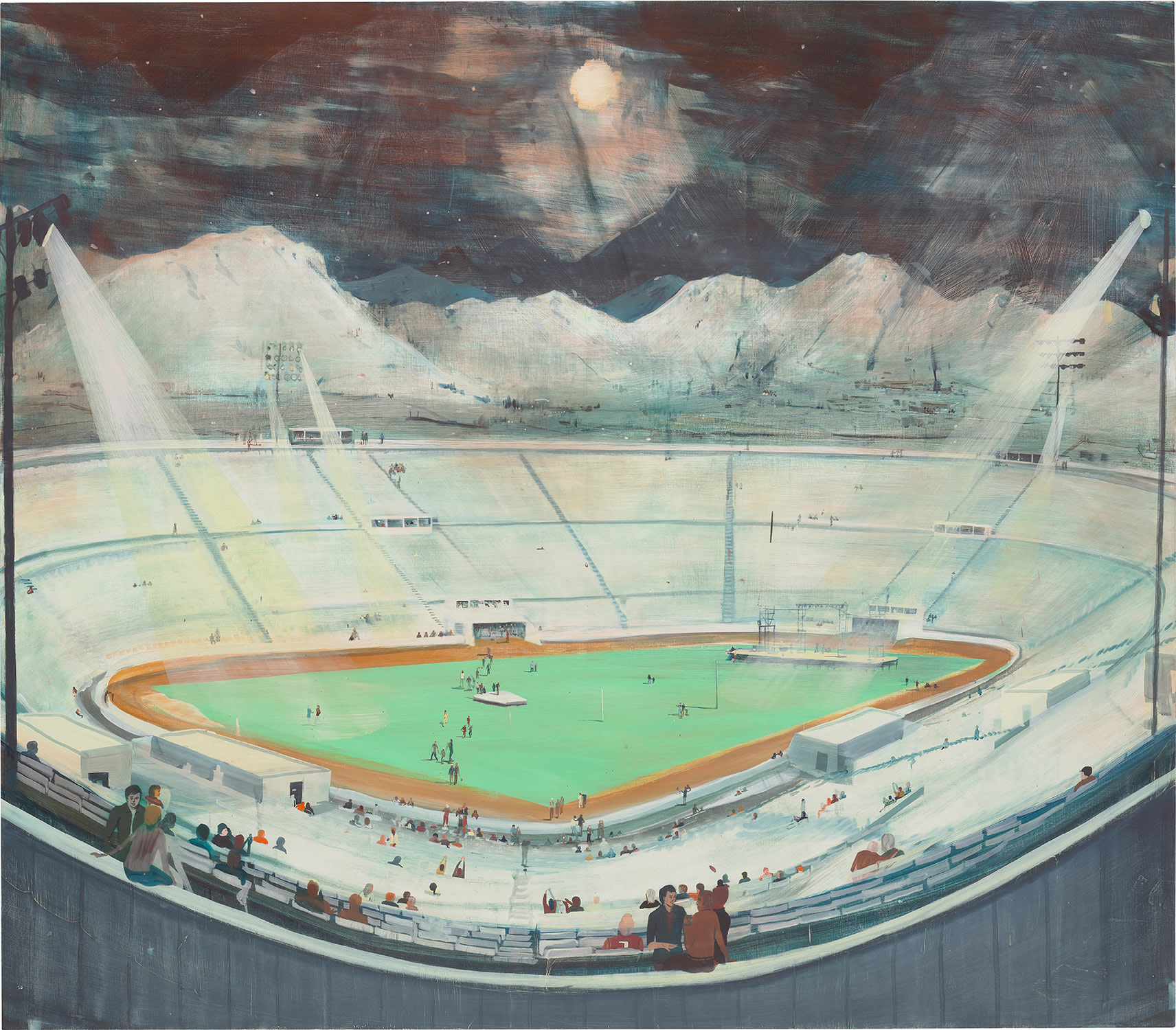
Dance Dance Revolution, Jet Setters Nightmare, Unspecific Things in Specific Spaces, and Painting the World all arrived in this period, each demonstrating a painter fully in command of his vision. The titles alone tell you something important about de Balincourt: they are never arbitrary. They carry irony lightly, without cruelty, and they frame the images in ways that open questions rather than closing them down. Painting the World is perhaps the most programmatic of these, a work that seems to reflect on the act of representation itself, the painter surveying a landscape that is also, in some sense, a self portrait of the practice.
Jules de Balincourt
Unspecific Things in Specific Spaces, 2011
Wondering and Wandering Islanders from 2019 shows how his vision has continued to evolve and deepen. The island becomes in de Balincourt's hands a stage for all manner of human seeking, figures dispersed across a terrain that feels both geographically specific and entirely mythic. There is a utopian impulse in the work, but it is never naive. The communities he depicts are always in process, negotiating, striving, occasionally lost, which is precisely what makes them feel human and recognizable rather than merely decorative.
From a collecting perspective, de Balincourt represents an unusually coherent and intellectually serious body of work that spans two decades without losing its thread. His panels are prized for their material quality as much as their imagery. The choice of panel over canvas gives his surfaces a certain solidity and presence that reproduces poorly but commands a room in person. Collectors drawn to artists like Peter Doig, Chris Ofili, or Cecily Brown will find in de Balincourt a sensibility that shares their commitment to painting as a vehicle for complex thought, while offering a distinctly American, politically awake perspective.
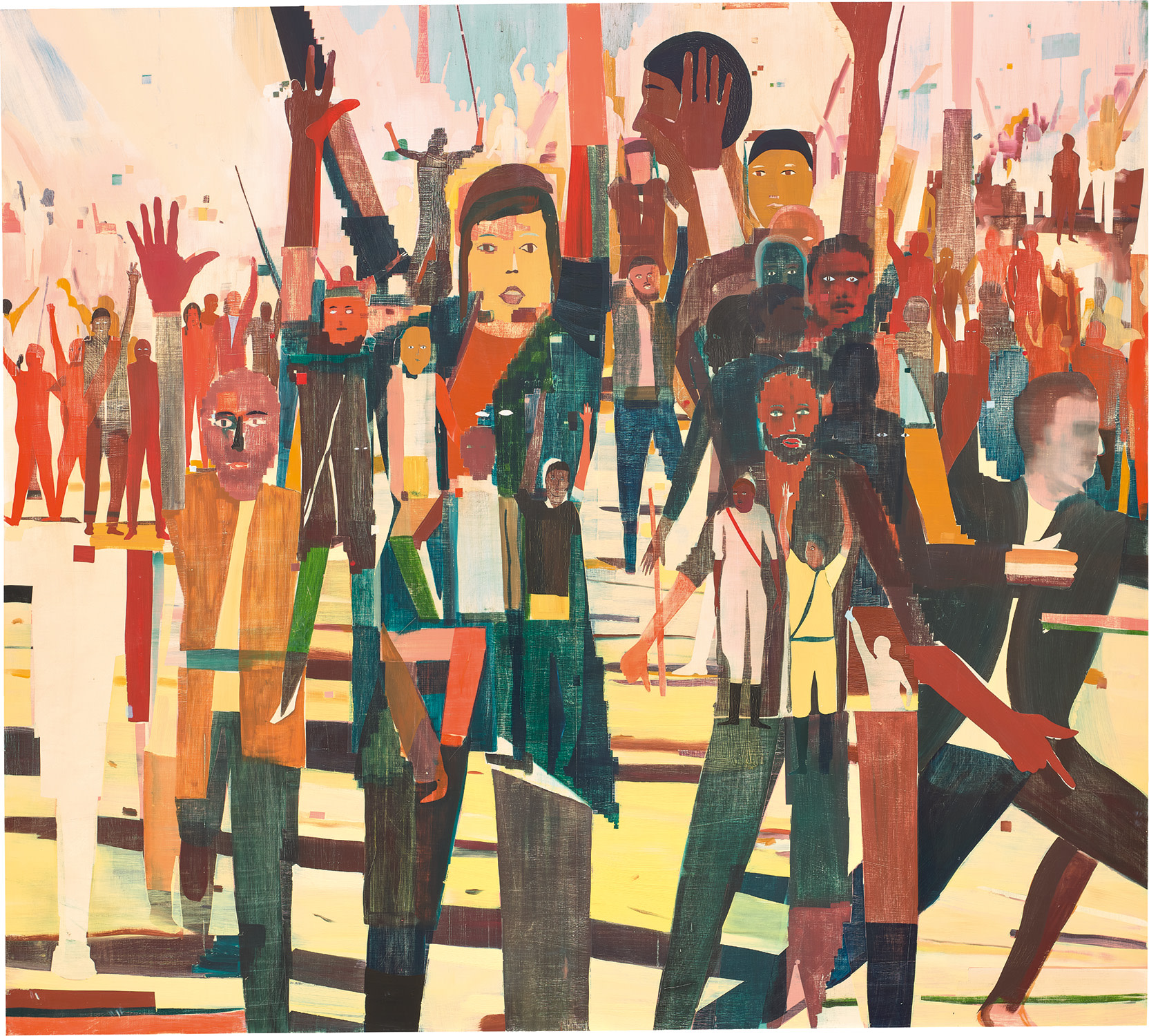
Jules de Balincourt
Dance Dance Revolution, 2011
His affinity with the folk art tradition also places him in a lineage that includes Grandma Moses and the American self taught tradition, though his visual sophistication is thoroughly rooted in contemporary practice. The broader art historical context for de Balincourt is rich and worth mapping. His maplike aerial views connect him to a long tradition of artists fascinated by the tension between the bird's eye view and the lived experience of a place. His use of flattened, vibrant color shares something with the Fauvist tradition filtered through American pop sensibility.
And his social commentary, delivered without didacticism, places him alongside painters like Neo Rauch and Luc Tuymans who use figurative painting as a lens for examining collective psychological states. Yet de Balincourt's tone is warmer than most of these comparisons suggest. There is an abiding affection in his work for the human creatures stumbling through his painted worlds. What ultimately secures de Balincourt's place in the history of early twenty first century painting is precisely this: he found a way to make work that is visually immediate and conceptually layered, politically engaged without being didactic, formally inventive without being inaccessible.
In an era of overwhelming imagery, his paintings insist on slowing you down, on asking you to look again, to notice the figure at the edge of the composition, to wonder what the crowd is moving toward. That quality of wondering, built into even his titles, is what makes collecting his work not just an aesthetic pleasure but an ongoing conversation with one of the most generous and searching minds working in paint today.