Jasper Johns
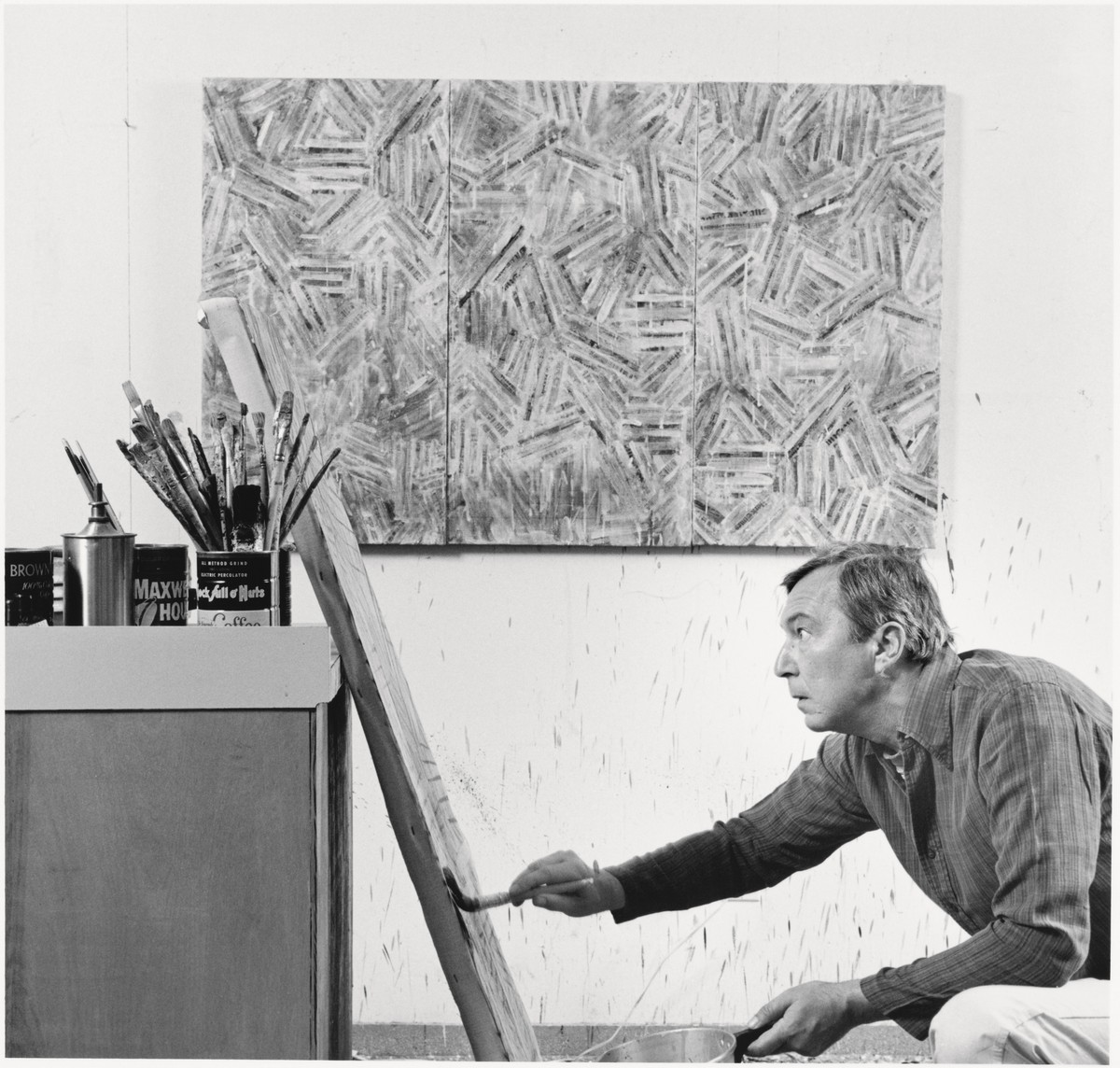
Jasper Johns: Icons That Rewrote Everything
Artist Spotlight · The Collection Editorial
“Sometimes I see it and then paint it. Other times I paint it and then see it.”
Jasper Johns, sketchbook notes, c. 1964
In the spring of 2023, the Philadelphia Museum of Art closed its landmark retrospective of Jasper Johns with attendance figures that reminded the art world why this quietly revolutionary artist remains one of the most vital forces in American cultural life. Spanning seven decades of relentless inquiry, the exhibition drew collectors, curators, and first time visitors alike into rooms where flags refused to be flags, targets refused to be targets, and numbers insisted on being both image and idea at the same time. At ninety three years old, Johns is not merely a survivor of the twentieth century's great artistic upheavals. He is one of their principal architects.
Jasper Johns
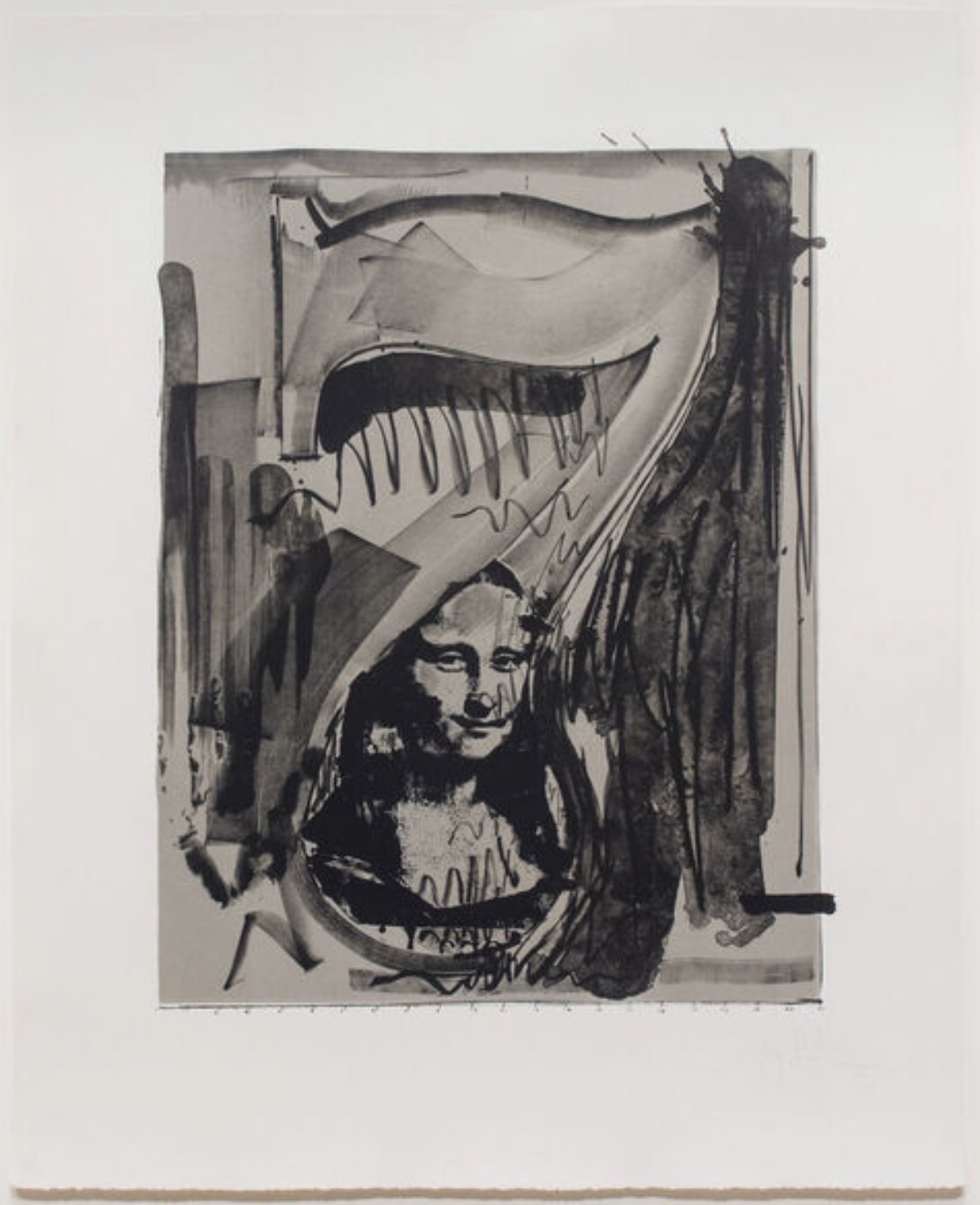
Figure 7, from the Black Numerals series, 1968
Jasper Johns was born in 1930 in Augusta, Georgia, and his early years were marked by displacement and a quiet self sufficiency that would come to define his entire sensibility as an artist. Raised largely by relatives in South Carolina after his parents separated, Johns grew up in a landscape far removed from the metropolitan art world he would later reshape. He studied briefly at the University of South Carolina before moving to New York City in 1948, a city then electrified by the ambitions of Abstract Expressionism and the towering personalities of Jackson Pollock and Willem de Kooning. Rather than be absorbed into that dominant mode, Johns absorbed it, studied it from close range, and eventually found his own way around it.
The friendship that changed everything came in the mid 1950s, when Johns met Robert Rauschenberg. The two artists lived in the same Lower Manhattan building, and their daily conversations became a kind of sustained philosophical seminar on what art could and could not do. Both were searching for an exit from the emotional grandeur of Abstract Expressionism, a way to reintroduce the world of things, of signs, of the already seen, without surrendering seriousness or depth. Johns found his answer in 1954 or 1955, when, he has said, he dreamed of painting a large American flag.
Jasper Johns
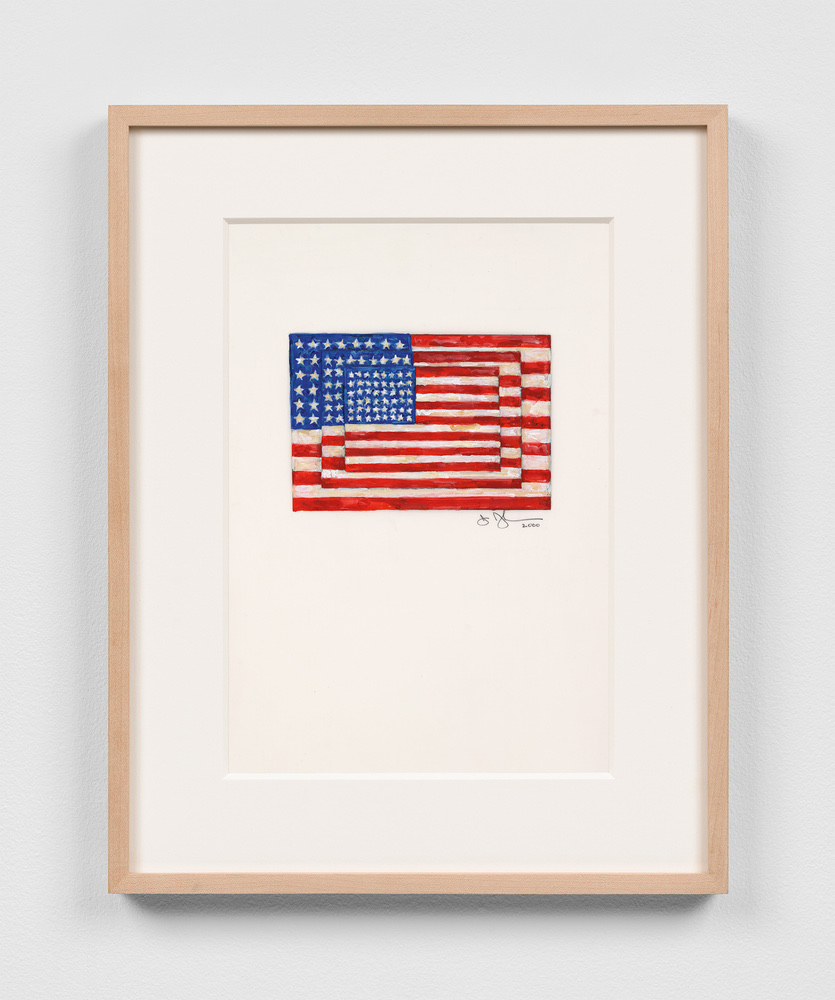
Three Flags, 2000
The resulting canvas, completed in encaustic and oil on fabric, was exhibited at Leo Castelli Gallery in 1958. It stopped the art world in its tracks. The Flag paintings, along with the Targets and the Number and Letter series, constitute one of the most concentrated and consequential bodies of work produced by any American artist in the postwar period. What Johns understood, with a clarity that still astonishes, was that certain images are so familiar they have become functionally invisible.
“Take an object. Do something to it. Do something else to it.”
Jasper Johns, sketchbook notes
By rendering the American flag in the slow, layered, luminous medium of encaustic, with its embedded newspaper scraps and its insistence on its own painted surface, he made the image strange again. You could not look at his flag and simply see a flag. You were forced to see the act of seeing itself. This was a philosophical proposition delivered in the language of craft, and it opened doors that would lead directly to Pop Art, Minimalism, and Conceptual Art.
Jasper Johns
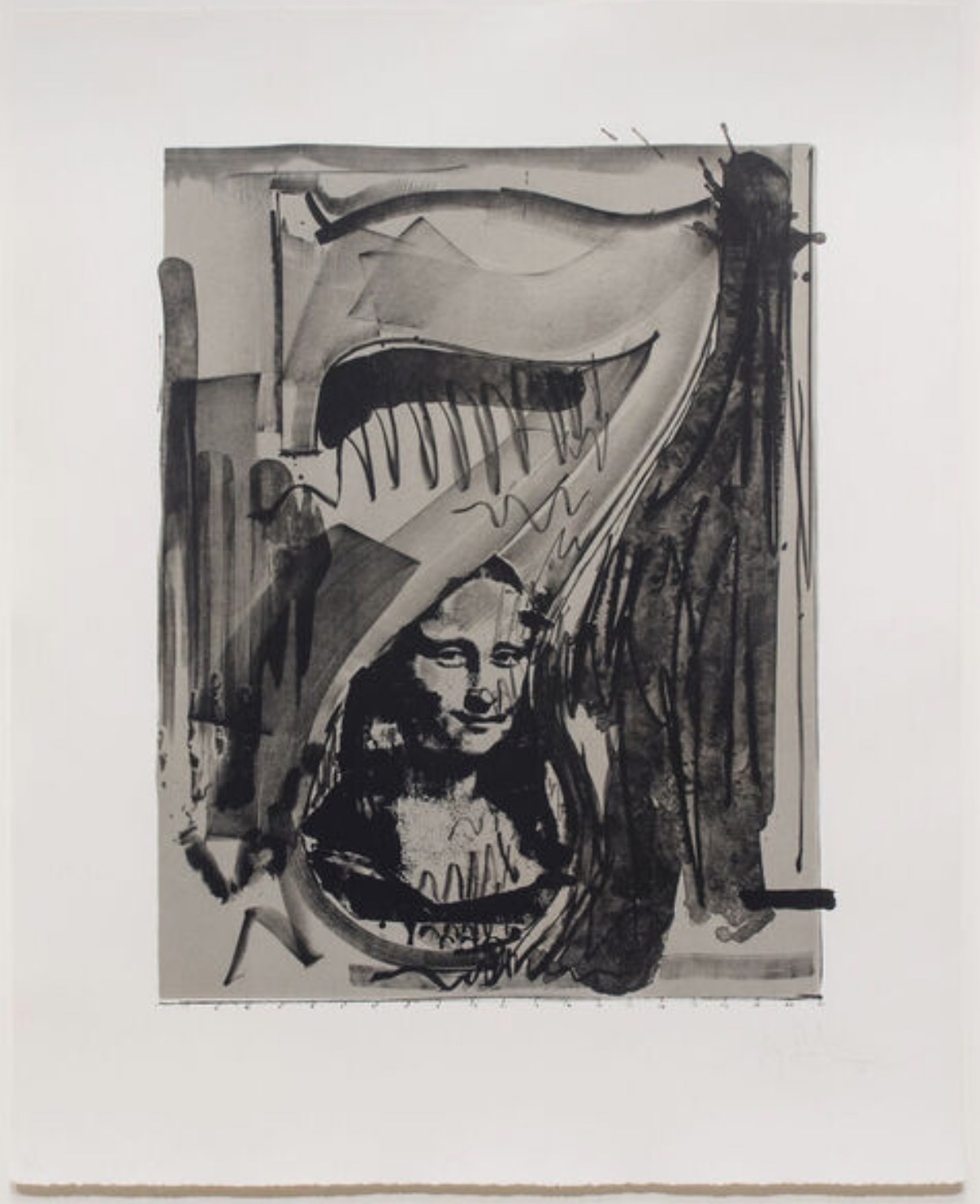
Figure 7, from the Black Numerals series, 1968
The Number and Letter series extended this logic into the realm of pure symbol. Works from the Black Numerals series, including the celebrated Figure 7 lithographs of 1968, demonstrate Johns's extraordinary feel for printmaking as a medium with its own logic and beauty. His collaboration with Universal Limited Art Editions, known as ULAE, produced some of the most significant print work of the twentieth century. Pieces such as Voice (ULAE 31), White Target (ULAE 54), and Two Maps II (ULAE 26) reveal an artist who understood that a print is not a reproduction of a painting but a distinct and sovereign object.
The Two Maps II lithograph, with its layering on Japanese paper laid to black Fabriano, exemplifies the material intelligence that collectors have long prized in his work. False Start II from 1962 brings the color word tension of his painted practice into a printed format of crackling energy. For collectors, Johns occupies that rare position where critical esteem and market strength reinforce each other without either cheapening the other. His paintings command some of the highest prices achieved by any living artist.
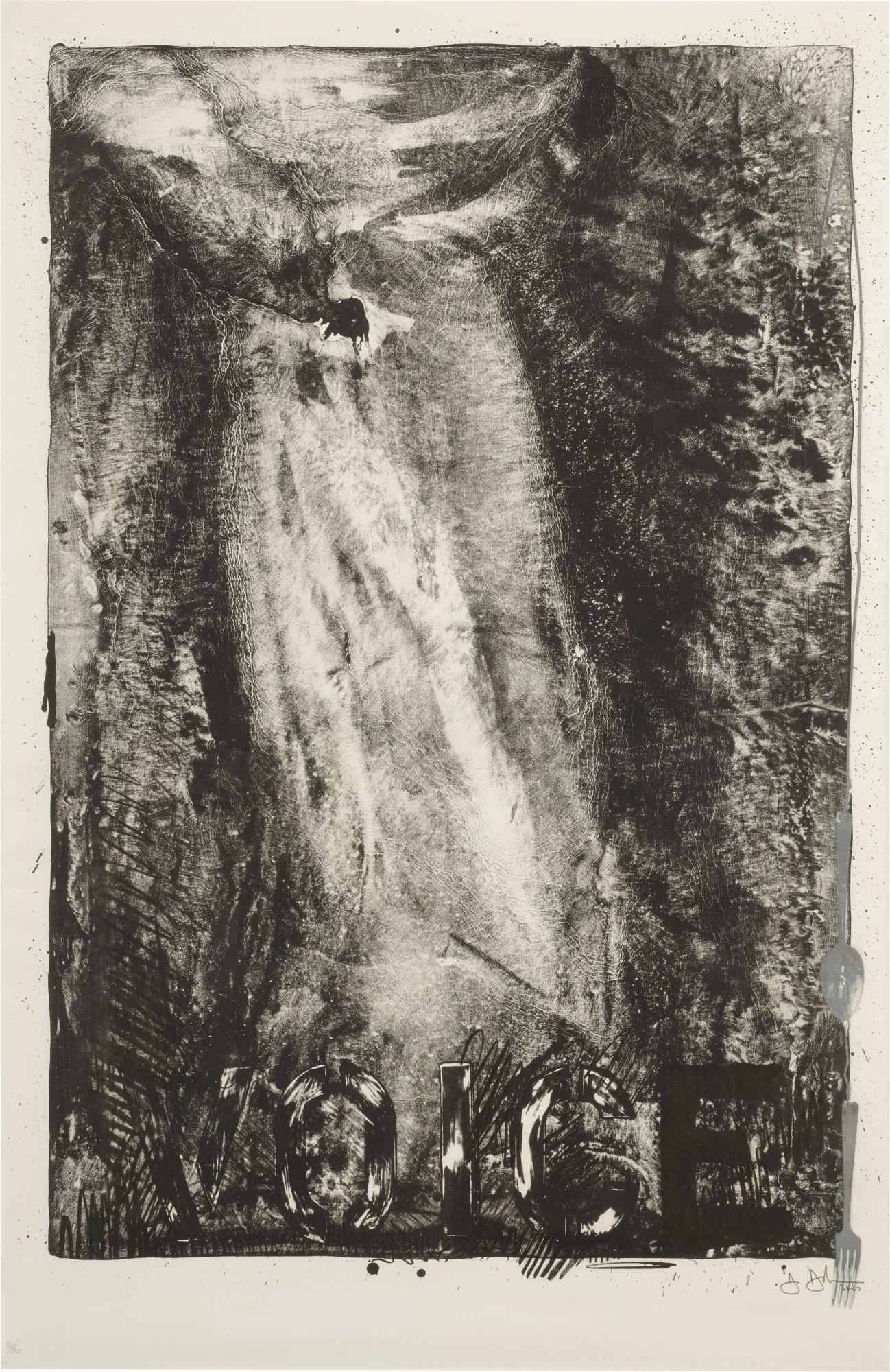
Jasper Johns
Voice (ULAE 31)
In 2006, his 1959 painting False Start sold for eighty million dollars, a record for a living artist at that time. His prints and works on paper offer entry points into a practice of comparable intellectual richness, and the ULAE collaborations in particular are regarded by print specialists as among the finest examples of the medium produced anywhere in the world during the latter half of the twentieth century. Collectors drawn to Johns are typically drawn to density, to work that rewards long looking and does not yield its meaning all at once. His is an art for people who believe that looking is a form of thinking.
To understand Johns fully, it helps to place him in dialogue with the artists around him and those who came after. Rauschenberg was his closest early interlocutor, and the two together represent the essential bridge between Abstract Expressionism and everything that followed. Andy Warhol would take the strategy of appropriating familiar imagery and push it toward mass culture and celebrity. Roy Lichtenstein found his material in comic books and commercial illustration.
But Johns was always doing something more inward, more phenomenological than either. He was less interested in the image as cultural artifact than in the image as a problem for consciousness. In this sense, he is as close to Marcel Duchamp as he is to any of his American contemporaries, and his long meditation on Duchamp's work, including his extraordinary series of prints based on Duchamp's last major work, demonstrates the depth of that kinship. The Cup 2 Picasso lithograph further shows his appetite for dialogue with the full sweep of modernism.
Jasper Johns matters today because the questions he raised have never been answered and perhaps never can be. What is the difference between a painted flag and an actual flag? When does representation become the thing represented? What does a number mean when it is also a painting?
These are not merely art world puzzles. They are questions about how human beings make and read meaning, and they carry the same charge in 2024 that they carried in 1958. His work is in the permanent collections of the Museum of Modern Art, the Whitney Museum of American Art, the Art Institute of Chicago, and virtually every major institution in the world. It has been seen by more people, and looked at more carefully, than almost any other body of work produced in the postwar era.
The Collection is proud to present a significant range of his prints and works on paper, each one a window into a practice that changed the course of art history and continues to reward every new encounter with fresh revelation.
Explore books about Jasper Johns
Jasper Johns: A Retrospective
Kirk Varnedoe
Jasper Johns: Writing, Sketchbook Notes, Interviews
Jasper Johns, ed. Kirk Varnedoe

Jasper Johns: Paintings, Drawings, Sculptures, Prints 1954-1996
Michael Crichton
Jasper Johns
Roberta Bernstein
Jasper Johns: An Allegory of Painting 1955-1965
James Cuno
Jasper Johns: Work Since 1983
Paul Taylor
Jasper Johns: Gray
James Rondeau, ed.
Jasper Johns: Catenary
Christy Putnam, Nan Rosenthal