Dorothea Rockburne
Dorothea Rockburne: Where Mathematics Meets the Divine
Artist Spotlight · The Collection Editorial
“I wanted to find a way to make something that was completely based on mathematics but that also had a spiritual dimension.”
Dorothea Rockburne, interview with the Dia Art Foundation
There is a quiet revolution happening in the way the art world understands Dorothea Rockburne. Institutions that once filed her work under the broad and sometimes reductive banner of Minimalism are now looking again, more carefully, and finding something far richer: a body of work that fuses mathematical elegance with spiritual longing, intellectual rigor with genuine beauty. MoMA, which has held her work in its permanent collection for decades, continues to affirm her place among the most consequential abstract artists of the twentieth and twenty first centuries. The Dia Art Foundation, whose programming has long championed artists who resist easy categorization, has similarly stood behind her vision.
Dorothea Rockburne
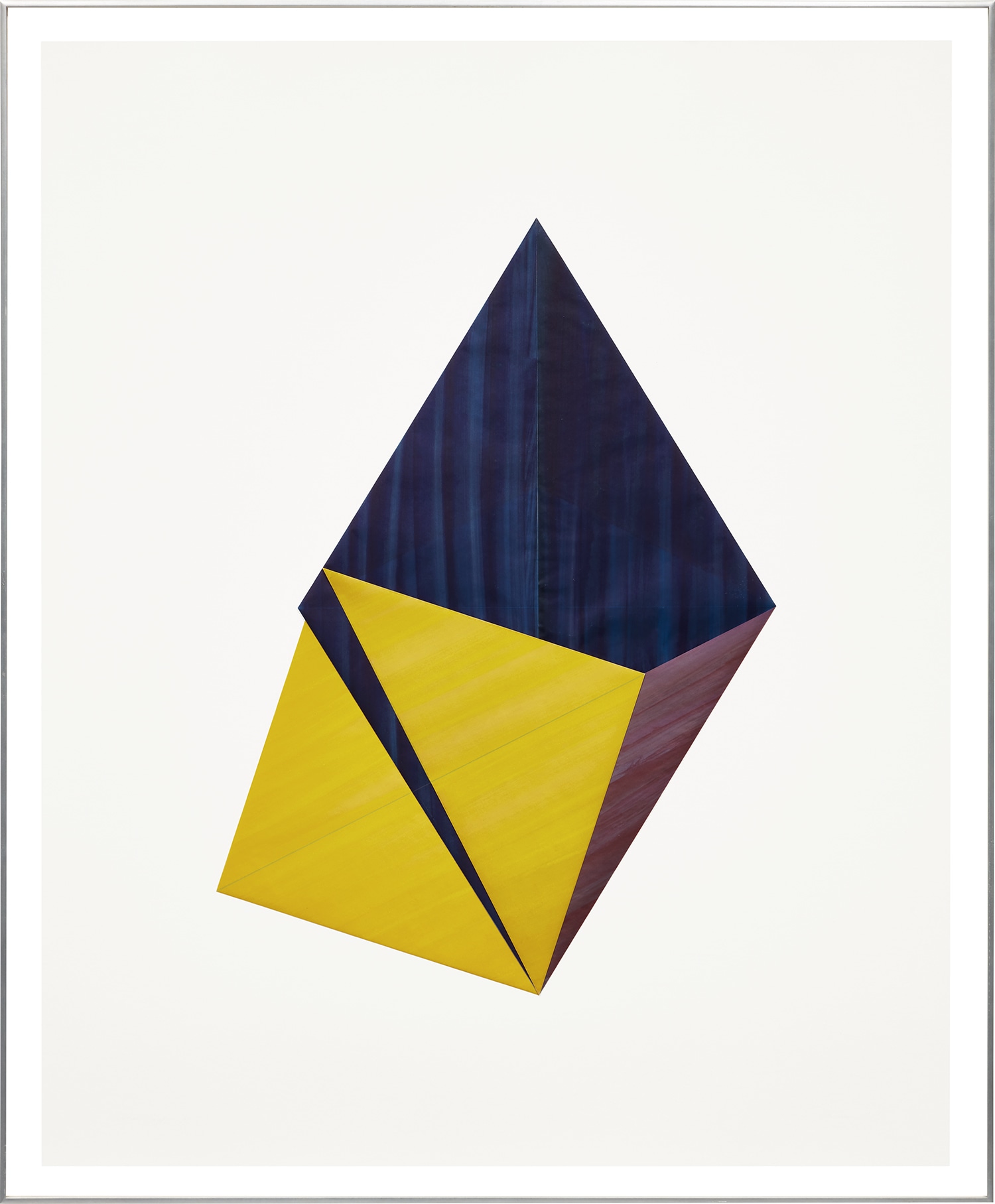
Musician Angel: Parallelogram, Square, 1979
At a moment when the conversation around abstraction is expanding to include more voices and more traditions, Rockburne's lifelong inquiry into the hidden structures of the universe feels not only timely but essential. Dorothea Rockburne was born in Verdun, Quebec, Canada in 1932, and her formation as an artist carries the unmistakable mark of two very different worlds. She grew up in a household where curiosity was valued, and the natural landscape of Canada left a lasting impression on her sense of scale and atmosphere. Her decisive intellectual turning point came when she enrolled at Black Mountain College in North Carolina during the early 1950s, that legendary crucible of American avant garde thought where Josef Albers taught color theory, Merce Cunningham choreographed in the gymnasium, and John Cage gave concerts that redefined what music could be.
It was here that Rockburne encountered the mathematician Max Dehn, a refugee scholar of extraordinary depth who introduced her to set theory and to the philosophical implications of mathematical structure. That encounter was, by her own account, transformative. It gave her a framework, a language, and a lifelong obsession. From Black Mountain, Rockburne moved to New York and planted herself in the downtown art world of the 1960s, a scene crackling with ambition and iconoclasm.
Dorothea Rockburne
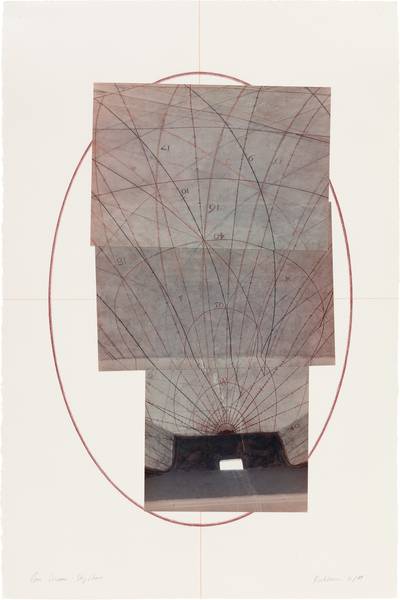
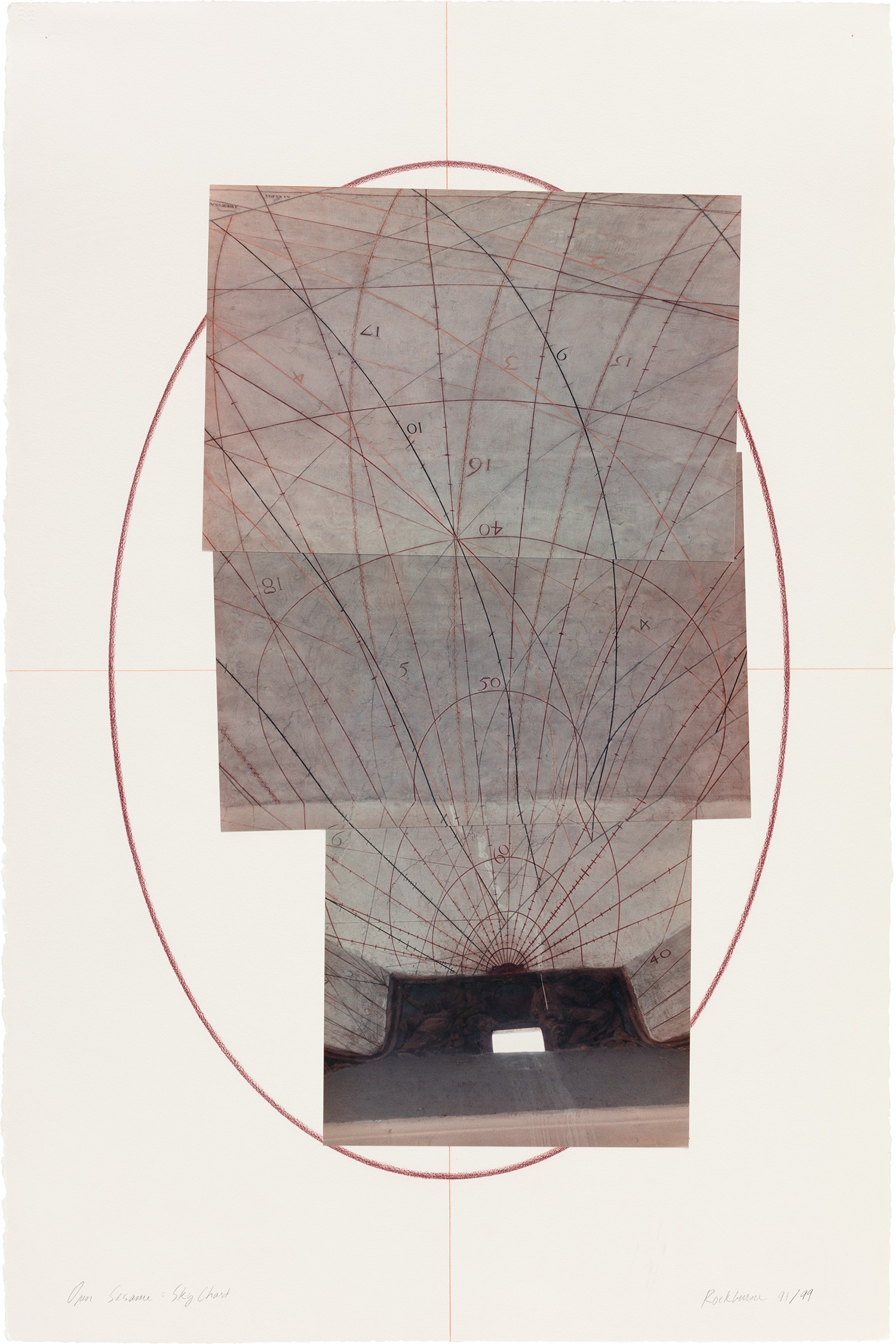
Open Sesame: Sky Chart
She was part of the generation that questioned the very nature of the art object, and her early work reflected this restlessness. She befriended and exchanged ideas with artists including Richard Serra and Robert Ryman, figures who were equally committed to stripping painting and sculpture down to their essential conditions. But where many of her peers were drawn toward pure materiality or industrial process, Rockburne was always reaching toward something more metaphysical. She wanted to make visible the invisible systems that govern form: the golden section, the proportional relationships found in Renaissance architecture and Egyptian geometry, the arcs and angles of celestial bodies moving through space.
“Max Dehn taught me that mathematics is a way of thinking about the world, not just calculating.”
Dorothea Rockburne
The decade of the 1970s produced some of Rockburne's most celebrated and radical work. Her Locus series, created in the early years of that decade, invited viewers into a space where sheets of paper and chipboard were folded, layered, and pinned to the wall in configurations derived from mathematical set theory. The work existed somewhere between drawing, sculpture, and diagram, and it announced a sensibility entirely her own. The golden section, that ancient proportion beloved by Leonardo da Vinci and the builders of the Parthenon, became a recurring armature in her practice throughout this period.

Dorothea Rockburne
Long Drawing, Narcissus
Rather than using it decoratively, she used it structurally, allowing it to determine every crease, every angle, every relationship between forms on the surface. The result was work that felt simultaneously ancient and radically new. Among the works that best illuminate Rockburne's range and depth, Musician Angel: Parallelogram, Square, created in 1979, stands as a particular treasure. Executed in pencil, wax, and glue on vellum mounted to rag board and presented in the artist's own frame, it distills her interest in sacred geometry into something luminous and intimate.
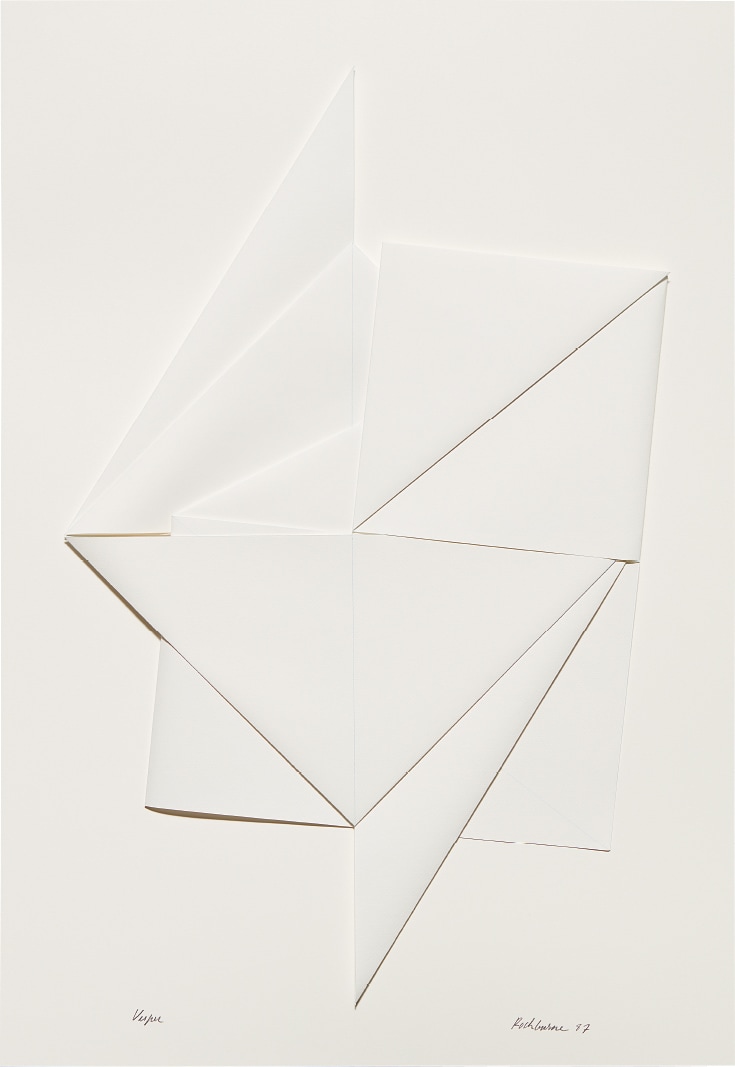
The vellum surface catches light differently depending on the angle of viewing, giving the work a quiet animation that rewards slow looking. Vesper, from 1987, realized in colored pencil on folded paper on rag board, captures the devotional quality that increasingly entered her work as she turned her gaze toward astronomy and the spiritual traditions that have always sought meaning in the stars. Oxymoron, also from 1987, rendered in oil on gessoed linen, demonstrates her equal command of the painted surface, with its tensions between transparency and opacity echoing the paradox embedded in its title. Open Sesame: Sky Chart, a photograph collage and colored pencil drawing on Saunders paper, reveals Rockburne at her most cosmological, mapping relationships between the earthly and the celestial with the confidence of someone who has spent decades learning to read the night sky.
Dorothea Rockburne
Vesper, 1987
For collectors, Rockburne's work occupies a singular and genuinely underappreciated position in the market. She emerged from the same generation as artists whose prices now command enormous attention at auction, yet her work has remained accessible in ways that should interest serious collectors looking for depth and historical significance in equal measure. Works on paper, which form a substantial and particularly personal part of her output, offer an especially intimate entry point into her practice. The use of materials such as vellum, rag board, and Arches watercolor paper reflects her exacting attention to the physical properties of her supports, and the long term stability of these materials ensures that her works on paper are both beautiful and durable.
Collectors who appreciate the tradition running from Agnes Martin through Bridget Riley, or who are drawn to the conceptual rigors of Sol LeWitt alongside a more overtly humanistic warmth, will find in Rockburne a kindred spirit who occupies her own irreplaceable position in that lineage. Rockburne's place in art history is best understood in relation to a generation of artists who collectively reinvented what painting and drawing could mean. She shares with Agnes Martin a devotion to proportion and to the meditative possibilities of the repeated mark. She shares with Sol LeWitt a belief that systems and rules, far from being cold constraints, can liberate the imagination.
She shares with Mel Bochner an interest in making mathematical thought visible on the picture plane. And yet none of these comparisons fully captures what makes her singular, which is the way she holds intellect and intuition in a kind of productive tension, allowing rigorous structure to coexist with genuine feeling. Her work never becomes merely theoretical. It always retains the warmth of a hand that has touched the paper.
The enduring significance of Dorothea Rockburne lies in her refusal to choose between the mind and the heart, between the ancient and the contemporary, between the earthly and the transcendent. Now in her tenth decade, she continues to work with the same focused intensity that characterized her first explorations at Black Mountain College. The art world is catching up to the full scope of what she has achieved, and for collectors and institutions alike, this is a profound opportunity. To live with a Rockburne is to live with a work that asks something of you, that rewards sustained attention, and that quietly insists on the possibility that beauty and truth might be, as the mathematicians and the mystics have always suspected, the same thing.