Donald Sultan
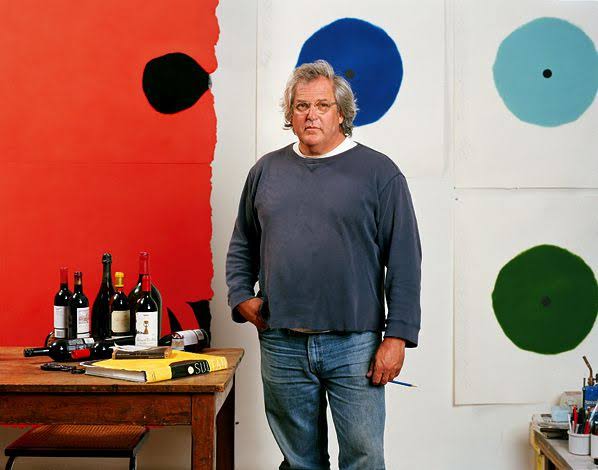
Donald Sultan, Master of Beautiful Gravity
Artist Spotlight · The Collection Editorial
“I wanted to make paintings that had the weight and presence of objects, not just pictures on a wall.”
Donald Sultan, interview with the Smithsonian Archives of American Art
There is a particular pleasure in watching an artist deepen rather than simply change. Donald Sultan, now in his eighth decade, continues to produce work of arresting physical presence, and a glance at his recent output confirms that his obsessions have only grown richer with time. His large poppy compositions from 2025, rendered in conté on paper, carry the same brooding sensibility that first made galleries stop in the late 1970s, while his sculptural aluminum works and silkscreens demonstrate a technical restlessness that refuses to let any single medium define him. Sultan remains one of the most compelling figures in American art precisely because his ambitions have never contracted.
Donald Sultan
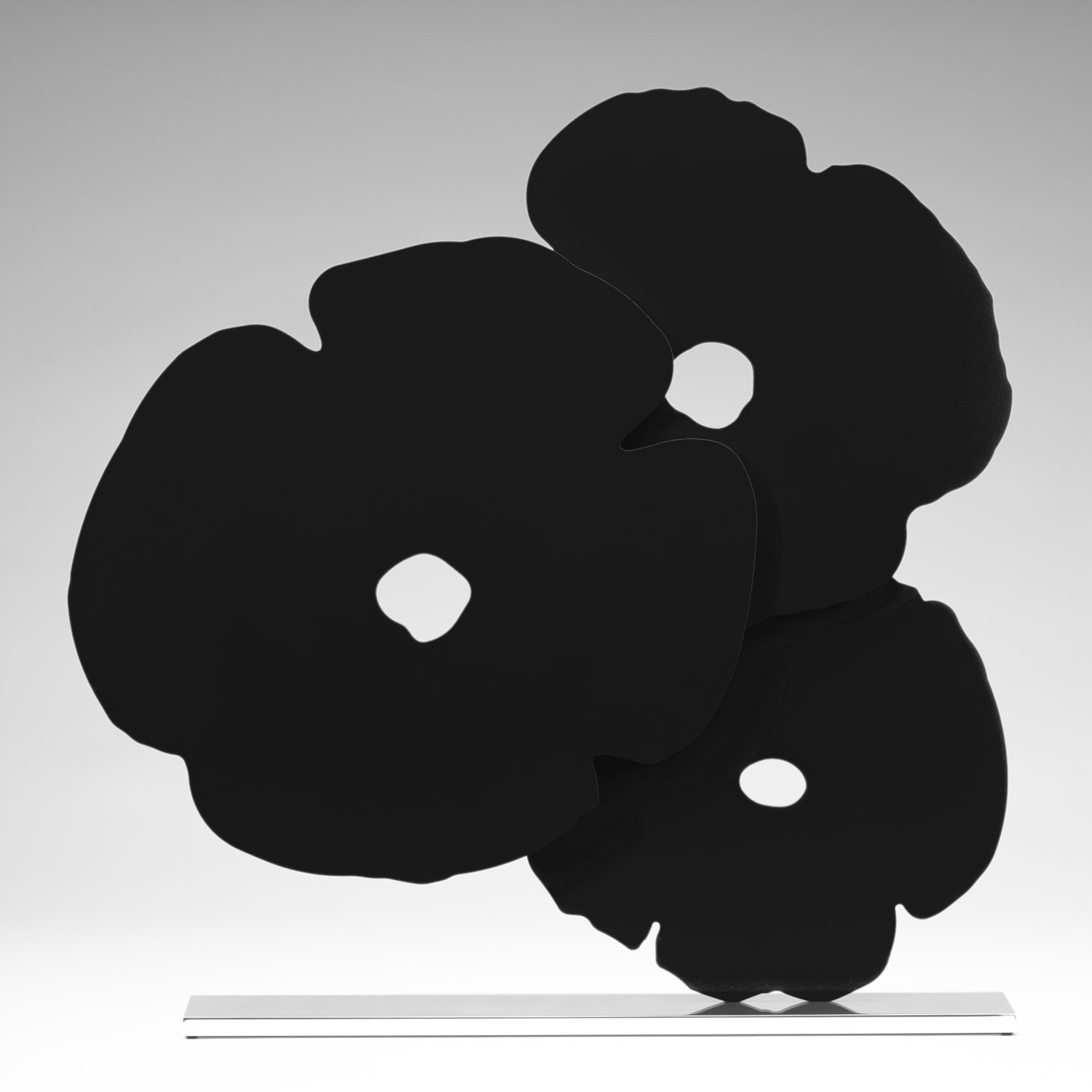
Black Poppies, 2017
He was born in 1951 in Asheville, North Carolina, a city nestled in the Blue Ridge Mountains with a cultural vitality that belied its size. That regional upbringing, steeped in the tactile and the physical, would leave its mark. Sultan went on to study at the University of North Carolina at Chapel Hill before pursuing his MFA at the School of the Art Institute of Chicago, which he completed in 1975. Chicago in the mid 1970s was a charged environment, full of artists testing the boundaries between abstraction and image, and Sultan absorbed that tension completely.
He arrived in New York shortly after, settling in Lower Manhattan at a moment when the city was economically precarious but creatively electric. Sultan came to prominence as part of the New Image painting movement, a loosely affiliated group of artists who sought to reintroduce recognizable imagery into contemporary art after more than a decade of minimalism and conceptualism had pushed representation to the margins. Alongside artists like Susan Rothenberg, Joel Shapiro, and Neil Jenney, Sultan helped reshape the conversation about what painting could hold. But his contribution was distinct.
Donald Sultan
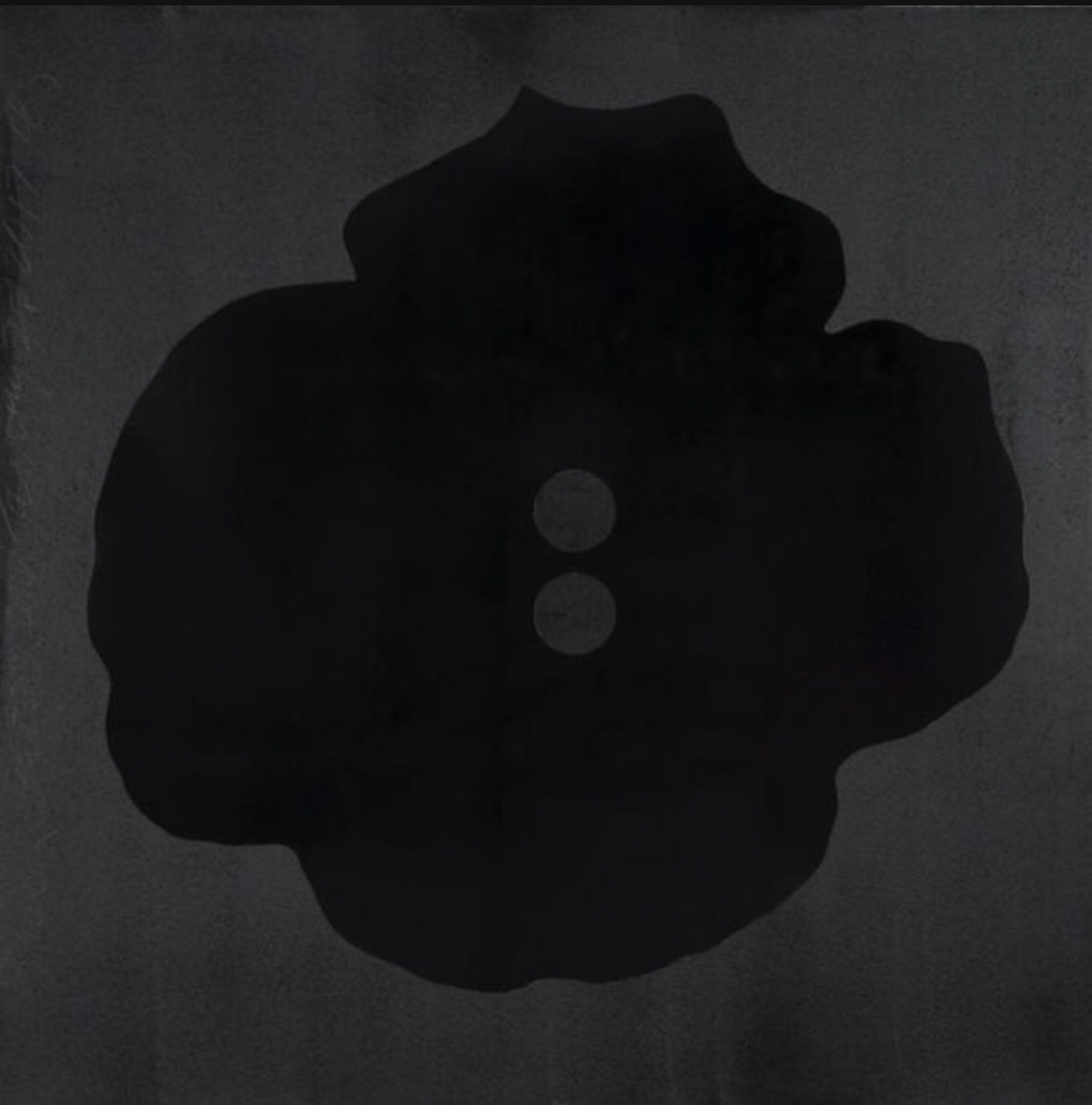
Black Button on Tar Aug 28 2017, 2017
Where others leaned into figuration or raw gesture, Sultan brought something more architecturally minded, a devotion to structure and surface that kept his work in dialogue with minimalism even as it embraced the sensual world of objects and nature. The method Sultan developed in those early New York years became one of the most physically distinctive in contemporary art. Working on large panels of Masonite laid over linoleum floor tiles, he applied tar and spackle to build heavily textured surfaces, then burned and scraped them to create his images. The results were paintings that felt geological, objects as much as pictures.
Lemons, tulips, smokestacks, and poppies emerged from these dark grounds with an almost hallucinatory presence. The scale was monumental, often filling an entire wall, and the weight of the materials gave even the most delicate botanical subject a gravitas that pure paint could not have achieved. His industrial landscapes, depicting factories and power plants shrouded in smoke, brought an elegiac quality to subject matter that most artists of his generation ignored entirely. Among his most celebrated bodies of work are the poppy paintings, which Sultan has returned to across several decades with sustained devotion.
Donald Sultan
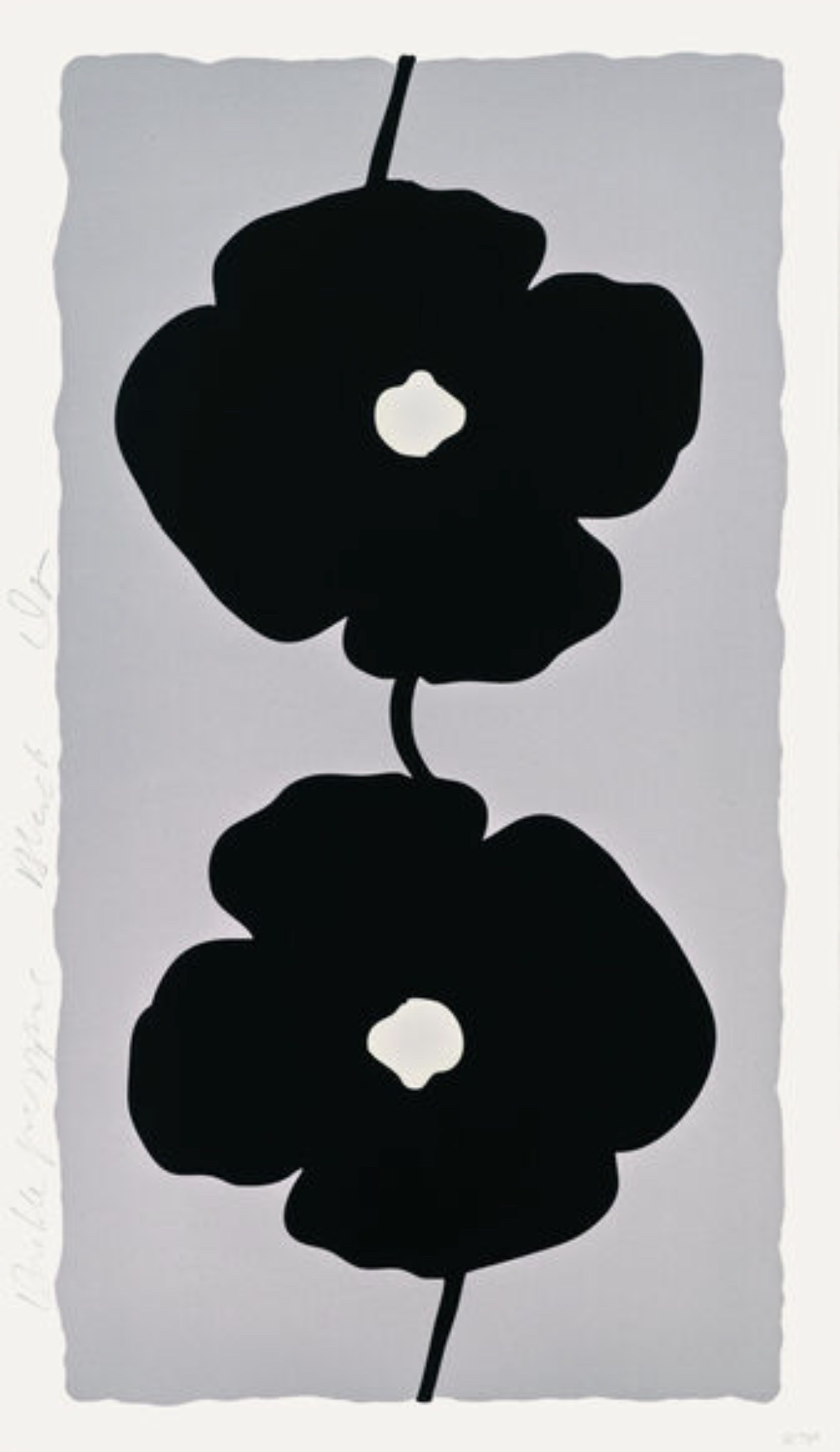
Double Poppies Black, 2025
These flowers, rendered in black against surfaces that seem to absorb light rather than reflect it, carry a complex symbolic charge. They are at once beautiful and melancholic, abundant and terminal, deeply rooted in art historical tradition yet entirely of their own moment. His series of playing card images, including the aquatints from 1990 depicting the Nine of Clubs, Ten of Hearts, and Jack of Diamonds, showed a different register of his imagination: flatter, more graphic, but no less carefully considered. The playing card works connect to a long tradition of still life and game imagery in Western painting while remaining unmistakably contemporary in their cool precision.
His printmaking practice, spanning aquatint, screenprint, and mixed media works incorporating flocking, tar like textures, and enamel inks on museum board, stands as one of the most technically inventive in American art of the past forty years. From a collecting perspective, Sultan occupies a genuinely enviable position in the market. He is what advisors describe as a blue chip artist with a broad entry range, meaning that both seasoned collectors and those building a serious collection for the first time can find meaningful access to his work. His prints and works on paper, including pieces like the Silver and Black silkscreen from 2015 and the Lantern Flower screenprint from 2012, offer extraordinary value relative to his museum standing.
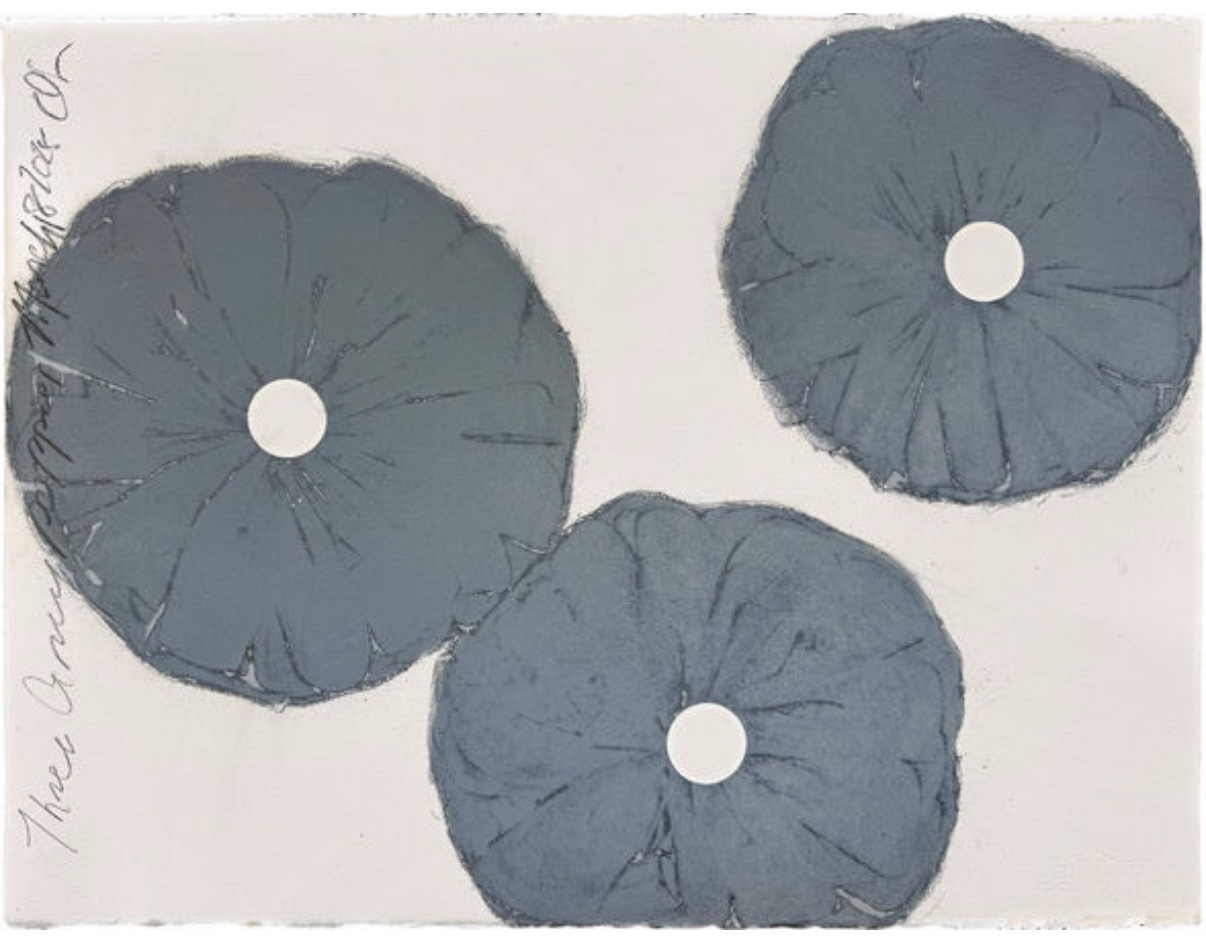
Donald Sultan
Three Gray Poppies March 18 2025, 2025
His larger unique works and sculptural pieces, such as the shaped aluminum Black Poppies from 2017, command prices commensurate with their ambition. Sultan is well represented in major institutional collections including the Museum of Modern Art in New York, the Metropolitan Museum of Art, the Art Institute of Chicago, and the Hirshhorn Museum and Sculpture Garden in Washington, which provides the kind of institutional validation that sustains long term market confidence. Collectors drawn to Neo Expressionism or to artists who straddle the line between abstraction and image consistently find Sultan's work rewarding across time. Sultan's place in art history becomes clearer when you consider the artists around him.
He shares the New Image generation with Rothenberg and Jenney, but his sensibility also aligns him with the European Neo Expressionists, particularly the Germans Anselm Kiefer and Georg Baselitz, who were similarly interested in heavy materiality and charged imagery during the same period. His still life preoccupations connect him backward to Giorgio Morandi and forward to contemporaries like Cy Twombly in their shared insistence that the most intimate subjects can carry the greatest weight. Like Ed Ruscha, Sultan is an artist whose graphic instincts and painterly practice feed each other continuously, producing a body of work more coherent for its range than despite it. What makes Sultan matter today, beyond the pleasures of individual works, is the integrity of his sustained vision.
In an art world that often rewards novelty above all else, he has spent five decades refining a set of questions about surface, image, and material rather than chasing new conversations. His most recent works confirm that this commitment has compounded rather than diminished. The conté poppy drawings of 2025 feel as immediate and alive as anything he has made, which is the most meaningful thing one can say about any artist still at work. For collectors, for institutions, and for anyone who believes that painting and its allied practices remain among the most powerful forms of human thought, Donald Sultan's body of work is an enduring invitation.
Explore books about Donald Sultan
