Atsushi Kaga
Atsushi Kaga's Joyful, Anarchic World Awaits
Artist Spotlight · The Collection Editorial
There is a particular kind of excitement that surrounds an artist whose work defies easy categorisation yet feels immediately, unmistakably itself. Atsushi Kaga has been generating that excitement quietly but persistently for over two decades, building a devoted following among collectors and curators who recognise in his paintings something genuinely rare: a visual language that is wholly his own. London has been his adopted home and creative base for many years now, and the city's own restless, multicultural energy has only deepened the complexity of a practice already rich with contradiction and wonder. As interest in cross cultural contemporary figuration continues to grow across major institutional and market contexts, Kaga's moment feels very much arrived.
Atsushi Kaga
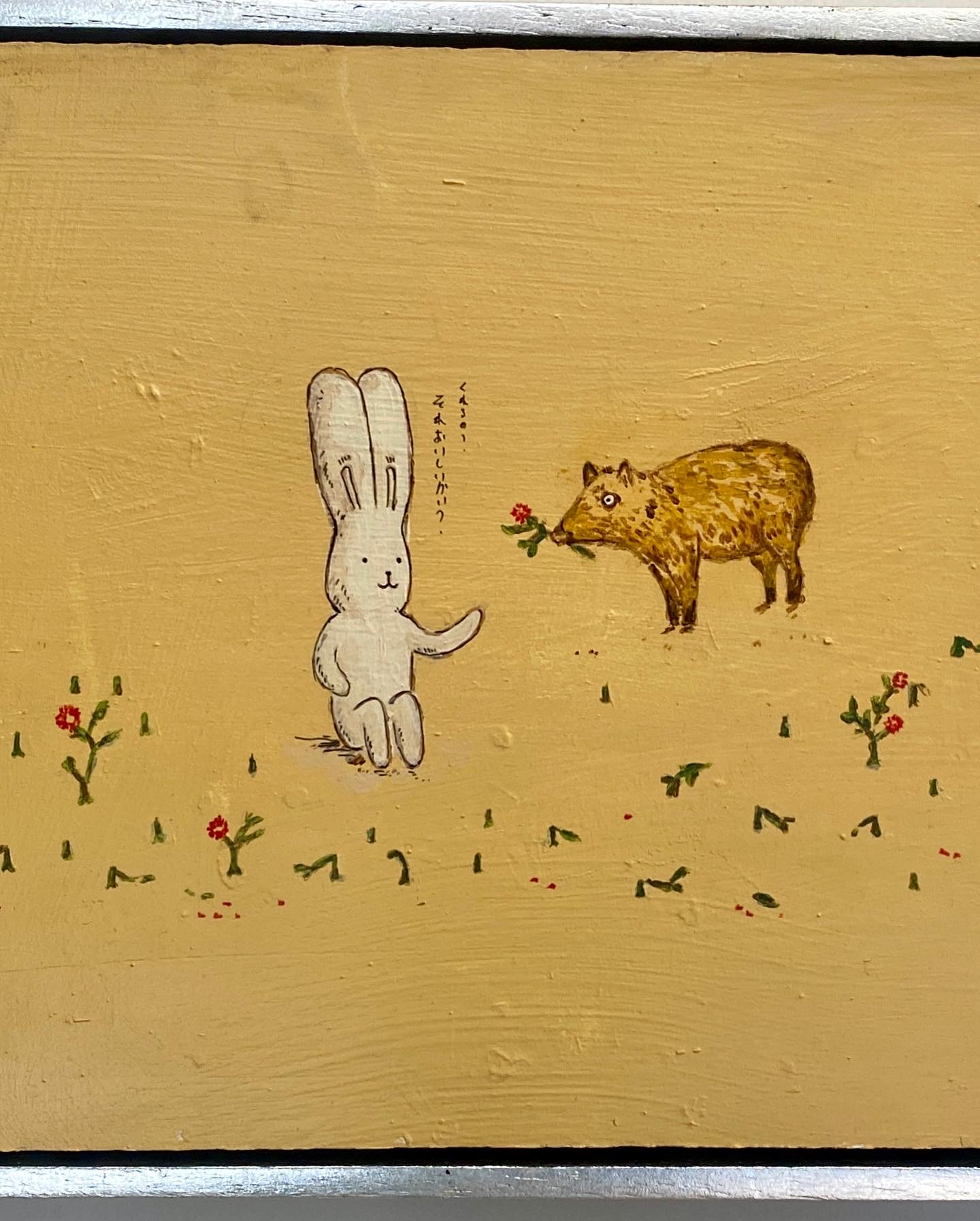
Are you Giving Me that Flower, 2006
Kaga was born in Japan in 1969, coming of age during a period when manga and anime were not merely entertainment but a total visual ecosystem shaping how an entire generation understood narrative, character, emotion, and the body. These were not influences he would later seek out or intellectually adopt; they were the water he swam in. Moving to London to develop his artistic practice placed him at a generative distance from that formative world, close enough to carry it with genuine fluency and far enough to observe it with a critical, affectionate eye. That productive tension between two cultural inheritances sits at the very heart of everything he makes.
Kaga works primarily in ink, watercolor, acrylic, and mixed media on paper and board, building compositions that are dense, layered, and alive with incident. His figures are hybrid creatures: part human, part animal, part something that resists classification entirely. They tumble and cluster across the picture plane in arrangements that feel simultaneously chaotic and deeply considered, as though every mark is both instinctive and inevitable. His line has the confidence of someone who has drawn obsessively for decades, but it carries none of the coldness that confidence can sometimes bring.
Atsushi Kaga
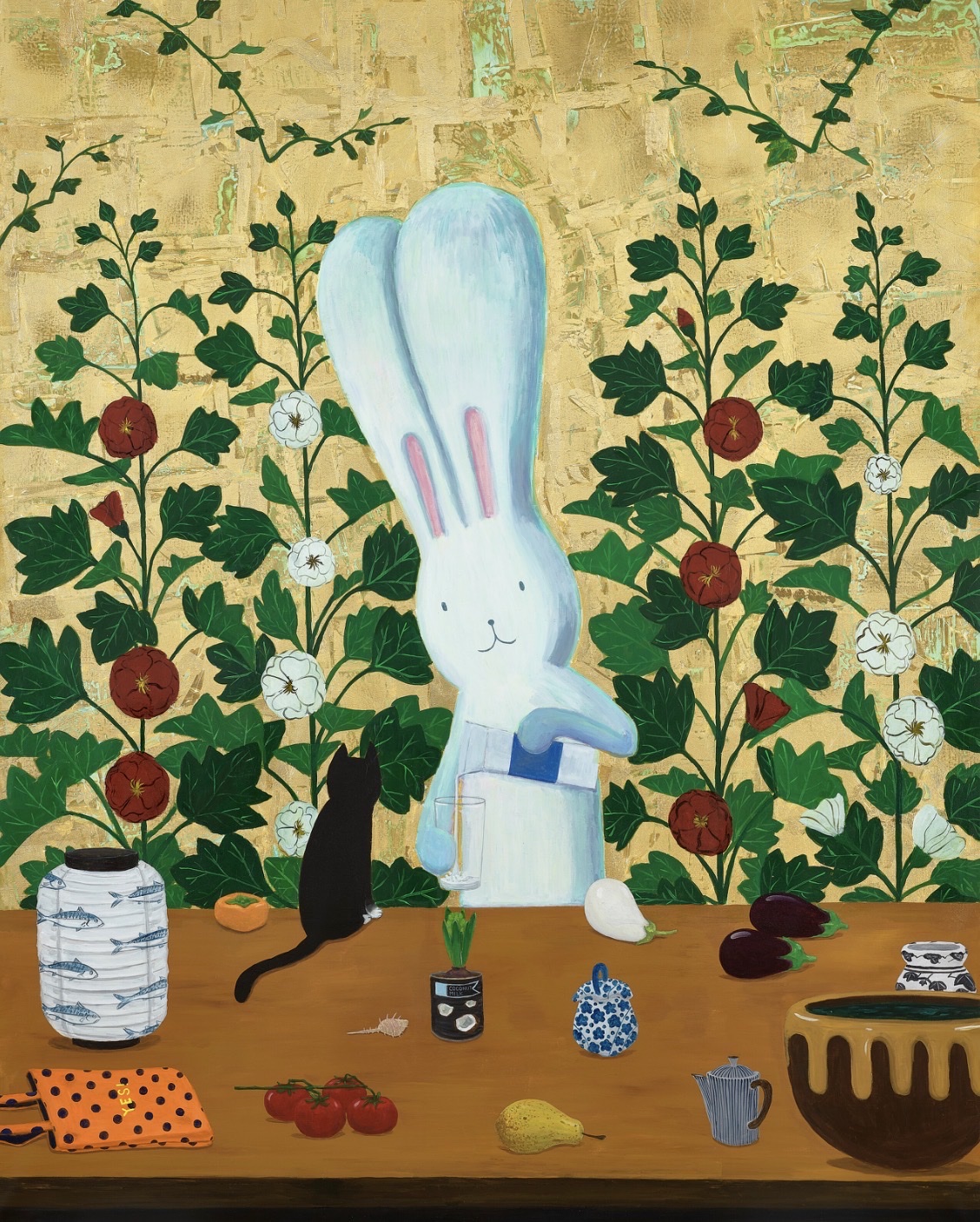
YES! (A bag made by my mother), 2021
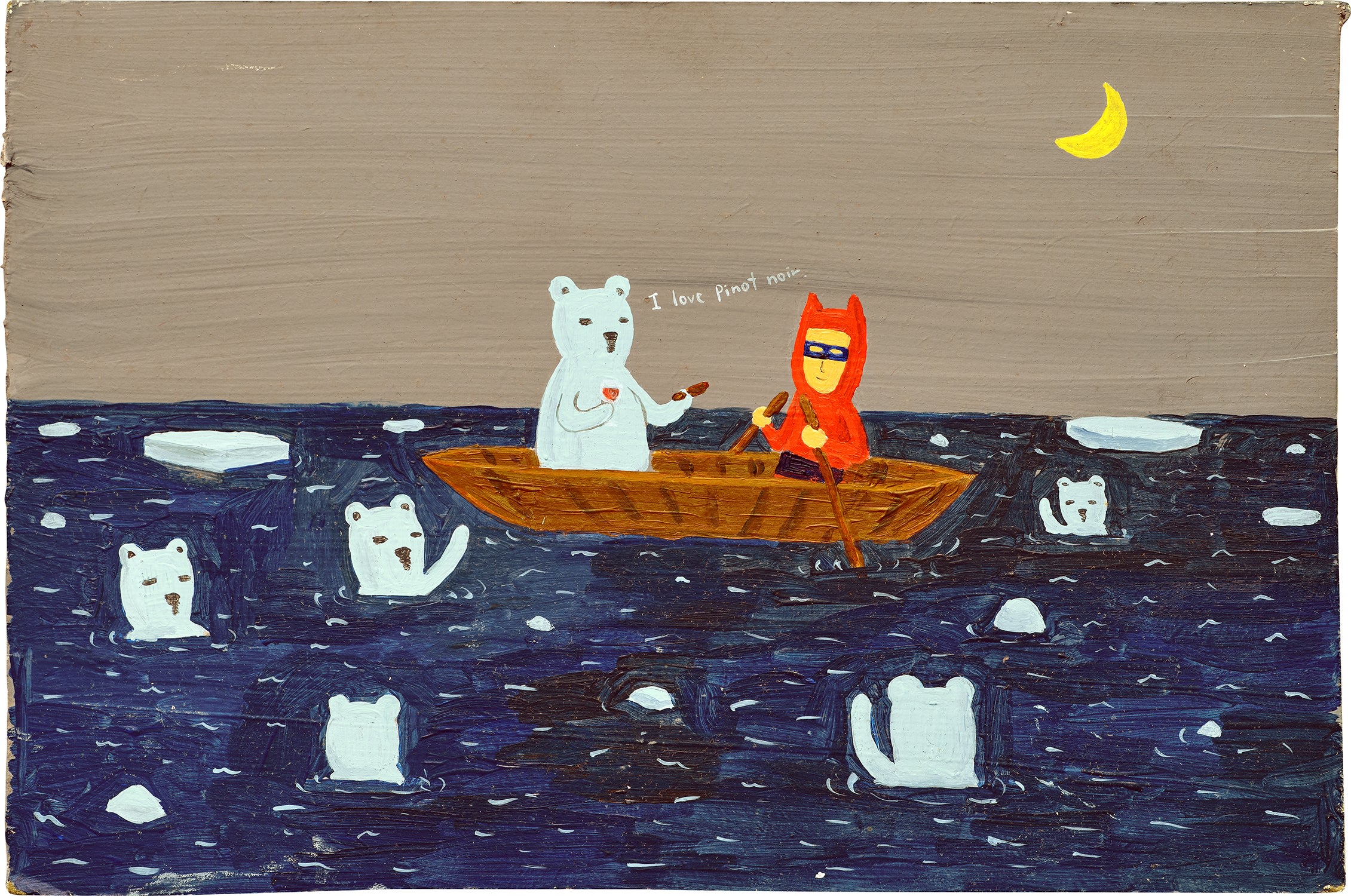
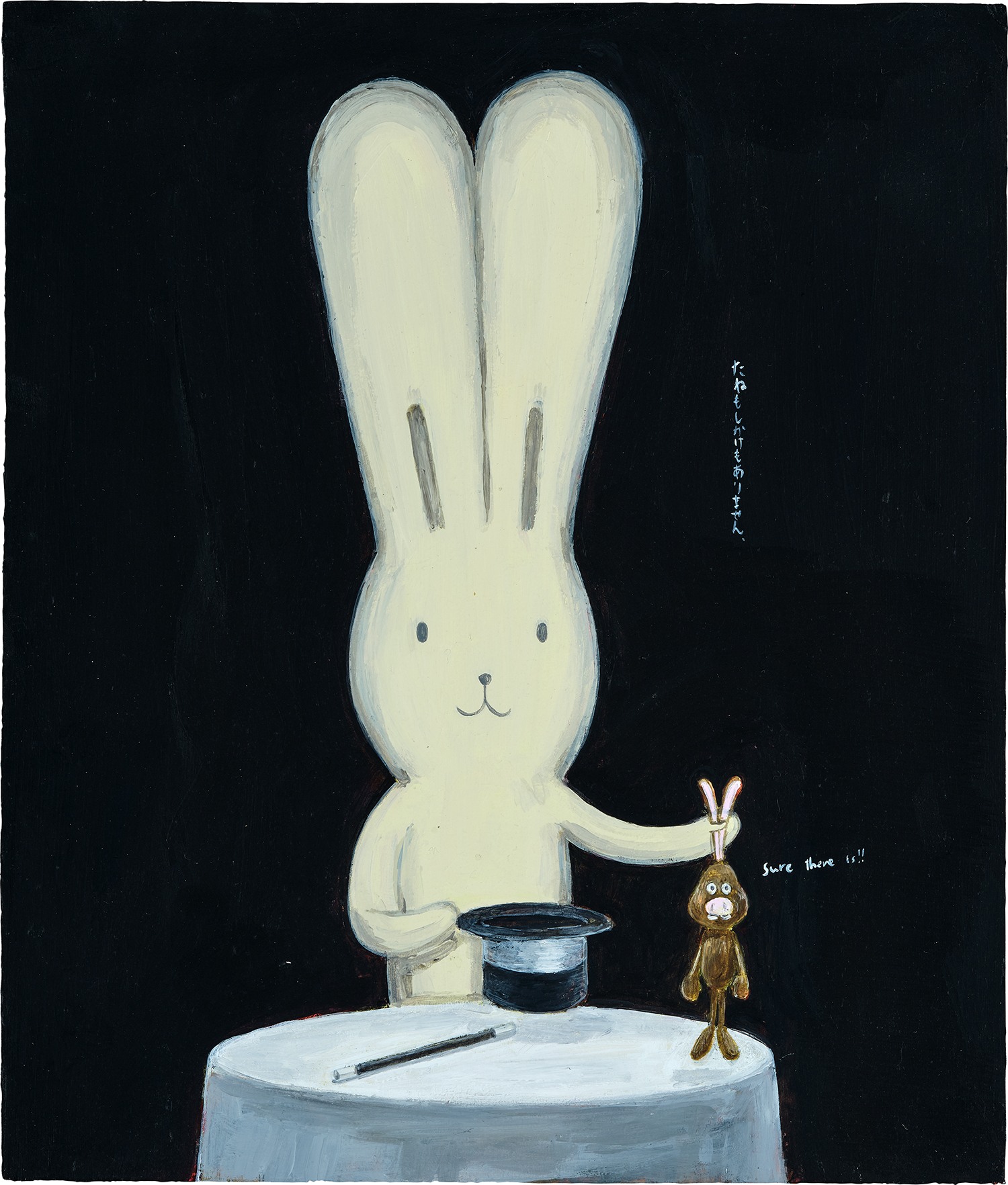
The work remains warm, strange, and genuinely funny in the best possible sense. Among the works that best illuminate his range and ambition, "Are you Giving Me that Flower" from 2006 stands as an early touchstone, its acrylic surface alive with the kind of tender absurdity that would come to define his voice. "Practising a Magic with Robert" from 2008 introduced a recurring cast of characters that collectors have come to love and recognise across multiple works, creatures with names and personalities and something very close to inner lives. By 2013, "I Love Pinot Noir" showed a painter fully at ease with his own iconography, using it to explore pleasure, leisure, and the comedy of everyday desire.
The 2021 work "YES! (A bag made by my mother)" marked a particularly moving development, bringing imitation gold leaf into dialogue with deeply personal subject matter and elevating the autobiographical into something genuinely luminous. "Golden Quintet" from 2021, presented as a five part work in acrylic and imitation gold leaf on MDF within an artist made frame, represents one of the most formally ambitious statements in his recent output. The decision to work in parts, and to construct the frame himself, speaks to an artist for whom the boundaries between painting, object, and craft are deliberately porous.
Atsushi Kaga
I Love Pinot Noir, 2013
"Two Monkeys in Winter" from 2020 and "Lemons, Macarons and A Black Cat" from 2019 demonstrate his gift for finding genuine emotion in seemingly playful subjects, a stillness beneath the surface energy that rewards sustained looking. These are works that give collectors something new each time they return to them. The collecting case for Kaga is built on a combination of factors that experienced advisors recognise as unusually strong. His works on board and panel hold their surfaces beautifully, and his palette, grounded in earthy tones punctuated by moments of vivid chromatic intensity, works across a wide range of domestic and institutional contexts.
He occupies an interesting position in the contemporary market: well respected within knowledgeable circles, still accessible compared to peers of comparable originality, and increasingly sought by collectors who are building serious holdings in cross cultural figurative work. The printmaking dimension of his practice, represented by works such as "Kumacchi Wanted To Be Someone Else; and The Sleeping Fox", an edition comprising one lithograph in colours and one etching on wove paper, offers excellent entry points for collectors who wish to live with his world before committing to larger works. In terms of artistic context, Kaga belongs to a loose but meaningful constellation of artists working at the intersection of vernacular visual culture and fine art tradition. His sensibility has been compared to that of artists like George Condo and Carroll Dunham in its embrace of grotesque tenderness, while his manga inflected lineage connects him to a broader conversation about the global influence of Japanese popular culture on contemporary painting.
Atsushi Kaga
Practising a Magic with Robert, 2008
He is part of a generation that has made the case, definitively and brilliantly, that figuration rooted in popular or subcultural imagery can carry as much weight and nuance as any more canonically approved tradition. Institutions and critics have been catching up to what his collectors already knew. What Kaga ultimately offers is something that the art world, for all its sophistication, cannot manufacture or manufacture the desire for: genuine singularity delivered with apparent ease and evident joy. His characters, his creatures, his improbable gatherings of beings engaged in unknowable rituals and small domestic dramas, feel like dispatches from a world that exists just beside this one, visible only to those paying the right kind of attention.
To collect his work is to keep a window open onto that world. To live with it is to be reminded, daily, that imagination and affection are among the most serious tools an artist can possess.