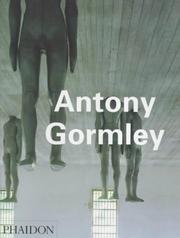
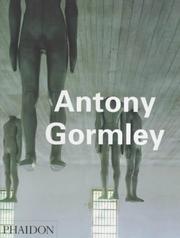
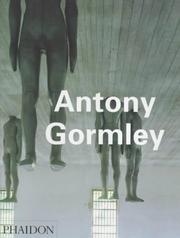
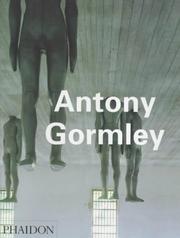
Antony Gormley
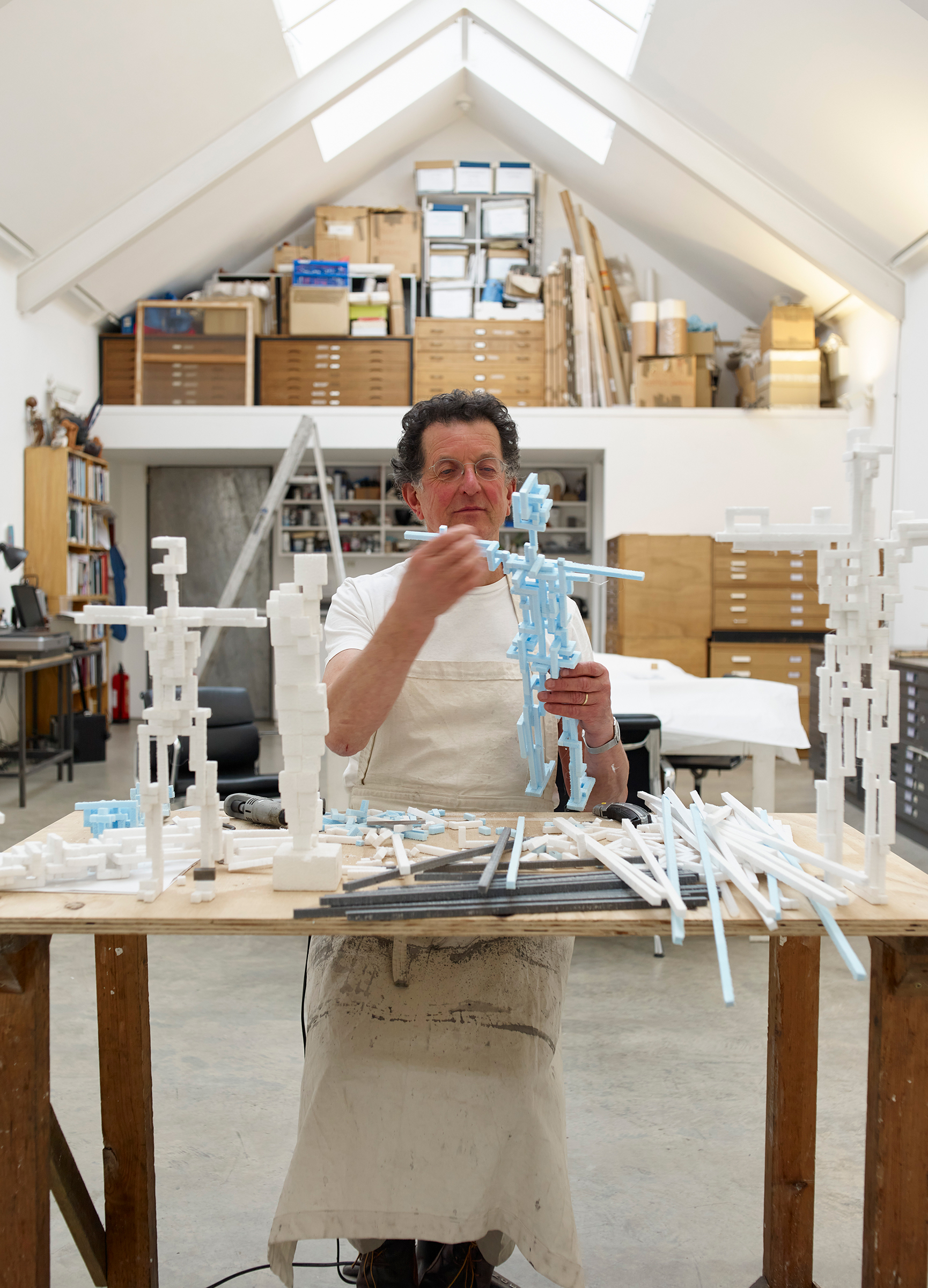
Antony Gormley: Bodies That Hold The World
Artist Spotlight · The Collection Editorial
“I am trying to make a space for the experience of being, not just looking.”
Antony Gormley, Tate interview
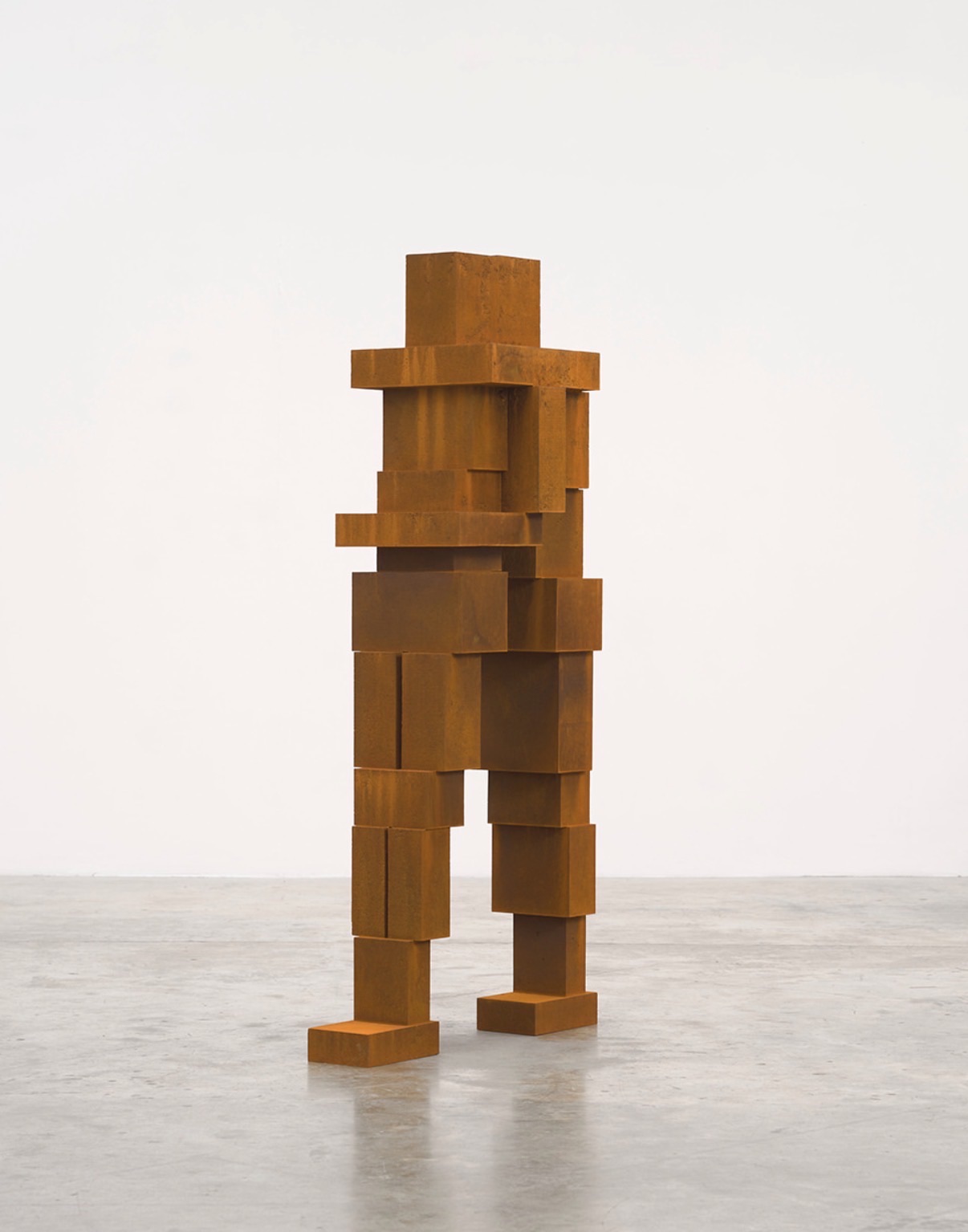
In the summer of 2024, Antony Gormley unveiled BUTTRESS, a monumental new cast iron work that arrived with the quiet authority that has come to define his practice across five decades. It is the kind of object that seems less made than discovered, as though Gormley had located something already latent in the material world and simply given it form. At a moment when sculpture as a discipline is being reconsidered and celebrated anew, Gormley stands at the centre of that conversation, as vital and formally adventurous as at any point in his long career. For collectors and institutions alike, his work continues to command both intellectual devotion and serious market attention.
Antony Gormley
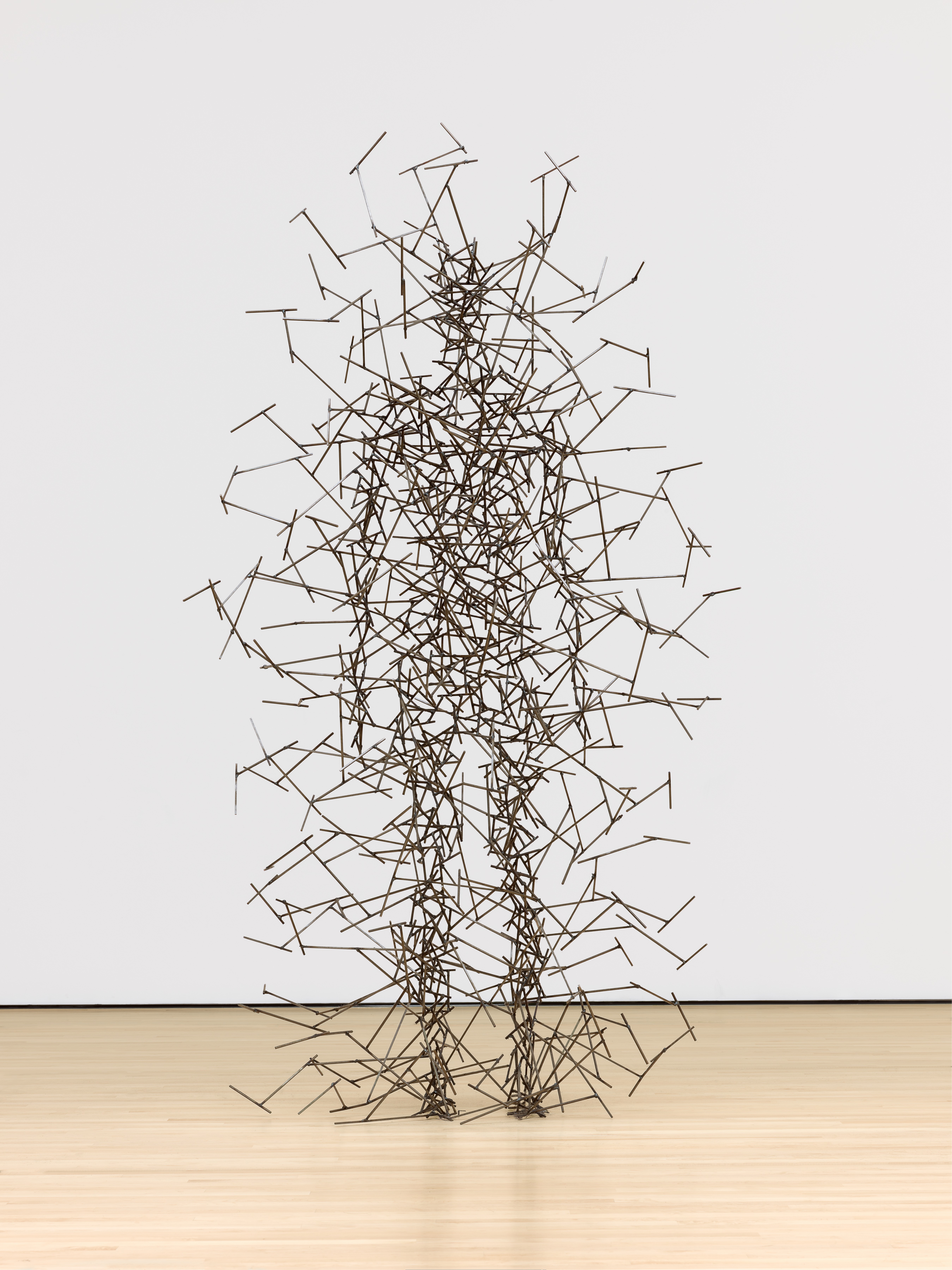
Quantum Cloud VIII, 1999
Gormley was born in London in 1950, the seventh of seven children in a Catholic family of Irish and German descent. He studied archaeology, anthropology, and the history of art at Trinity College Cambridge, a formation that gave his thinking an unusually broad and humanistic foundation. He then spent three years in India, immersing himself in Buddhist philosophy and meditation, an experience that would prove formative in his understanding of the body not as a fixed object but as a field of experience, a site where inner and outer worlds meet. On returning to Britain, he studied sculpture at the Slade School of Fine Art in London, graduating in 1979 with a practice already distinctly his own.
His breakthrough came through a radical decision: to use his own body as both subject and mould. Beginning in the early 1980s, Gormley worked with his partner, the artist Vicken Parsons, to cast his body in lead and then later in iron, creating life sized figures that carry within them the precise volume and posture of a human being in a moment of stillness. This was not mere figuration. It was phenomenology given physical form.
Antony Gormley
BUTTRESS, 2024
The body in Gormley's hands becomes a vessel, a boundary between the self and the space around it, and the sculptures insist that the viewer feel that boundary in their own bones. His 1987 work FIELD, later expanded into the extraordinary FIELD FOR THE BRITISH ISLES in 1993, showed another dimension of this thinking, filling entire rooms with thousands of small terracotta figures made by communities of non artists, turning the act of making into a collective and deeply human ritual. The works that brought Gormley to global recognition are now embedded in the cultural landscape in a way that few contemporary sculptures achieve. ANGEL OF THE NORTH, installed in Gateshead in 1998, stands 20 metres tall with wings spanning 54 metres and has become one of the most visited works of art in the world.
“The body is the place where emotions, feelings, and thoughts are registered. It is the first home we ever have.”
Antony Gormley, The Guardian
It is an extraordinary feat of formal confidence, merging the figurative and the abstract, the local and the universal. ANOTHER PLACE, installed permanently at Crosby Beach near Liverpool in 2005 after earlier showings in Germany, Belgium, and Norway, places 100 cast iron figures across nearly two miles of tidal beach, each figure gazing out to sea. The work belongs to the landscape now, weathered and encrusted, as though it had always been there. These are not merely public sculptures.
Antony Gormley
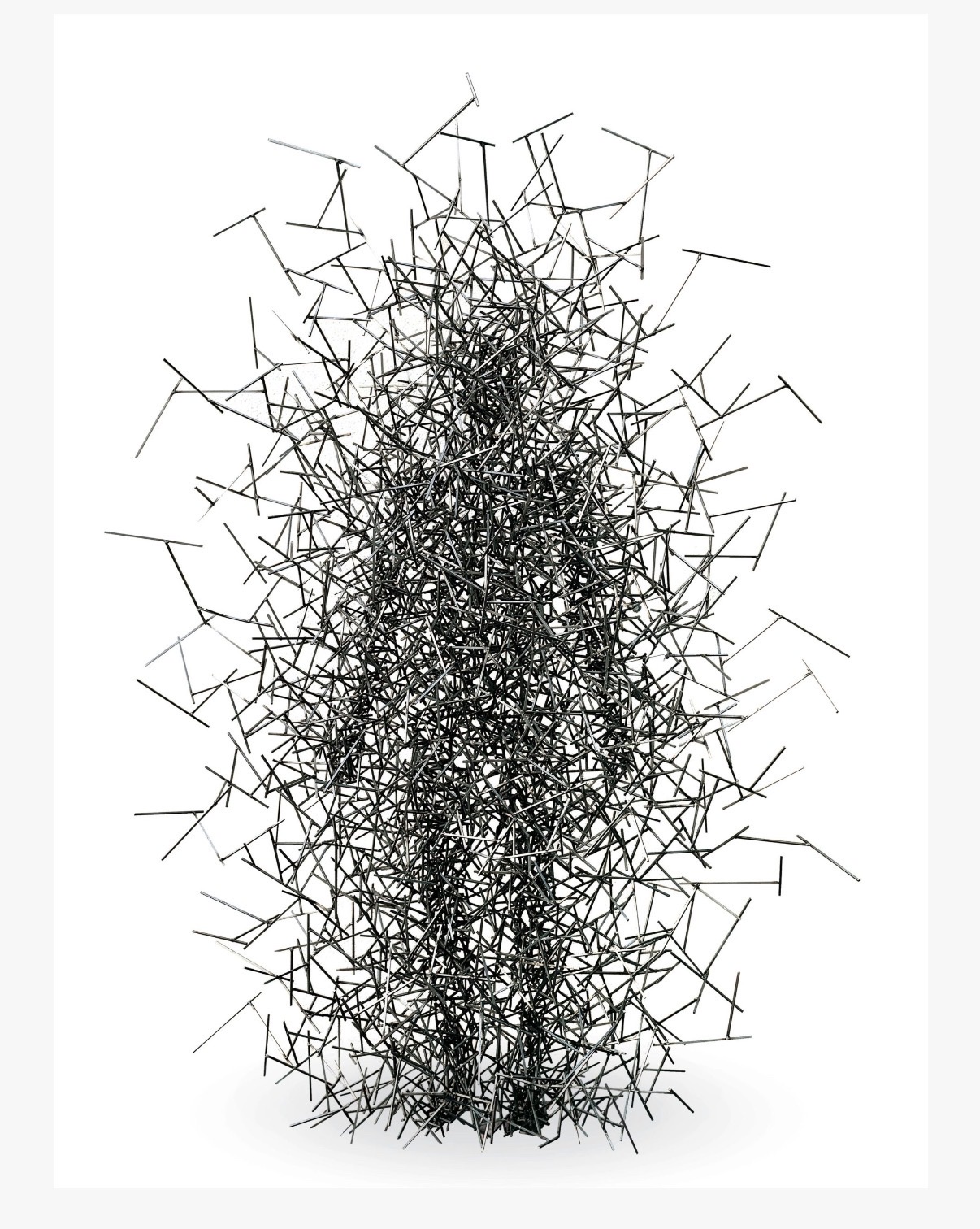
Quantum Cloud XV, 2000
They are acts of reimagining what sculpture can do in relation to place, time, and the people who encounter it. In his studio practice, Gormley has moved steadily toward greater abstraction while never losing the body as his anchor point. Works like QUANTUM CLOUD VIII from 1999, constructed from a dense matrix of steel rods, envelop a skeletal human figure in a cloud of chaotic material energy, suggesting the body as a site of quantum uncertainty, present and dissolved at once. QUANTUM CLOUD XV from 2000 in stainless steel extends this investigation with luminous precision.
TRAJECTORY FIELD I from 2002 bends spring steel rods into vectors of force and direction, evoking the invisible pathways that bodies trace through space. More recent works like OPEN CLASP from 2014 in 4 mm Corten steel and CONNECT VI from 2023 demonstrate that his formal vocabulary is still expanding, still finding new ways to make the invisible felt. STATE III from 2012 and BORDER MODEL from 2012 speak to the political and existential dimensions of the body in space, its vulnerability, its insistence on existing. For collectors, Gormley occupies one of the most secure and intellectually rewarding positions in the contemporary market.
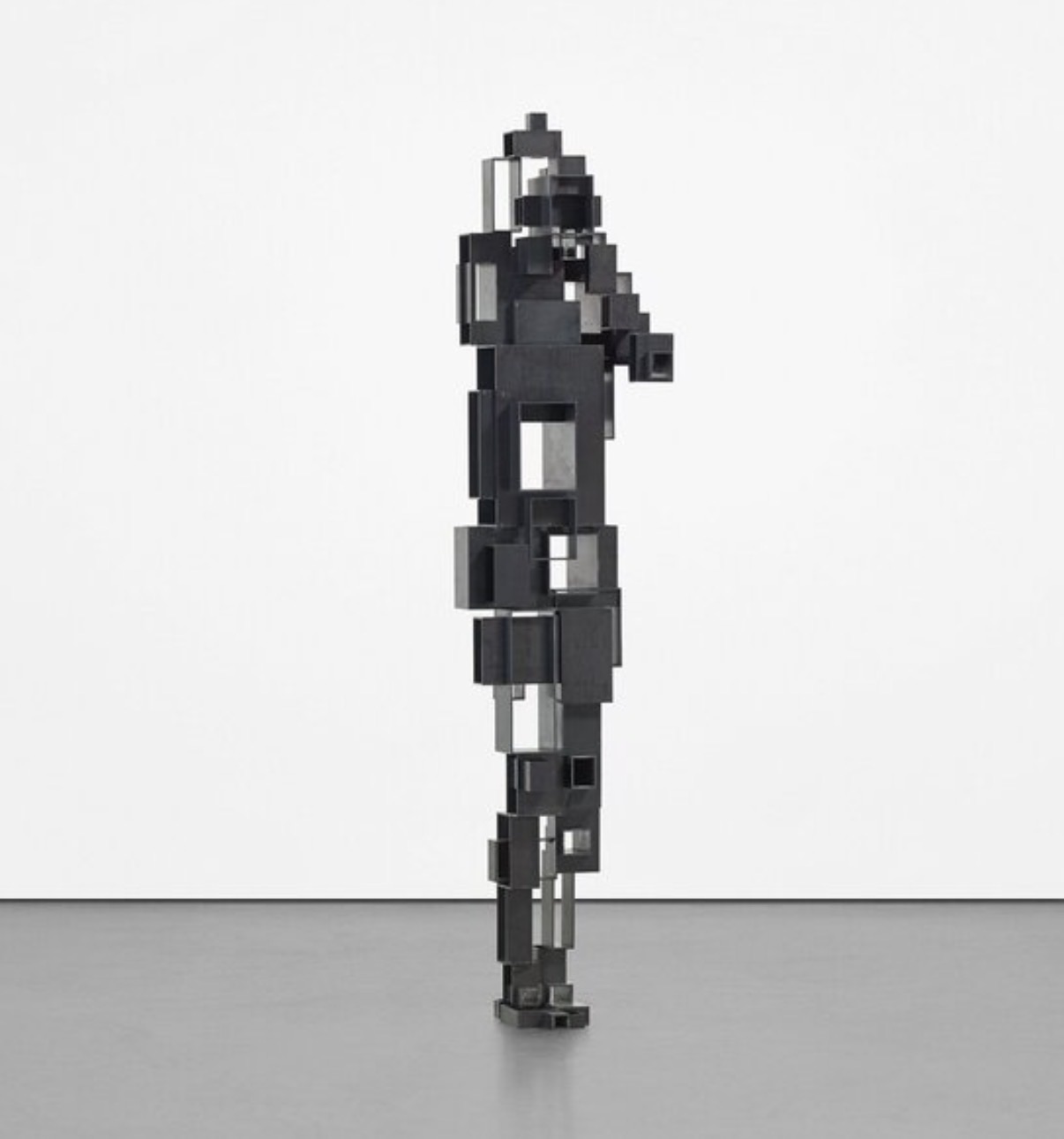
Antony Gormley
Open clasp, 2014
His works are held in the permanent collections of Tate, the Museum of Modern Art in New York, and the Guggenheim, among many other major institutions, and his presence in blue chip galleries worldwide underscores the seriousness with which the market regards his practice. Smaller editioned works and unique pieces in cast iron and steel offer collectors at different levels a point of genuine engagement, and the range of his output means that there is both depth and variety to collect across. What distinguishes a Gormley collection is its capacity to evolve: works that seemed purely formal acquire political resonance, and works that seemed political open into something more personal and philosophical. He is represented by White Cube in London, and his works appear regularly at the major auction houses.
MEME CXLIV in cast iron is a fine example of his ongoing engagement with seriality and variation, the sense that each figure is both individual and part of an infinite human continuum. Gormley's place in art history sits at a remarkable intersection. He shares with Richard Serra an interest in the relationship between mass, material, and the space of the viewer's body. He is in conversation with the phenomenological concerns of Bruce Nauman and the spatial investigations of Richard Long.
His interest in the collective and the communal links him to Joseph Beuys, though his idiom is more quietly lyrical and less confrontational. Within British sculpture, he stands in a lineage that includes Henry Moore and Barbara Hepworth, both of whom understood the figure as a meeting point between inner life and outer world, though Gormley has pushed that dialogue into entirely new territory. What makes Gormley matter now, in the middle of the 2020s, is the same thing that made him matter when he first cast his own body in lead in a London studio four decades ago. He insists that the human body is not a given, not a simple fact, but a question, a threshold, a place where the personal and the cosmic are perpetually negotiating.
In an era of increasing disembodiment, of screens and algorithms and the erosion of felt experience, his sculptures stand in the world with a physical insistence that feels not nostalgic but urgently necessary. Each figure is an invitation to arrive, to be present, to feel where your body ends and space begins. That is a rare and generous gift from an artist at the height of his powers.
Explore books about Antony Gormley