Anthony van Dyck
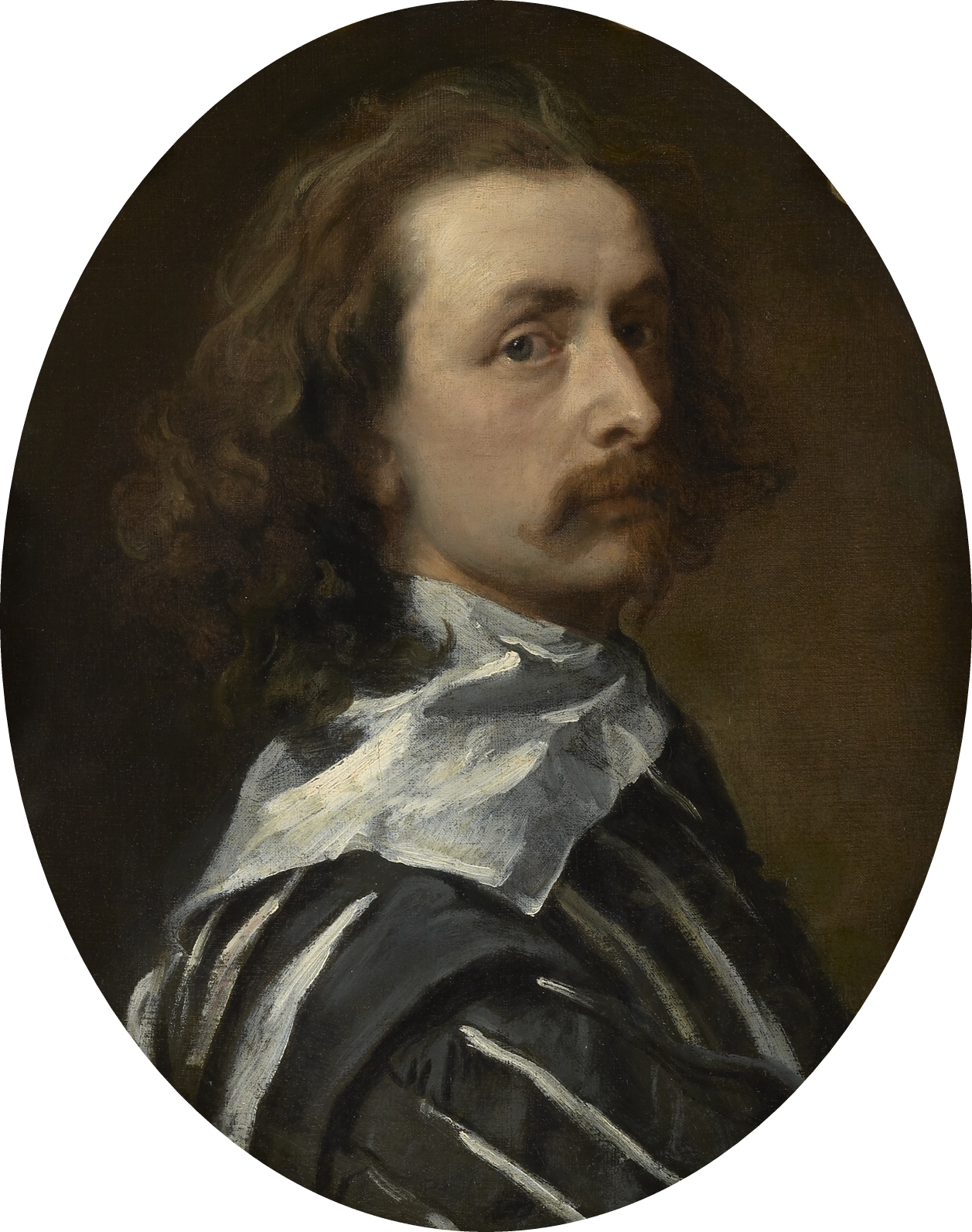
Van Dyck: The Master Who Reinvented Elegance
Artist Spotlight · The Collection Editorial
There is a moment, standing before Anthony van Dyck's portrait of Charles I in the Louvre, when the entire mythology of aristocratic portraiture snaps into focus. The king is mounted on horseback, rendered with such commanding authority and psychological intimacy that you understand immediately how one painter could reshape the visual identity of an entire ruling class. That work, completed around 1635, remains one of the most studied and reproduced portraits in Western art history, and institutions from the National Portrait Gallery in London to the Museo del Prado in Madrid continue to place van Dyck at the very center of conversations about power, beauty, and the art of likeness. His influence has never faded.
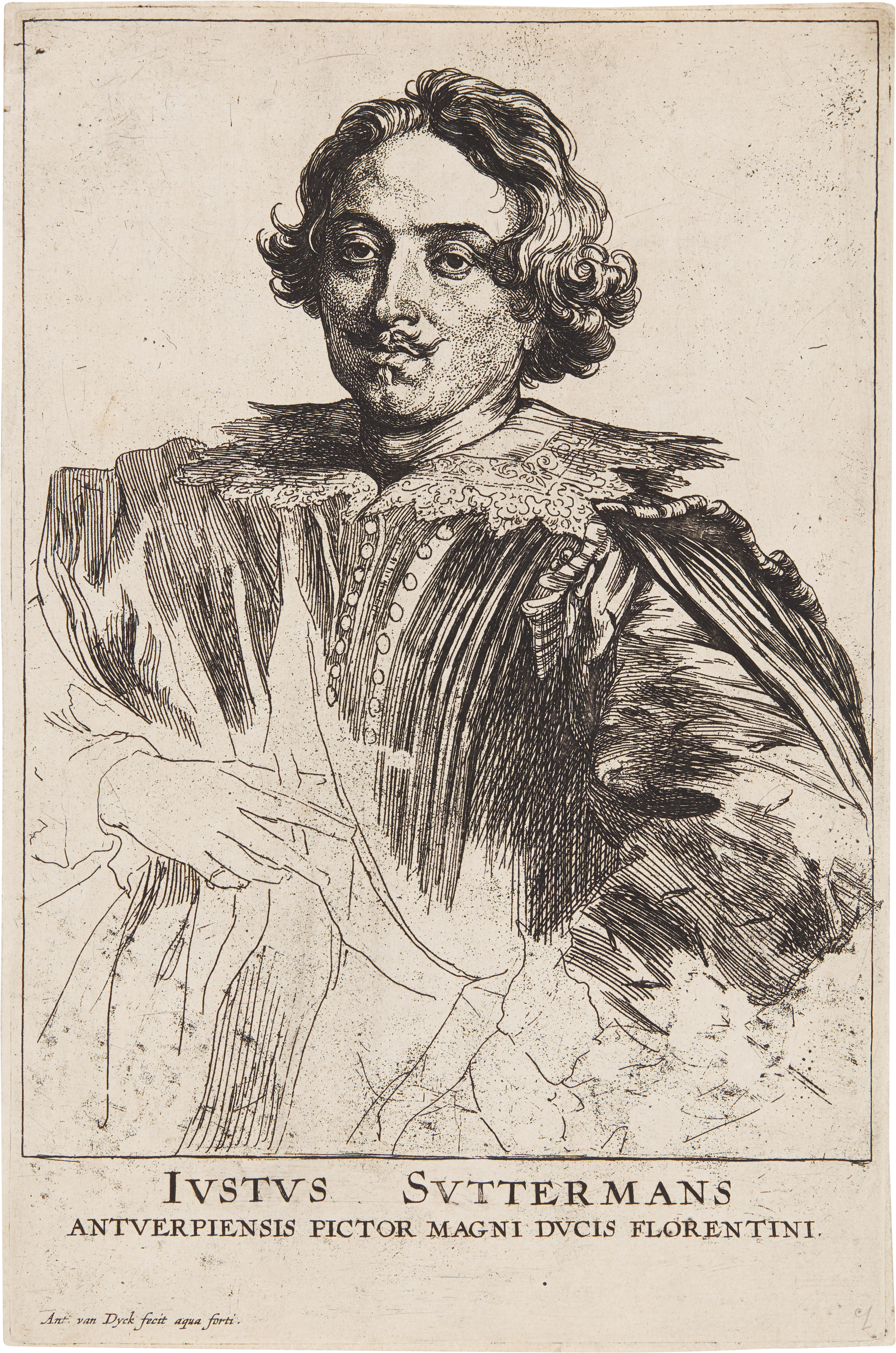
Anthony van Dyck
Justus Sustermans; and The Mocking of Christ (two works) (Hollstein 12, 20; Mauquoy-Hendrickx 12, A; New Hollstein 11, 519)
It has only deepened. Anthony van Dyck was born on 22 March 1599 in Antwerp, then one of the most commercially and culturally vibrant cities in Europe and part of the Spanish Netherlands. He was the seventh of twelve children born to a prosperous silk merchant, and the household he grew up in was not without refinement. His father collected art and his mother was known for her needlework, skills that suggest a family attuned to beauty and craftsmanship.
Van Dyck demonstrated exceptional ability from childhood. He was registered as a pupil of the Antwerp painter Hendrick van Balen around 1609, and by 1615, still a teenager, he had already established his own workshop. In 1618 he became a master in the Antwerp Guild of Saint Luke, a formal recognition of what must have seemed, even then, like an extraordinary and inevitable talent. The most formative relationship of van Dyck's early career was his time in the studio of Peter Paul Rubens, the undisputed colossus of Flemish Baroque painting.
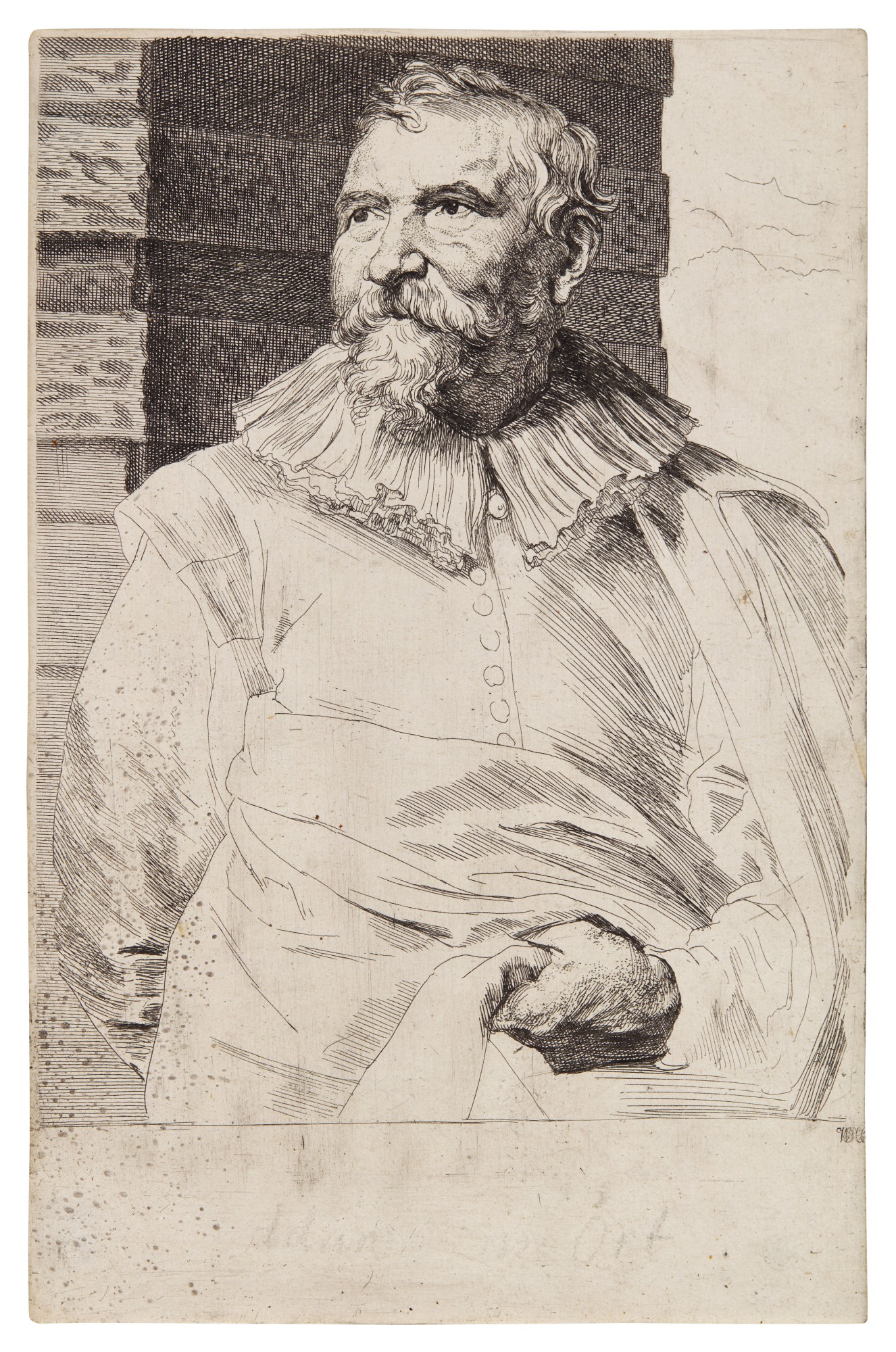
Anthony van Dyck
Adam van Noort (Hollstein, Mauquoy-Hendrickx 8; New Hollstein 7)
Van Dyck worked alongside Rubens roughly between 1618 and 1620, absorbing the master's command of color, compositional dynamism, and the rendering of flesh and fabric. Yet even within that orbit, van Dyck was no mere apprentice. Rubens himself reportedly acknowledged the younger man's gifts with something close to unease, recognizing in his pupil a rival of the highest order. The two artists shared a fluency in religious painting and a deep engagement with Italian precedents, particularly the work of Titian, whose luminous approach to portraiture would prove decisive for van Dyck's own evolution.
The Rubens circle was a crucible, and van Dyck emerged from it with a sensibility entirely his own. A transformative journey to Italy between 1621 and 1627 confirmed van Dyck's ambitions and refined his technique. He spent considerable time in Genoa, where he found in the city's patrician families a clientele ideally suited to his gifts, and the full length portraits he produced there, tall, spare, and magnificent in their spatial confidence, established a format that would define aristocratic portraiture for generations. He also spent time in Rome, Venice, and Palermo, studying the Old Masters and absorbing the lessons of Venetian colorism at their source.
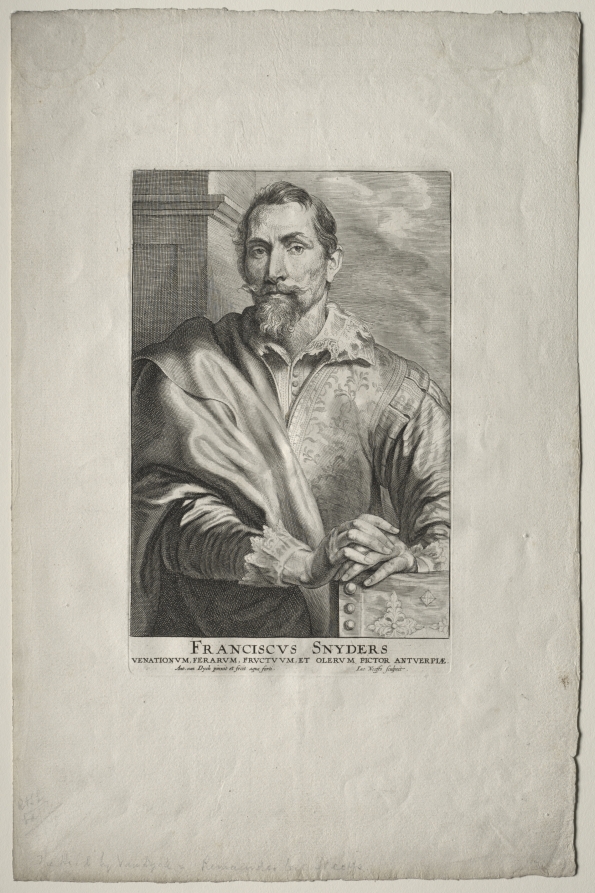
Anthony van Dyck
Frans Snyders, 1930
Titian's influence is everywhere in the work van Dyck produced during and after Italy: the cool silvery light, the extraordinary sensitivity to textiles, the sense that a portrait is not simply a record of appearance but a negotiation between painter and sitter about how posterity will remember them. Van Dyck returned to Antwerp in 1627 and entered one of the most productive phases of his career, painting religious works and portraits for the Flemish nobility and the Hapsburg court in Brussels. But it was his appointment in 1632 as principal painter to King Charles I of England that brought him to the height of his fame and influence. Knighted by the king and granted a generous stipend, van Dyck settled at Blackfriars in London and proceeded to create the visual language through which the Stuart court wished to be seen.
His portraits of Charles I, of Henrietta Maria, and of the great aristocratic families of England are works of astonishing psychological complexity, figures rendered with tender precision against skies of bruised silk, their hands and faces alive with interiority. The elegance is never cold. It breathes. For collectors, van Dyck's graphic work offers a particularly compelling and accessible entry point into his universe.
His celebrated series of portrait etchings known as the Iconography, begun around 1630 and published posthumously in expanded form by the Antwerp publisher Martinus van den Enden, brought the faces of artists, scientists, nobles, and statesmen to a broad European audience. The etchings van Dyck produced for this series, including portraits of fellow artists such as Adam van Noort and Frans Snyders, reveal a draughtsman of the first order, a mind comfortable in the intimate, exploratory register of printmaking as much as in the grand machinery of oil on canvas. Works on paper from this period, particularly fine early impressions in strong black ink on laid paper, are among the most prized objects in any collection focused on seventeenth century Flemish art. The distinction between states, the quality of impression, and the presence of watermarks are all factors that serious collectors attend to with great care.
Within the broader sweep of Baroque art history, van Dyck sits in distinguished company. His teacher Rubens remains the essential point of reference, and works by Frans Hals, Rembrandt van Rijn, and Diego Velázquez occupy the same cultural and chronological territory, each offering a different answer to the question of what a painted face can tell us about a human life. Van Dyck's particular genius lay in synthesis: he took the monumental energy of Rubens, the chromatic sensitivity of Titian, and the psychological acuity that was his own inheritance and fused them into something that felt entirely inevitable. Collectors who love one of these masters almost invariably find themselves drawn to the others, and van Dyck frequently serves as the connective tissue between them.
Van Dyck died in London on 9 December 1641, aged just forty two, leaving behind a body of work of staggering scope and quality. His legacy is woven into the fabric of Western portraiture in ways that cannot be fully measured. Joshua Reynolds studied him. Thomas Gainsborough revered him.
The tradition of the grand English portrait, which runs through the eighteenth and nineteenth centuries and into the modern era, is inconceivable without him. In auction rooms today, works firmly attributed to van Dyck command serious attention from major museums and private collectors alike, and the scholarly apparatus around his prints and drawings continues to grow. He was a painter of genius working at full stretch throughout a short life, and the works he left behind carry his intelligence and feeling as vividly now as they did in the courts and studios of seventeenth century Europe.
Explore books about Anthony van Dyck
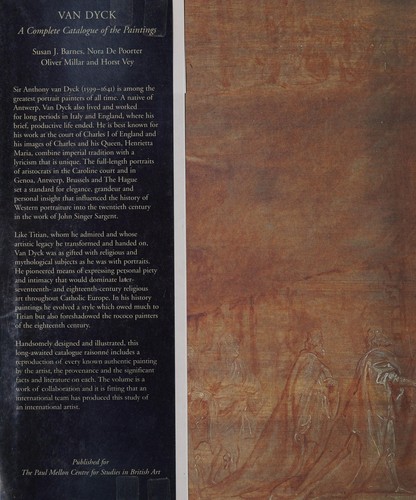
Van Dyck: A Complete Catalogue of the Paintings
Susan J. Barnes, et al.
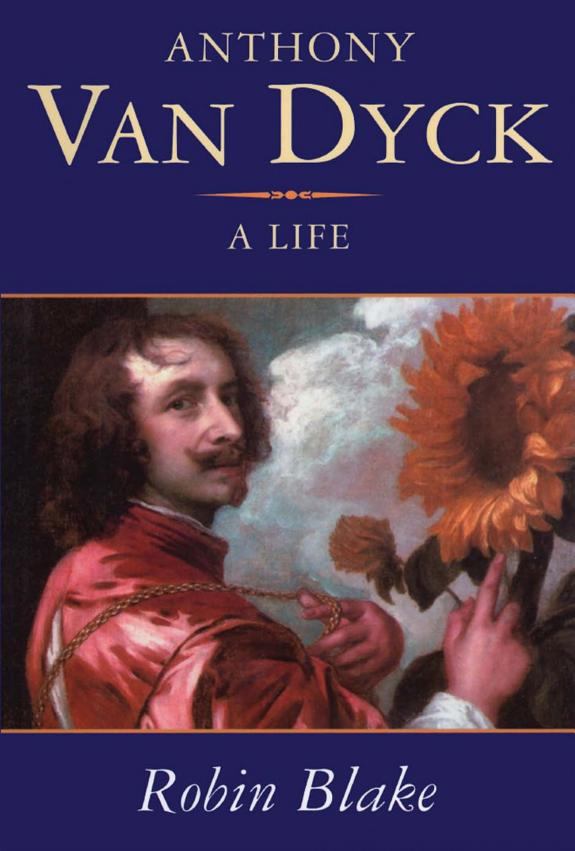
Anthony van Dyck
Michael Levey
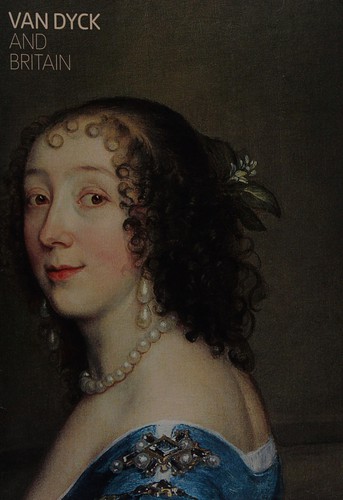
Van Dyck and Britain
Karen Hearn
Anthony van Dyck: Masters of Art
Julius S. Held
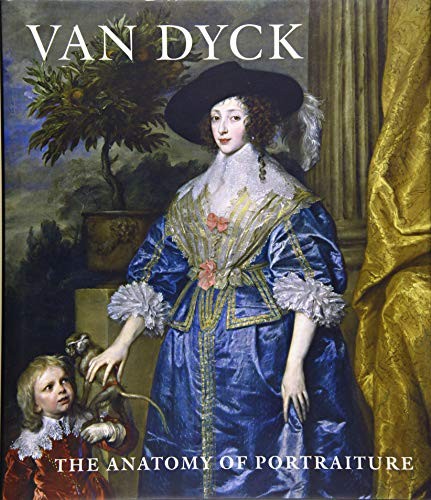
Van Dyck's English Period
Oliver Millar
The Drawings of Anthony van Dyck
Michael Jaffé
Anthony van Dyck: Faith, Friendship and Collecting
Susan J. Barnes, Arjan van Grevenstein-Kruse

Van Dyck: The Holy Family with Saint Elizabeth and Saint John
Kristin Lohse Belkin