Adrian Ghenie

Adrian Ghenie Paints History Into Something Luminous
Artist Spotlight · The Collection Editorial
“I am very interested in the idea of collective memory and how painting can be a way to investigate that.”
Adrian Ghenie, interview with Tate
When Adrian Ghenie represented Romania at the 56th Venice Biennale in 2015, the art world took notice in a way that felt less like discovery and more like confirmation. His pavilion, filled with monumental canvases depicting Darwin, dictators, and the smeared residue of collective trauma, drew some of the longest queues of that edition. Critics reached for superlatives. Collectors who had been watching quietly for years found themselves in fierce competition.
Adrian Ghenie
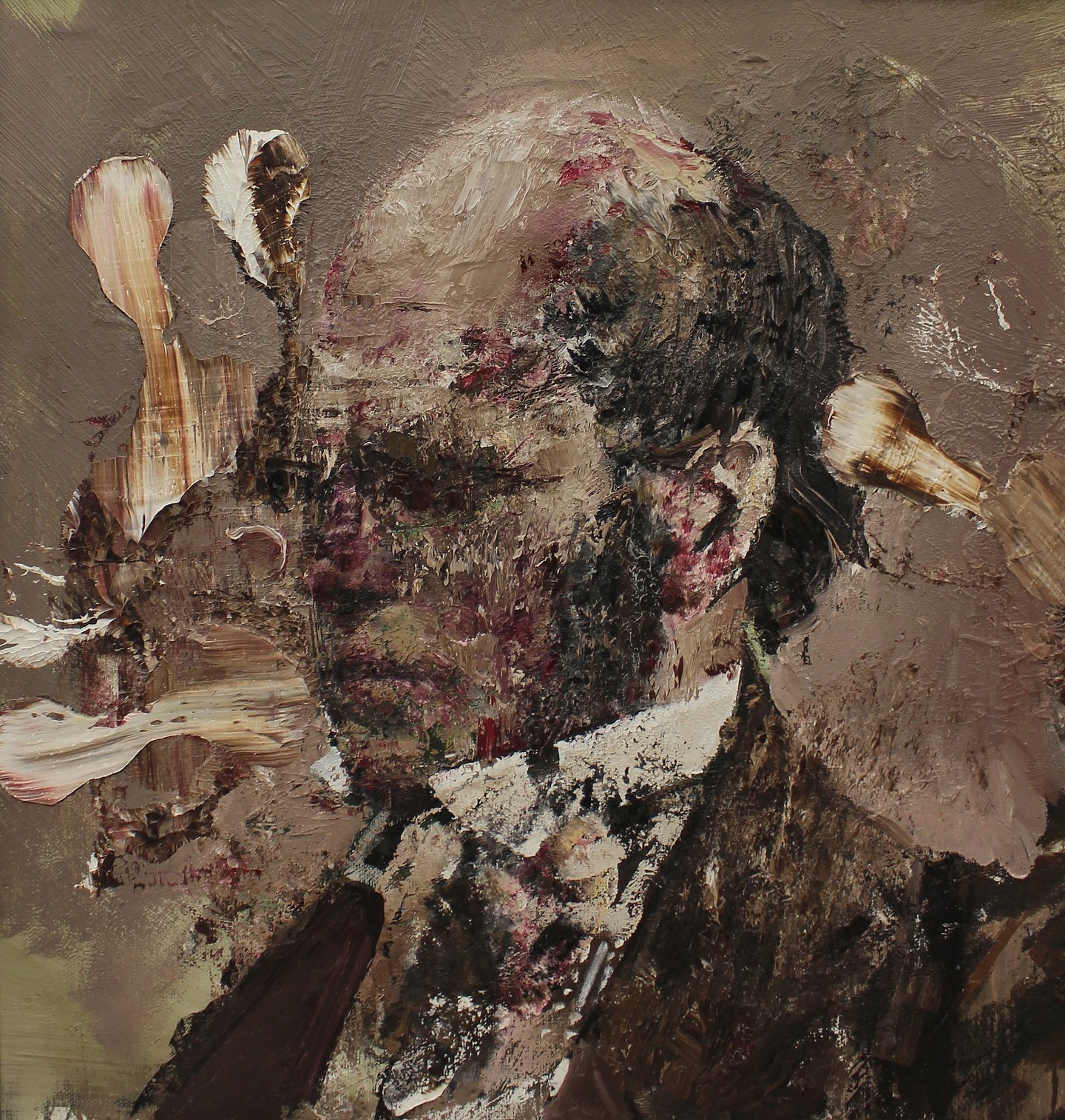
Charles Darwin as a Young Man, 2013
It was one of those rare moments when a painter's singular vision and the appetite of a global audience align perfectly, and the result was electric. Ghenie was born in 1977 in Baia Mare, a city in northwestern Romania that carries its own layered history, shaped by industrialization, communism, and the particular texture of life in a country still finding its footing after decades of authoritarian rule. He studied at the University of Art and Design in Cluj Napoca, a city that would become central not just to his own formation but to one of the most compelling art scenes in Eastern Europe. Cluj offered Ghenie something essential: a community of serious painters thinking seriously about what painting could still do in the twenty first century.
In 2005, Ghenie co founded Plan B alongside fellow artist Mihai Pop. What began as an artist run space in Cluj became something much larger, eventually opening a second location in Berlin and establishing itself as one of the most internationally regarded galleries in Europe. Plan B was never simply a commercial venture. It was a statement of intent, a belief that artists from Romania could shape global conversations rather than respond to them from the margins.
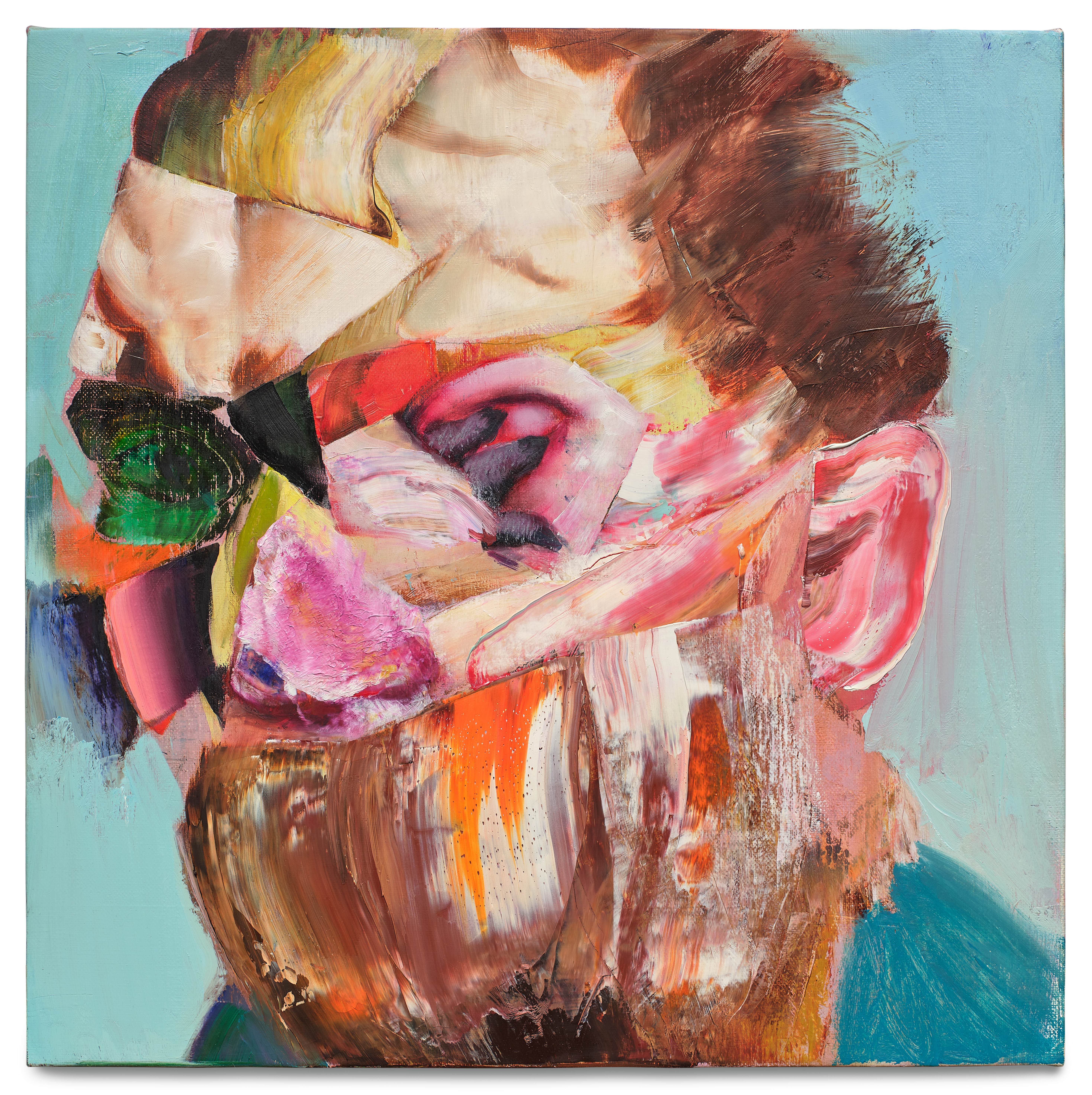
Adrian Ghenie
Lidless Eye, 2016
That founding instinct, ambitious and collaborative, has remained a defining quality of everything Ghenie has done since. His painting practice is immediately recognizable and yet never quite predictable. Ghenie works with oil on large scale canvases, building surfaces of extraordinary physical density through layering, scraping, and distortion. Faces dissolve into storms of pigment.
“Painting is still the most intimate way to deal with history.”
Adrian Ghenie
Figures emerge from backgrounds that seem to be simultaneously consuming and generating them. The technique owes something to Francis Bacon's compressed psychological violence and something to the gestural freedom of Abstract Expressionism, but the result is entirely Ghenie's own. His paintings feel as though they are being remembered rather than recorded, as though the image is struggling to hold its form against the pressure of what it carries. Among his most celebrated works, the series of paintings depicting Charles Darwin stands apart for its sustained conceptual ambition.
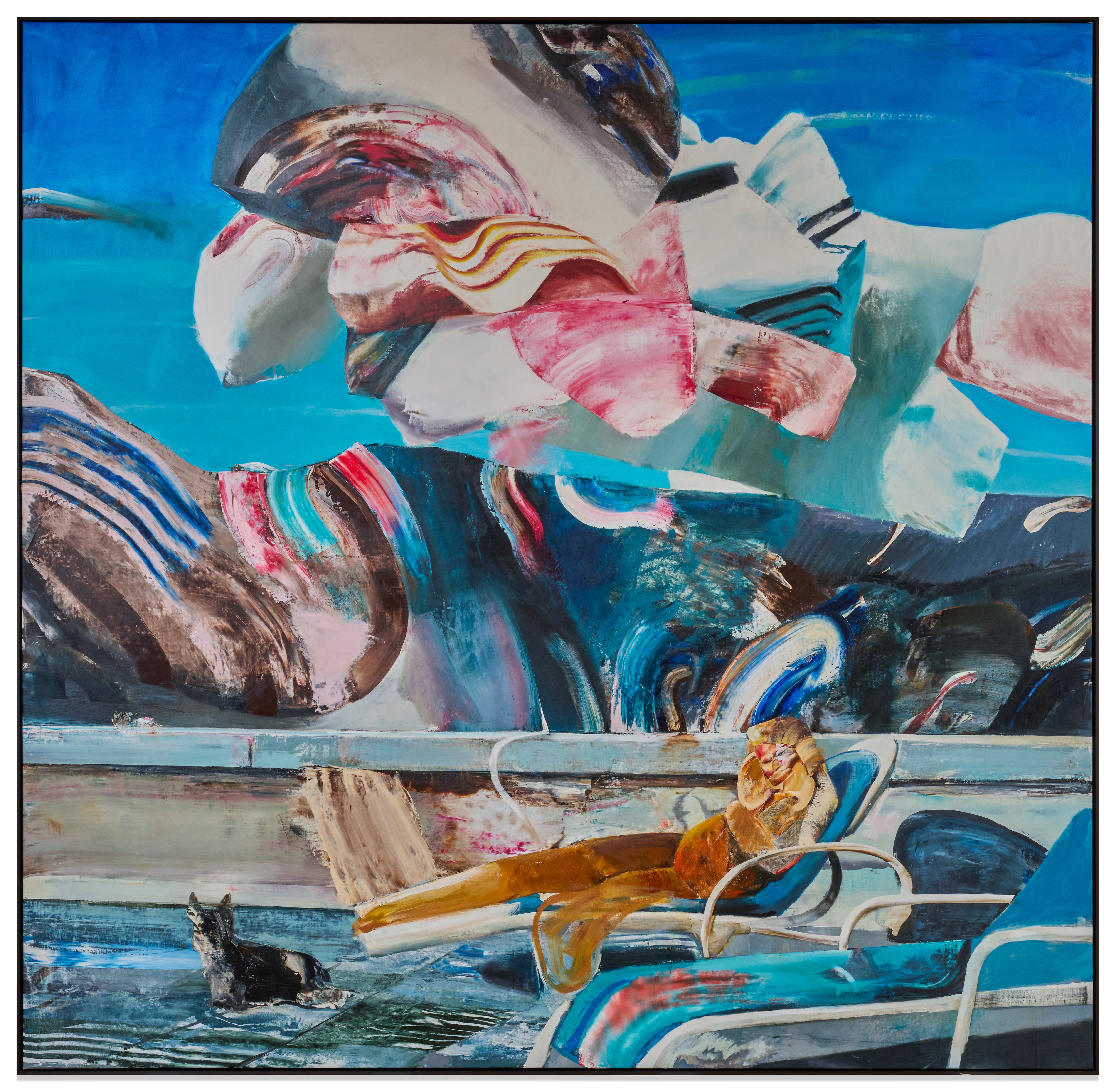
Adrian Ghenie
Alpine Retreat 2, 2017
Works such as "Charles Darwin as a Young Man" from 2013 and "The Death of Charles Darwin" use the figure of Darwin not simply as portraiture but as a vehicle for thinking about evolution, survival, and the brutal logic of natural selection applied to human history. These canvases are searching and strange, tender even, despite their disturbing surfaces. "Study for Self Portrait as Charles Darwin No. 2" from 2012, executed in acrylic, ink, and paper collage, reveals the intimacy of his working process, the way ideas accrue and shift before they reach the large canvas.
"Pie Fight (Child)" from 2012 and "Lidless Eye" from 2016 demonstrate the range of his emotional register, moving between something approaching dark comedy and something closer to dread. His 2024 work "The App 3," a Ditone print on Hahnemühle photo rag, signals an ongoing willingness to push beyond the boundaries of oil on canvas while maintaining the visual intensity that defines his entire output. For collectors, Ghenie represents one of the most compelling opportunities in the contemporary market. His prices at auction have reflected both critical consensus and genuine institutional enthusiasm.
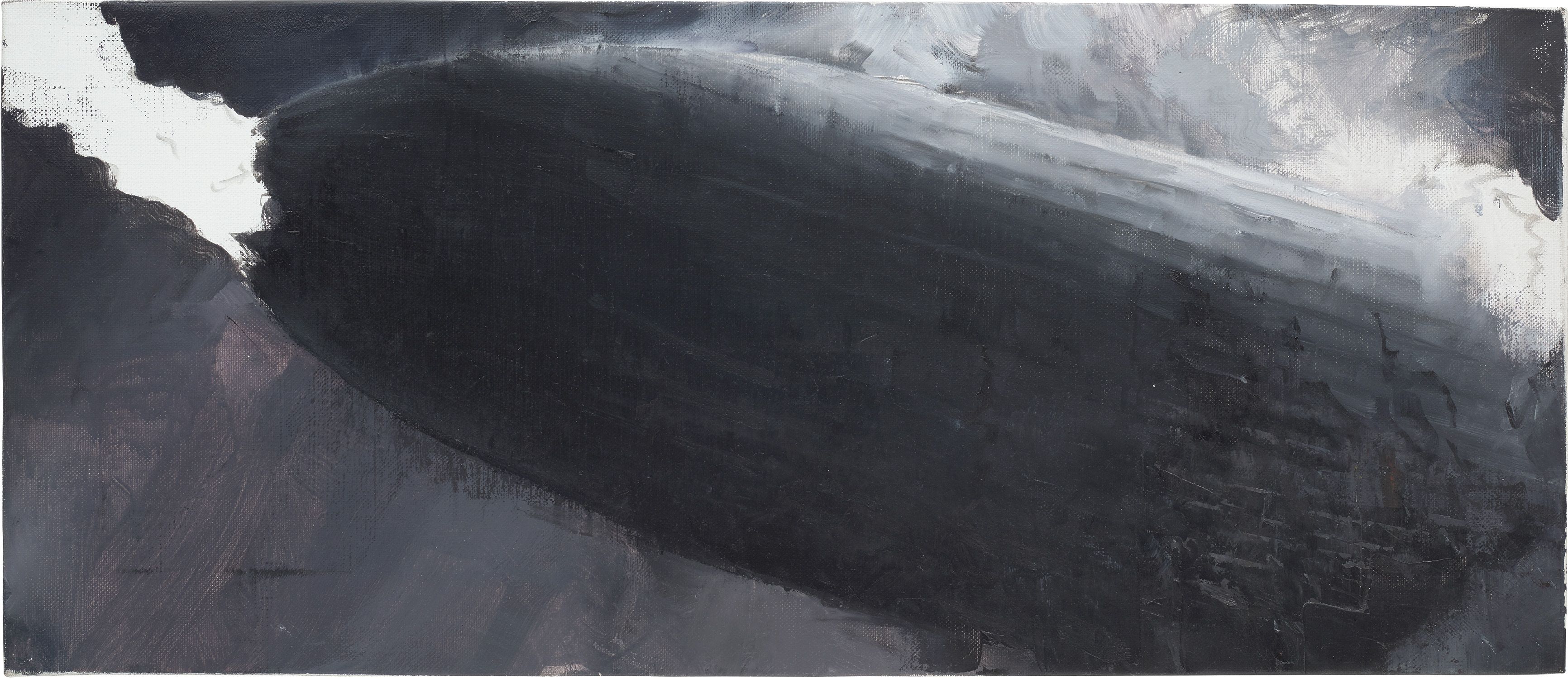
Adrian Ghenie
History Is Always Horny I, 2007
Christie's and Sotheby's have handled major works, with results that have positioned him firmly among the most sought after painters of his generation. What distinguishes his market is the depth of institutional support behind it. Major museums in Europe and the United States hold his work, and that presence in permanent collections provides the kind of long term validation that serious collectors rightly prize. Works on paper and smaller studies offer entry points that reward close attention, carrying the same raw intelligence as the large canvases at a scale that allows for a more intimate daily relationship with the work.
Placing Ghenie within art history is an exercise in productive tension. He is clearly in conversation with Bacon, with Marlene Dumas, with Neo Expressionist painters such as Georg Baselitz and Anselm Kiefer. The influence of Chaim Soutine is legible in the almost fevered application of paint, the sense that the surface itself is under enormous pressure. And yet Ghenie's relationship to Eastern European history, to the specific textures of communist era trauma and the uncertainty of transition, gives his work a grounding that is entirely particular.
He is not illustrating history. He is painting what history feels like from inside a body that has inherited it. What makes Ghenie matter today, beyond the market metrics and the institutional endorsements, is something harder to quantify but easy to feel standing in front of one of his canvases. He has found a way to make painting feel urgent again, to insist that figuration can carry the weight of the most difficult human experiences without becoming either illustrative or sentimental.
His surfaces demand something of the viewer, a willingness to sit with ambiguity, to accept that a face dissolving into abstraction might be more honest than one rendered in clear detail. In an era saturated with images, Ghenie makes paintings that resist easy consumption and reward sustained looking. That is a rare quality, and it is one that will ensure his work remains essential long after the auction records fade from memory.
Explore books about Adrian Ghenie