Jake Chapman
1
Works
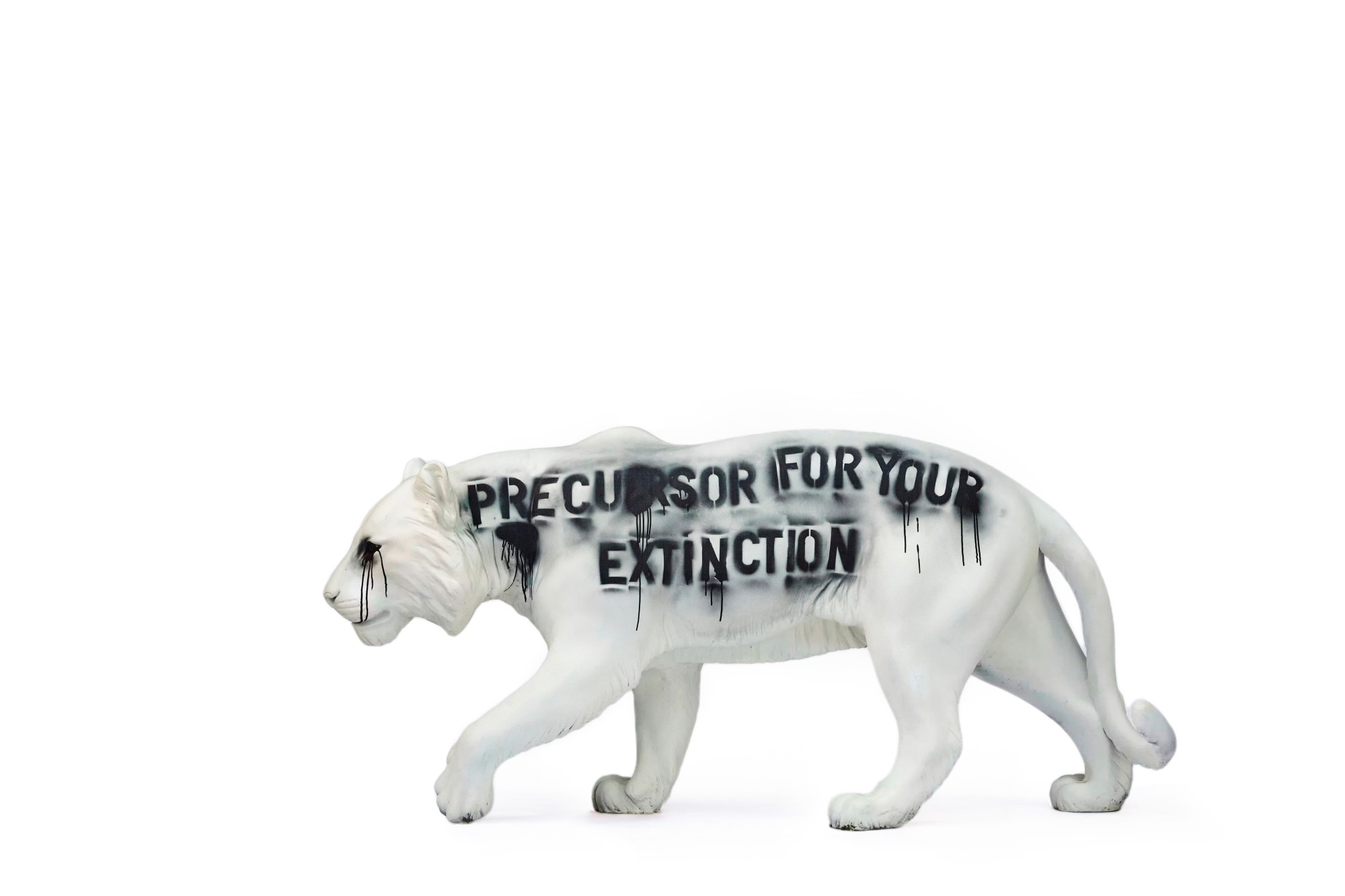
Jake Chapman is a British contemporary artist best known for his collaborative practice with his brother Dinos Chapman. Born in 1966, Jake Chapman studied at the North East London Polytechnic and later at the Royal College of Art, where he met Dinos and began their enduring artistic partnership. Together, the Chapman Brothers became one of the most provocative and controversial duos to emerge from the Young British Artists (YBAs) movement of the 1990s, a scene that also included Damien Hirst and Tracey Emin. Their work is characterized by a gleeful transgression of moral and aesthetic boundaries, drawing heavily on themes of war, death, sexuality, consumer culture, and the limits of humanism, often rendered with darkly comic or satirical intent. The Chapman Brothers' most iconic works include 'Hell' (1999, 2000), a monumental diorama of nine glass cases depicting thousands of miniature Nazi figures engaged in grotesque scenes of torture and murder, a work destroyed in a warehouse fire in 2004 and later recreated as 'Fucking Hell' (2008). Their series of defaced Goya etchings, in which they painted clown faces and cartoon heads over Francisco Goya's 'Disasters of War,' provoked widespread debate about the sanctity of art history and the ethics of appropriation. Other notable works include their mutilated and conjoined mannequins with genitalia replacing facial features, exploring themes of the abject body and the collapse of the normative human form. Their work has been exhibited at major institutions including Tate Modern, the White Cube gallery, and the Museum of Modern Art. Jake Chapman has also pursued a solo practice alongside the collaborative work, producing paintings, drawings, and sculptures that share the same irreverent and philosophically provocative sensibility. He is also known as a writer and commentator, engaging with philosophy, particularly Nietzsche and post-structuralist thought, to articulate the theoretical underpinnings of his and Dinos's practice. The Chapmans are represented by White Cube gallery in London and have achieved significant auction results, cementing their place as central figures in the legacy of British contemporary art. Their work remains deeply polarizing, simultaneously celebrated for its intellectual rigor and condemned for its apparent nihilism and shock tactics.
Artists in conversation