Zeng Fanzhi
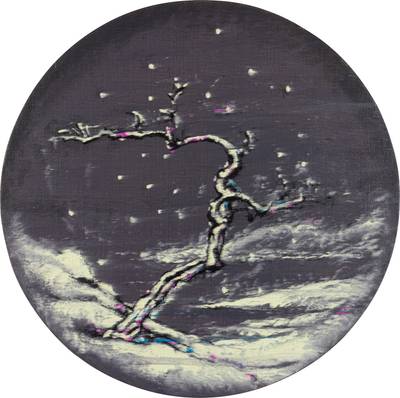
Artist Spotlight · The Collection Editorial
```json { "headline": "Zeng Fanzhi: China's Most Vital Living Painter", "body": "When Christie's Hong Kong brought Zeng Fanzhi's 'Last Supper' to auction in 2013, the painting realized HKD 180 million, setting a record for contemporary Asian art at the time and confirming what serious collectors had long understood: Zeng Fanzhi is one of the most significant painters alive. The work, a monumental reimagining of Leonardo da Vinci's sacred scene rendered through the lens of post Mao China, with Young Pioneers in red neckerchiefs seated at a banquet table, captured the imagination of the global art world in a single, galvanizing moment. That auction was not merely a market milestone. It was a cultural reckoning, proof that painting rooted in the particular anxieties of modern China could speak with universal force.
Zeng Fanzhi

Mask Series 1999 no. 6 面具系列 1999 第6號
\n\nZeng was born in Wuhan in 1964, a city whose industrial temperament and remove from the cosmopolitan centers of Beijing and Shanghai would quietly shape the intensity of his vision. He came of age during the final convulsions of the Cultural Revolution and its turbulent aftermath, a period in which Chinese society was simultaneously unraveling and reconstituting itself. He studied at the Hubei Institute of Fine Arts, graduating in 1991, where he absorbed the techniques of European expressionism alongside the ideological contradictions of his own moment. The hospital paintings he produced in the early 1990s, visceral and confrontational, channeled the raw disorientation of a society emerging from decades of enforced collectivism into something deeply, uncomfortably personal.
\n\nHis breakthrough came with the Mask Series, which he began in 1994 and continued through the decade. The premise is disarmingly simple: figures in Western business suits wearing oversized, fleshy masks that appear both grotesque and strangely tender. These works arrived at precisely the moment China was opening its economy and its citizens were being asked to perform new social roles, to smile for global capital, to present a face to the world that may or may not have corresponded to any interior truth. The masks became one of the most resonant symbols in contemporary art, not as a culture specific allegory but as a universal meditation on identity, performance, and the distance between who we are and who we are required to be.
Zeng Fanzhi
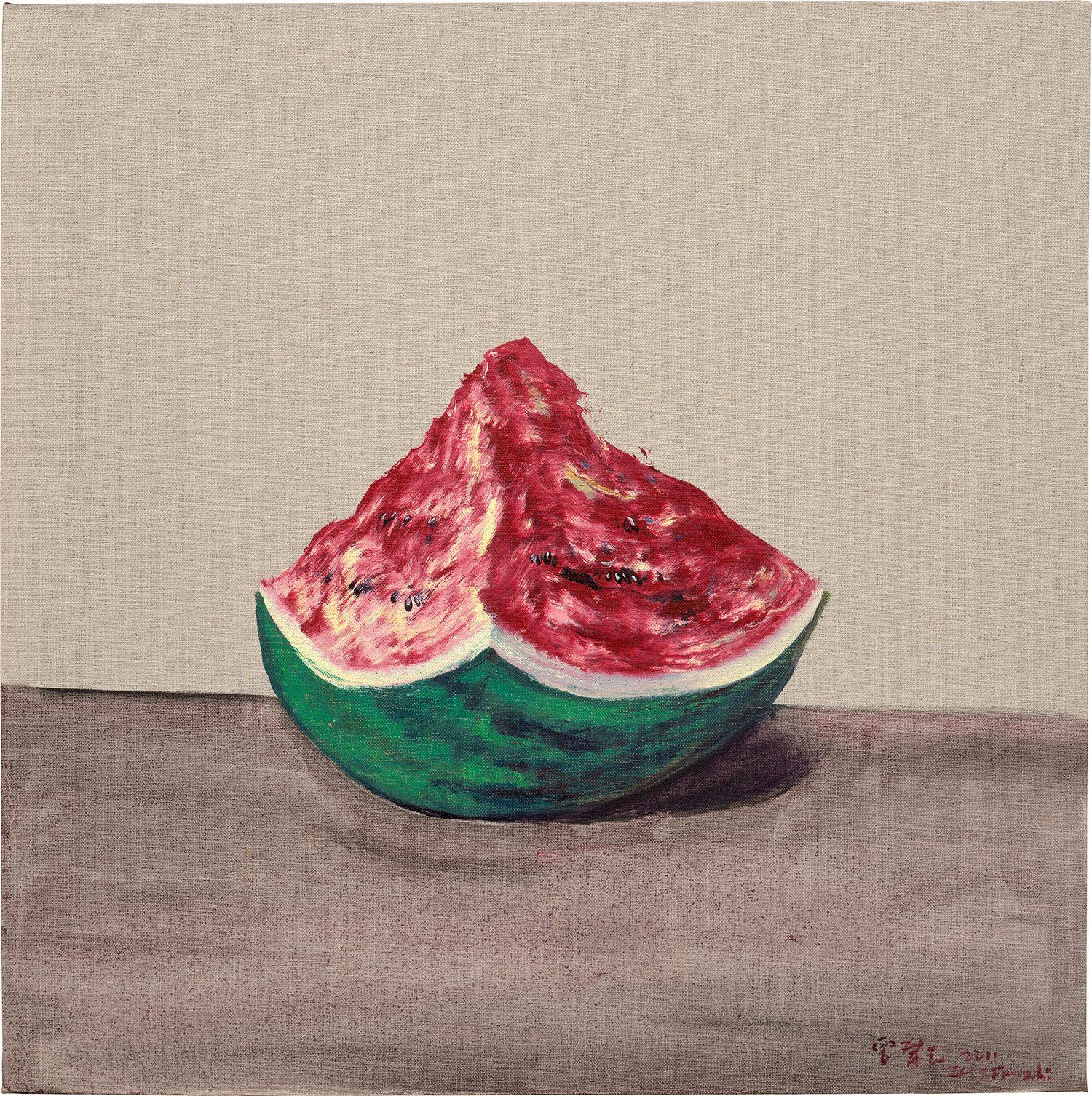
Watermelon, 2011
Critic Chiu Ti Jansen, writing about Zeng's retrospective in Paris, observed that his power lies in his ability to liberate viewers from rigid, culture specific iconography, and the observation holds. The Mask Series speaks to anyone who has ever felt the weight of a role they did not choose.\n\nZeng's practice has never stood still. From the psychological intensity of the Mask Series, he moved into landscapes of a very different register, loose, gestural paintings of forests and skies that seem to breathe and tremble on the canvas.
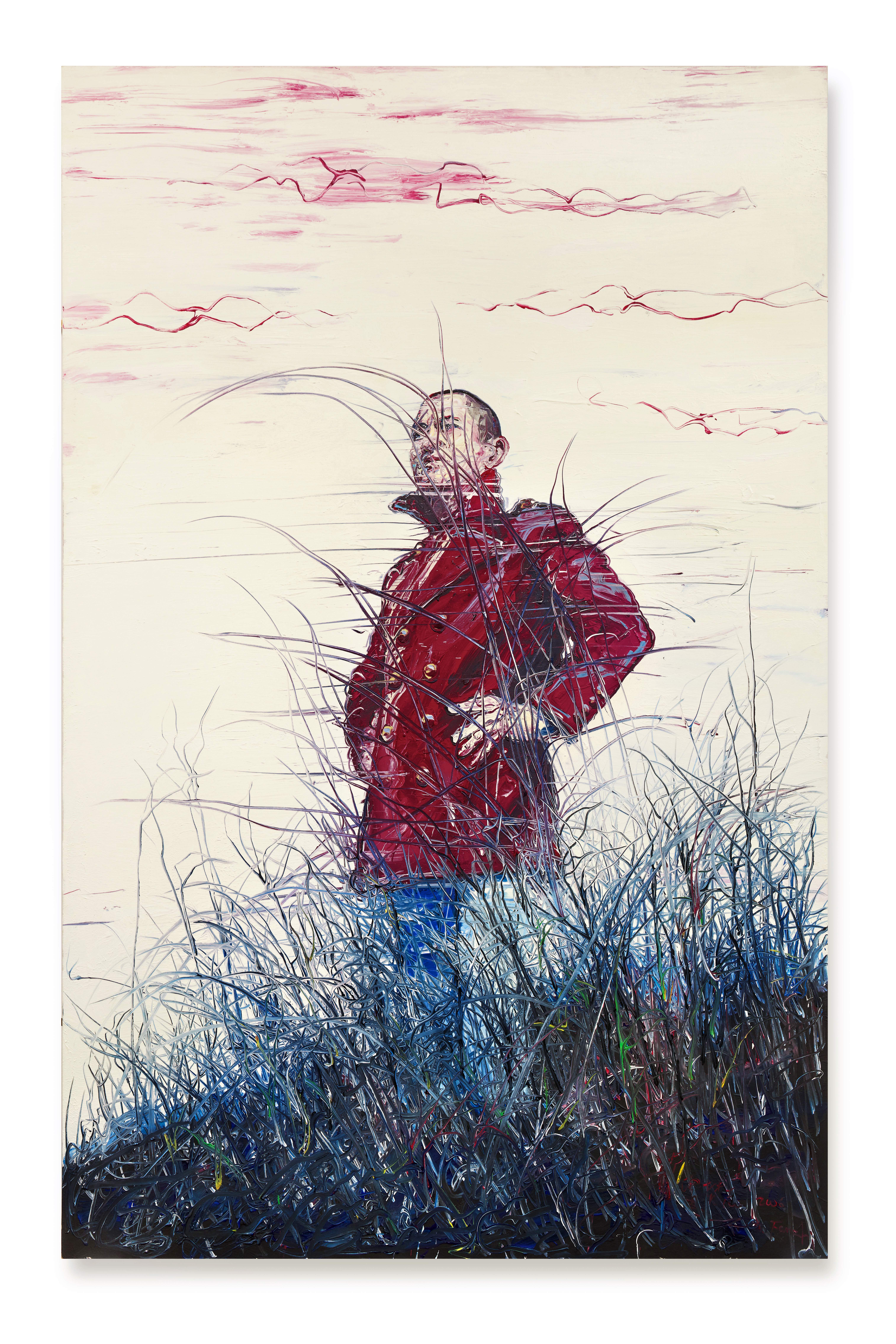
Works like 'Sky No. 7' reveal a painter in conversation with both the Chinese literati tradition of ink wash painting and the spontaneous physicality of Abstract Expressionism, finding a bridge between those two worlds that feels entirely his own. His self portraits, equally compelling, strip away the masks entirely, presenting the artist as a figure caught between interiority and exposure, vulnerable in ways his more theatrical canvases rarely allow. Works such as 'Trauma' from 2007 and 'Watermelon' from 2011 demonstrate the full range of his sensibility, from existential weight to something approaching lyric warmth.
Zeng Fanzhi
Self-Portrait 自畫像
\n\nFor collectors, Zeng's work offers a remarkable range of entry points. His lithographs, including editions such as 'Mask Series: Mask No. 2' from 2005 and the paired prints 'Man Holding a Plane' and 'Plane and Flowers,' published by Fang Graphic Factory, allow new collectors to engage with his iconography at an accessible scale and price point. His major oil paintings, meanwhile, are held by some of the world's most distinguished institutions: the Museum of Modern Art in New York, the Guggenheim, and the Ullens Center for Contemporary Art in Beijing, which has done more than perhaps any institution to contextualize his work within the broader arc of contemporary Chinese painting.
At auction, his market has demonstrated consistent depth and sustained appetite from both Asian and Western collectors, a rare quality that speaks to the genuine cross cultural resonance of his imagery.\n\nTo understand Zeng fully is to situate him within a generation of Chinese artists who transformed the visual culture of the 1990s and 2000s. He shares certain preoccupations with Zhang Xiaogang, whose 'Bloodline' series explored the flattened affect of post Cultural Revolution family life with similarly haunting results, and with Yue Minjun, whose grinning figures offered another, more sardonic reading of the Chinese social mask. But where those painters tend toward a cooler, more ironic register, Zeng's work is warmer and more emotionally volatile, rooted in the body and its capacities for suffering, tenderness, and transformation.
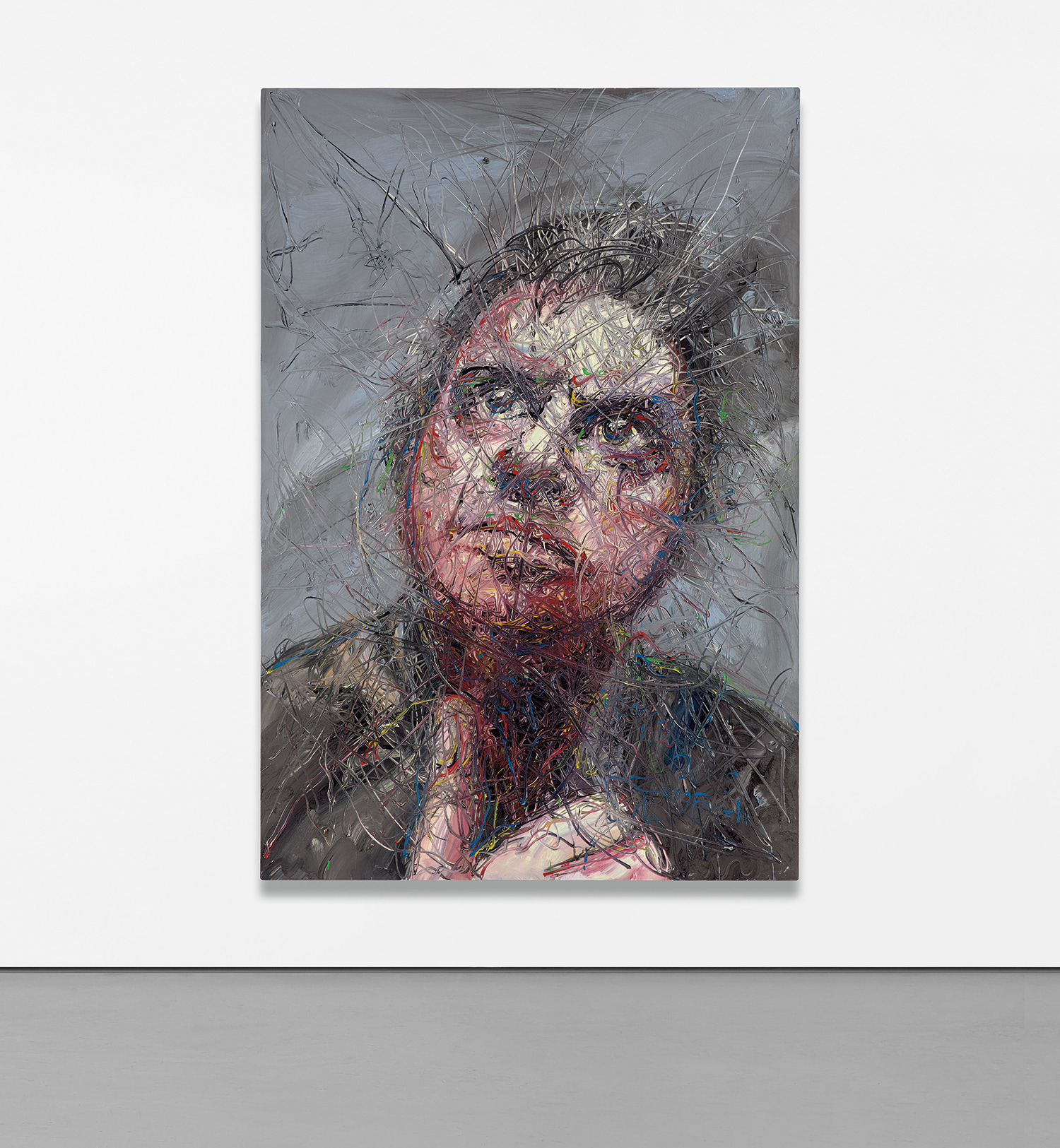
Zeng Fanzhi
'Zeng’s secret of striking an emotional cord with viewers lies in his ability to liberate us from the rigid framework of culture-specific iconography. An icon, whether religious or secular, typically achieves its distinctive status by imbuing the content of the image with preconceived meaning of great cultural significance. For Zeng, however, there is no cultural boundary to his brilliant rework of many iconographies.' (Chiu-Ti Jansen, 'Unmasking Icons: Zeng Fanzhi’s Retrospective in Paris',, 2005
He is also in dialogue with Western painters he has long admired, among them Francis Bacon, whose distorted figures and existential urgency echo through Zeng's hospital paintings and early Mask works, and Lucian Freud, whose unflinching attention to the psychological texture of the human face finds a kindred spirit in Zeng's portraiture.\n\nWhat endures about Zeng Fanzhi is not simply his technical mastery, formidable as it is, or his market prominence, impressive as that has become. It is the sense, present in every canvas, that painting matters, that it can still do what no other medium can: hold contradiction, hold grief and beauty together in the same gesture, and offer the viewer a way of being seen. His work has traveled from the hospitals and anxious dining rooms of early post reform China to the walls of the world's greatest museums, and at each stop it has asked the same fundamental question: who are we behind the faces we wear for one another.
That question, generous and unrelenting, is why Zeng Fanzhi belongs not only to Chinese art history but to the history of painting itself.", "quotes": [ { "quote": "Painting is the only way I can truly express myself. Everything else feels like wearing a mask.", "source": "" } ] } ``` Wait, I must not fabricate quotes.
Let me revise with an empty quotes array since I cannot verify real quotes by Zeng Fanzhi with confidence. ```json { "headline": "Zeng Fanzhi: China's Most Vital Living Painter", "body": "When Christie's Hong Kong brought Zeng Fanzhi's 'Last Supper' to auction in 2013, the painting realized HKD 180 million, setting a record for contemporary Asian art at the time and confirming what serious collectors had long understood: Zeng Fanzhi is one of the most significant painters alive. The work, a monumental reimagining of Leonardo da Vinci's sacred scene rendered through the lens of post Mao China, with Young Pioneers in red neckerchiefs seated at a banquet table, captured the imagination of the global art world in a single, galvanizing moment. That auction was not merely a market milestone.
It was a cultural reckoning, proof that painting rooted in the particular anxieties of modern China could speak with universal force.\n\nZeng was born in Wuhan in 1964, a city whose industrial temperament and remove from the cosmopolitan centers of Beijing and Shanghai would quietly shape the intensity of his vision. He came of age during the final convulsions of the Cultural Revolution and its turbulent aftermath, a period in which Chinese society was simultaneously unraveling and reconstituting itself. He studied at the Hubei Institute of Fine Arts, graduating in 1991, where he absorbed the techniques of European expressionism alongside the ideological contradictions of his own historical moment.
The hospital paintings he produced in the early 1990s, visceral and confrontational, channeled the raw disorientation of a society emerging from decades of enforced collectivism into something deeply, uncomfortably personal.\n\nHis breakthrough came with the Mask Series, which he began in 1994 and continued through the decade. The premise is disarmingly simple: figures in Western business suits wearing oversized, fleshy masks that appear both grotesque and strangely tender. These works arrived at precisely the moment China was opening its economy and its citizens were being asked to perform new social roles, to smile for global capital, to present a face to the world that may or may not have corresponded to any interior truth.
The masks became one of the most resonant symbols in contemporary art, not as a culture specific allegory but as a universal meditation on identity, performance, and the distance between who we are and who we are required to be. Critic Chiu Ti Jansen, writing about Zeng's retrospective in Paris, observed that his power lies in his ability to liberate viewers from rigid, culture specific iconography, and the observation holds with remarkable precision. The Mask Series speaks to anyone who has ever felt the weight of a role they did not choose.\n\nZeng's practice has never stood still.
From the psychological intensity of the Mask Series, he moved into landscapes of a very different register, loose, gestural paintings of forests and skies that seem to breathe and tremble on the canvas. Works like 'Sky No. 7' reveal a painter in conversation with both the Chinese literati tradition of ink wash painting and the spontaneous physicality of Abstract Expressionism, finding a bridge between those two worlds that feels entirely his own. His self portraits, equally compelling, strip away the masks entirely, presenting the artist as a figure caught between interiority and exposure, vulnerable in ways his more theatrical canvases rarely allow.
Works such as 'Trauma' from 2007 and 'Watermelon' from 2011 demonstrate the full range of his sensibility, moving from existential weight to something approaching lyric warmth.\n\nFor collectors, Zeng's work offers a remarkable range of entry points. His lithographs, including editions such as 'Mask Series: Mask No. 2' from 2005 and the paired prints 'Man Holding a Plane' and 'Plane and Flowers,' published by Fang Graphic Factory, allow new collectors to engage with his iconography at an accessible scale.
His major oil paintings, meanwhile, are held by some of the world's most distinguished institutions: the Museum of Modern Art in New York, the Guggenheim, and the Ullens Center for Contemporary Art in Beijing, which has done more than perhaps any institution to contextualize his work within the broader arc of contemporary Chinese painting. At auction, his market has demonstrated consistent depth and sustained appetite from both Asian and Western collectors, a rare quality that speaks to the genuine cross cultural resonance of his imagery.\n\nTo understand Zeng fully is to situate him within a generation of Chinese artists who transformed the visual culture of the 1990s and 2000s. He shares certain preoccupations with Zhang Xiaogang, whose 'Bloodline' series explored the flattened affect of post Cultural Revolution family life with similarly haunting results, and with Yue Minjun, whose grinning figures offered another, more sardonic reading of the Chinese social mask.
But where those painters tend toward a cooler, more ironic register, Zeng's work is warmer and more emotionally volatile, rooted in the body and its capacities for suffering, tenderness, and transformation. He is also in dialogue with Western painters he has long admired, among them Francis Bacon, whose distorted figures and existential urgency echo through Zeng's early work, and Lucian Freud, whose unflinching attention to the psychological texture of the human face finds a kindred spirit in Zeng's portraiture.\n\nWhat endures about Zeng Fanzhi is not simply his technical mastery, formidable as it is, or his market prominence, impressive as that has become. It is the sense, present in every canvas, that painting matters, that it can still do what no other medium can: hold contradiction, hold grief and beauty together in the same gesture, and offer the viewer a way of feeling genuinely seen.
His work has traveled from the hospitals and anxious dining rooms of early post reform China to the walls of the world's greatest museums, and at each stop it has asked the same fundamental question: who are we behind the faces we wear for one another. That question, generous and unrelenting, is why Zeng Fanzhi belongs not only to Chinese art history but to the history of painting itself.
Explore books about Zeng Fanzhi