Yayoi Kusama
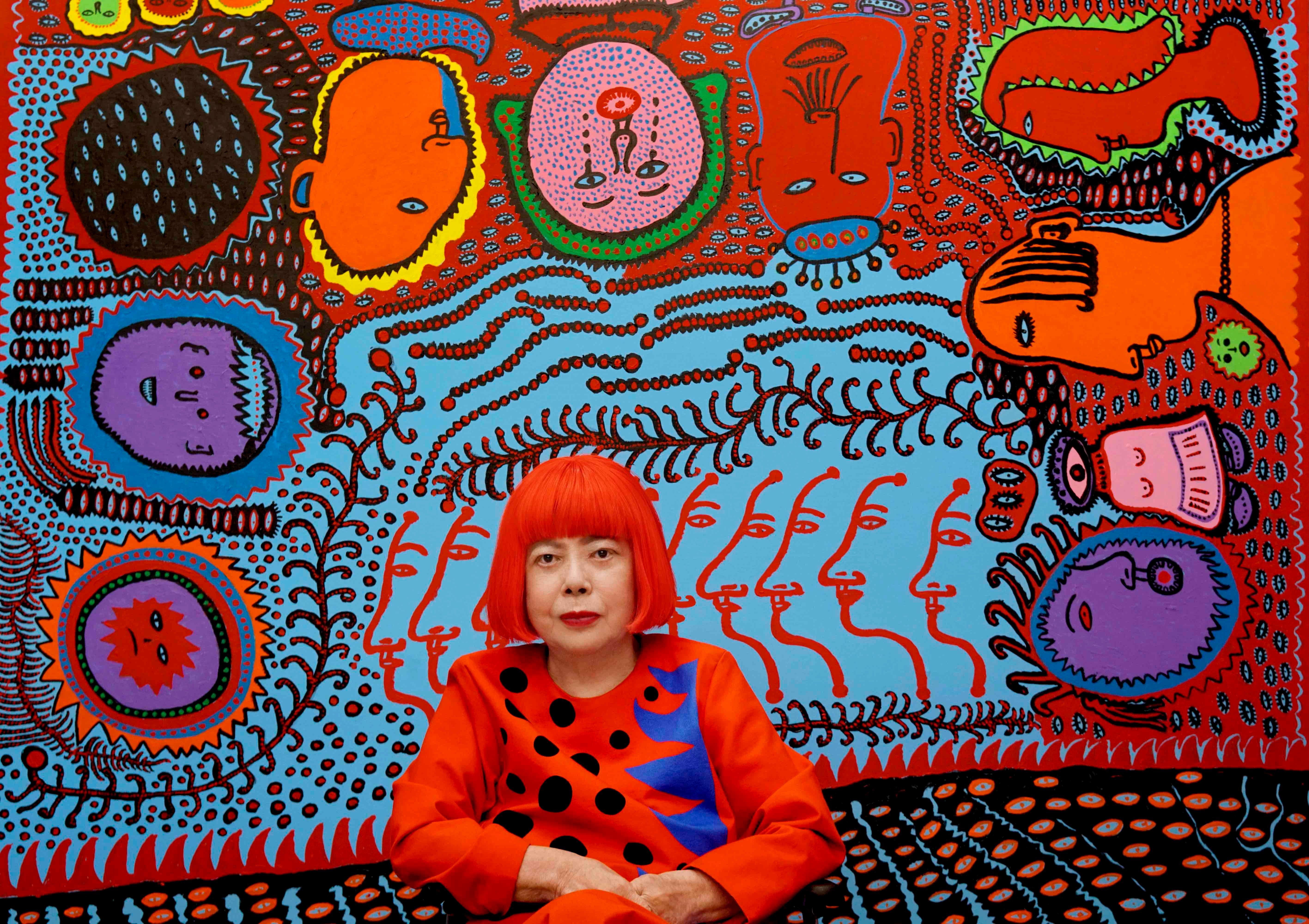
Yayoi Kusama: Infinite Worlds, Infinite Wonder
Artist Spotlight · The Collection Editorial
“I fight pain, anxiety, and fear every day, and the only method I have found that relieves my illness is to keep creating art.”
Yayoi Kusama
In 2022, the Hirshhorn Museum and Sculpture Garden in Washington, D.C. mounted what became one of the most visited exhibitions in its history, a sweeping retrospective titled Yayoi Kusama: One with Eternity. The show drew extraordinary crowds, with timed tickets reserved weeks in advance by visitors hungry for the experience of standing inside Kusama's legendary Infinity Mirror Rooms and gazing into a universe that seemed to expand forever.
Yayoi Kusama
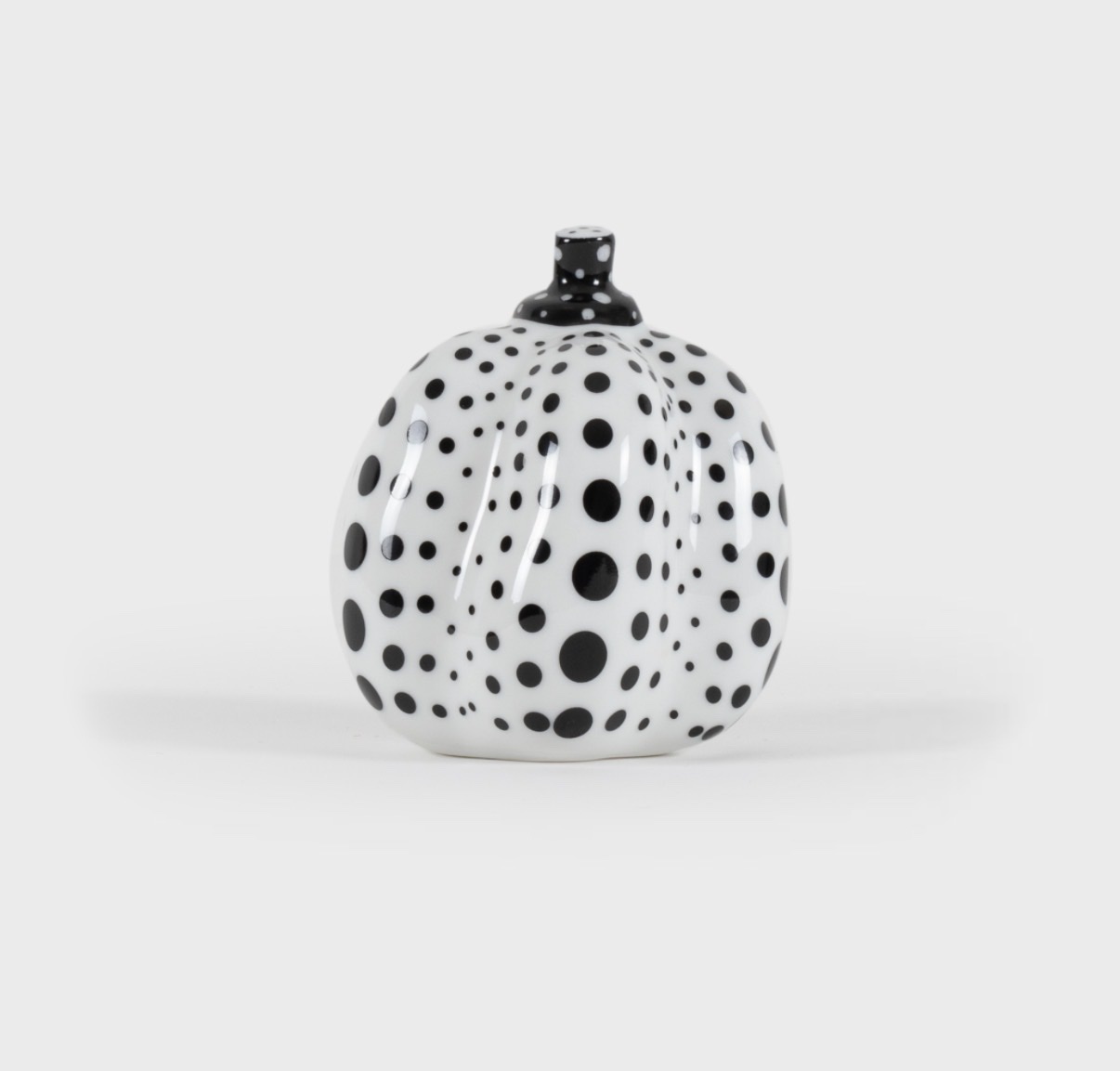
Pumpkin (Limoges) (White and Black), 2002
That same year, her work continued to command serious attention at auction houses worldwide, with major paintings and sculptures affirming her position as one of the highest valued living artists on the planet. At 93, Yayoi Kusama was not a legacy to be studied at a respectful distance. She was very much the center of the conversation. Kusama was born in 1929 in Matsumoto, a city in the Nagano prefecture of Japan, into a prosperous family whose emotional atmosphere was, by her own account, difficult and sometimes frightening.
From childhood, she experienced vivid visual hallucinations, seeing auras around objects and patterns that pulsed and multiplied across her field of vision. Rather than suppressing these experiences, Kusama turned to drawing and painting as a way of externalizing them, of transferring the overwhelming flood of imagery onto paper and canvas where it could be held and examined. This practice of using art as a form of psychological release and self therapy became the engine of her entire creative life. She studied Nihonga, traditional Japanese painting, at the Kyoto Municipal School of Arts and Crafts in the late 1940s, but she quickly found its conventions too restrictive for what she needed to express.
Yayoi Kusama
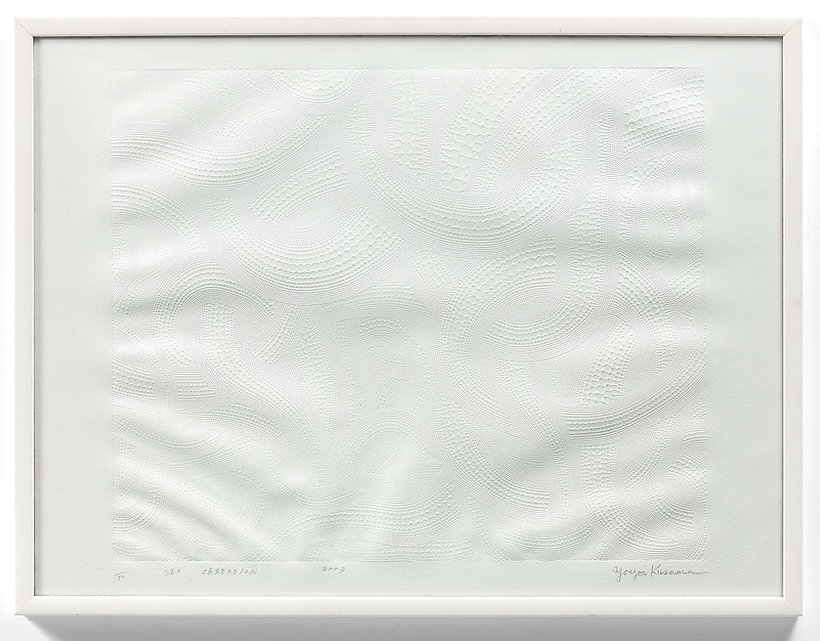
Sex Obsession, 2003
In 1958, Kusama made the bold and consequential decision to move to New York City, arriving with a letter of encouragement from Georgia O'Keeffe, whose directness and independence she admired. New York was electric with possibility, and Kusama threw herself into its postwar avant garde scene with remarkable energy and conviction. She developed her Infinity Net paintings during this period, vast canvases covered in obsessive, painstaking loops of paint that seemed to dissolve form into pure repetition. These works were shown at the Brata Gallery in 1959 and drew immediate attention from critics and fellow artists, including Donald Judd, who praised their radical commitment to surface and process.
“My art originates from hallucinations only I can see. I translate the hallucinations and obsessional images that plague me into sculptures and paintings.”
Yayoi Kusama
She organized happenings and performance events in the city throughout the 1960s, staging nude body painting events in public spaces that challenged social convention and anticipated the political dimensions of conceptual and performance art that would follow. What defines Kusama's practice above all else is the concept she calls Obliteration, the idea that the self can be dissolved into pattern, into repetition, into the infinite. Her polka dots began as a personal symbol rooted in her hallucinations, but they evolved into a philosophical statement about the relationship between the individual and the cosmos. Her Infinity Mirror Rooms, the first of which she created in 1965 under the title Phalli's Field, use mirrors and LED lights to create the sensation of standing inside boundless space.
Yayoi Kusama
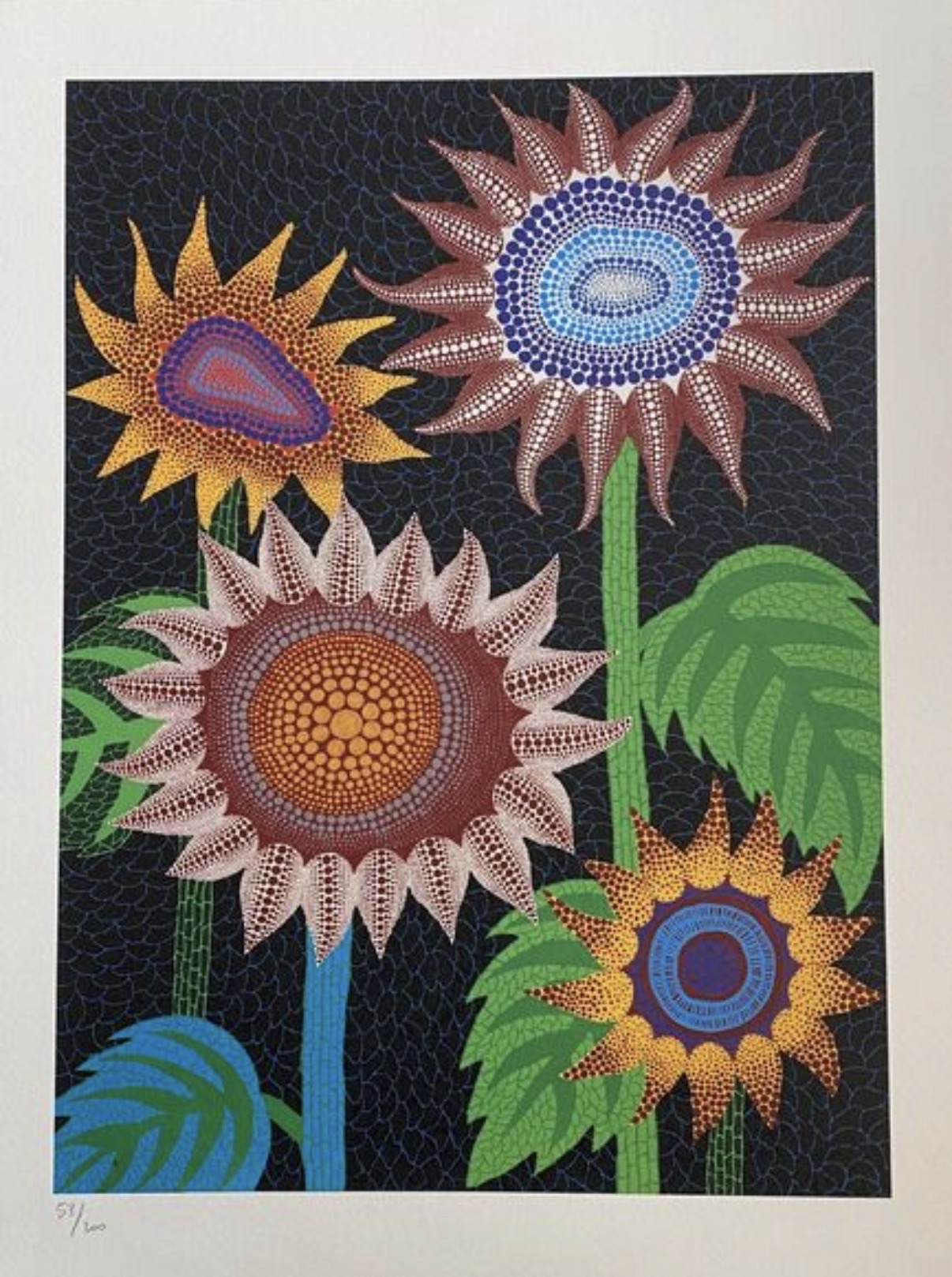
Sunflowers, 2011
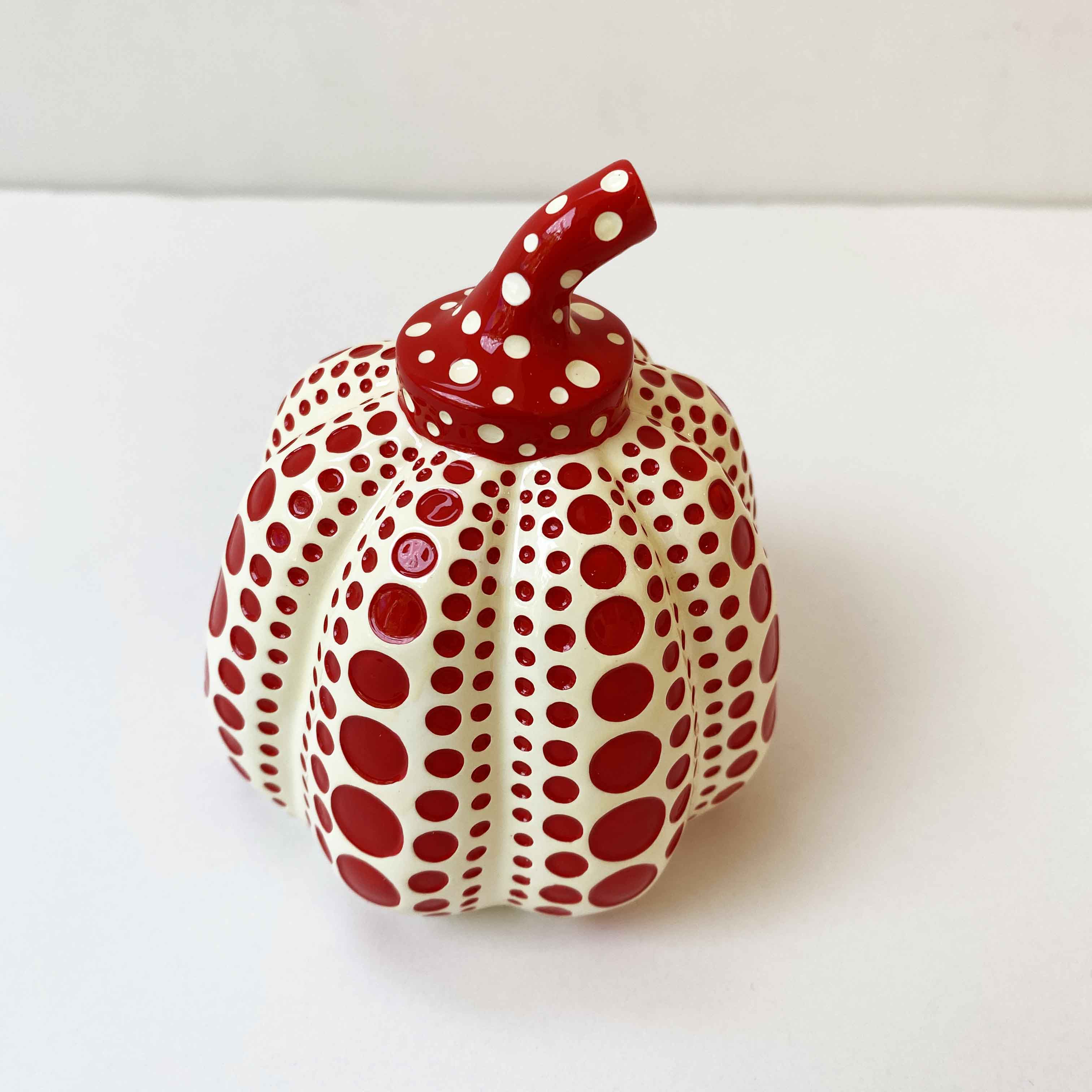
These rooms are not theatrical tricks. They are genuine environments for contemplation, spaces where the ordinary boundaries between viewer and artwork dissolve in a way that very few artists have ever achieved. Her pumpkin sculptures, which she has returned to throughout her career in formats ranging from monumental outdoor installations to intimate ceramic works and screenprints, carry a different emotional register. Humble, earthy, and unexpectedly joyful, they represent for Kusama a kind of anchor in the natural world, a form whose roundness and imperfection she finds deeply human.
“If it were not for art, I would have killed myself a long time ago.”
Yayoi Kusama
For collectors, Kusama's work presents one of the most compelling and genuinely layered opportunities in the contemporary market. Her output across media is extraordinary in its range: large scale acrylic paintings on canvas, intimate works on paper including lithographs and embossed prints, ceramic sculptures, resin works, and stainless steel pieces that hold their presence with serene confidence. Works from the 1950s such as the acrylic and pastel piece Sun Green, made in 1957, are rare documents of a formative period when she was translating the visual intensity of her inner world onto paper for the first time. The pumpkin editions, appearing in screenprint and resin formats across multiple decades, have shown sustained collector interest and continue to represent an accessible point of entry into a practice of enormous art historical significance.
Yayoi Kusama
Pumpkin (Red & White), 2015
Prints such as the 1992 screenprint Pumpkin (OG) and the 2002 lithograph Flowers carry the same obsessive visual logic as her monumental works while remaining approachable in scale and format. Her more recent paintings, including Sunset Afterglow inside My Heart from 2020, demonstrate that her creative urgency has not diminished with age. If anything, her canvases from the last decade carry an emotional directness that feels hard won and completely alive. Kusama's place within art history is both singular and deeply relational.
She worked alongside and in conversation with artists including Andy Warhol and Claes Oldenburg during the New York years, and the connections between her practice and Pop Art's embrace of repetition and consumer imagery are genuinely illuminating. Her use of accumulation and pattern also places her in dialogue with Minimalism, though her work carries a psychological and autobiographical urgency that sets it apart from that movement's cool detachment. Collectors drawn to the meditative intensity of Agnes Martin, the bodily presence of Louise Bourgeois, or the environmental ambitions of James Turrell will find in Kusama an artist who shares their seriousness of purpose while pursuing a vision entirely her own. She is also a foundational figure in the history of women artists and artists of Asian heritage achieving recognition on the global stage, a fact that carries increasing weight in collections and institutions seeking depth and genuine representation.
Kusama returned to Japan in 1973 and has lived voluntarily in a psychiatric facility in Tokyo since 1977, continuing to work in her nearby studio every day with extraordinary discipline. In 2012, she opened the Yayoi Kusama Museum in Tokyo, a dedicated space for her work that has become an essential destination for art lovers traveling to Japan. Her partnership with the gallery David Zwirner, who has represented her in the United States, has brought her work to new audiences and sustained serious critical attention across her later career. What endures in Kusama's art, and what makes it so remarkable to live with as a collector, is the sense that each work is not simply an object but a window.
A window into a consciousness of rare intensity and courage, one that transformed its most private experiences into something universal, luminous, and genuinely infinite.
Explore books about Yayoi Kusama