Yang Fudong
Yang Fudong's Luminous Vision of China
Artist Spotlight · The Collection Editorial
In the years since his breakthrough at the 2002 Documenta 11 in Kassel, Yang Fudong has steadily grown into one of the most significant voices in contemporary Chinese art. His presence in the permanent collections of the Museum of Modern Art in New York, the Guggenheim, and Hong Kong's M+ Museum signals a career that has moved well beyond critical recognition into a kind of institutional permanence. Yet despite this institutional embrace, his work retains something genuinely elusive, a quality of longing and uncertainty that feels as alive today as it did when he first began making films and photographs in Shanghai in the late 1990s. Yang was born in Beijing in 1971, and his formative years unfolded against one of the most turbulent periods of social transformation in modern Chinese history.
Yang Fudong
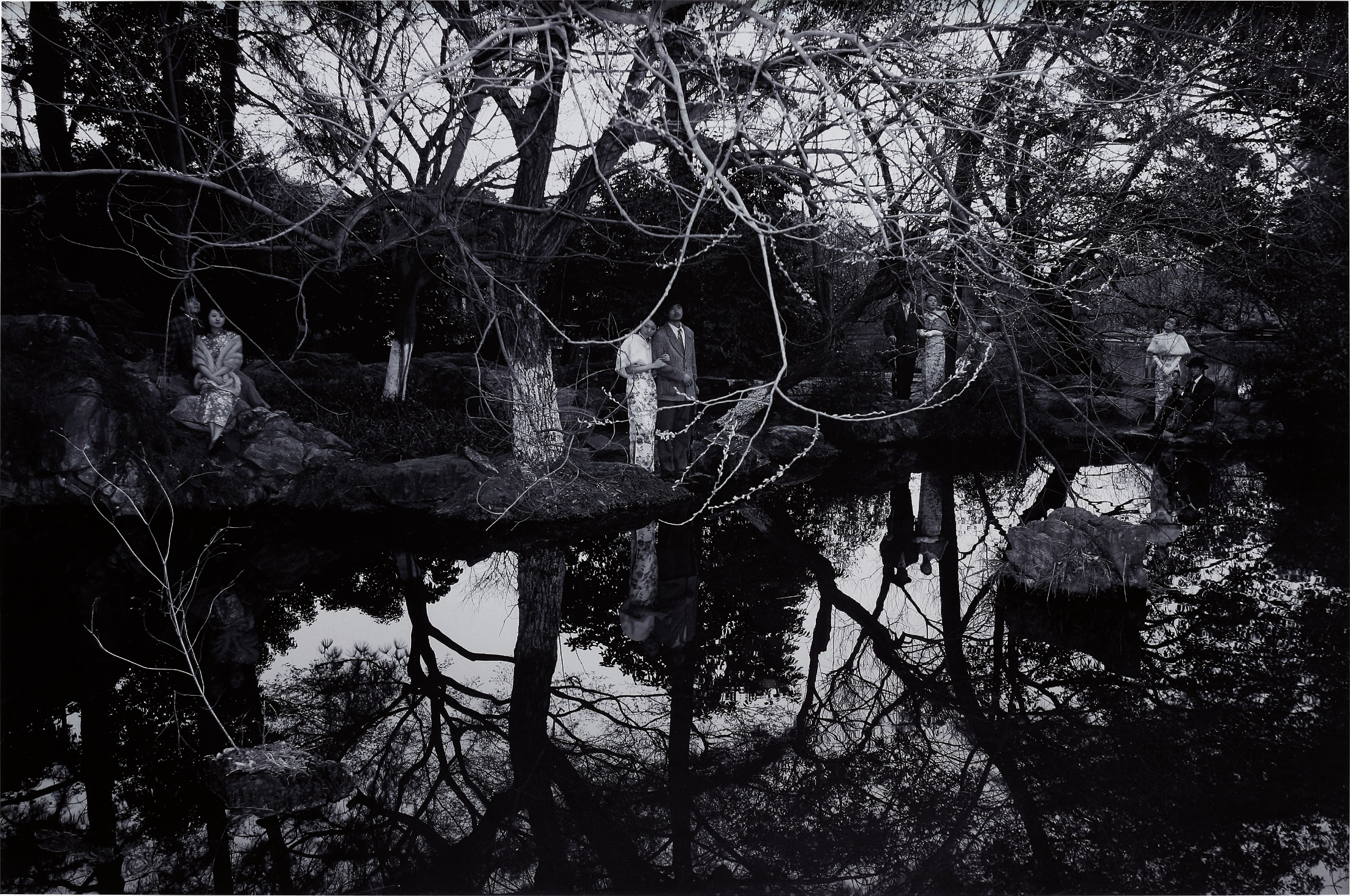
No Snow on the Broken Bridge, 2006
He studied oil painting at the China Academy of Art in Hangzhou, graduating in 1995, and it was there that he absorbed both the weight of classical Chinese aesthetics and the restless energy of a generation caught between tradition and rapid modernisation. Hangzhou, with its storied landscapes and its proximity to the refined intellectual culture of the Jiangnan region, left a visible imprint on his visual imagination. When he moved to Shanghai in the mid 1990s, he encountered a city remaking itself almost faster than it could be recorded, and that tension between memory and transformation became the engine of his practice. His turn toward film and photography rather than painting was not a rejection of his training but an extension of it.
Yang has spoken of the cinematic image as a space where time can be held and questioned rather than simply consumed. Shooting almost exclusively in black and white, he draws on the visual grammar of mid twentieth century Chinese and Japanese cinema, invoking directors such as Fei Mu and the quiet melancholy of postwar film culture. This is not nostalgia for its own sake. The monochromatic palette strips away the noise of the contemporary moment and forces the viewer into a more contemplative, almost ethical relationship with the figures on screen.
Yang Fudong
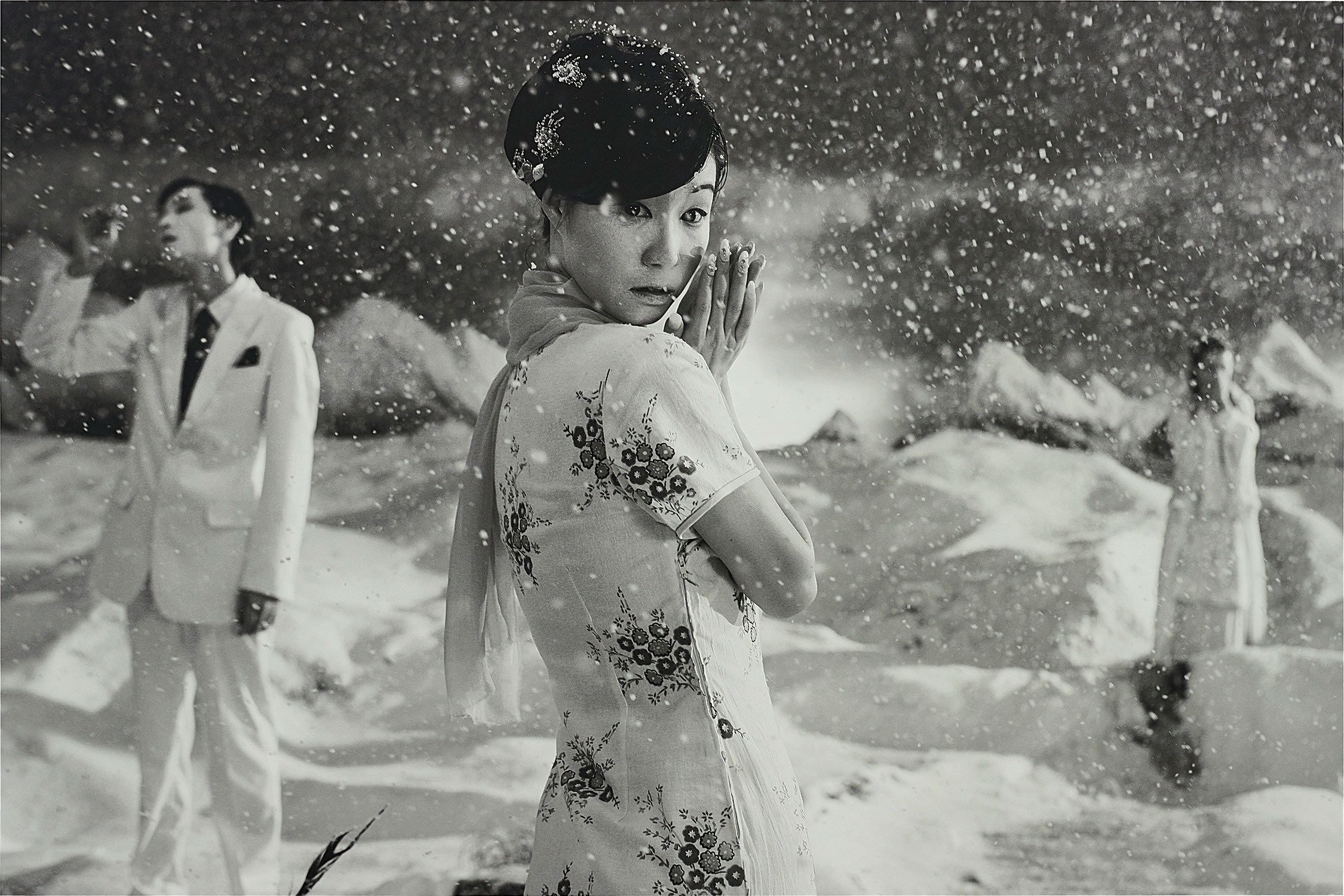
Yejiang/ The Nightman Cometh 1, 2011
His characters, typically young, educated, and adrift, carry within them the unresolved questions of an entire generation. The work that cemented his international reputation is the extraordinary seven part film cycle Seven Intellectuals in a Bamboo Forest, produced between 2003 and 2007. The title draws directly from the famous group of third century scholars known as the Seven Sages of the Bamboo Grove, who retreated from corrupt court life into nature and philosophical discourse. Yang reanimates this classical archetype through the lives of contemporary young Chinese men and women, following them across landscapes that shift from mountain wilderness to urban apartments to rural villages.
Each chapter deepens the inquiry rather than resolving it, and the cumulative effect is something close to an epic poem in visual form. The cycle was shown in major institutions across Europe and the United States and remains one of the defining works of Chinese contemporary art. Among the still works available on The Collection, No Snow on the Broken Bridge from 2006 stands as a particularly compelling entry point into Yang's photographic practice. The Broken Bridge at West Lake in Hangzhou is one of the most storied sites in Chinese literary culture, associated with the classical tale of the White Snake and carrying centuries of romantic and mythological weight.
Yang Fudong
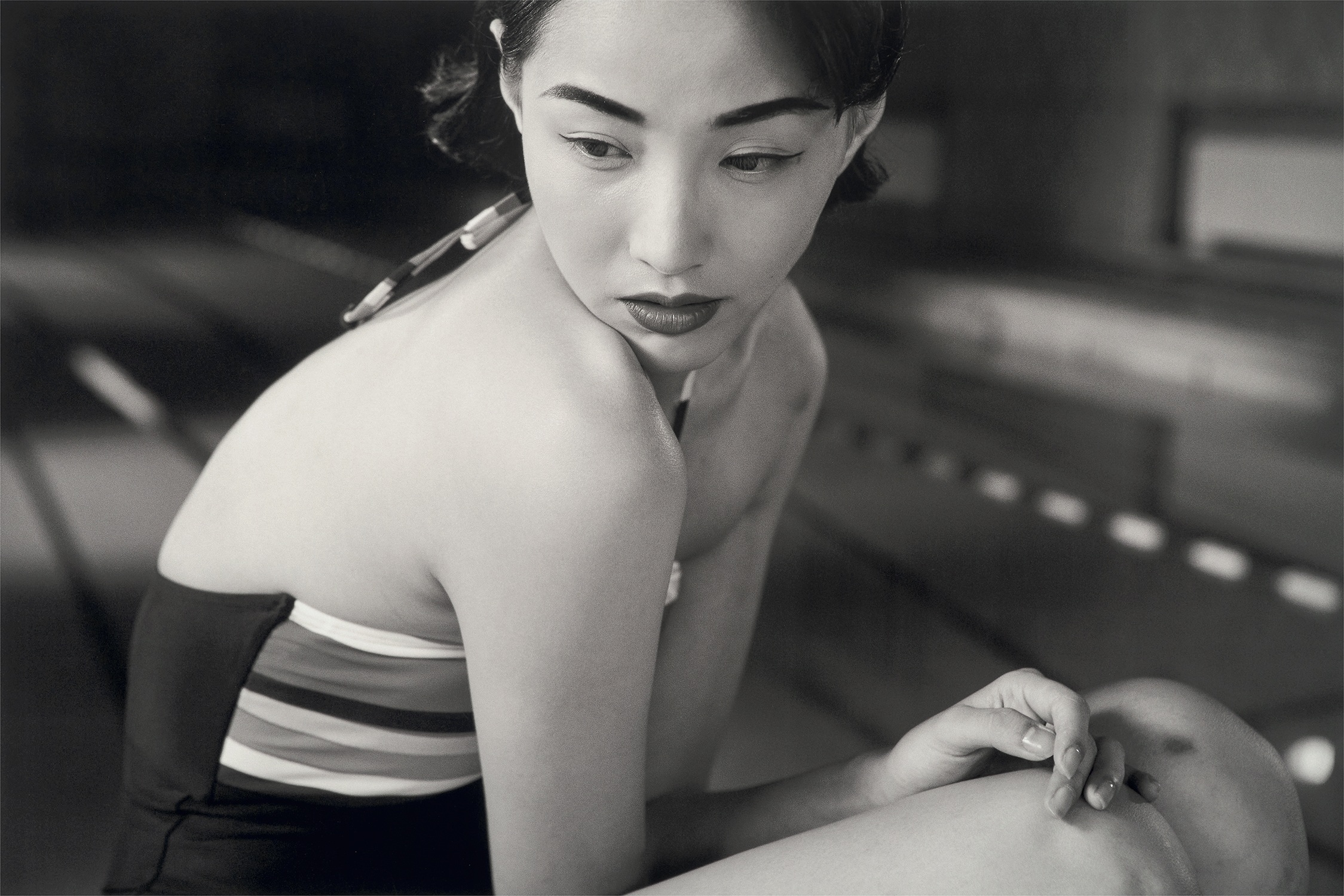
International Hotel No.11, 2010
Yang photographs it not as a tourist monument but as a stage for private feeling, his figures inhabiting the frame with a poised and slightly theatrical stillness. Yejiang, also known as The Nightman Cometh 1, from 2011, extends this sensibility into a more explicitly cinematic register, the image functioning almost as a film still from a story the viewer must construct for themselves. International Hotel No. 11 from 2010 and Ms.
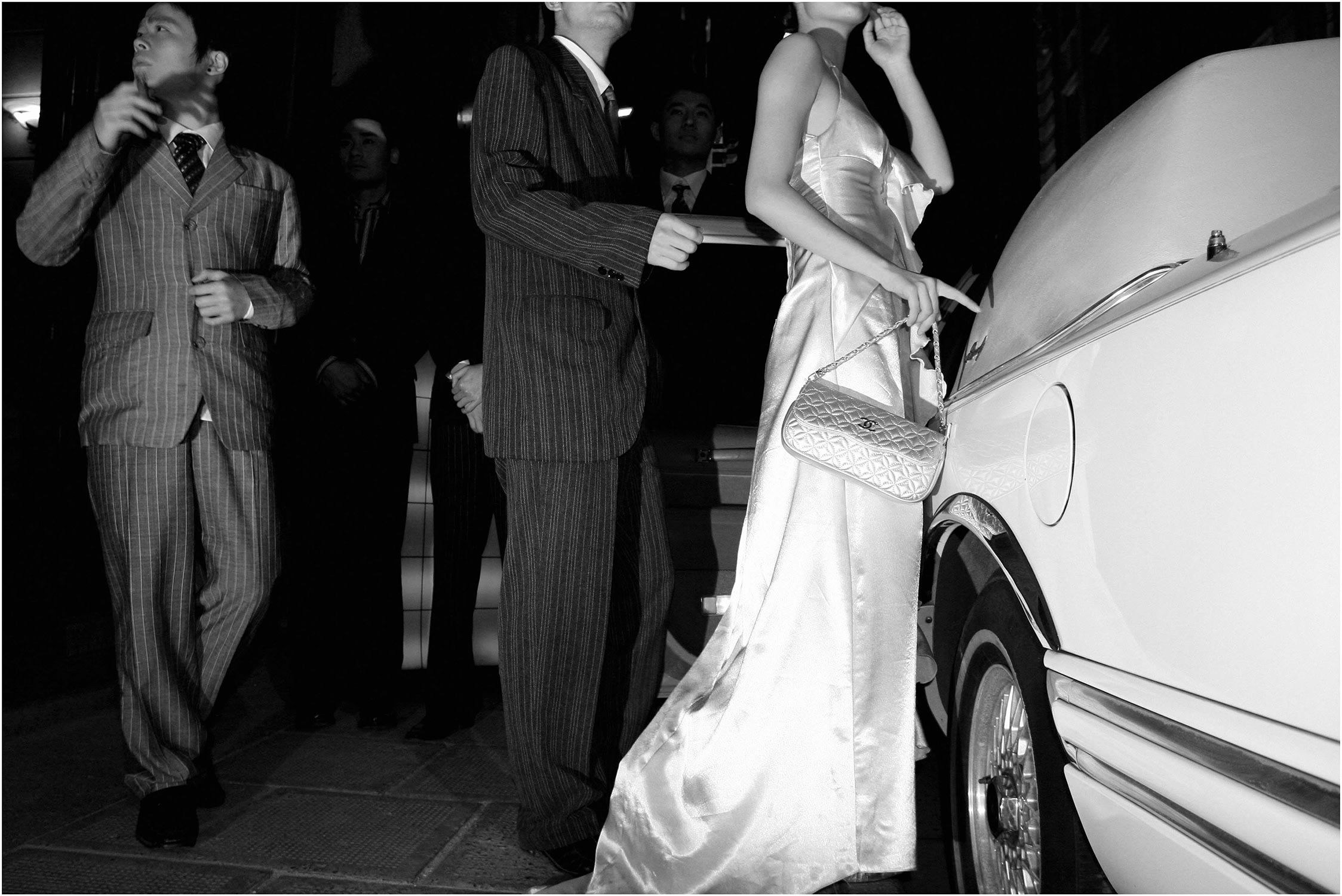
Huang at M Last Night Nr. 5 from 2006 together trace the contours of urban Shanghai life with an anthropologist's curiosity and a poet's eye, finding in the social rituals of the city a portrait of collective yearning. From a collecting perspective, Yang Fudong represents a genuinely rare combination of critical seriousness and visual accessibility. His photographs reward prolonged looking without demanding specialist knowledge, and the cinematic quality of his images means they command a room with quiet authority.
Yang Fudong
Ms.Huang at M last night Nr. 5, 2006
Works on paper and chromogenic prints have appeared at auction at Christie's and Sotheby's, where his market has shown consistent strength among collectors focused on Asian contemporary art and among international collectors drawn to his clear art historical lineage. Collectors who have followed his career since the early 2000s have watched values appreciate alongside institutional recognition, and the depth of his museum presence provides a strong foundation for long term significance. For collectors entering his work now, the photographic editions represent an accessible and rewarding point of engagement. In the broader landscape of contemporary art, Yang occupies a position that invites comparison with artists who similarly navigate the space between cinematic and visual culture.
His work resonates with that of Apichatpong Weerasethakul in its treatment of landscape as psychic space, and with the photograph based practice of artists such as Hiroshi Sugimoto in its commitment to a rigorous, meditative formalism. Within the Chinese context, he belongs to a generation that includes Cao Fei and Zeng Fanzhi, artists who came of age in the 1990s and who collectively shaped what it meant for Chinese art to speak to a global audience without surrendering its cultural specificity. Yang's achievement is to have held that specificity with particular care and intellectual honesty. What makes Yang Fudong matter today, in an art world often rushing toward the immediately legible, is precisely his insistence on the slow image.
His films and photographs ask for time, and in return they offer a genuinely enlarging experience of what it means to be young, searching, and alive in a world changing faster than any individual can fully absorb. The questions he poses through his figures, questions about loyalty, beauty, intellectual vocation, and the possibility of an authentic life, are not specifically Chinese questions. They are human ones, and that universality, worn lightly and without pretension, is the true measure of his achievement.