Wolfgang Laib
Wolfgang Laib: Nature's Quiet, Transformative Power
Artist Spotlight · The Collection Editorial
“I am not interested in making art for art's sake. I am interested in something much larger than that.”
Wolfgang Laib, interview with MoMA, 2013
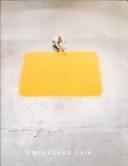
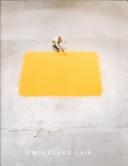
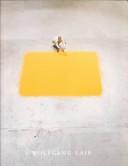
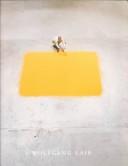
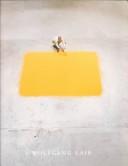
In the spring of 2013, visitors to the Museum of Modern Art in New York encountered something unlike anything else in the building. Spread across the floor of a darkened gallery was a vast, shimmering field of hazelnut pollen, so intensely yellow it seemed to generate its own light. Wolfgang Laib had spent months collecting the pollen grain by grain, sifting it by hand, and the result was less an artwork than an atmosphere, a living presence that stilled conversation and slowed breath. The MoMA installation brought Laib to the widest American audience he had ever known, and confirmed what European curators had understood for decades: this quietly radical German artist is one of the most spiritually and aesthetically significant voices working anywhere in the world today.
Wolfgang Laib
Nirgendwo, 1995
Wolfgang Laib was born in 1950 in Metzingen, in the Baden Württemberg region of southwestern Germany. He grew up in a household shaped by intellectual curiosity and a deep respect for the natural world, qualities that would prove foundational to everything he later made. He trained not as an artist but as a physician, completing a medical degree at the University of Tübingen in 1974. It was during his studies, and through extended travel in India, that Laib encountered philosophies and spiritual traditions, particularly those rooted in Hindu and Buddhist thought, that permanently redirected his sense of purpose.
He abandoned medicine for art, not out of restlessness but out of conviction that a different kind of healing was possible through material and contemplation. Laib's earliest mature works appeared in the mid 1970s, when he began collecting pollen from the fields and meadows around his home in rural Germany. The process was extraordinarily laborious and deeply intentional. Each morning during the flowering season he would gather pollen from a single species, hazelnut, dandelion, pine, buttercup, moss, storing it carefully in glass jars through the winter months.
The act of collection was itself part of the work, a form of sustained attention and seasonal ritual that echoed the rhythms of agricultural and monastic life. When Laib finally sifted the pollen onto a gallery floor, the accumulated months of quiet effort became visible in an instant, a paradox that lies at the heart of his entire practice. Alongside the pollen works, Laib developed what he called the milk stones, polished slabs of white marble onto which he pours fresh milk each morning until the surface appears to merge with the liquid, creating an image of absolute whiteness and perfect stillness. These works require daily tending; they are, in a sense, alive.
“The pollen is something very living, very powerful, very beautiful. And it changes everything around it.”
Wolfgang Laib, Bomb Magazine
He also began constructing wax chambers, room sized enclosures built entirely from beeswax, whose amber walls glow warmly when lit from within. These spaces feel simultaneously ancient and contemporary, evoking the cells of a hive, the interior of a temple, and the most minimal traditions of postwar Western art all at once. The wax rooms have been installed at institutions including the Hirshhorn Museum and Sculpture Garden in Washington D.C.
, where their sensory intimacy proved quietly overwhelming for visitors accustomed to the scale and noise of contemporary installation. The work titled Nirgendwo, created in 1995 and among the most significant pieces associated with Laib, offers a window into his philosophical concerns through its very name. Nirgendwo is the German word for nowhere, or more precisely, no place. For Laib, this is not a pessimistic designation but a liberating one.
His works consistently seek to exist outside fixed coordinates of time and geography, to occupy a space that is simultaneously everywhere and nowhere, connecting the particular field in Germany where pollen was gathered to the universal human experiences of impermanence, renewal, and presence. It is a work that rewards stillness, and that grows in the memory long after the encounter itself has passed. Within the broader landscape of art history, Laib occupies a distinctive position that resists easy categorization. He shares the reductive formal language of European and American Minimalism with artists such as Donald Judd, Carl Andre, and Richard Serra, yet his relationship to natural materials and cyclical time aligns him more closely with Arte Povera figures like Mario Merz and Giuseppe Penone, who also sought to reintroduce organic life into the cool spaces of the postmodern gallery.
His spiritual orientation connects him to Joseph Beuys, whose shamanic engagement with felt and fat explored the healing potential of humble substances, though Laib's work is quieter, more inward, less theatrical. He has also been compared to James Turrell and Anish Kapoor in his ability to transform perception itself into the subject of an artwork. For collectors, Laib's work presents both a rare opportunity and a genuine responsibility. Because his practice is so deeply rooted in process and natural material, acquiring a work by Laib means entering into a relationship with something living and seasonal, something that asks to be tended rather than simply displayed.
His pollen works, stored carefully in glass jars or sifted anew for each installation, carry with them the accumulated time of their making in a way that no photographic reproduction can convey. Collectors who have brought his work into private collections often describe the experience in terms that go well beyond aesthetic appreciation, speaking instead of a changed relationship to slowness, to the natural world, and to the passage of time. For those drawn to art that has genuine spiritual and philosophical weight, his work stands apart. Wolfgang Laib continues to work from his home in rural Germany, gathering pollen each spring as he has done for nearly fifty years, tending his milk stones, constructing chambers of wax and silence.
His career has been recognized with major exhibitions at the Kunstmuseum Bonn, the Kunsthalle Basel, and museums across Europe and North America, yet he remains one of the least self promotional figures in contemporary art, a quality that only deepens the sense of integrity surrounding his practice. In an era dominated by spectacle and speed, Laib's insistence on slowness, on the gathered grain and the poured milk and the amber room, feels not merely countercultural but essential. He is an artist who has spent a lifetime asking what it might mean to pay full attention to the world, and whose answer, made visible in yellow fields and glowing chambers, continues to transform everyone who encounters it.
Explore books about Wolfgang Laib