William Klein

William Klein: The City Always Fights Back
Artist Spotlight · The Collection Editorial
“I wanted to show a New York that was hard, that was real. I wanted to do a book that would be like a tabloid.”
William Klein, interview on his New York photography book
There is a particular photograph that stops you in your tracks every time. A young boy on a New York street corner thrusts a toy pistol directly into the lens, his face twisted into something between a grin and a snarl, the city roaring behind him in a blur of grain and shadow. "Gun 1, New York" is not merely a photograph. It is an ambush.
William Klein
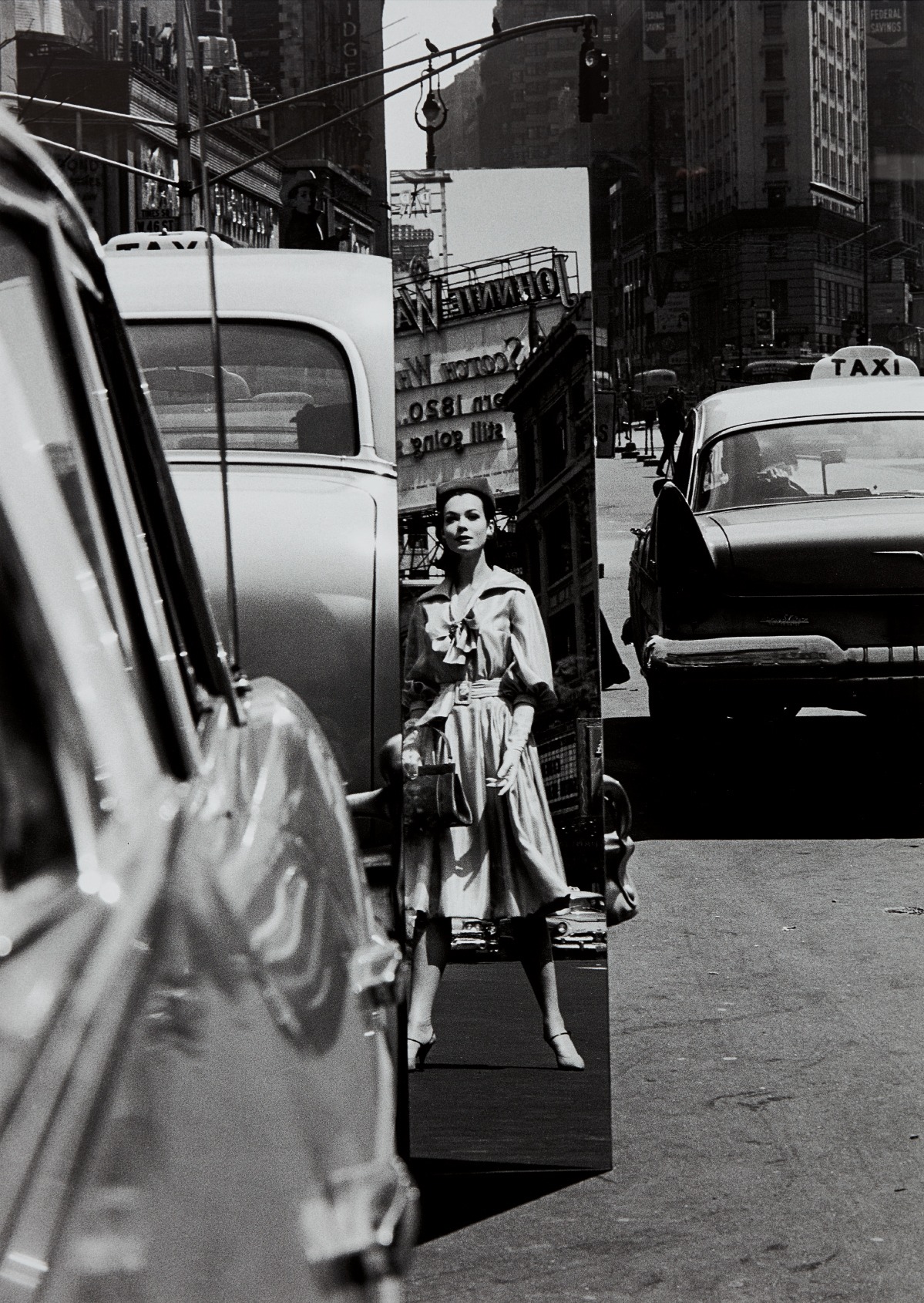
Sandra + Mirror, Times Square, New York (Vogue)
William Klein, who died in September 2022 at the age of 96, spent the better part of seven decades ambushing the world with exactly this kind of image, and the art world is still catching its breath. Klein was born in New York City in 1926, the son of Jewish immigrants from Eastern Europe who had settled in the working class neighborhoods of Manhattan. He grew up in the city that would later define his artistic identity, though his path to photography was anything thing but direct. He enrolled at City College of New York before being drafted into the United States Army, serving in postwar Europe where he remained to study painting in Paris under the legendary Fernand Léger.
It was Léger who planted the idea that art should confront the world rather than retreat from it, a lesson Klein absorbed completely and transformed into something entirely his own. His return to New York in 1954 marked one of the most electrifying moments in the history of photography. Armed with a wide angle lens, a willingness to get uncomfortably close, and a complete disregard for the compositional rules that governed fine art photography at the time, Klein made the images that would be collected into his landmark 1956 book "Life Is Good and Good for You in New York." Published first in France, where its brutal energy was celebrated, the book was initially rejected by American publishers who found it too raw, too chaotic, too honest.
William Klein
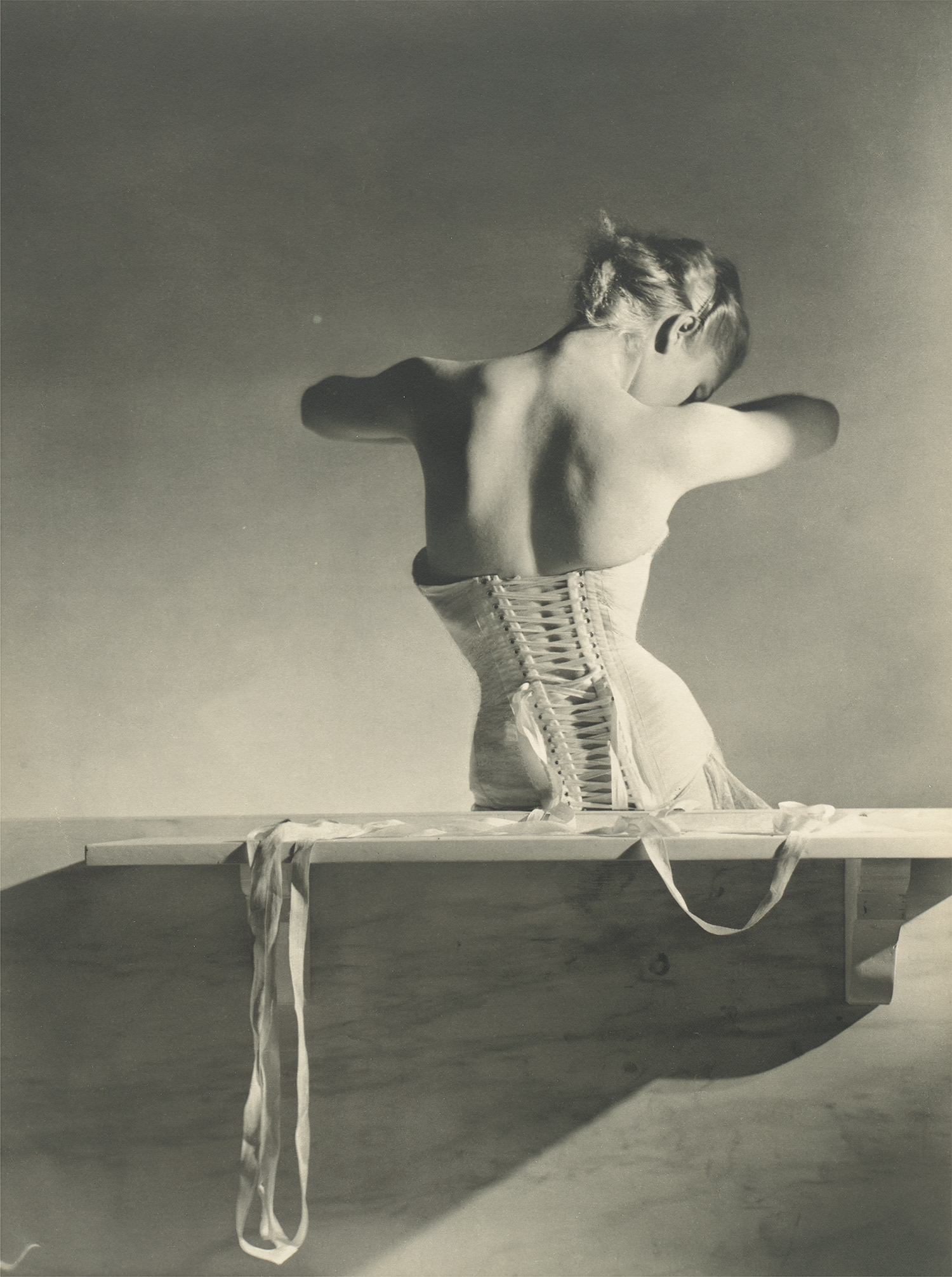
Maquillage Backstage, Paris
Time has been spectacularly unkind to those publishers. The book is now regarded as one of the most important photography publications of the twentieth century, a founding document of street photography as a serious artistic form. What separated Klein from his contemporaries was his insistence on photography as a medium of physical and psychological confrontation. Where Henri Cartier Bresson sought the quiet decisive moment, Klein sought volume, friction, and collision.
“I didn't know the rules of photography, so I invented my own.”
William Klein
He used motion blur and extreme grain not as flaws to be corrected but as expressive tools, ways of conveying the noise and pressure of urban life. His images of New York, Rome, Moscow, and Tokyo feel less like documents than like arguments. Works such as "May Day Parade, Gorki Street, Moscow" demonstrate his ability to read the political theater of public space, while "Simone and Nina, Piazza di Spagna, Rome" from his Vogue years shows a Klein who could turn the grammar of fashion photography into something strange and unexpectedly powerful. His collaborations with Vogue, which began in the late 1950s, produced some of the most formally inventive fashion imagery ever made, including the extraordinary "Anne St.
William Klein
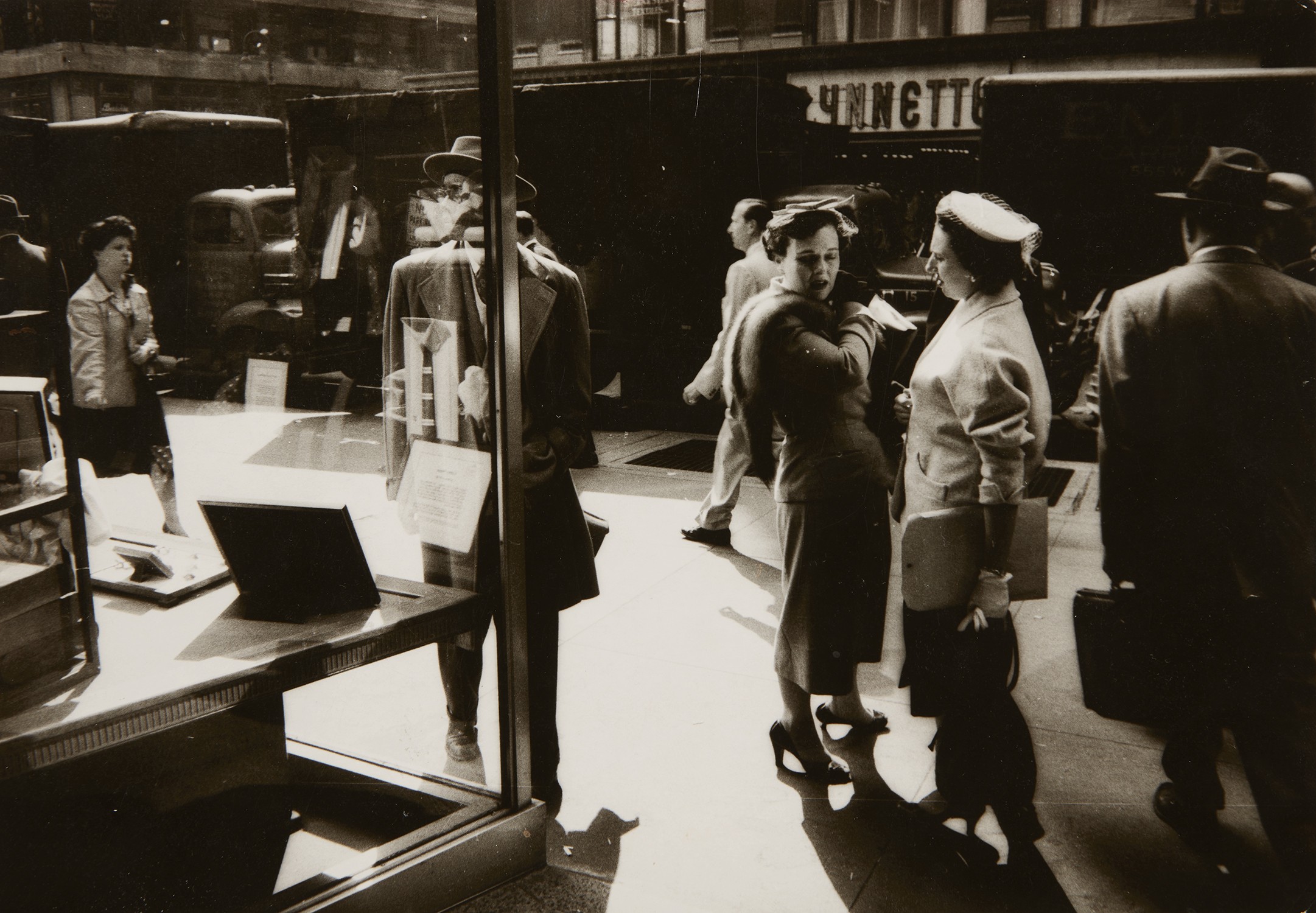
Ynette, NY
Marie and Cruiser, New York" and the mirror fractured glamour of "Sandra and Mirror, Times Square, New York." The painted and collaged works add yet another dimension to an already formidable practice. Klein frequently returned to his photographic prints with enamel paint, transforming documentary images into hybrid objects that blur the boundary between photography and painting, between reportage and abstraction. "Maquillage Backstage, Paris," a unique gelatin silver print with enamel paint, exemplifies this approach: it is a singular object, impossible to fully reproduce, a work that insists on its own materiality in a way that purely photographic prints cannot.
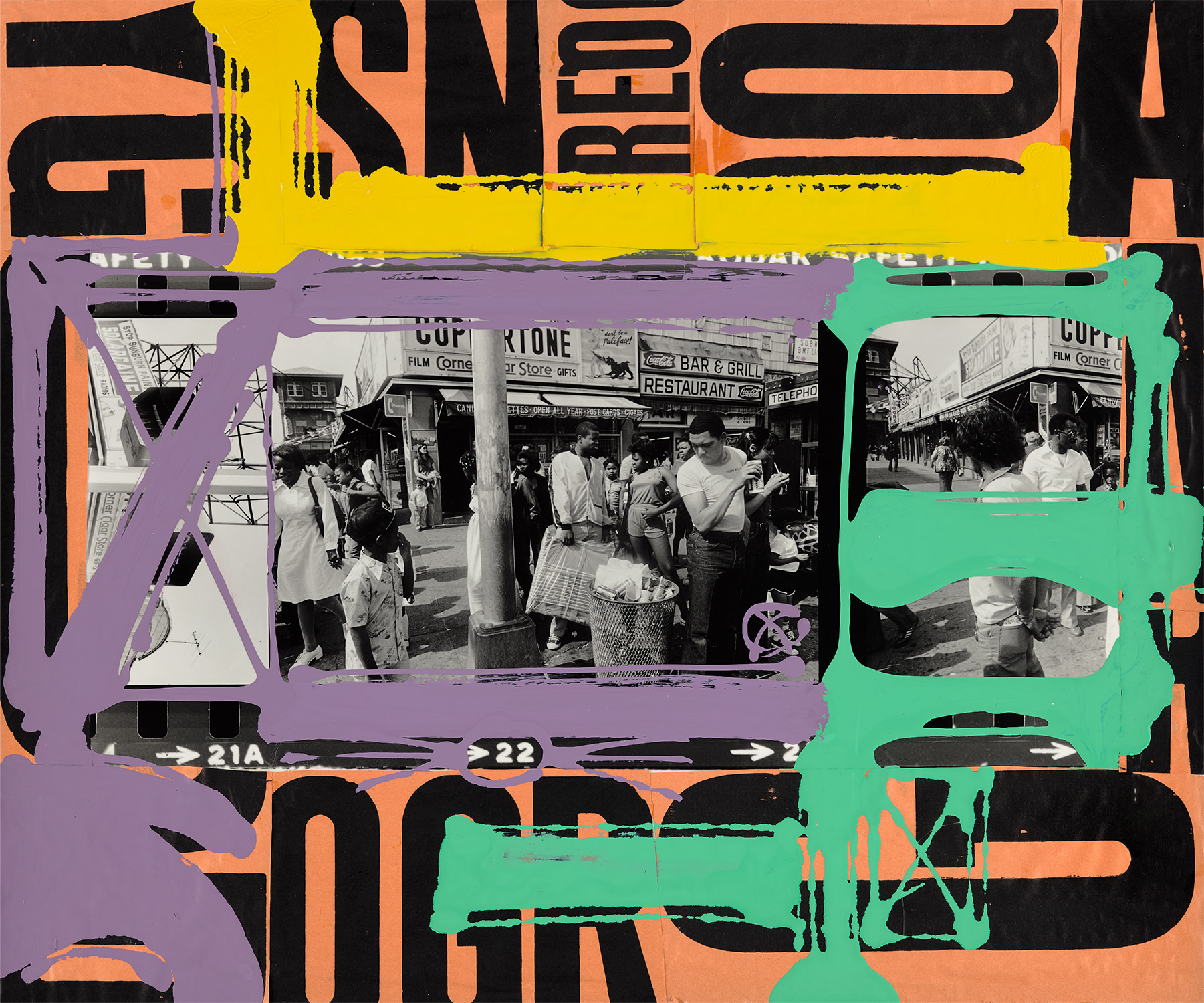
The hand painted gelatin silver prints, including his treatment of "Coney Island, New York" executed in 2000, show Klein in his late career still restless, still unwilling to let a medium settle into comfortable predictability. These works are among the most collectible of his output precisely because each one is genuinely unique. For collectors, Klein represents a rare convergence of art historical importance and genuine market vitality. His prints have appeared consistently at major auction houses including Christie's and Phillips, where works from the New York series and the Vogue commissions reliably attract serious attention.
William Klein
Coney Island, New York
The unique works, particularly those involving enamel paint or mixed media intervention, command premiums that reflect both their singularity and the growing recognition that Klein operated at the intersection of several major movements simultaneously. He was a street photographer before the genre had a name, a fashion photographer who subverted the genre from within, and a painter who used the camera as a drawing instrument. Collectors building holdings in postwar photography, in the New York School aesthetic, or in the history of fashion imagery as fine art all find compelling reasons to look at Klein seriously. His prints share meaningful territory with the work of Robert Frank, Diane Arbus, Garry Winogrand, and Daido Moriyama, each of whom pushed photography toward rawness and away from refinement, though Klein predates and in many ways enabled all of them.
Klein also built a substantial career as a filmmaker, directing the satirical film "Who Are You, Polly Maggoo?" in 1966 and the celebrated documentary "Muhammad Ali, the Greatest" in 1974, among many others. His films share with his photographs a quality of restless intelligence, a refusal to accept the surface of things as sufficient. This interdisciplinary range, rare in artists of any era, has made him a figure of enduring fascination for institutions as well as private collectors.
Retrospectives at the International Center of Photography in New York and at the Tate Modern in London have confirmed his standing in the canon, while his work continues to appear in group exhibitions examining the history of street photography, fashion, and the postwar avant garde. What makes Klein matter today, beyond the market and the museum walls, is something harder to quantify. His photographs feel contemporary in a way that most work from the 1950s and 1960s simply does not. The aggression is still there, and so is the wit, and so is the tenderness underneath both.
The cities he photographed have changed enormously, but the human pressure he captured in those streets, that jostling, unresolvable energy, has not gone anywhere. Klein saw the world at close range and refused to flinch. That is not a technique. It is a philosophy, and it produced a body of work that remains one of the genuine treasures of twentieth century art.
Explore books about William Klein
William Klein: Photographs
William Klein
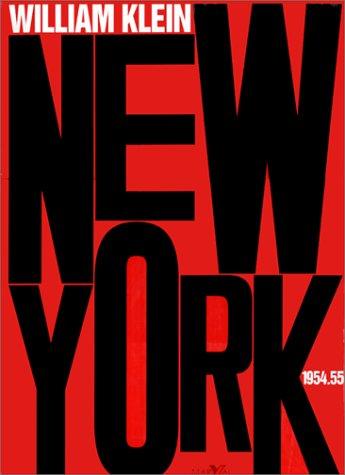
William Klein: Life is Good & Good for You in New York
William Klein
William Klein: Retrospective
William Klein, James Crump
William Klein: In+Out
William Klein
William Klein: Tokyo
William Klein
William Klein: Rome
William Klein
William Klein: Photographs 1948-2015
William Klein