Wendell Castle
Wendell Castle, Where Wood Becomes Wonder
Artist Spotlight · The Collection Editorial
“I want to make something that didn't exist before I made it.”
Wendell Castle
When the Smithsonian American Art Museum mounted a major survey of Wendell Castle's work, visitors reportedly stood in prolonged silence before his pieces, uncertain whether to admire them as sculpture or simply sit down. That productive confusion was precisely the point. Castle spent more than six decades dismantling the hierarchy that placed furniture beneath fine art, and by the time of his death in 2018, the argument was settled in his favor. Institutions from the Metropolitan Museum of Art to the Museum of Arts and Design in New York had collected his work, and the art world had long since accepted that a chair could be as profound as a painting.
Wendell Castle
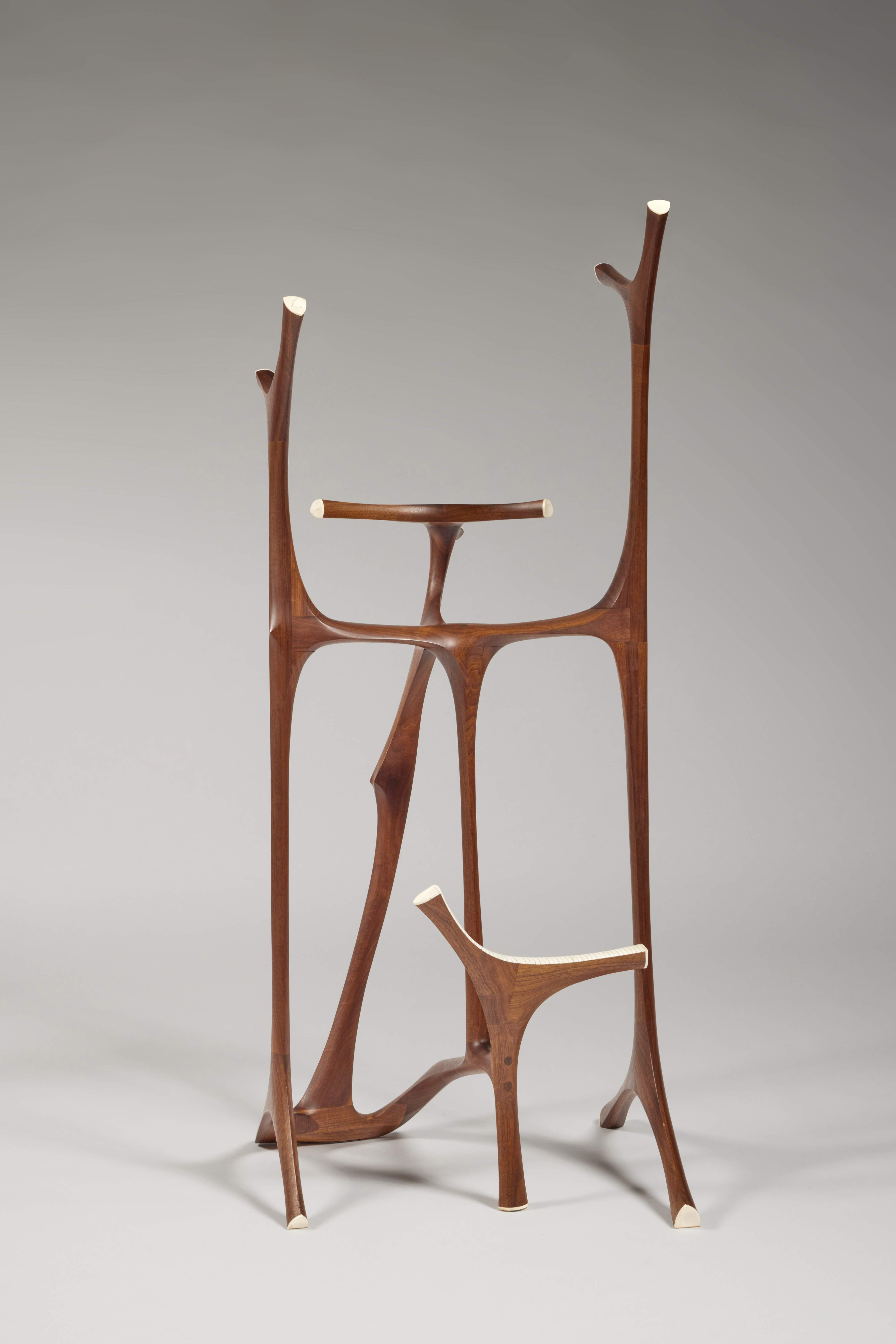
"Stool Sculpture"
Castle was born in Emporia, Kansas, in 1932, a circumstance that placed him at some remove from the coastal art centers that might have shaped a more conventionally minded artist. He studied industrial design and then sculpture at the University of Kansas, earning his MFA in 1961, and it was there that the tension between those two disciplines became the engine of his entire practice. He was drawn to the formal ambition of sculpture and the intimate utility of furniture, and he refused the assumption that these were incompatible aspirations. Kansas gave him a certain self reliance and a maker's relationship with materials that never left him.
After graduate school, Castle settled in the Rochester, New York area, where he would spend most of his life and career. Rochester proved to be a remarkably fertile environment. The region had a strong craft tradition, and Castle would later found the Wendell Castle School in Scottsville, New York, in 1980, training a generation of artists and makers who carried his ideas forward. His early work in the 1960s announced something genuinely new: furniture that grew from the floor like living organisms, chairs and tables whose legs merged and swelled as if shaped by biological rather than mechanical forces.
Wendell Castle
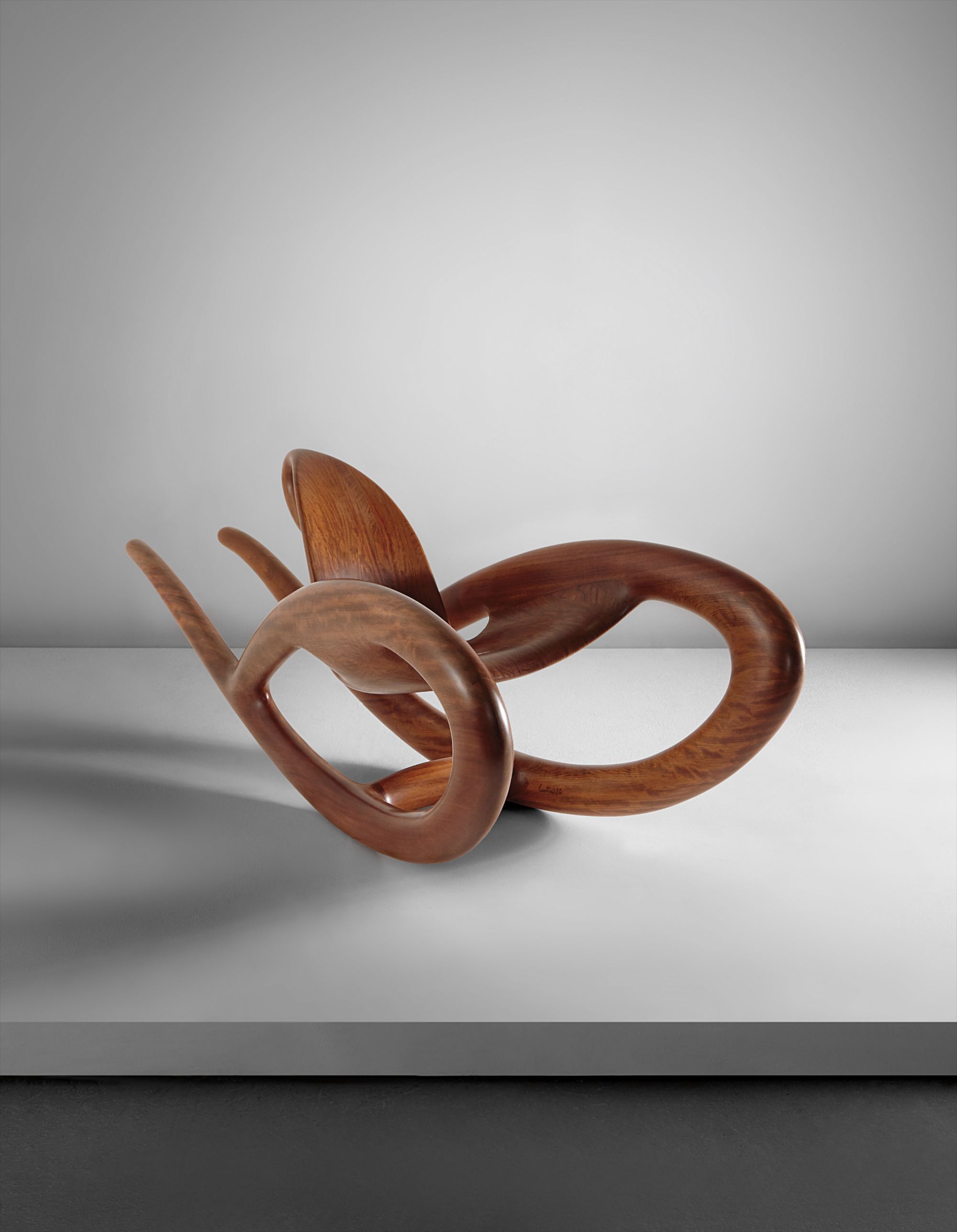
Unique 'Ghost Rider' rocking chair, 2010
These were objects that had never existed before, and their strangeness was inseparable from their beauty. The technique that made these forms possible was stack lamination, a method Castle effectively pioneered for studio furniture. By gluing together thick layers of wood and then carving into the resulting mass, he could achieve sweeping curves and cantilevered forms that traditional joinery could never have produced. The process demanded both the patience of a craftsman and the spatial imagination of a sculptor, and Castle possessed both in abundance.
“If you follow all the rules, you miss all the fun.”
Wendell Castle
His early laminated works in walnut and cherry from the 1960s and 1970s remain among the most celebrated objects in American studio craft, occupying a place in the history of design comparable to what the Abstract Expressionists achieved in painting during the same era. There is a directness and physical confidence to these pieces that still startles. Castle's development was never static. Through the 1970s and into the 1980s, he moved into trompe l'oeil works of breathtaking virtuosity, carving coats, hats, and draped fabrics from wood so convincingly that the eye refused to believe what the hand would feel.
Wendell Castle
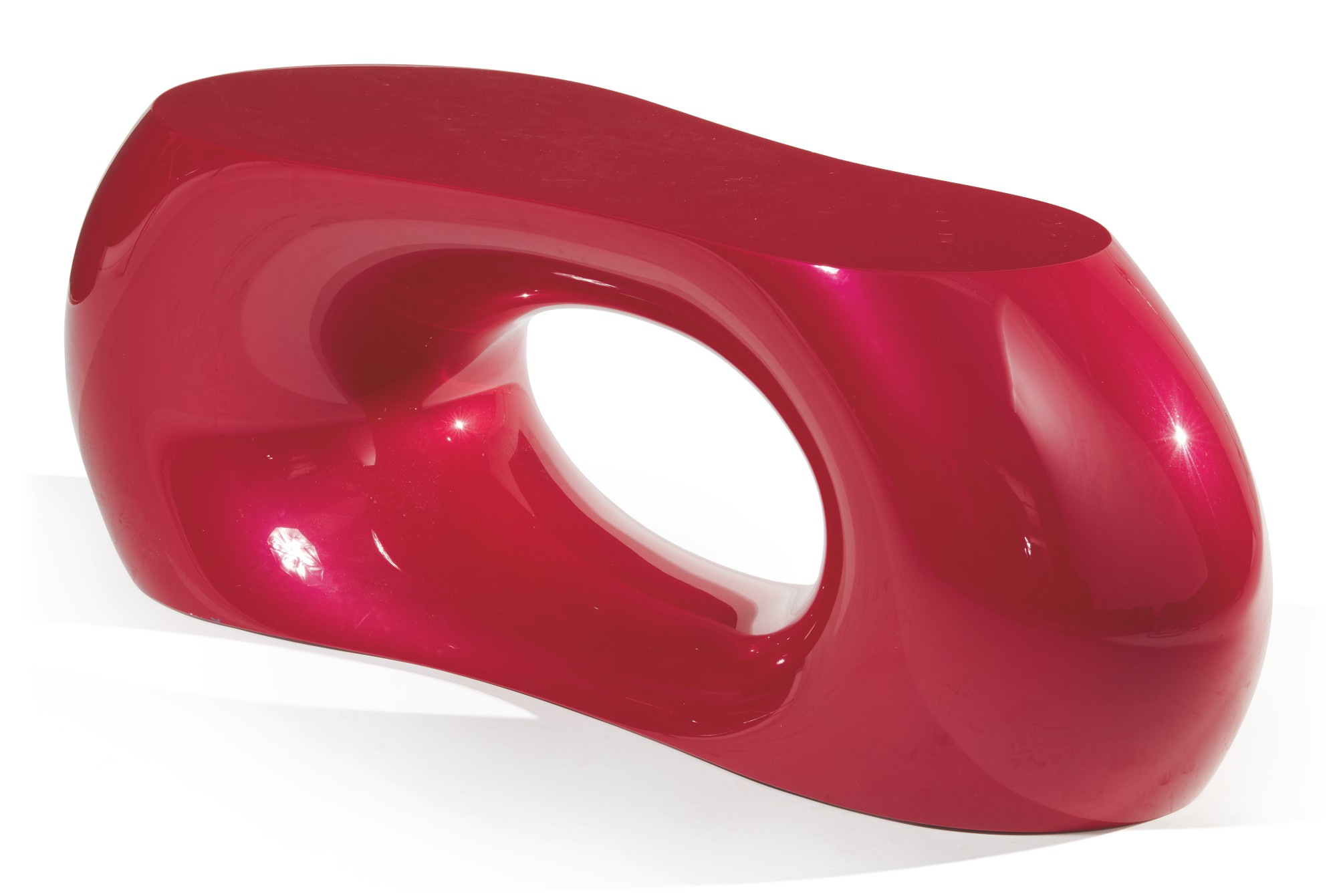
“osbourne” Coffee Table
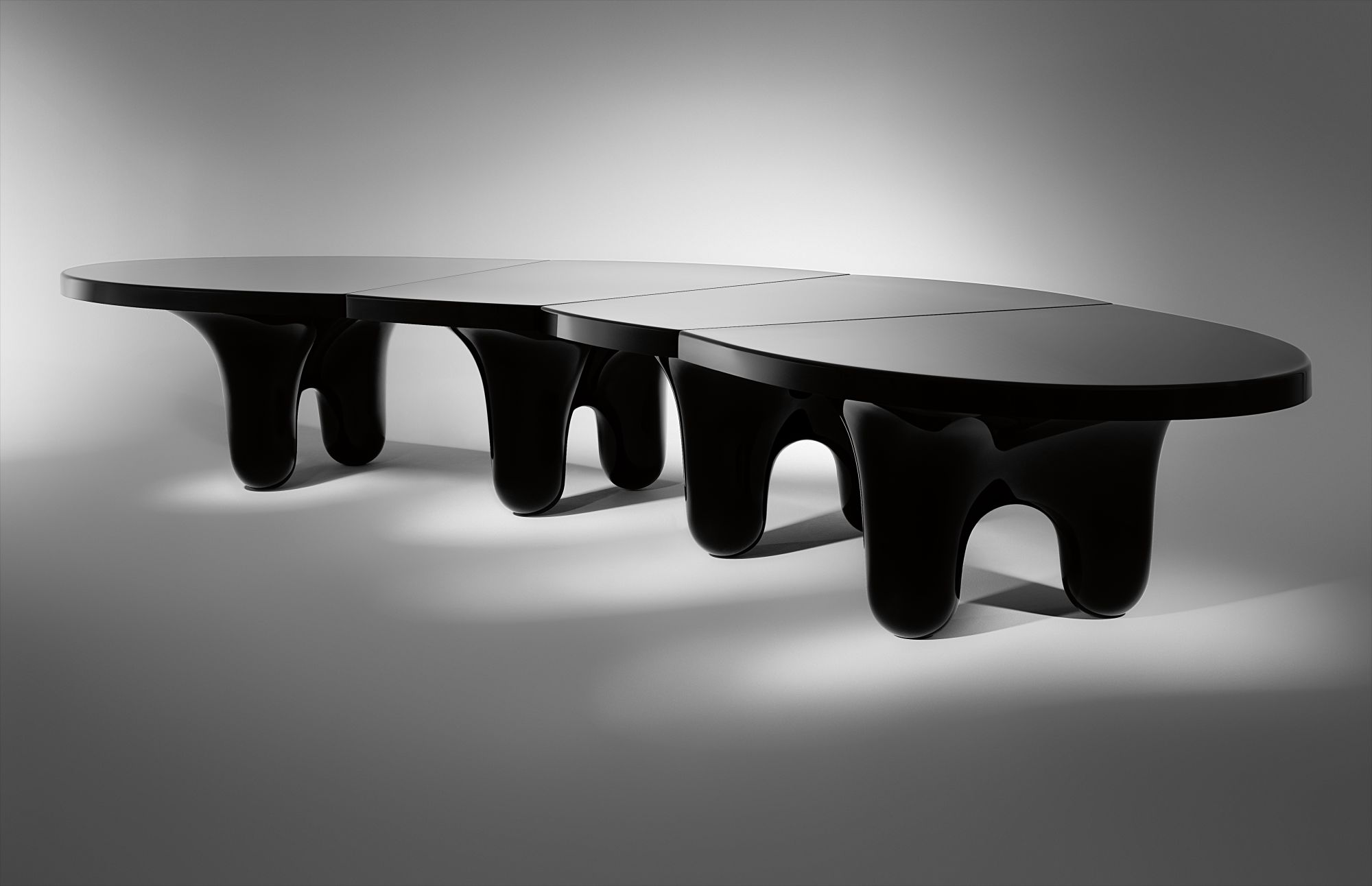
These pieces had a wit and a conceptual sharpness that positioned Castle firmly in conversation with contemporary art, not merely craft. Later, he embraced fiberglass and then plastics, producing work in bold colors and even more radical geometries. His Ghost series from the 1980s rendered everyday objects in ghostly white lacquer, stripping them of function while preserving their phantom forms. The Molar series, with its great rounded biomorphic tables that seem to reference both dental anatomy and planetary geology, became some of his most recognized and sought after work.
Among the works that best represent Castle's range, the Ghost Rider rocking chair of 2010 stands as a late masterwork. Cast in fiberglass and finished in that signature spectral white, it transforms one of the most vernacular of American furniture forms into something uncanny and poetic. It rocks, yes, but it also haunts the room it inhabits. The Stool Sculpture and the Osbourne Coffee Table similarly demonstrate how Castle could take the most familiar domestic objects and return them to the viewer with a sense of cosmic strangeness.
Wendell Castle
Black Edition “Big Table,” from the “Molar” series
These are not decorator's props. They are arguments made in three dimensions about what the designed world could be if we allowed it to be genuinely ambitious. For collectors, Castle's work occupies a distinctive and increasingly valuable position in the market. His pieces appear regularly at major auction houses, with significant examples achieving prices well into the six figures, and demand has only strengthened since his death.
Collectors are drawn not only to the objects themselves but to the intellectual seriousness Castle brought to every decision about form, material, and finish. There is no piece that feels casual or expedient. Serious collectors of studio craft often begin with Castle precisely because his work articulates so clearly why furniture can be collected with the same commitment one brings to painting or sculpture. His work holds its meaning across decades and across very different interiors.
In the broader context of art history, Castle belongs to a remarkable generation of American makers who transformed studio craft into a fine art discipline. His peers and near contemporaries include George Nakashima, whose reverence for natural wood grain complemented Castle's more sculptural ambitions, and Sam Maloof, whose devotion to the handmade chair brought him comparable institutional recognition. In the furniture world, the Italian designers associated with the Memphis Group, particularly Ettore Sottsass, pursued some analogous instincts about form and personality in objects, though from a very different cultural direction. Castle was always distinctly American in his scale and his democratic belief that the objects of daily life deserved the full force of artistic imagination.
Castle's legacy grows rather than diminishes with the passage of time. The art furniture movement he helped create now has its own history, its own scholarship, and its own collecting culture, and his work sits at the origin of all of it. Museums continue to acquire and exhibit his pieces. A new generation of designers working at the intersection of digital fabrication and handcraft look back to his stack lamination experiments as a conceptual predecessor.
Most importantly, the objects themselves continue to do what the greatest art always does: they change the space around them and the attention of the people who encounter them. To own a Wendell Castle is to live with a permanent argument for beauty, one that never grows quiet.
Explore books about Wendell Castle