Weegee (Arthur Fellig)
Weegee: New York's Most Brilliant Night Witness
Artist Spotlight · The Collection Editorial
“I am the camera.”
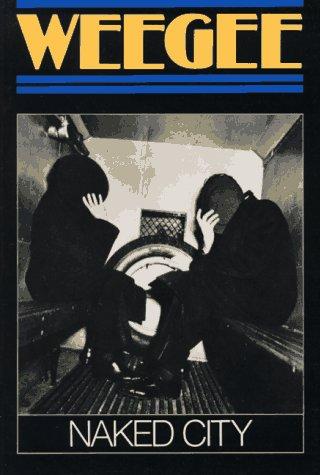
Weegee, Naked City, 1945
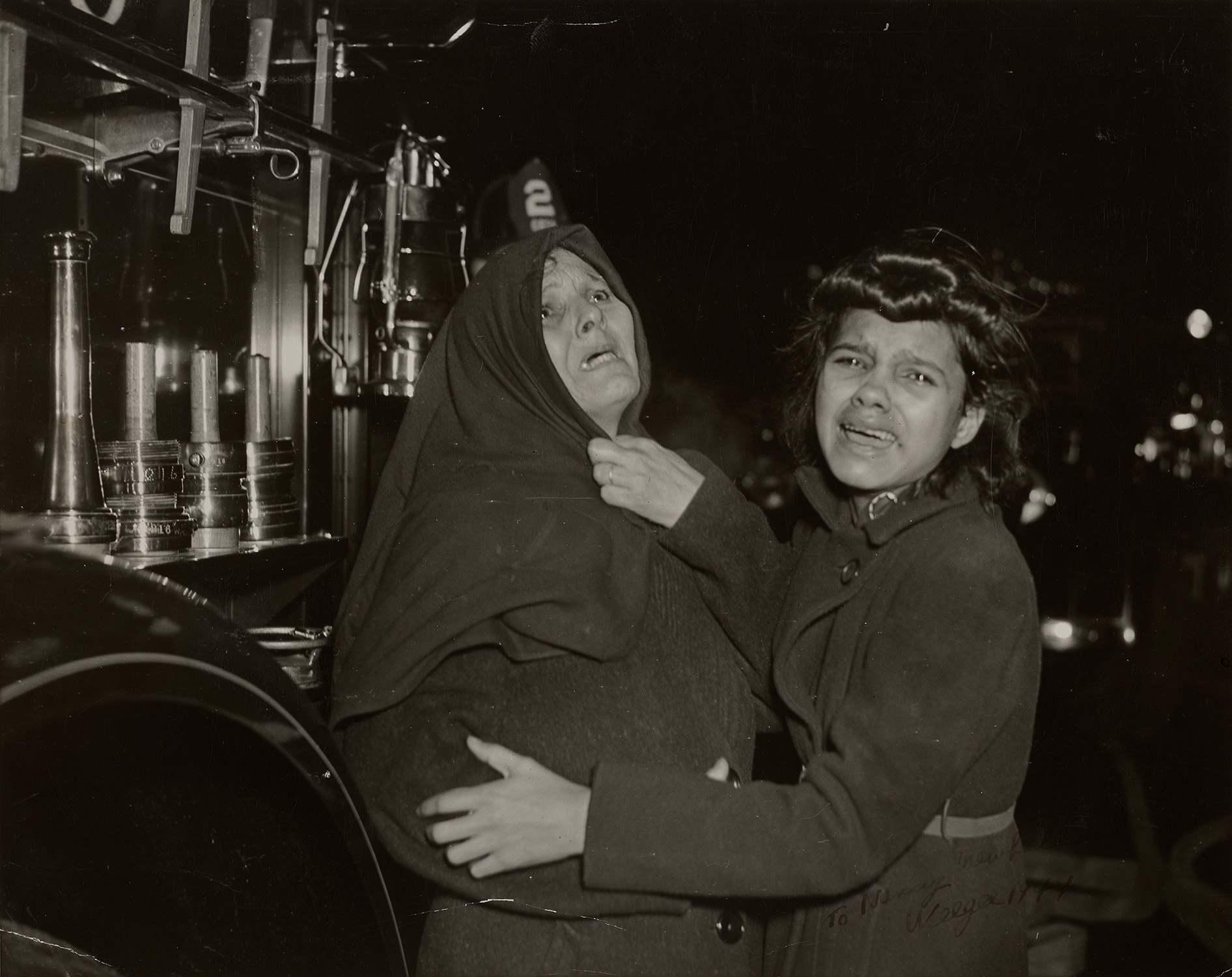
There is a photograph that stops every visitor who encounters it. A tenement in Harlem is ablaze, and somewhere in the chaos of smoke and ladders and desperate faces, a photographer has paused long enough to feel something. He later titled it "I Cried When I Took This Picture," and in that admission lives the entire contradiction that made Weegee one of the twentieth century's most essential image makers: a man who sold sensation for a living and yet could not help but love the people he photographed. That tension, raw and unresolved, is precisely what draws collectors and curators back to his gelatin silver prints decade after decade, and why institutions from the International Center of Photography in New York to the Museum of Modern Art continue to hold his work in their permanent collections as foundational documents of American modernism.
Weegee (Arthur Fellig)
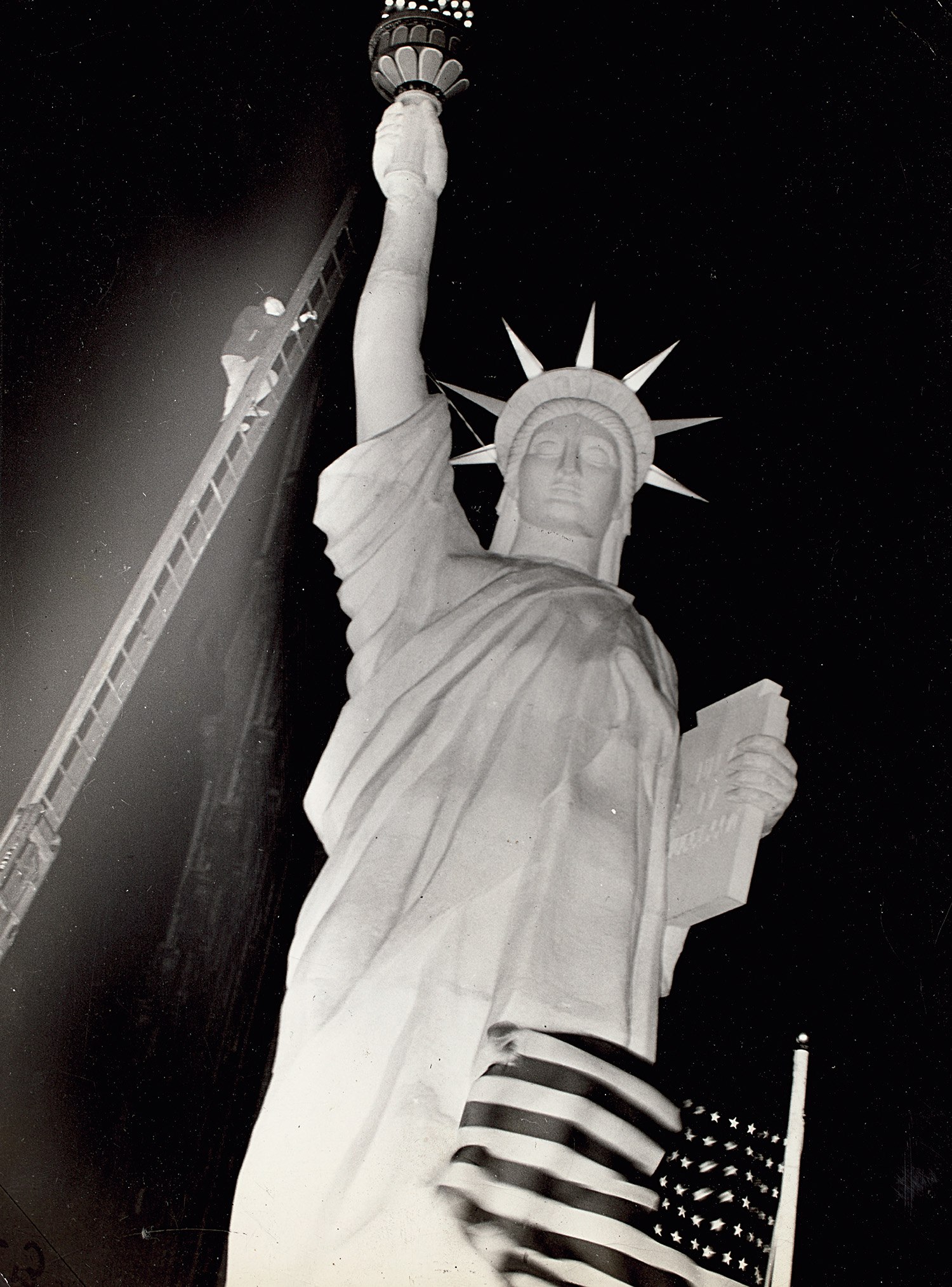
Man climbs 85-foot ladder to secure torch on the plastic Statue of Liberty erected at Times Square for the Sixth War Loan Drive, New York, November 30
Usher Fellig was born in 1899 in Zolochiv, a small town in what was then the Austro Hungarian Empire and is today western Ukraine. His family emigrated to New York's Lower East Side when he was a child, and the teeming, overcrowded streets of that neighborhood became his first education in human density and drama. He left school at an early age and worked a series of odd jobs before discovering photography through a tintype street photographer whose equipment he borrowed in exchange for assistance. There was no formal training, no academy, no patron.
There was only the street, the camera, and an appetite for being present that bordered on compulsion. By the 1930s, Fellig had adopted the name Weegee, a phonetic rendering of Ouija, a reference to his seemingly supernatural ability to arrive at crime scenes, fires, and accidents before anyone else. The explanation was more practical than mystical: he was one of the first press photographers to install a police shortwave radio scanner in his car, a secondhand Chevrolet he essentially lived out of, parked near police headquarters on Centre Street in Lower Manhattan. He worked through the night, every night, and sold his images to papers including PM, the New York Daily News, and the New York Post.
Weegee (Arthur Fellig)
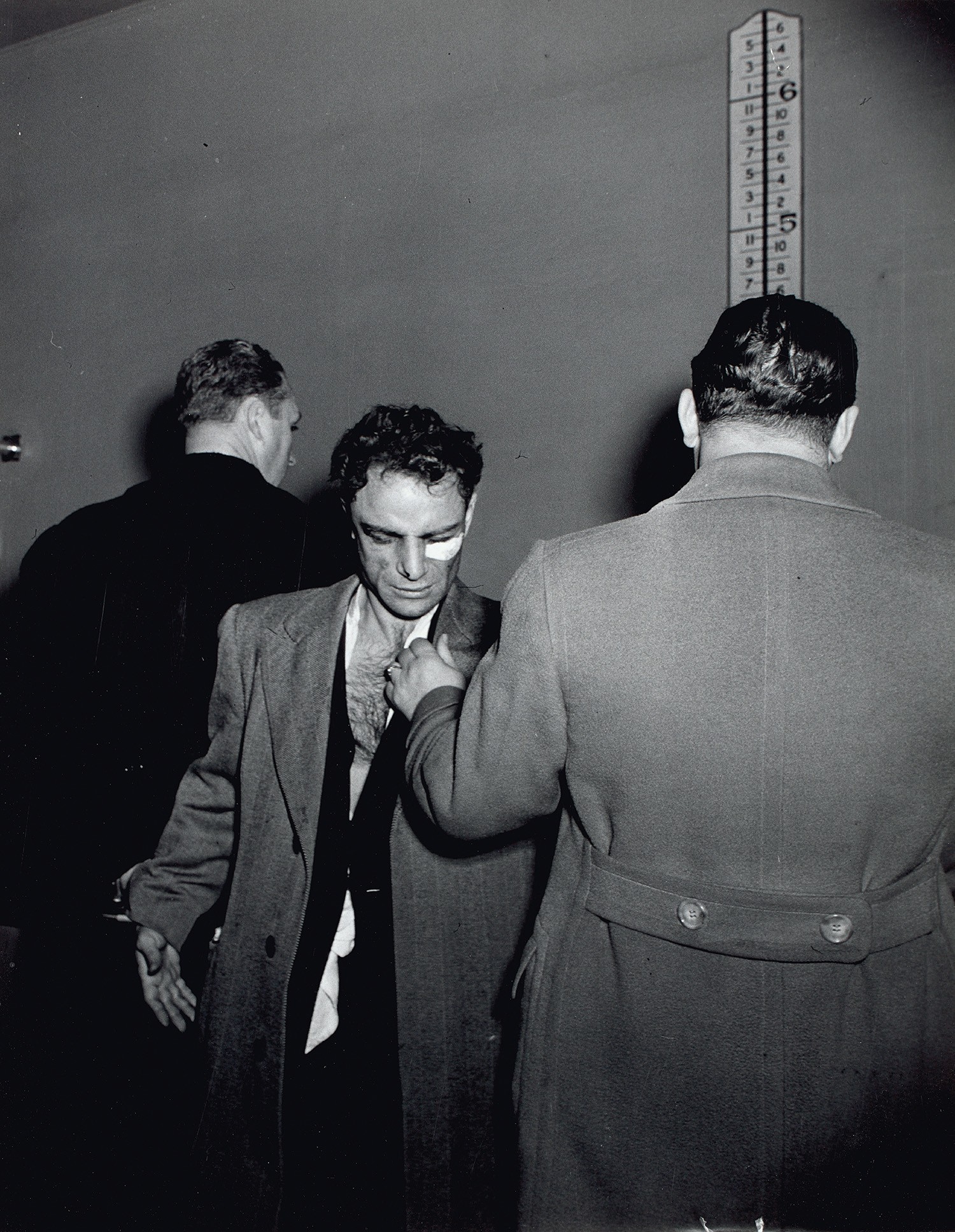
Anthony Esposito, Accused 'Cop Killer,' January 16
His flash unit was so powerful and his compositions so instinctive that editors rarely needed to crop his prints. What the camera saw was what the page ran. The visual language Weegee developed across those years was unlike anything that had come before in American press photography. His use of flash created a dramatic chiaroscuro effect that owed something to the German Expressionist cinema he would have seen in Manhattan theaters, all blinding foreground illumination against pools of absolute darkness.
“When I have a camera in my hand, I know no fear.”
Weegee
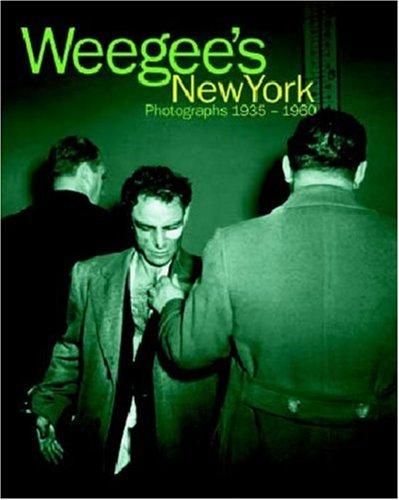
But where Expressionism reached for the psychological and the theatrical, Weegee reached for the true. His subjects are rarely posed in any conventional sense; they are caught in the irreducible reality of grief, curiosity, exhaustion, and joy. "Anthony Esposito, Accused Cop Killer, January 16" is a masterpiece of this approach: the accused man's face caught in flash light, surrounded by the pressing bodies of detectives, the image vibrating with the specific voltage of a New York night in 1941. The print is not a document of guilt or innocence but of the machinery of urban justice and its human cost.
Weegee (Arthur Fellig)
I Cried When I took this Picture (Tenement Fire, Harlem)
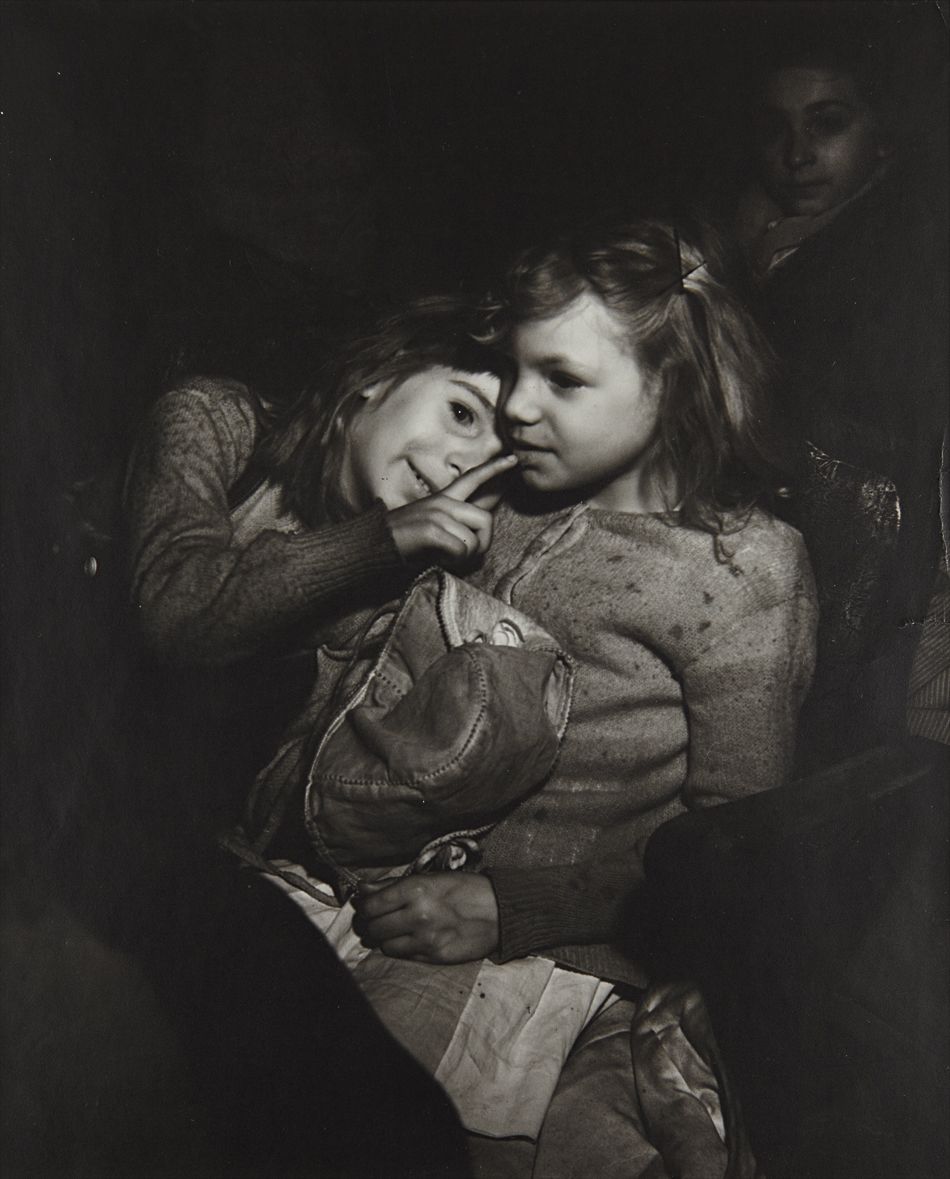
Among his most celebrated images, "The Critic" from 1943 holds a particular place. Two women in elaborate furs arrive at the Metropolitan Opera opening night, and a disheveled woman in the crowd regards them with an expression of magnificent disdain. The image is frequently cited as a defining document of class in mid century America, a single frame that contains multitudes of social commentary without a word of caption. "Night at the Apollo" and "Girls, Palace Theater, NY" reveal another dimension of his practice entirely: the joy and abandon of popular entertainment, audiences surrendered to pleasure, faces open and unguarded in the dark of a theater.
These images feel warmer, more tender, and they remind collectors that Weegee was not simply a chronicler of catastrophe but a deeply attentive observer of delight. For collectors approaching Weegee's work today, the market offers a rewarding range of entry points. Vintage prints, meaning those made during his lifetime and closest to the original negatives, command the strongest prices at auction and carry the deepest historical authority. Christie's, Sotheby's, and Phillips have all handled significant Weegee material in recent decades, with key prints achieving prices in the tens of thousands of dollars.
Weegee (Arthur Fellig)
Girls, Palace Theater, NY
Later printed examples, often authorized posthumously through the International Center of Photography, which holds a substantial archive of his negatives, offer more accessible pricing while still connecting the collector to his essential vision. Works depicting his signature subjects including Manhattan night scenes, the Apollo Theater, and his rare self portraits such as the quietly extraordinary "Self Portrait in Moscow" are among the most sought after. Condition, print quality, and provenance are the critical factors, as with any photographic market. Weegee belongs to a lineage of photographers committed to the documentary power of the street.
His work shares a spiritual kinship with that of Lisette Model, whose unsparing portraits of Coney Island bathers and cafe society carried a similar charge of democratic observation. Diane Arbus, who came of age looking at the kind of photography Weegee had normalized, acknowledged the debt her generation owed to press photographers who treated ordinary and marginal subjects as worthy of serious visual attention. Internationally, his flash lit urgency finds echoes in the work of Brassai in Paris and Weegee's near contemporary Robert Frank, whose "The Americans" carried forward the tradition of the lone photographer moving through a society and finding its truth in the unposed and the overlooked. What makes Weegee matter now, in an era saturated with images to a degree he could not have imagined, is the quality of his attention.
Every print in his body of work is evidence of a man who showed up, night after night, to witness the city in its most unguarded hours and to treat what he found there as worthy of his full artistic engagement. The children tumbling out of school in "Children (School Is Over)," the performers caught mid transformation behind the circus ring at Ringling Brothers, the lone figure scaling a ladder to fix a torch to a plastic Statue of Liberty in Times Square for the Sixth War Loan Drive in November 1944: each of these images is a small act of preservation, a refusal to let the ordinary and the extraordinary of American life pass unrecorded. Collecting Weegee is an act of alignment with that refusal, and with the belief that the world, even at its most chaotic, deserves a steady and loving eye.
Explore books about Weegee (Arthur Fellig)