Wassily Kandinsky
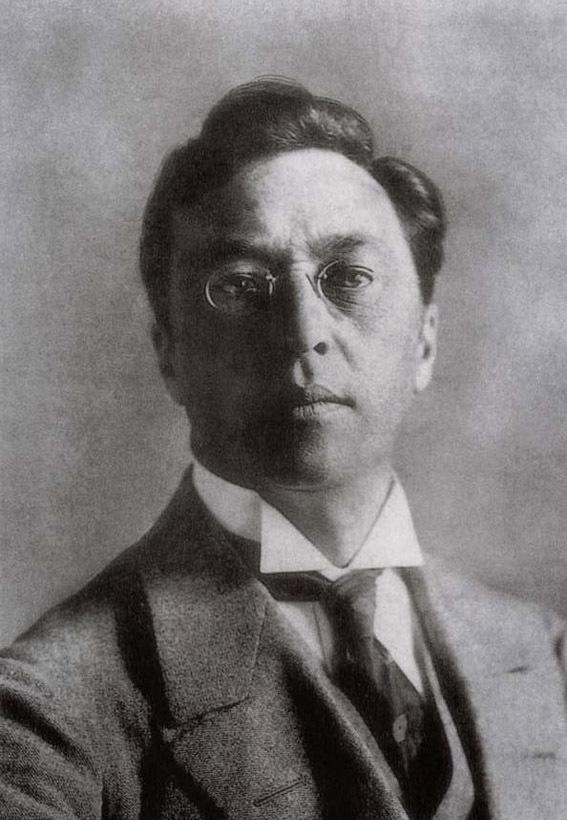
Kandinsky: The Man Who Painted Music
Artist Spotlight · The Collection Editorial
“Color is the keyboard, the eyes are the harmonies, the soul is the piano with many strings.”
Concerning the Spiritual in Art, 1911
There is a moment in art history that feels almost mythological in its clarity. Around 1908, Wassily Kandinsky returned to his studio at dusk and found a painting of extraordinary beauty leaning against the wall. It shimmered with form and colour, and for a moment he could not identify the subject. Then he realised it was one of his own canvases, turned on its side.
Wassily Kandinsky
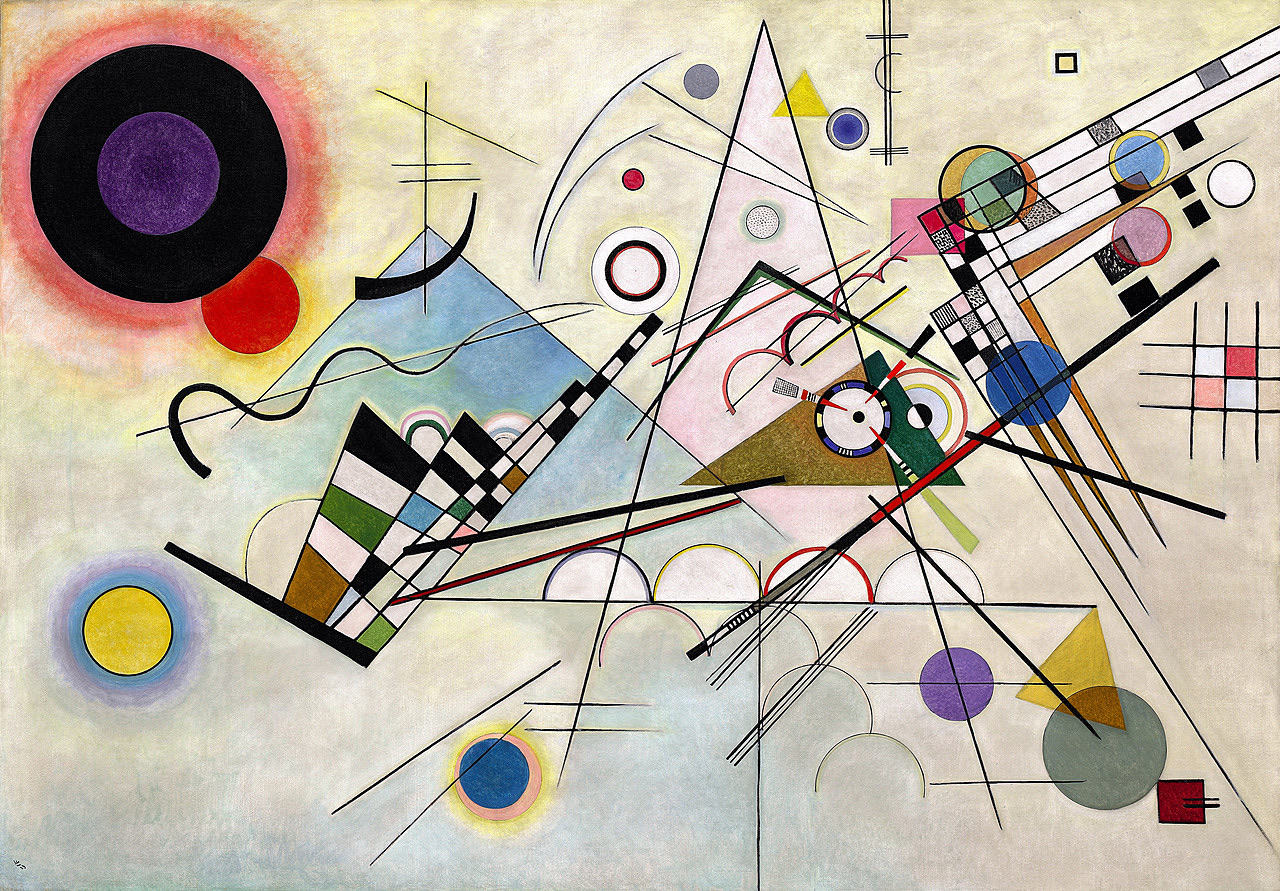
Composition VIII, 1923
In that disorienting instant, he understood something that would reshape the course of modern art: that colour and form alone, freed from the obligation to represent the world, could carry the full emotional weight of human experience. That revelation became the foundation of abstract painting as we know it. Kandinsky was born in Moscow in 1866 into a cultured, well travelled family. His childhood was saturated with music, and he studied piano and cello from a young age, an early immersion in the idea that sensation could be transmitted through pure structure and feeling rather than through literal description.
He pursued law and economics at the University of Moscow, and it was not until he was thirty years old, after attending a performance of Wagner's Lohengrin and seeing a Claude Monet exhibition in Moscow, that he felt the irresistible pull of painting. The Monet works, depicting haystacks, struck him with an almost violent force: he had not immediately recognised the subject, yet the emotional impact was overwhelming. This experience planted a seed that would take years to fully flower. In 1896 Kandinsky made the decisive move to Munich, turning down a professorship to enroll in art school.
Wassily Kandinsky
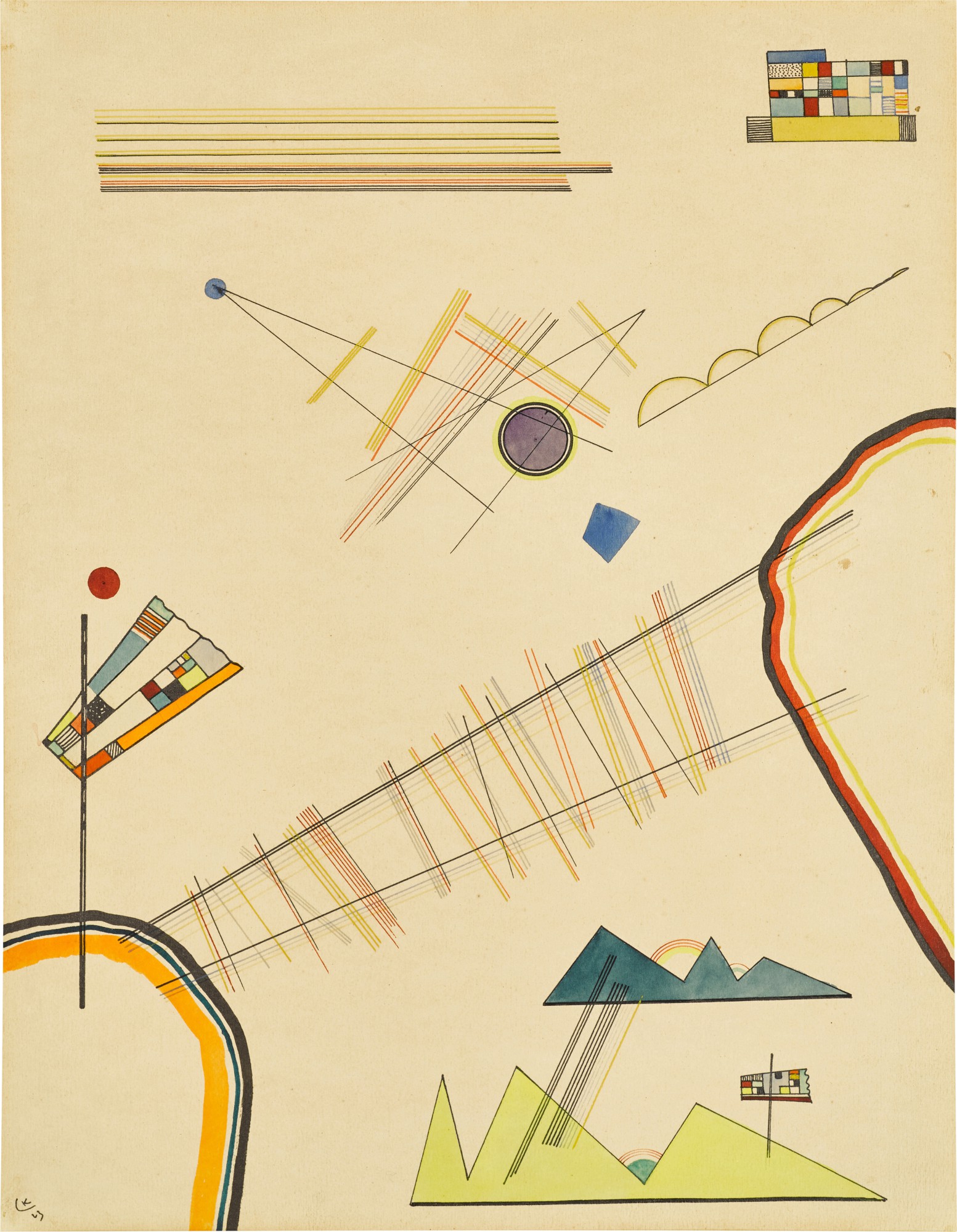
Linienbrücke (Bridge of Lines)
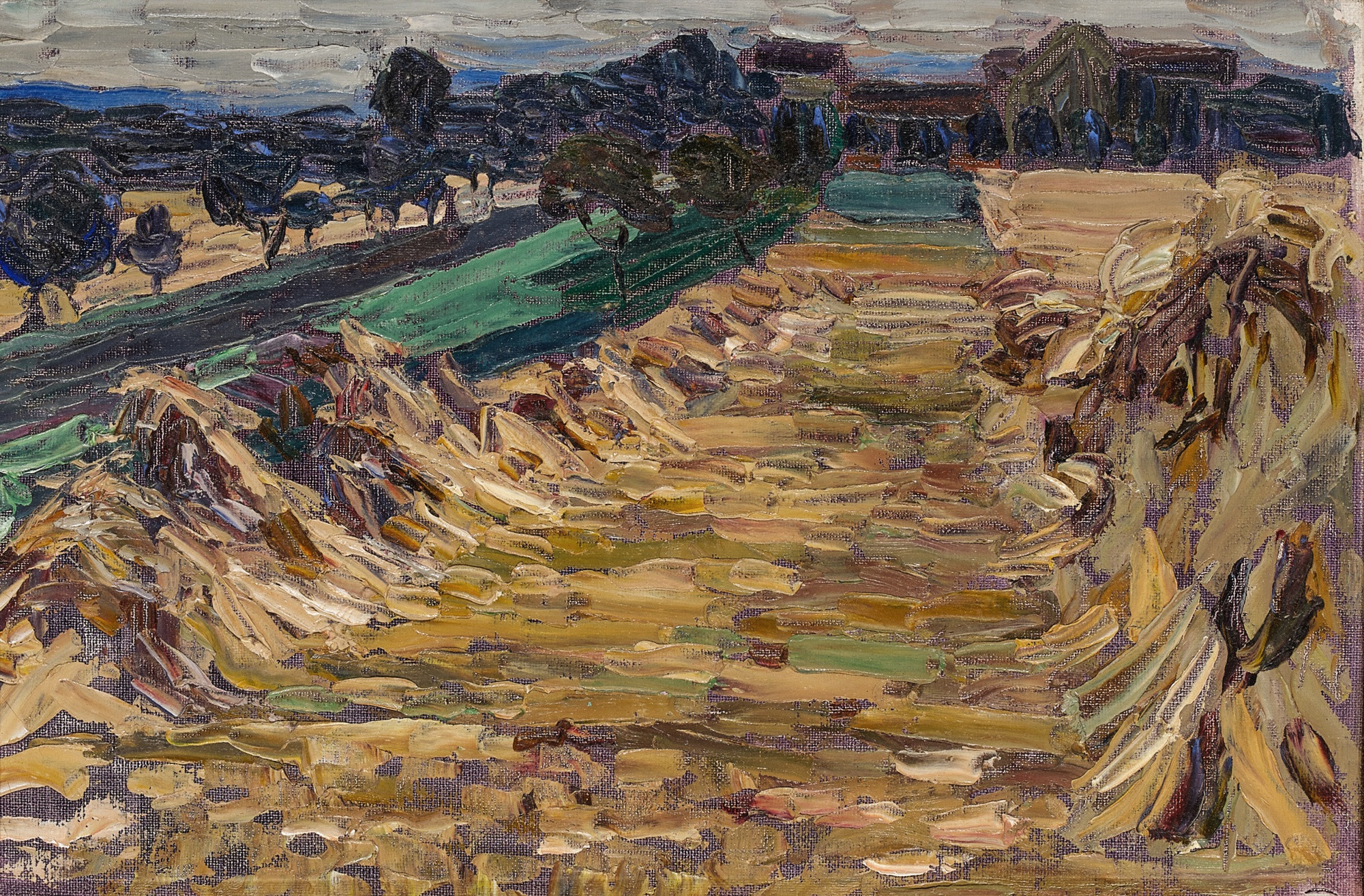
He studied under Franz von Stuck alongside Paul Klee and immersed himself in the vibrant bohemian culture of the city. His early work from this period, such as the luminous oil on canvas Kornfeld bei Dresden (Cornfield near Dresden) from 1905, reflects a painter deeply engaged with Post Impressionist colour and Symbolist mood. These works are rich with a kind of joyful intensity, the surface alive with dabs and strokes of vivid pigment that seem to vibrate against one another. They show an artist already restless with representation, already reaching toward something beyond the visible world.
“There is no must in art because art is free.”
Wassily Kandinsky
The years between 1908 and 1914, much of which Kandinsky spent in the Bavarian town of Murnau with his companion and fellow painter Gabriele Münter, represent one of the most electrifying periods of artistic transformation in the twentieth century. Works such as Murnau mit Kirche II (Murnau with Church II) from 1910 show the landscape dissolving into bold, almost violent areas of colour, the forms barely tethered to their real world origins. This was also the period in which Kandinsky co founded Der Blaue Reiter (The Blue Rider) alongside Franz Marc, a loose but enormously influential collective that brought together artists, composers, and theorists united by a belief in the spiritual dimension of art. His landmark theoretical text Concerning the Spiritual in Art, published in 1911, gave intellectual and philosophical weight to what his canvases were enacting visually.
Wassily Kandinsky
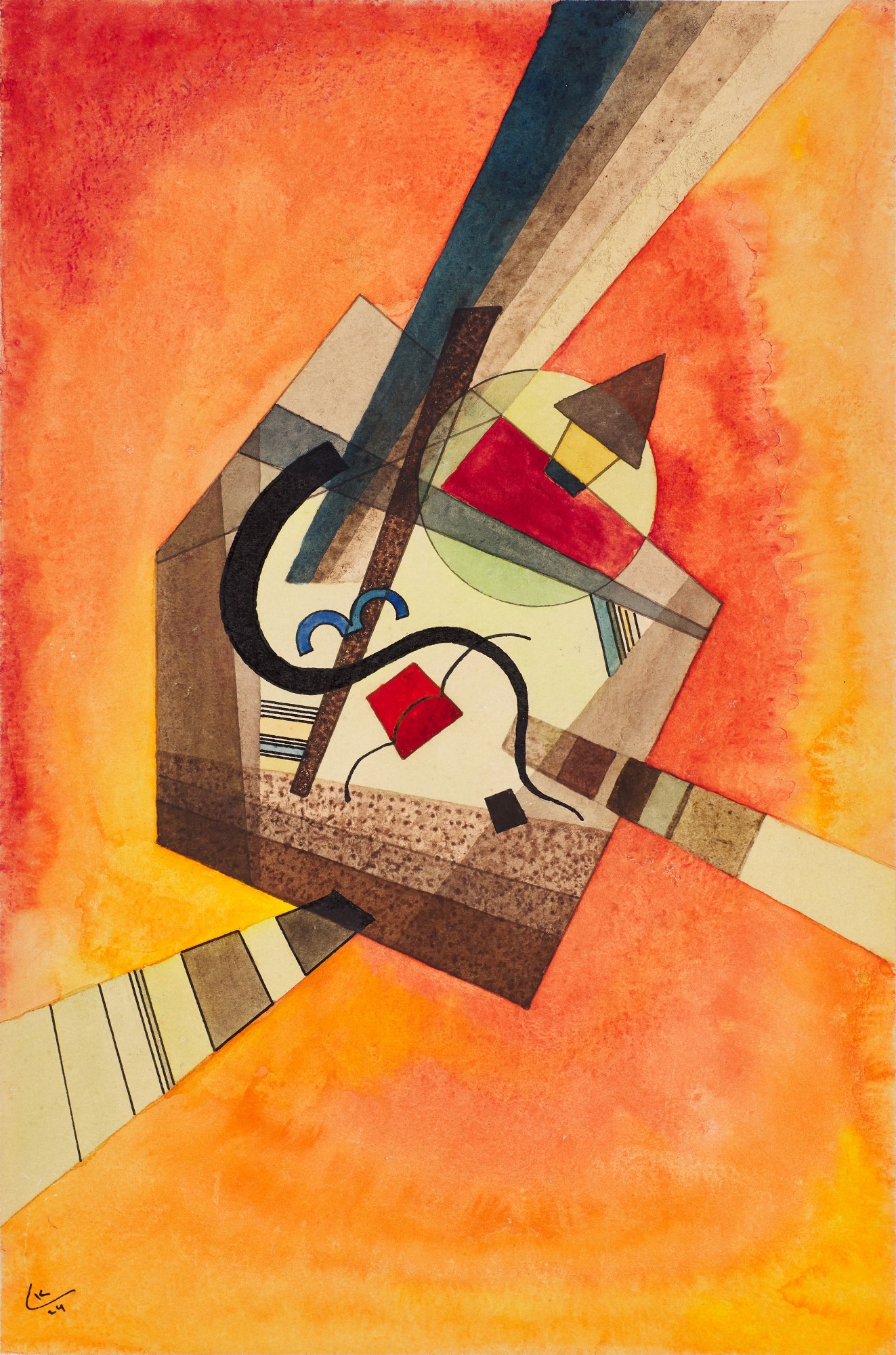
Strich Zentraler (Central Line)
By the time Kandinsky joined the Bauhaus in Weimar in 1922, invited by Walter Gropius, his work had evolved into the geometric precision and architectural rigour that defines his most celebrated mature phase. Composition VIII from 1923, now in the collection of the Solomon R. Guggenheim Museum in New York, stands as one of the great monuments of this period. The canvas is a cosmos of circles, triangles, lines, and arcs rendered with jeweller's precision against a pale ground, each element in dynamic tension with the others.
“The artist must have something to say, for mastery over form is not his goal but rather the adapting of form to its inner meaning.”
Concerning the Spiritual in Art, 1911
It feels less like a painting and more like a score, a visual symphony whose instruments are pure geometry. Works from this Bauhaus era demonstrate the full range of Kandinsky's technical versatility, from the sweeping ambition of large oil compositions to the intimate precision of pen and ink drawings, watercolours, and works on paper that reveal the searching, investigative quality of his daily practice. For collectors, the works on paper hold a particular fascination. Pieces such as Linienbrücke (Bridge of Lines) and Aufstieg (Ascent), rendered in watercolour and pen and ink, offer an unguarded intimacy with Kandinsky's thinking.
Wassily Kandinsky
Kornfeld bei Dresden (Cornfield near Dresden), 1905
These are works in which you can trace the movement of a mind actively solving problems of visual logic, weight, balance, and rhythm. The gouache and watercolour works, including Lyrisch (Lyrical) and Strich Zentraler (Central Line), demonstrate his mastery of layered translucency and the way colour could be both physically light and emotionally immense. In the international auction market, Kandinsky commands consistent and significant attention. His major oil paintings have achieved prices well into the tens of millions of dollars at houses including Christie's, Sotheby's, and Bonhams, while works on paper and smaller compositions offer collectors a genuine point of access to one of the most important bodies of work in modern art.
Kandinsky's legacy sits at the very centre of the modern tradition, and his influence radiates outward in almost every direction. His fellow Blaue Reiter artists, particularly Franz Marc and August Macke, share his commitment to colour as an emotional force. Paul Klee, his Bauhaus colleague and lifelong intellectual companion, pursued a similarly musical and poetic approach to abstraction. Further afield, the American Abstract Expressionists, Mark Rothko, Franz Kline, and Lee Krasner among them, owe an enormous debt to the philosophical and aesthetic framework Kandinsky constructed.
To engage seriously with twentieth century abstraction is to return, again and again, to Kandinsky as a primary source. After the Nazis shuttered the Bauhaus in 1933, Kandinsky settled in Neuilly sur Seine near Paris, where he would spend the final decade of his life. His late work took on a biomorphic warmth, the strict geometry of the Bauhaus years giving way to softer, more organic forms that hint at microscopic life and primordial energy. He died in 1944, having witnessed both the creative euphoria of the European avant garde and its brutal suppression.
What endures is the extraordinary coherence of his vision across five decades: that art is a form of inner necessity, that colour speaks directly to the soul, and that the painter's truest obligation is to the invisible life of feeling. In the works available through The Collection, that vision is alive, available, and waiting to be lived with.
Explore books about Wassily Kandinsky
Concerning the Spiritual in Art
Wassily Kandinsky
Kandinsky: Complete Writings on Art
Wassily Kandinsky
Wassily Kandinsky: A Life
Philip Sayers

Kandinsky and Old Russia
Rose-Carol Washton Long
Kandinsky: Compositions
Hans K. Roethel
The Art of Abstraction: Kandinsky, Malevich, Mondrian
Sixten Ringbom
Kandinsky: The Language of the Eye
Roger Hilton