Wangechi Mutu
Wangechi Mutu Remakes the World Entire
Artist Spotlight · The Collection Editorial
“I am interested in the body as a site of transformation, as a place where culture and nature meet and negotiate.”
Wangechi Mutu, interview with Frieze
In the autumn of 2019, the Metropolitan Museum of Art unveiled four monumental bronze sculptures by Wangechi Mutu in the niches of its Fifth Avenue facade, the first works ever commissioned for those storied positions. The figures, part of a series titled "The NewOnes, will free Us," depicted otherworldly feminine forms that seemed to emerge from the stone itself, at once ancient and radically contemporary. For New Yorkers and visitors from around the world who paused on the steps of one of the most iconic institutions on earth, it was an unmistakable declaration: Mutu had arrived at the very center of the global art conversation, and she had transformed the space simply by inhabiting it. Wangechi Mutu was born in Nairobi, Kenya, in 1972, and her early years in East Africa would prove foundational to everything that followed.
Wangechi Mutu
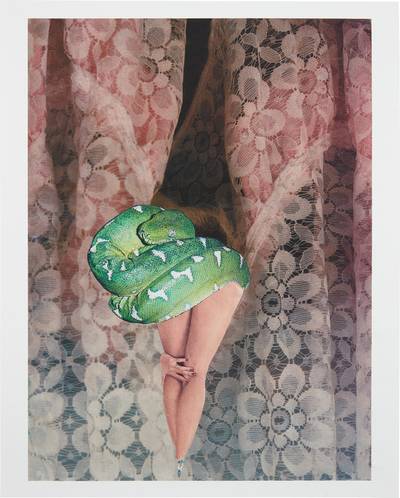
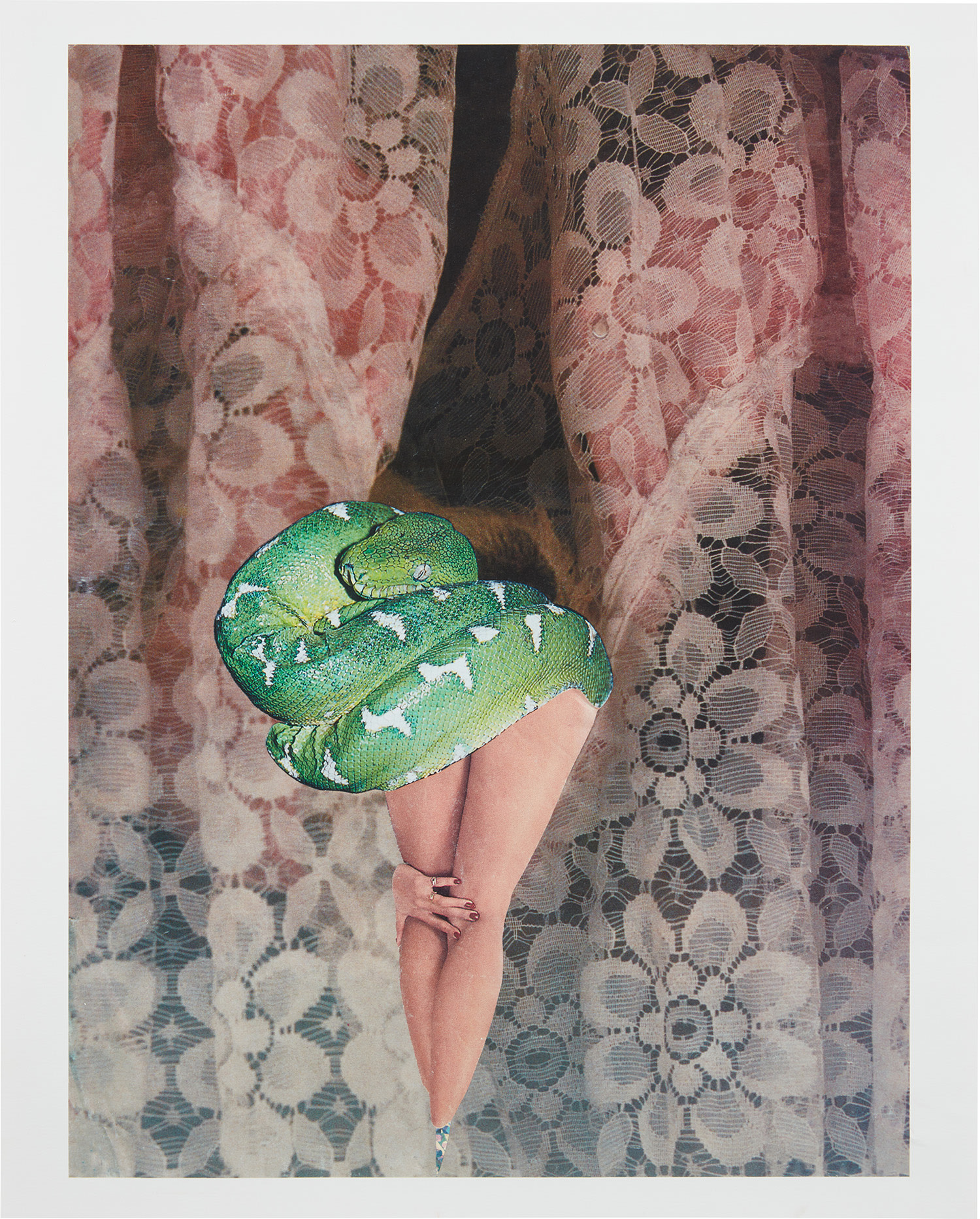
Eve
She studied at the Loreto Convent in Nairobi before traveling abroad for her education, first attending the United World College of the Atlantic in Wales, then earning a degree in anthropology from the Cooper Union in New York, and finally an MFA from Yale School of Art in 2000. This trajectory, moving fluidly between continents, disciplines, and ways of knowing, gave her a rare vantage point from which to examine bodies, borders, belonging, and the layered violences of colonial history. New York became her primary base, but Nairobi has always remained a vital anchor, and in recent years she has deepened her connection to Kenya, establishing a studio presence there that informs the materiality and spiritual resonance of her work. Mutu first gained widespread critical attention in the early 2000s with her collage works on Mylar, a reflective polyester film that lent her imagery an eerie, luminous quality unlike anything else being made at the time.
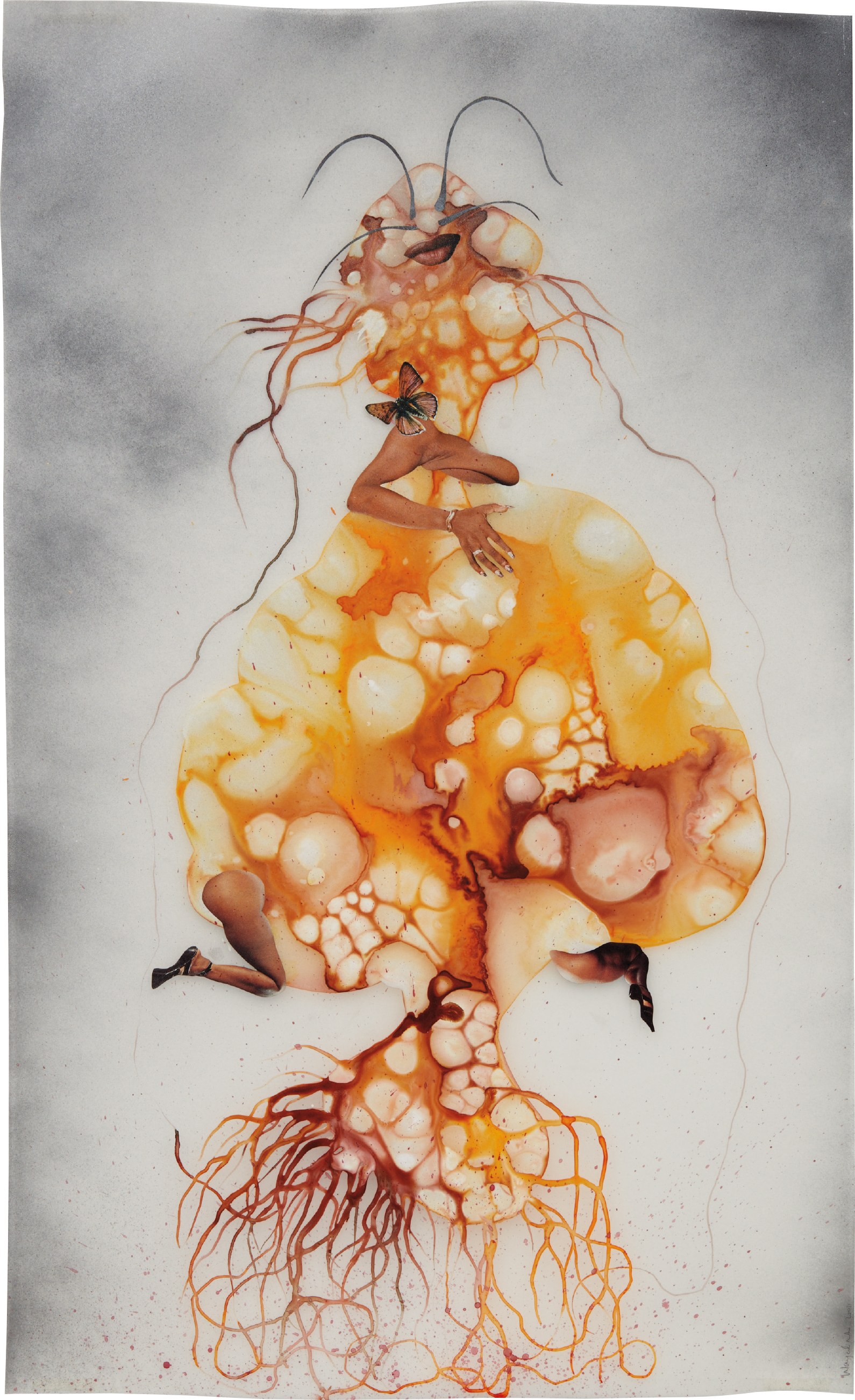
Works such as "Mellow Yellow" from 2004 exemplify this period beautifully: ink, paint, and paper collage combined on Mylar to produce figures that are simultaneously seductive and unsettling, feminine and feral, human and something altogether beyond classification. She drew source material from fashion magazines, medical textbooks, wildlife photography, and African visual traditions, layering these references to create composite beings that spoke directly to the fragmentation experienced by women, and particularly Black women, under the pressures of colonialism, media representation, and bodily scrutiny. The Mylar works announced a singular imagination at work. Over the course of the following decade, Mutu expanded her practice in every direction.
Wangechi Mutu
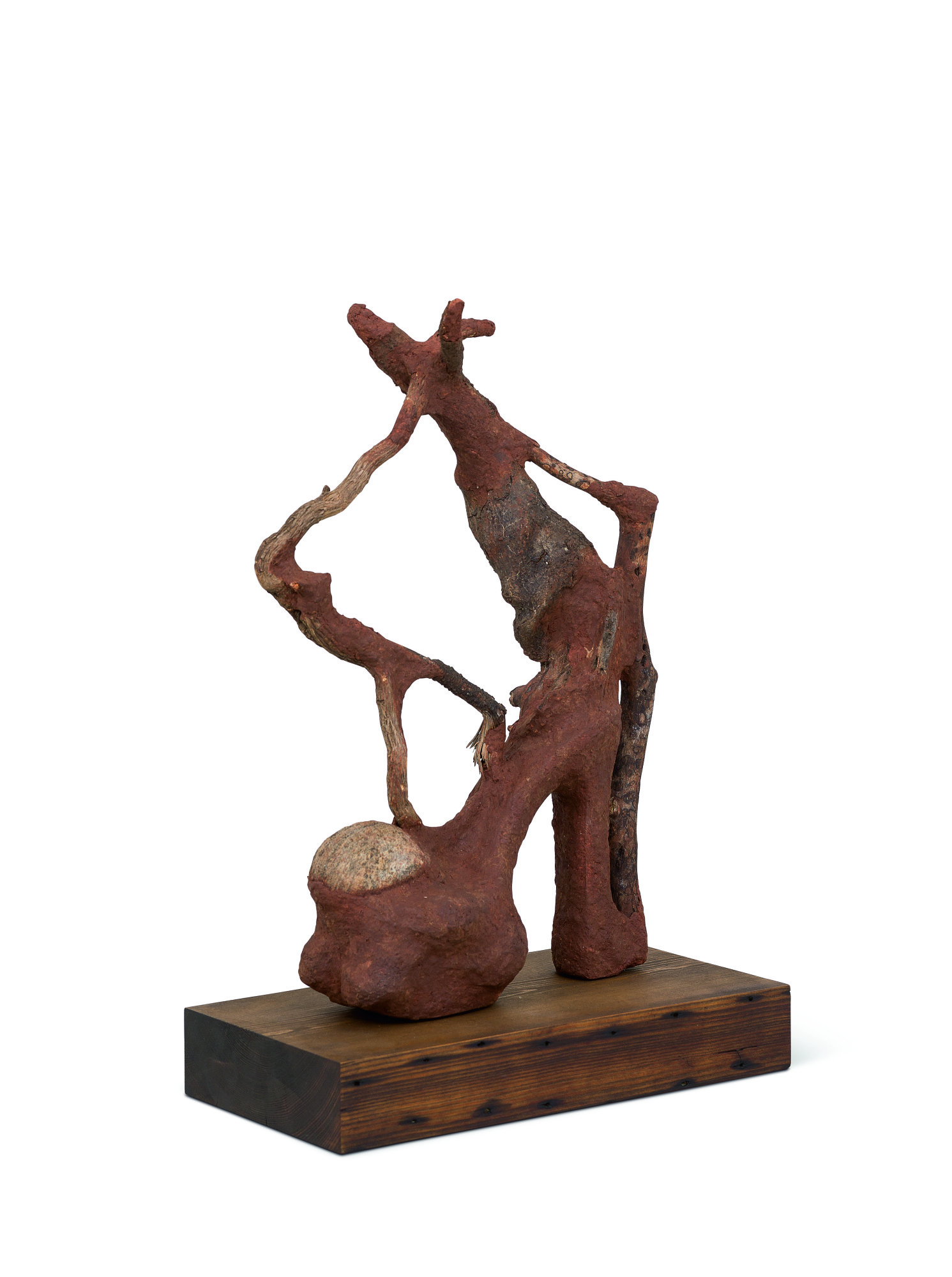
Heeler Xvi, 2016
Her collages grew in ambition and scale. Works like "The Dreamer," rendered in acrylic, gouache, watercolor, glitter, and collage on paper, demonstrate her extraordinary facility for combining disparate materials into compositions of startling coherence and emotional depth. The glitter that recurs across her work is never merely decorative; it catches light in ways that destabilize the image, making the viewer complicit in the seduction even as the imagery resists easy consumption. "Histology of the Different Classes of Uterine Tumors," a suite of twelve digital prints with mixed media collage, draws directly on the language of scientific illustration, reclaiming a body of imagery historically used to objectify and pathologize women's bodies and redirecting it toward something far more complex and humanizing.
“Kenya made me. New York sharpened me. But I belong to the world I make in my work.”
Wangechi Mutu
Her printmaking practice, including ambitious editions such as "The Original Nine Daughters," a complete set of nine etchings incorporating screenprint, collage, letterpress, carborundum crystals, and hand coloring, reveals an artist deeply committed to the collaborative and democratic possibilities of the multiple. By the 2010s, Mutu had moved decisively into sculpture, and the results were extraordinary. Works from the "Heeler" series, including "Heeler XVI" from 2016, composed of red soil, acrylic shoes, paper pulp, wood glue, rocks, and wood, draw on the elemental materials of the earth in ways that feel genuinely ritualistic. The use of red soil in particular carries enormous resonance, evoking the specific landscape of Kenya, the blood of history, and the generative power of the land itself.
Wangechi Mutu
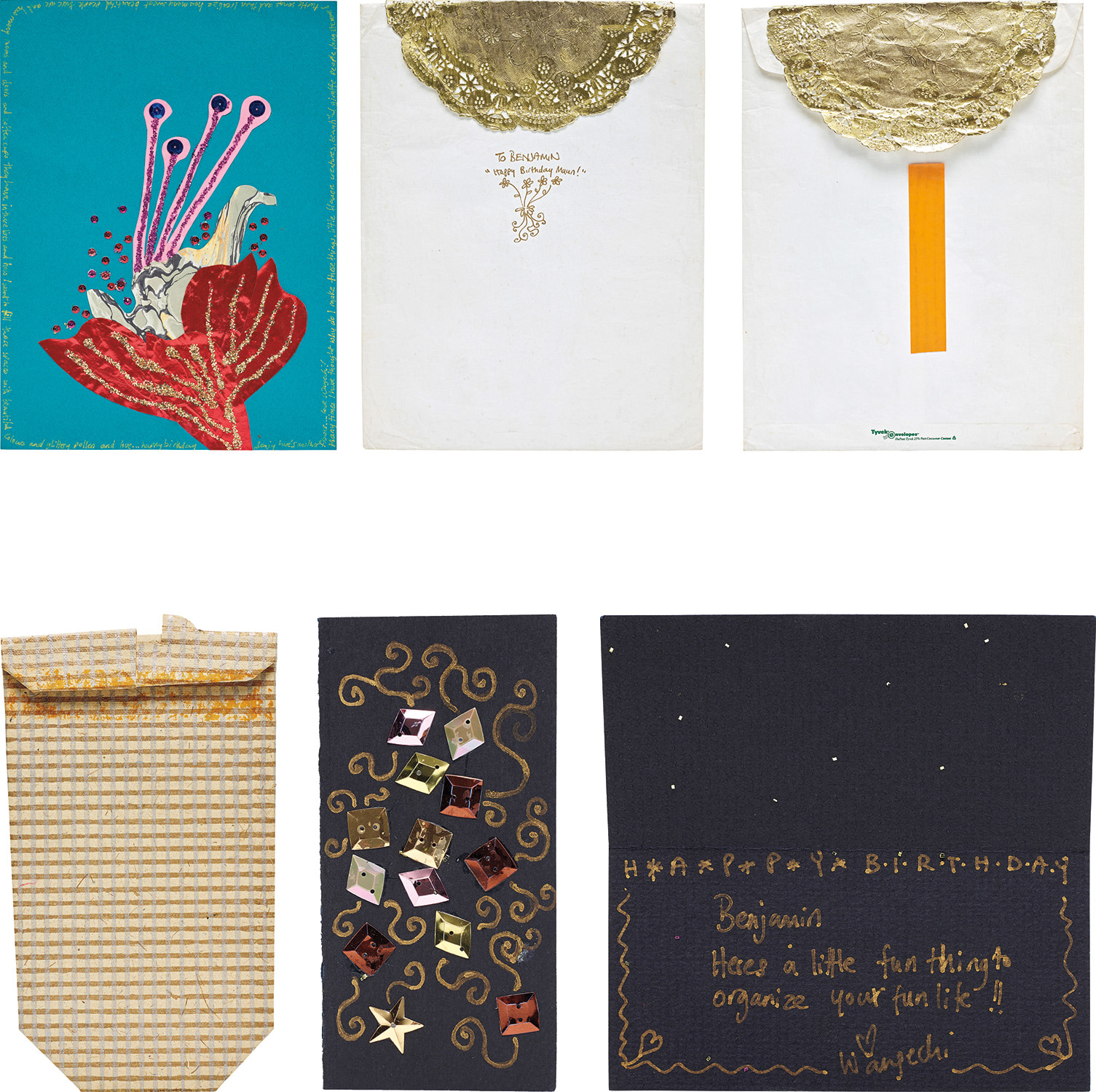
Two Works: (i), 2001
These sculptures feel like they have been conjured rather than constructed, artifacts of a mythological world that Mutu has been building across her entire career. Her institutional recognition during this period was considerable, with major exhibitions at venues including the Brooklyn Museum, the Nasher Museum of Art at Duke University, and the Tate Modern in London. For collectors, Mutu's work offers something genuinely rare: a practice of remarkable consistency and depth that has only grown more assured and ambitious over more than two decades. Her works on paper and Mylar from the early 2000s represent an important and now historically significant period in contemporary art, while her prints and editions offer meaningful points of entry at a range of price levels.
Works such as "Eve" and "Homeward Bound," available as archival pigment prints, allow collectors to engage with her imagery in forms that carry the full weight of her visual intelligence. "Double Hand Shake" from 2012, an acrylic, glitter, and printed paper collage on linoleum, exemplifies the formal daring and material inventiveness that make her works so immediately recognizable and so enduringly compelling. At auction, her works have performed strongly at houses including Christie's and Sotheby's, reflecting sustained institutional and private demand. In art historical terms, Mutu occupies a position of genuine importance within a constellation of artists who have expanded what figuration, collage, and sculpture can mean and do.
Wangechi Mutu
Mellow Yellow, 2004
Her work is in productive dialogue with artists such as Kara Walker, whose own practice interrogates the silhouetted and fragmented body in relation to race and history; with Ellen Gallagher, whose layered works on paper similarly mine the archive of popular and medical imagery for material; and with the sculptural practices of artists like El Anatsui, who has transformed everyday and found materials into works of monumental power. Mutu belongs fully to this company, and her influence on a younger generation of artists working across Africa and the diaspora has been considerable and growing. What makes Wangechi Mutu matter so profoundly right now is the completeness of her vision. She has built, work by work over more than twenty years, a cosmology populated by figures who refuse easy categorization, who carry within them the contradictions of history, gender, ecology, and identity, and who emerge from those contradictions not diminished but luminous.
Her return to Nairobi, her ongoing sculptural ambition, and her expanding institutional presence all suggest an artist entering the most fertile and powerful phase of a practice already filled with landmark achievements. To collect her work is to participate in one of the most significant artistic visions of our time.
Explore books about Wangechi Mutu
Wangechi Mutu: A Fantastic Journey
Okwui Enwezor
Wangechi Mutu: Histoires de Fantômes
Catherine David
Wangechi Mutu: Specimen
Lisa Immordino Vreeland
Wangechi Mutu: Ink Blot
Yasmil Raymond
Wangechi Mutu: My EveryNight Feels Ancient
Helen Molesworth