Walker Evans
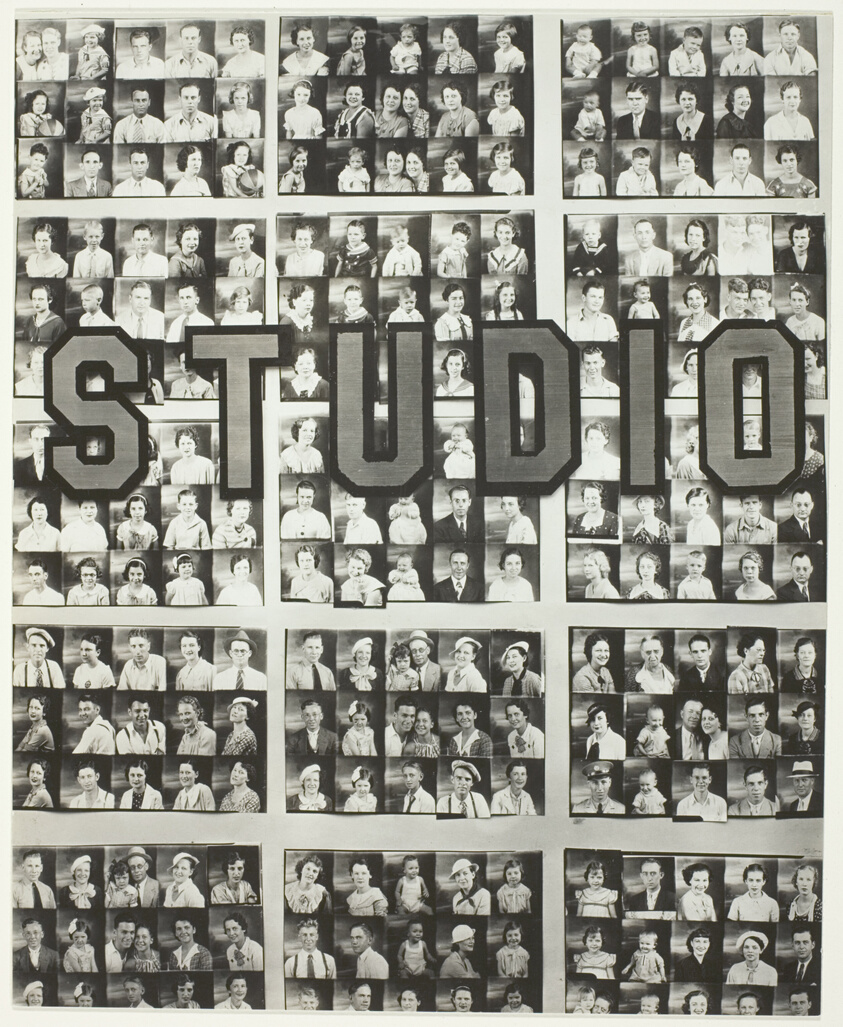
Walker Evans: America Seen With Open Eyes
Artist Spotlight · The Collection Editorial
“I want to make an image that is so convincing that it will absolutely blow the mind of anyone who sees it.”
Walker Evans, Yale lecture, 1970s
There is a photograph that stops you cold. A woman sits before a weathered wooden wall, her eyes meeting the camera with a directness so complete, so unguarded, that seven decades later it still feels like a conversation. Allie Mae Burroughs, captured by Walker Evans in Hale County, Alabama in 1936, is not a symbol of suffering. She is a person, fully present, fully dignified, and it is that insistence on full humanity that separates Evans from every other photographer of his era.
Walker Evans
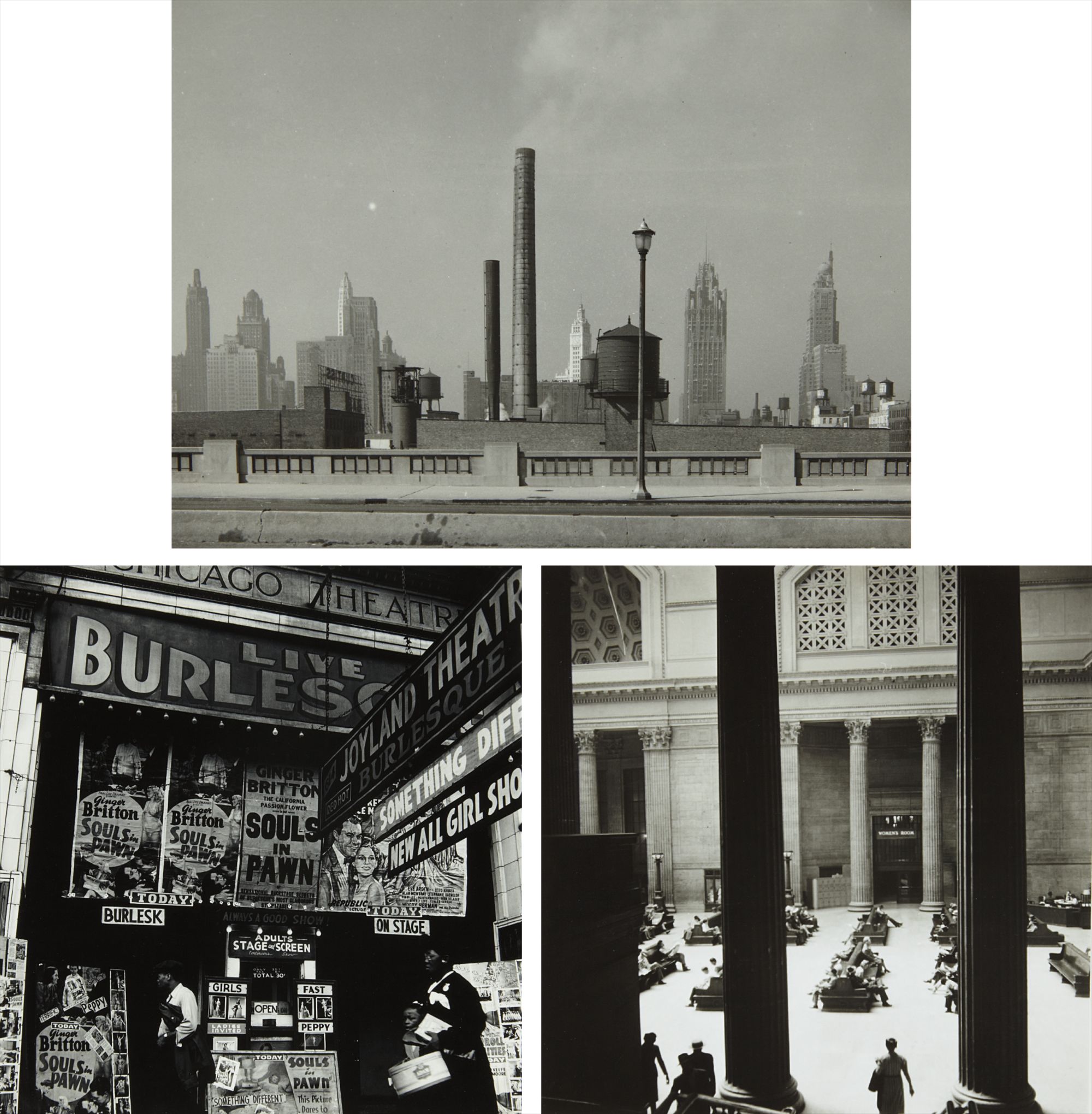
Selected Images of Chicago
The Museum of Modern Art, which gave Evans his landmark solo exhibition in 1938, understood this early. The art world has been catching up ever since. Walker Evans was born in St. Louis, Missouri in 1903 and raised in a comfortable, suburban household that gave him little indication of the raw American vernacular he would spend his life celebrating.
He studied literature at Williams College and later spent time in Paris in the late 1920s, absorbing the literary modernism of Flaubert and the visual culture of a continent in ferment. It was books, not photography, that first shaped his sensibility, and that literary precision, the belief that the right detail at the right moment could carry enormous freight, never left him. When he returned to New York and took up the camera seriously around 1928, he brought with him the eye of an editor and the instincts of a poet. His artistic development unfolded in distinct and remarkable phases.
Walker Evans
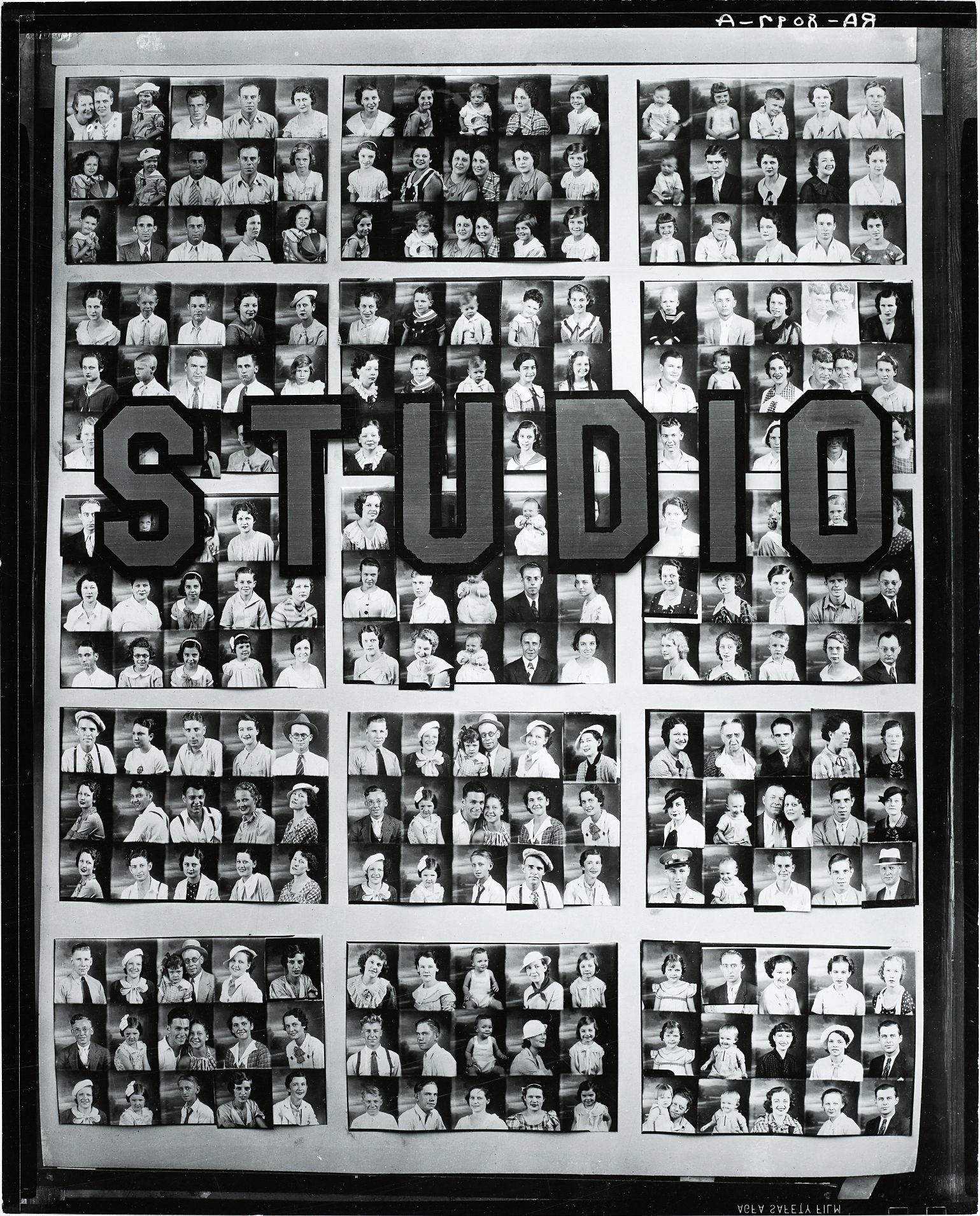
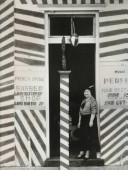
Penny Picture Display, Savannah, Georgia
In the early 1930s, Evans made a series of photographs in Cuba that demonstrated his already formidable compositional intelligence, and his work came to the attention of Lincoln Kirstein, the influential arts patron and founder of the New York City Ballet, who championed him at a crucial early moment. Then came the assignment that would define his reputation for generations. Between 1935 and 1937, Evans worked for the Farm Security Administration under Roy Stryker, traveling the rural American South to document the lives of tenant farmers and sharecroppers during the Great Depression. What he produced during those years was not journalism in any conventional sense.
“The art of seeing has to be learned.”
Walker Evans
It was art of the most demanding and enduring kind. The collaboration with writer James Agee that grew from a 1936 Fortune magazine assignment produced Let Us Now Praise Famous Men, published in 1941, one of the most consequential books in the history of American nonfiction. Evans insisted that his photographs appear without captions at the front of the volume, refusing to subordinate the images to the text. That decision was itself a statement about the autonomy and authority of the photographic image, a position that resonated through the rest of the century and shaped how photographers and critics thought about documentary work.
Walker Evans
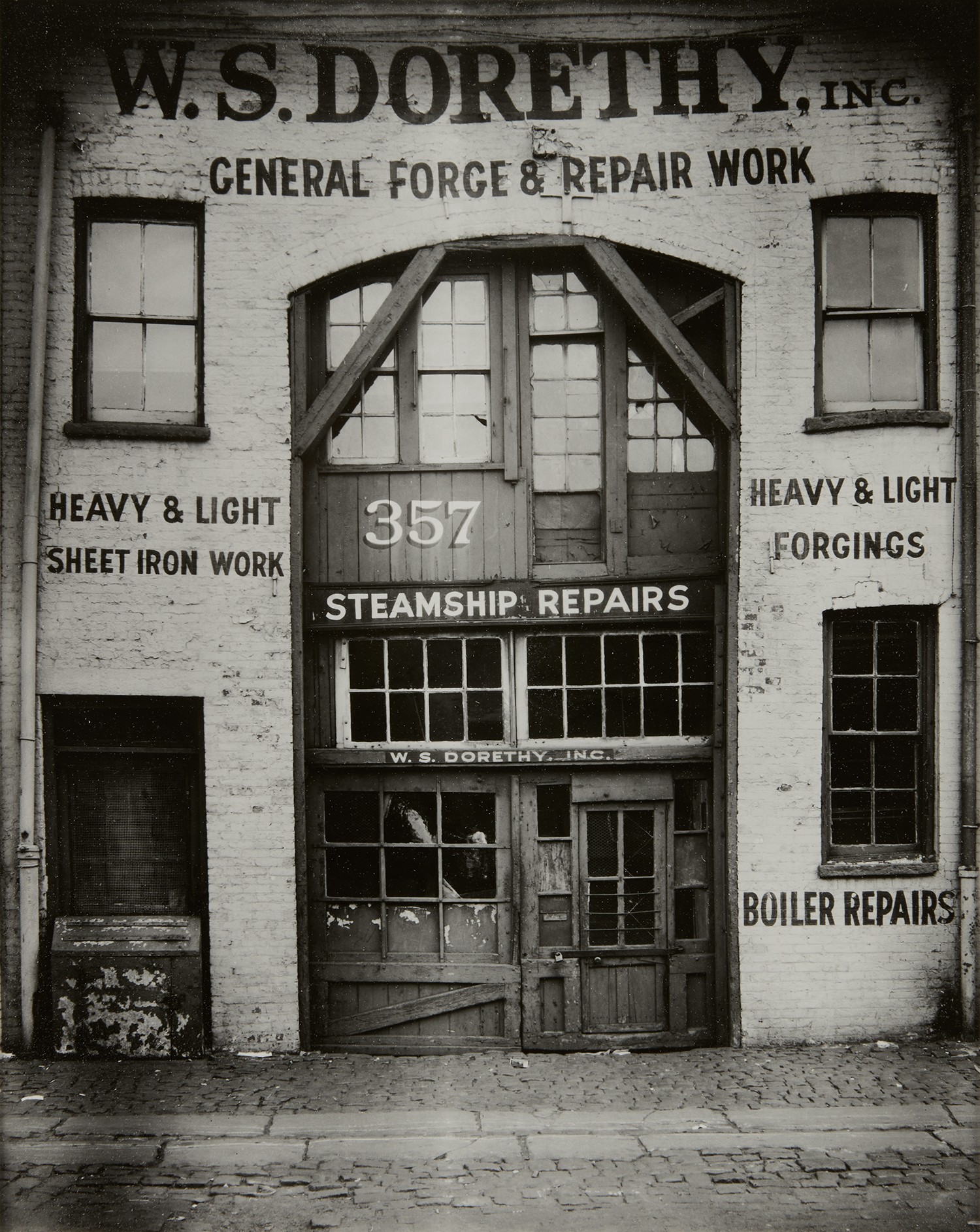
West Street, New York
The families Evans photographed in Alabama, the Burroughses and the Fieldses among them, were rendered not as victims but as individuals with full interior lives, their homes and possessions and faces treated with the same formal care Evans brought to anything he turned his lens toward. What makes Evans extraordinary, and what makes his work so endlessly rewarding for collectors, is the range and consistency of his formal intelligence. His photographs of vernacular architecture, country stores, roadside gas stations, penny picture displays, and commercial signage in towns like Bethlehem, Pennsylvania and Savannah, Georgia anticipated the pop art sensibility by two decades and directly influenced artists from Robert Frank to Ed Ruscha. Evans saw that the storefronts and hand lettered signs of ordinary American life were as visually rich and culturally charged as any academic subject, and he photographed them with the same cool, frontal clarity he brought to portraiture.
West Street, New York and Country Store and Gas Station, Alabama are not simply documents. They are meditations on American space, American commerce, and American aspiration. On the market, Evans occupies a position of enduring strength. Gelatin silver prints from the FSA period, particularly those with documented provenance connecting them to the artist or major institutional collections, command serious attention at auction.
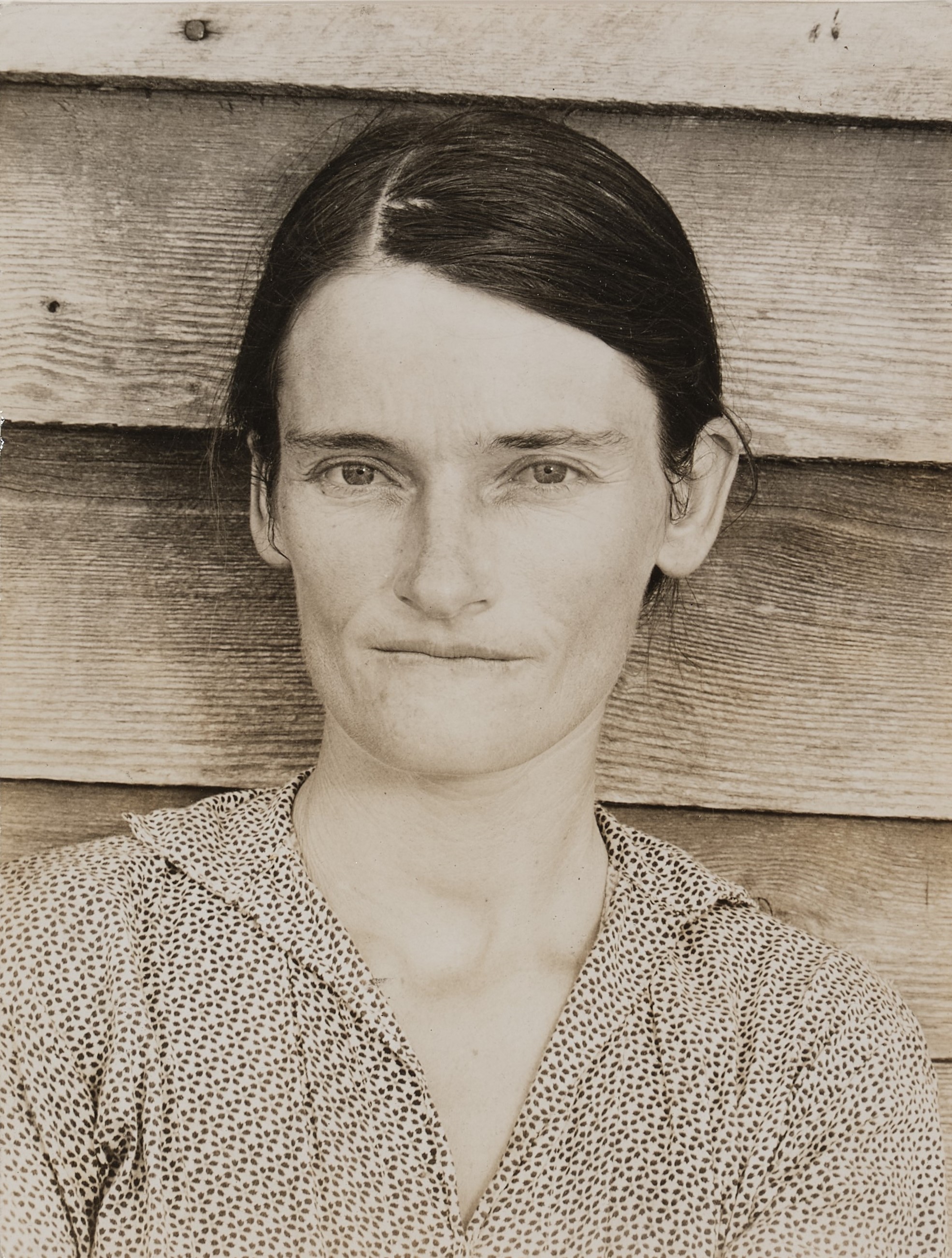
Walker Evans
Allie Mae Burroughs, Wife of Cotton Sharecropper, Hale County, Alabama
Works printed later under Evans's supervision, many of which appeared in the 1960s as interest in his archive grew, offer collectors a more accessible point of entry while maintaining a direct connection to his vision. The Lunn Gallery in Washington, D.C. played a significant role in the 1970s in establishing Evans as a collectible fine art photographer, and that institutional groundwork helped create the robust secondary market collectors benefit from today.
Prints with handwritten inscriptions, such as the remarkable Untitled Mississippi Hitchhiker gifted to his student Jerry Thompson in 1973, carry additional weight as objects with personal history embedded in them. To understand Evans fully, it helps to see him in constellation with the artists he influenced and those who shaped him. The directness of Eugene Atget, the French photographer whose images of old Paris Evans deeply admired, is everywhere in Evans's frontal compositions and his feeling for the poetics of everyday urban space. Robert Frank, whose 1958 book The Americans is unthinkable without Evans's precedent, pushed the documentary form in a more expressionistic direction and acknowledged Evans as his essential forebear.
Diane Arbus, Berenice Abbott, and later photographers associated with the New Topographics movement of the 1970s all worked in the long shadow Evans cast. His influence on painters and conceptual artists, from Andy Warhol's appropriation of vernacular imagery to the deadpan visual strategies of the Pictures Generation, is equally profound. Evans spent his final decade teaching at Yale, where he passed his exacting sensibility to a new generation of image makers, and he continued to work with a late burst of energy using the SX 70 Polaroid camera in the years before his death in 1975. That willingness to embrace a new and commercially humble tool at the end of a celebrated career said everything about what Evans valued.
It was never about the prestige of the medium. It was always about looking, with patience and precision and genuine love, at the world in front of him. For collectors drawn to work that rewards sustained attention, that carries genuine art historical weight, and that speaks to something fundamental about American identity and human dignity, Walker Evans remains one of the great and necessary artists of the twentieth century.
Explore books about Walker Evans
Walker Evans: American Photographs
Walker Evans
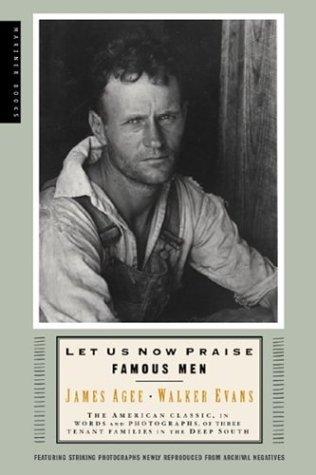
Let Us Now Praise Famous Men
James Agee and Walker Evans
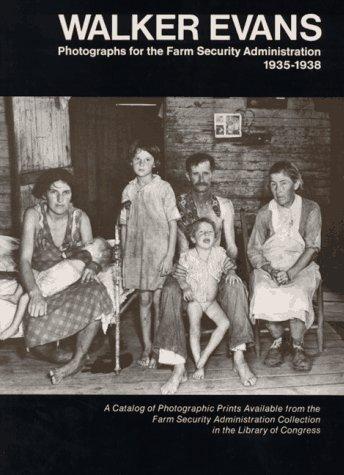
Walker Evans: Photographs for the Farm Security Administration, 1935-1938
Walker Evans
Walker Evans at Fortune
Gerry Souter
Walker Evans
Judith Keller
Walker Evans: A Life
Andrey Parmegyei
The Hungry Eye: A Photographic Journey Through America
Walter Evans
Walker Evans: The Hungry Eye
Mia Fineman