Victor Pasmore
Victor Pasmore: The Art of Pure Possibility
Artist Spotlight · The Collection Editorial
“Abstract art today is the equivalent of what landscape painting was in the nineteenth century.”
Victor Pasmore, interview with Norbert Lynton
There are pivotal moments in British art history that announce themselves quietly, without fanfare, and yet reshape everything that follows. One such moment arrived in the late 1940s when Victor Pasmore, already a celebrated figurative painter whose luminous Thames side scenes had earned him widespread admiration, walked away from representation altogether. He turned toward abstraction not as a retreat but as a discovery, following the logic of his own curiosity with the kind of intellectual courage that defines the very greatest artists. Decades on, his work continues to command serious attention at auction, with his prints and paintings appearing regularly at Christie's, Sotheby's, and Bonhams, while museum collections from the Tate to the Arts Council of Great Britain hold his work as a cornerstone of twentieth century British modernism.
Victor Pasmore
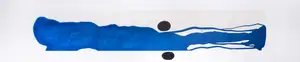
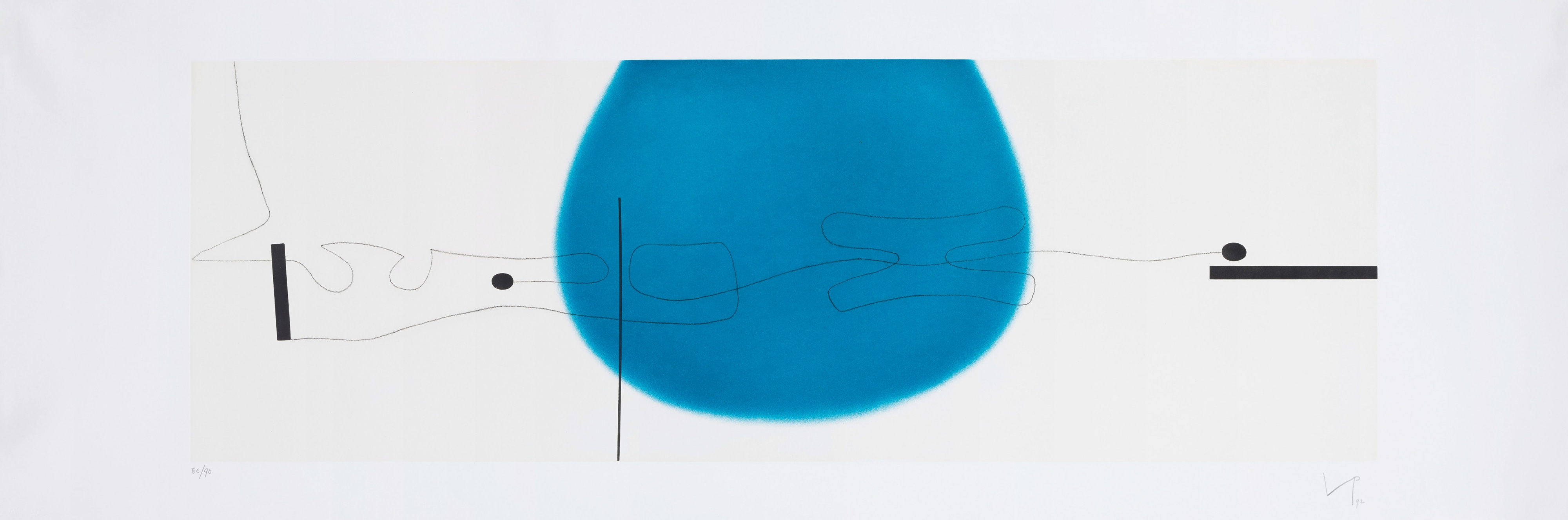
The Blue Between (Bowness & Lambertini 74)
Victor Pasmore was born in Chelsham, Surrey, in 1908, and his early life offered few obvious signposts toward a life in art. His father died when Pasmore was a teenager, and financial necessity meant that art school was not an immediate option. He took a clerical position with the London County Council, painting in his spare hours and attending evening classes at the Central School of Arts and Crafts. These years of self directed study, pursued alongside the demands of ordinary working life, gave his practice a seriousness and discipline that a more conventional training might not have instilled.
He joined the London Artists Association in the early 1930s and began exhibiting to growing critical notice, his sensibility sharpening with each encounter with the great modernists whose work was beginning to arrive in London from the Continent. His early paintings reveal a profound attunement to the quieter registers of the visible world. The Thames paintings of the late 1930s and early 1940s are among the most tender and atmospheric works produced by any British painter of the period, their misty tonal harmonies recalling Whistler while remaining entirely Pasmore's own. Works from this period show a painter of exceptional sensitivity, alive to the way light dissolves solid form, to the poetry latent in ordinary urban and riverside scenes.
Victor Pasmore
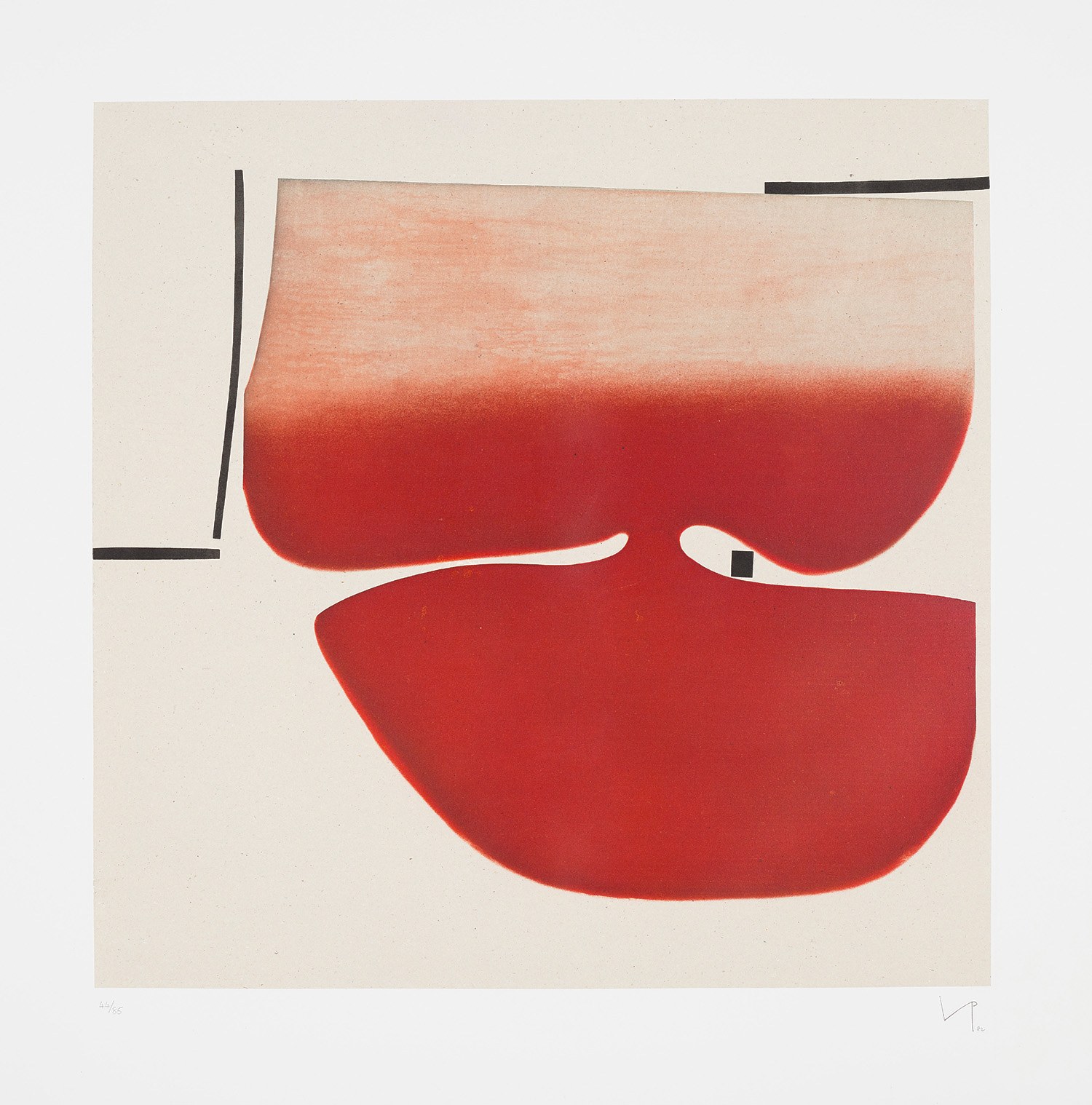
World in Space in Time I
Yet even as these canvases were winning him admirers, Pasmore was restless. He had co founded the Euston Road School in 1937 alongside William Coldstream and Claude Rogers, a collective committed to a sober, observational approach to painting. But the very precision of that commitment eventually revealed its limits to him, and he began to sense that painting could do something more. The transformation, when it came, was radical.
By the early 1950s Pasmore had abandoned figuration entirely, embracing a pure abstraction rooted in the constructivist tradition. He encountered the ideas of Paul Klee and Piet Mondrian with the excitement of someone who has finally found a language equal to his thoughts. His constructions in relief, three dimensional works that occupied the territory between painting, sculpture, and architecture, brought him into conversation with a European avant garde tradition while remaining distinctly his own proposition. He began teaching at King's College, Newcastle, in 1954, where alongside Richard Hamilton he helped shape what became known as the Basic Design movement, a pedagogical revolution that transformed how art and design were taught across Britain.
Victor Pasmore
Victor Pasmore
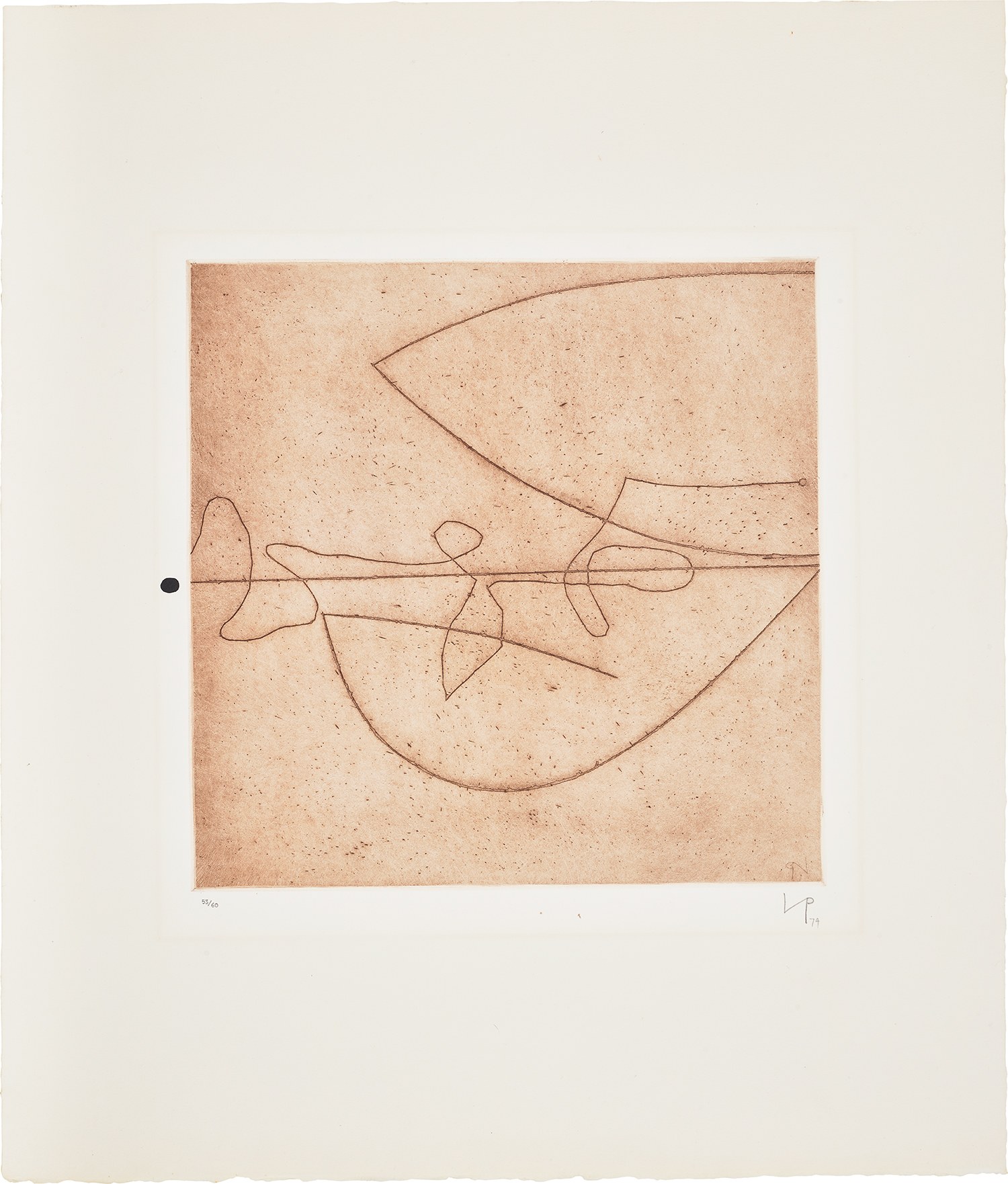
The influence of that teaching reverberated through a generation of British artists and designers. The prints for which Pasmore is so widely collected today represent one of the richest chapters of his career, spanning decades and demonstrating a restless formal intelligence that never settled into formula. Works such as Linear Motif in Two Movements, his celebrated etching with screenprint, show his mastery of layered mark and colour, the image seeming to breathe and shift as the eye moves across it. The Blue Between, an etching with aquatint printed in sweeping panoramic dimensions, co published by Marlborough Fine Art in London and 2RC Edizioni d'arte in Rome, is a work of breathtaking ambition, its horizontal expanse creating a meditative field of colour and line that rewards sustained looking.
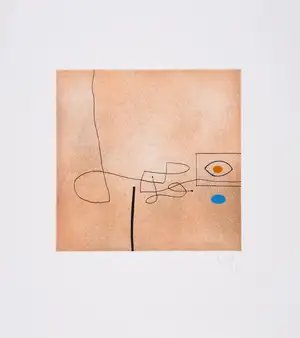
His Images on the Wall series, produced in the early 1990s with the master printer Jack Shirreff in Bath and published by Marlborough Graphics, demonstrates that even in his ninth decade Pasmore retained the capacity for genuine formal invention. These are not the works of an artist coasting on reputation but of a mind still actively in conversation with the possibilities of the medium. His architectural work deserves equal recognition. The Apollo Pavilion, completed in 1969 in Peterlee, County Durham, stands as one of the most ambitious fusions of art and social housing in postwar Britain.
Victor Pasmore
Images on the Wall G, Edition B (Lynton G72g)
Designed as a work of public art integrated into the fabric of a new town, it embodies Pasmore's conviction that abstract art belonged not in galleries alone but in the shared spaces of everyday life. The pavilion has had its controversies and its champions, but it endures as a statement of genuine belief in art's capacity to enrich ordinary experience, and in recent years it has undergone restoration and been granted listed status, recognition of its singular importance to the national built environment. For collectors, Pasmore offers an exceptional range of entry points. His prints, produced in close collaboration with distinguished printers and publishers including Marlborough Fine Art and 2RC in Rome, are works of genuine ambition rather than mere multiples, each one bearing the evidence of his direct involvement through initialling and numbering.
The edition sizes are generally modest, and printer's proofs from series such as Images on the Wall and the Senza Titolo etchings of the late 1980s carry particular significance. His oil paintings on board, such as Composition, Blue Image from 1971, represent the most direct encounter with his purely abstract language and appear at auction with enough regularity to allow careful collectors to find exceptional examples at reasonable prices relative to his art historical importance. Those who collect him often find that his work deepens over time, revealing new structural logic and chromatic nuance with each passing season. Pasmore belongs to a constellation of British and European modernists whose ambitions were shaped by the constructivist and concrete art traditions: alongside Ben Nicholson, whose own geometric abstractions share something of Pasmore's rigour and restraint, and in dialogue with figures such as Kenneth Martin and Mary Martin, who also pursued the possibilities of constructed form in postwar Britain.
Internationally, his sensibility places him in conversation with Josef Albers and Max Bill, artists for whom the geometry of colour was a subject of inexhaustible investigation. He is, in the deepest sense, an artist of ideas, one for whom formal decisions are never merely aesthetic but carry genuine philosophical weight. Victor Pasmore died in Gudja, Malta, in 1998, having spent much of his later life on the island he had made his home. His legacy is one of exceptional breadth: a painter, printmaker, sculptor, architect, and teacher whose influence runs through British art and design like a quietly insistent current.
In an era when the boundaries between disciplines feel newly permeable, his lifelong refusal to be confined by any single medium looks less like restlessness than like prescience. To collect his work is to participate in one of the twentieth century's most searching conversations about what abstract art can mean and what it can do.
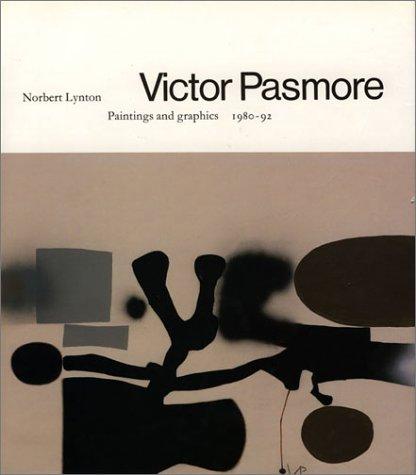
Explore books about Victor Pasmore