Ugo Rondinone
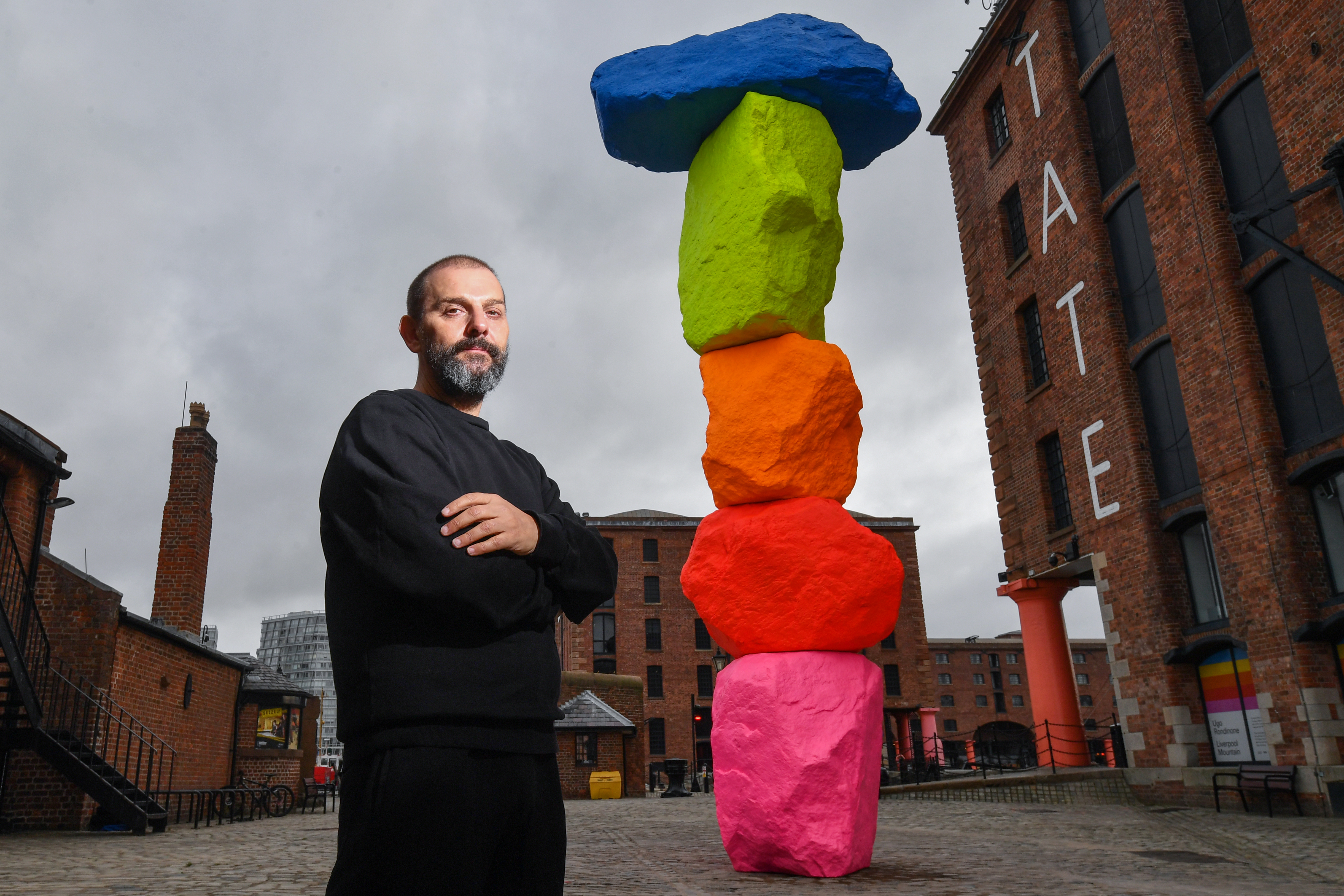
Ugo Rondinone: Where Wonder Meets the World
Artist Spotlight · The Collection Editorial
“I want my work to be a place where you can be alone with yourself and feel less alone in the world.”
Ugo Rondinone, interview with Artforum
In the summer of 2016, seven towering stacked stone figures rose from the cracked earth of the Nevada desert near Las Vegas, their ancient presence both impossible and inevitable against the vast blue sky. That installation, "seven magic mountains," became one of the most visited public artworks in recent American history, drawing over four million visitors in its first five years alone. Produced in collaboration with the Nevada Museum of Art, the neon painted boulders glowed like totems from another civilization, yet felt entirely of this moment. That a Swiss artist working in New York could conjure something so rooted in landscape and yet so alive with contemporary feeling tells you almost everything you need to know about Ugo Rondinone.
Ugo Rondinone
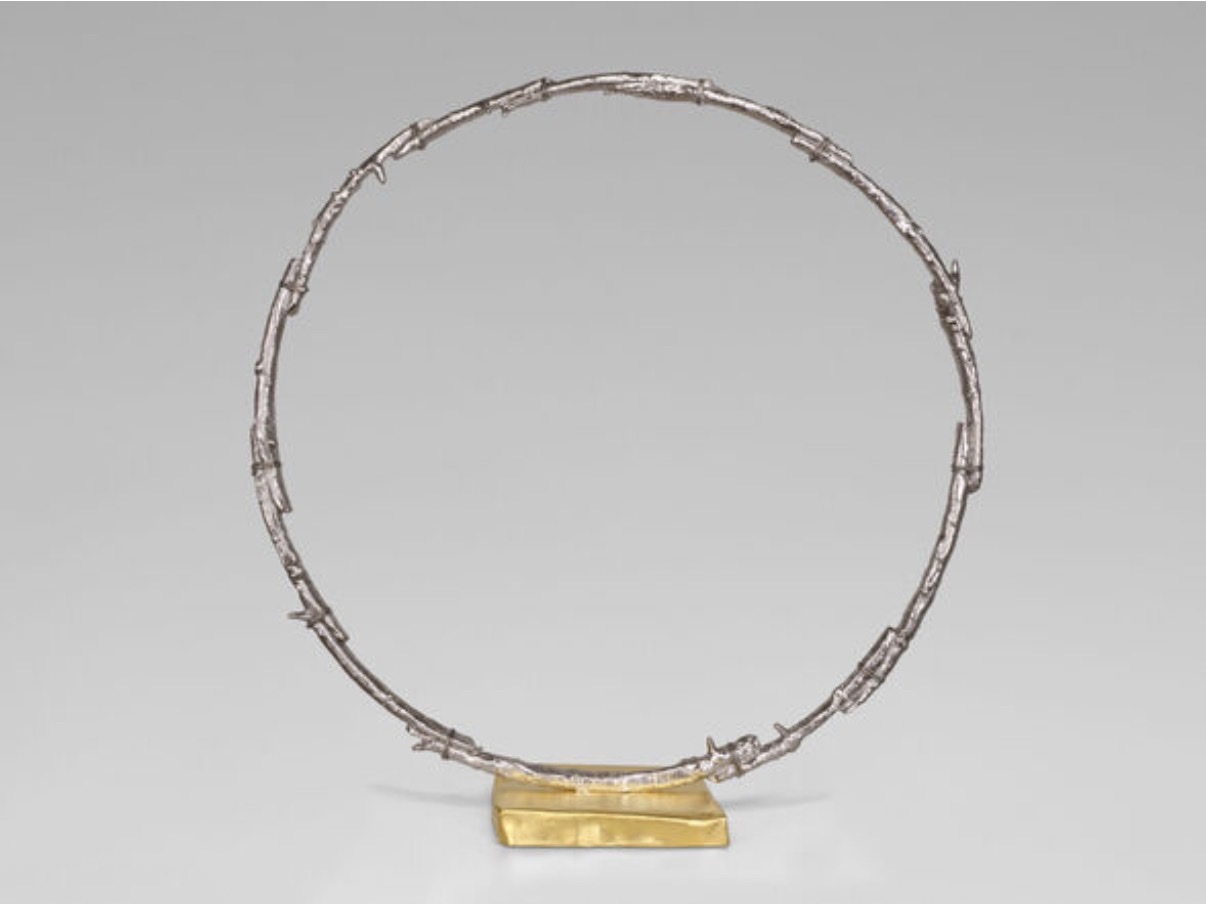
Moon sculpture, 2023
Rondinone was born in Brunnen, Switzerland, a small lakeside town whose Alpine drama and seasonal extremes left a lasting imprint on his imagination. He studied at the Universität für angewandte Kunst in Vienna, where he encountered the full weight of European art history while developing his own restless, deeply intuitive sensibility. Vienna in the late 1980s and early 1990s was a city still negotiating its relationship to expressionism, psychoanalysis, and the body, and those currents ran through his early formation. By the late 1990s he had relocated to New York, joining a generation of artists including Maurizio Cattelan and Rirkrit Tiravanija who were redefining what contemporary art could feel and mean.
What emerged from those years of cross continental formation was a practice of remarkable breadth. Rondinone moves with equal fluency across sculpture, painting, video, photography, and monumental public installation, yet his work never feels scattered. A consistent emotional logic binds it together: the search for stillness within movement, for presence within emptiness, for the human within the elemental. His early exhibitions in the late 1990s introduced large scale paintings of bare winter trees, printed directly onto gallery walls, which spoke a language of longing and seasonal grief that resonated immediately with collectors and curators alike.
Ugo Rondinone
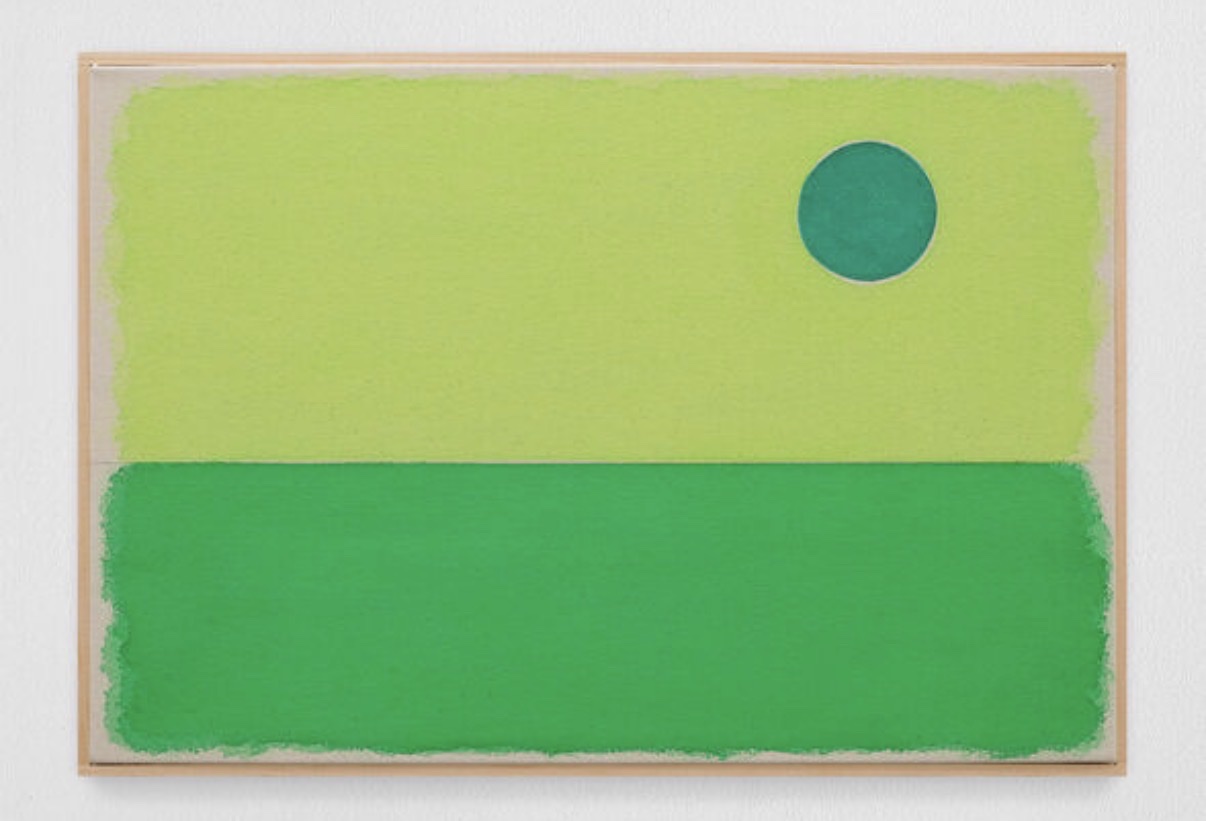
einundzwanzigstermaizweitausenddreiundzwanzig, 2023
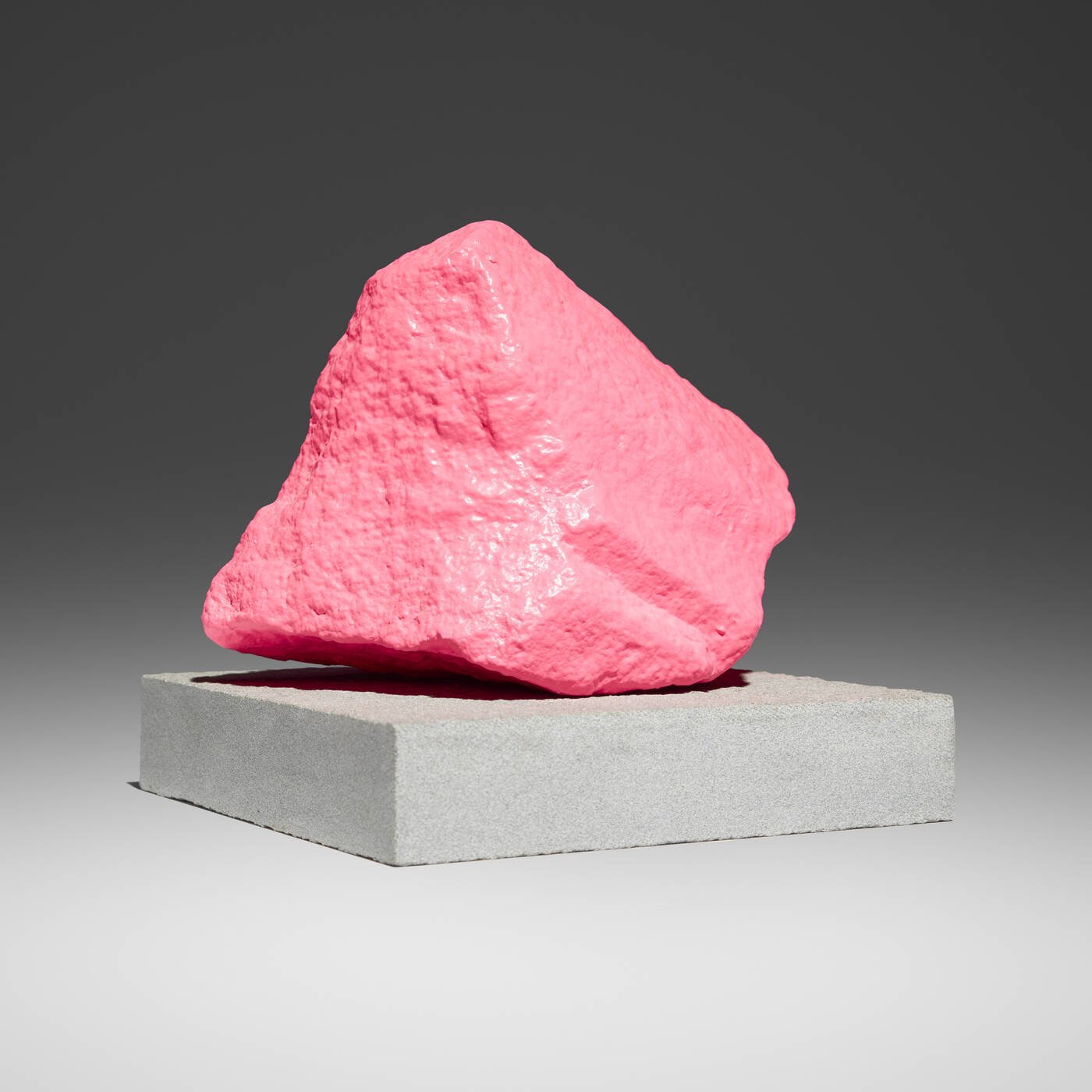
The Whitney Museum of American Art recognized his importance early, and European institutions from the Kunsthalle Zürich to the Centre Pompidou have given his work sustained critical attention. The mountain sculptures occupy a special place within his output and represent one of the most recognizable bodies of work in contemporary art. Stacked from naturally tumbled stones and painted in vivid flat colors, works such as "Purple Black Yellow Blue Mountain" from 2015 and "Small Pink Mountain" from 2016 carry a charged duality. They are simultaneously ancient and contemporary, playful and solemn, referencing land art forebears like Robert Smithson and Richard Long while arriving somewhere entirely Rondinone's own.
The stones themselves bear the memory of geological time, but the bold color fields applied to their surfaces pull them into the present, into something almost festive. Collectors who live with these works consistently describe an experience of daily renewal, as though the object holds its meaning loosely and offers it fresh each morning. His ongoing series of watercolors on canvas, often titled with precise dates rendered in lowercase German such as "einundzwanzigstermaizweitausenddreiundzwanzig" from 2023, represent another dimension of this sensibility entirely. These atmospheric, cloud suffused works feel like the interior weather of a day captured and held.
Ugo Rondinone
Small Pink Mountain, 2016
The artist's bespoke frames, often fashioned from rough hewn wood, extend the work beyond the canvas and into something closer to a relic or a portal. They reward sustained attention in a way that speaks to collectors with a meditative streak, those who understand that the best art changes slightly each time you return to it. The "Moon sculpture" and "Sun sculpture" bronzes from 2023, with their palladium and gold leaf finishes respectively, extend his cosmological thinking into a material register at once luxurious and elemental. The wax and earth pigment figure "nude (xxxxxxxxxxxx)" from 2011 demonstrates yet another register of Rondinone's practice.
These silent, slumped human forms, rendered in raw organic materials, carry an ancient quality that invokes everything from pre Columbian funerary objects to Arte Povera. They stand close to the work of artists like Kiki Smith in their bodily directness, yet carry a lonelier emotional charge. The figures seem to have arrived from somewhere outside of ordinary time, and in doing so they ask the viewer to consider what it means to simply be present in a body, on a planet, in a moment that will pass. From a collecting perspective, Rondinone occupies an enviable position within the contemporary market.
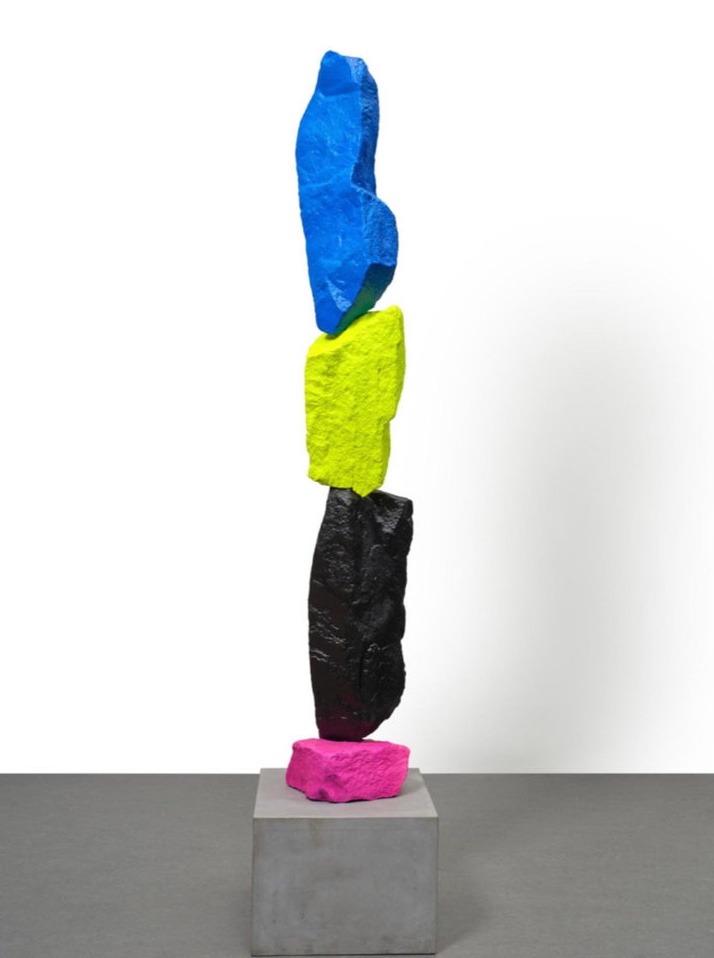
Ugo Rondinone
Purple Black Yellow Blue Mountain, 2015
His work is held in major institutional collections including the Museum of Modern Art in New York, the Tate Modern in London, and the Musée d'Art Moderne de la Ville de Paris, which provides the kind of institutional endorsement that sustains long term value. His mountain sculptures in particular have achieved consistent results at major auction houses, with works regularly exceeding estimate at Sotheby's and Christie's. Entry points exist across multiple mediums and scales, from intimate watercolors to significant sculptural works, making his practice accessible to collectors at different stages of their journey. For those building a collection with genuine depth, Rondinone offers rare coherence: each work illuminates the others, and a collection of his pieces accrues meaning the way a body of poems does.
Rondinone's legacy is already assured, though the most exciting chapters may still lie ahead. He belongs to a lineage of artists who understand that art's deepest task is emotional and even spiritual, that a sculpture or a painting can hold space for what ordinary language cannot. His affinities run through Joseph Beuys and Donald Judd, through Agnes Martin and Cy Twombly, through the earthworks of James Turrell and the quiet color fields of Mark Rothko, yet he synthesizes these influences into something unmistakably his own. In an art world that can sometimes mistake speed and spectacle for significance, Rondinone insists on slowness, on presence, on the radical act of paying attention.
That is not a modest ambition. It is, in fact, the whole of it.
Explore books about Ugo Rondinone
Ugo Rondinone
Carolyn Christov-Bakargiev
Ugo Rondinone: The Baldachin
Various contributors
Ugo Rondinone: Painting
Elisabeth Sussman
Ugo Rondinone: Neon Bible
Museum of Modern Art
Ugo Rondinone: Drawings
Anita Haldemann