Tony Smith
Tony Smith: The Architect Who Reimagined Space
Artist Spotlight · The Collection Editorial
“I was an architect for many years, and I still think that way. I think in terms of space.”
Tony Smith, interview
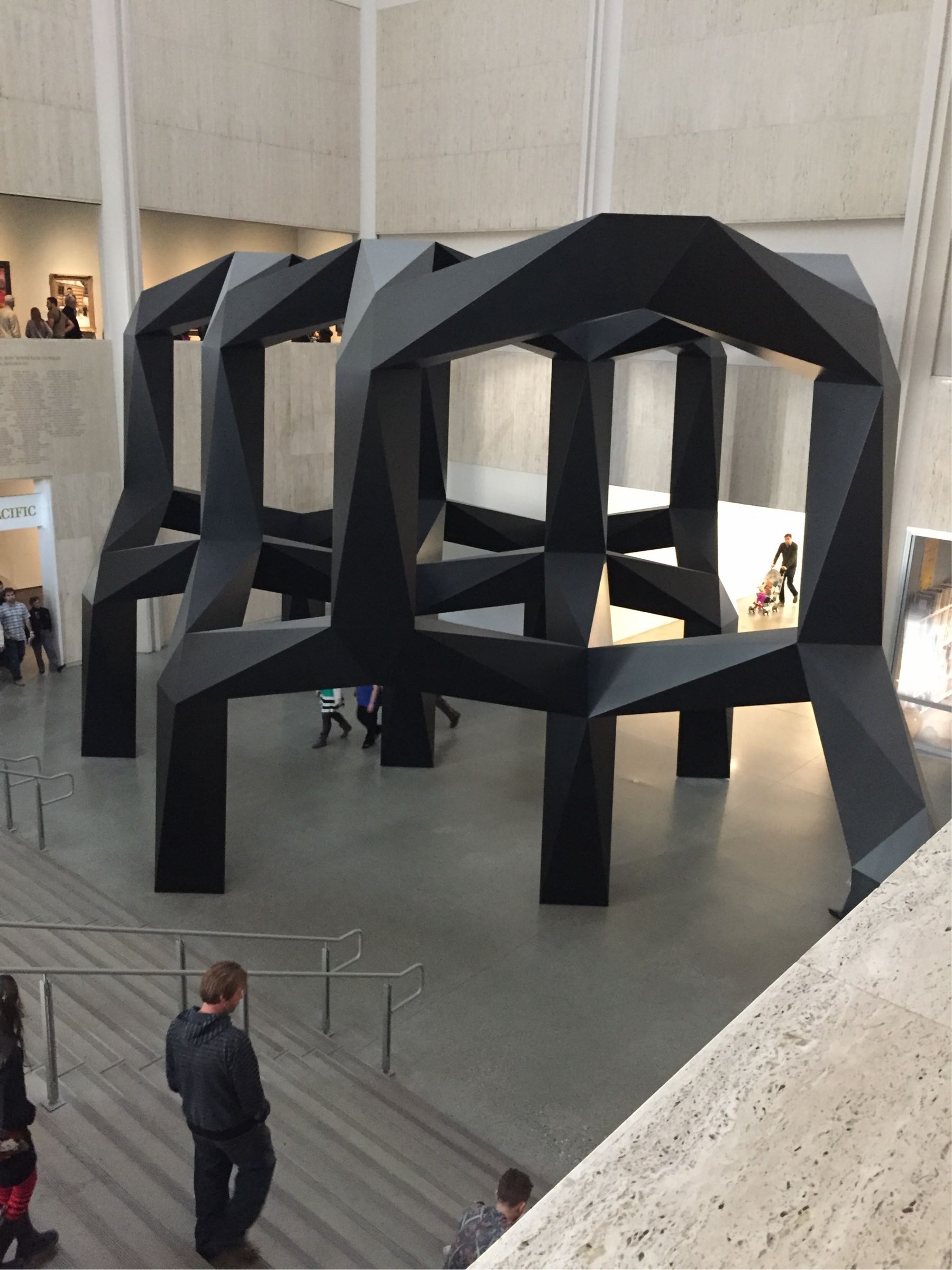
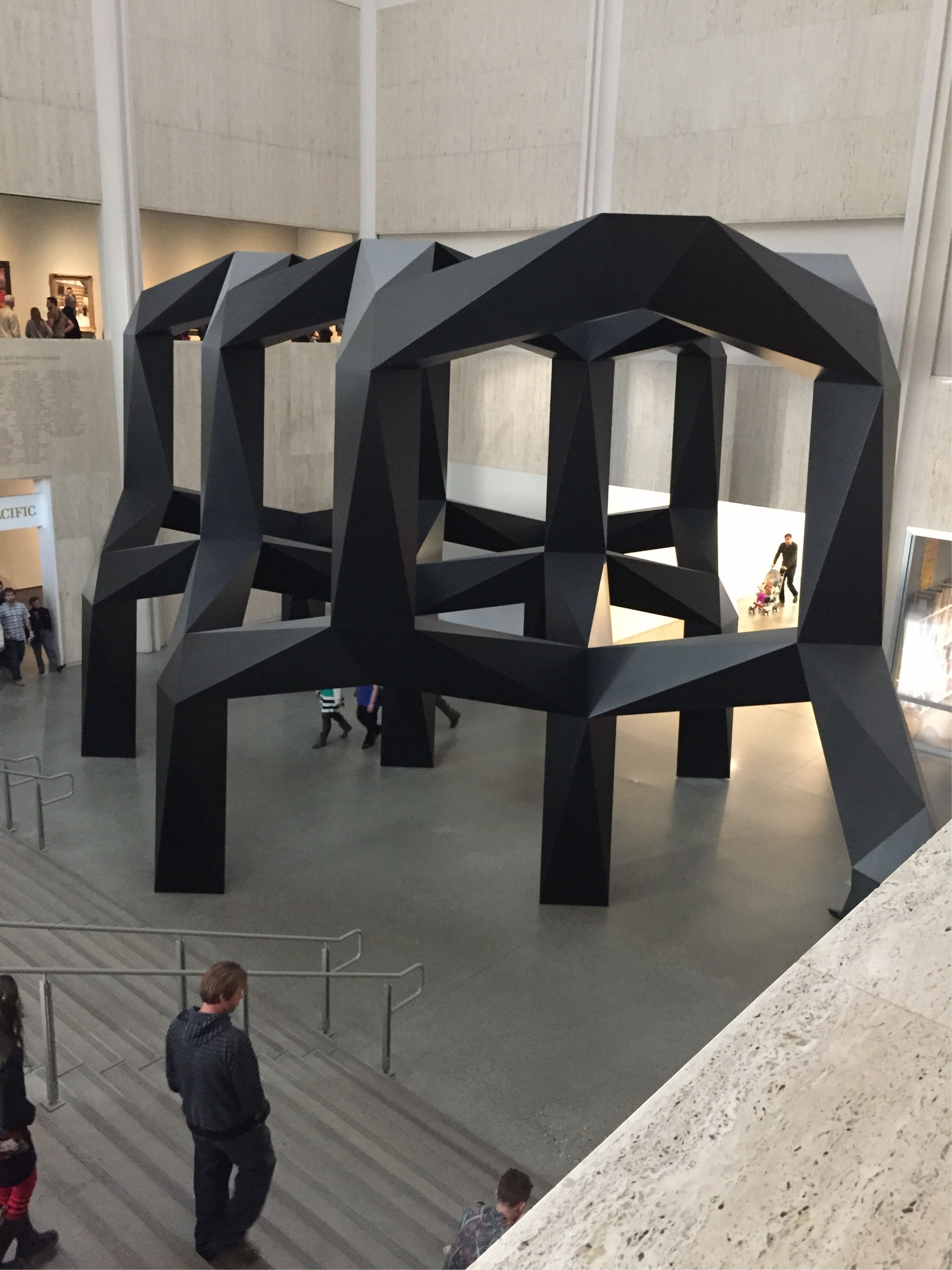
Stand in the presence of Smoke, Tony Smith's monumental painted steel sculpture, and something shifts. The work, first realized in 1967 and later installed permanently at the Los Angeles County Museum of Art, does not merely occupy space. It reorganizes it, folding the air around its tetrahedral forms into something alive and insistent. Decades after its creation, Smoke continues to draw crowds, prompt conversations, and appear in survey exhibitions of postwar American art with a frequency that confirms Smith's enduring centrality to the story of modern sculpture.
Tony Smith
Smoke, 1967
His work is not a relic of a particular moment. It is a living argument about what sculpture can be and do. Tony Smith was born in 1912 in South Orange, New Jersey, into a world still shaped by the industrial ambitions of the late nineteenth century. That context was not lost on him.
He grew up with an acute sensitivity to built form, to the way structures mediate between human beings and the vast indifference of the physical world. His early studies at the Art Students League in New York introduced him to the rigors of formal training, but it was his subsequent apprenticeship with Frank Lloyd Wright that fundamentally rewired his understanding of space, geometry, and the relationship between interior and exterior. Working alongside one of the twentieth century's most commanding architectural minds, Smith absorbed a way of thinking about form that was organic and systemic at once, attentive to module and proportion in a manner that would echo throughout his entire career. For much of his early adult life, Smith worked primarily as an architect and a painter, and his sculptures were slow to arrive.
Tony Smith
Mistake
This late blooming is one of the most fascinating aspects of his biography. He did not begin making the large scale geometric steel works for which he is now celebrated until the early 1960s, when he was already in his fifties. That timing placed him at the center of one of the most electrically charged periods in American art history, the moment when a generation of artists was interrogating the emotional expressionism of Abstract Expressionism and reaching for something cooler, more structural, more philosophically rigorous. Smith was neither a young insurgent nor a reluctant convert.
“The experience on the road was something mapped out but not socially recognized. I thought to myself, it ought to be clear that this is a work of art.”
Tony Smith, on his New Jersey Turnpike drive, as cited in Samuel Wagstaff interview, 1966
He arrived at Minimalism through his own accumulated logic, bringing with him the weight of an architectural sensibility that gave his work a particular authority. The sculptures Smith began producing in the 1960s were geometric and uncompromising, built from modular units that derived from the tetrahedron and the octahedron, forms he had studied in relation to crystalline and molecular structures. His famous night drive on the unfinished New Jersey Turnpike in the early 1950s, often cited as a formative experience, had given him a visceral sense of how vast, unmediated space could produce an aesthetic experience of stunning power without any traditional artistic framing. That insight ran through everything he made.
Tony Smith
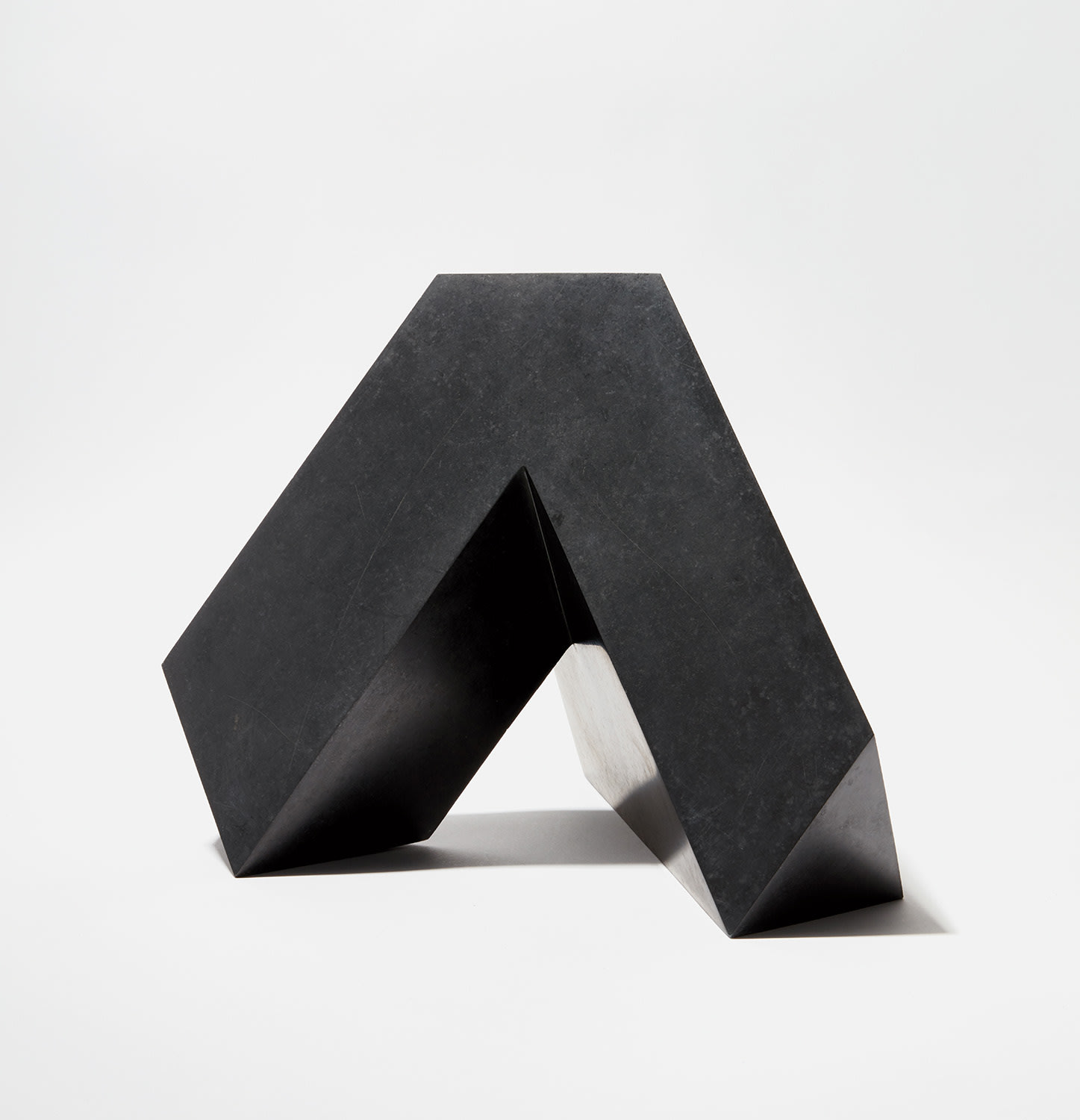
Spitball, 1970
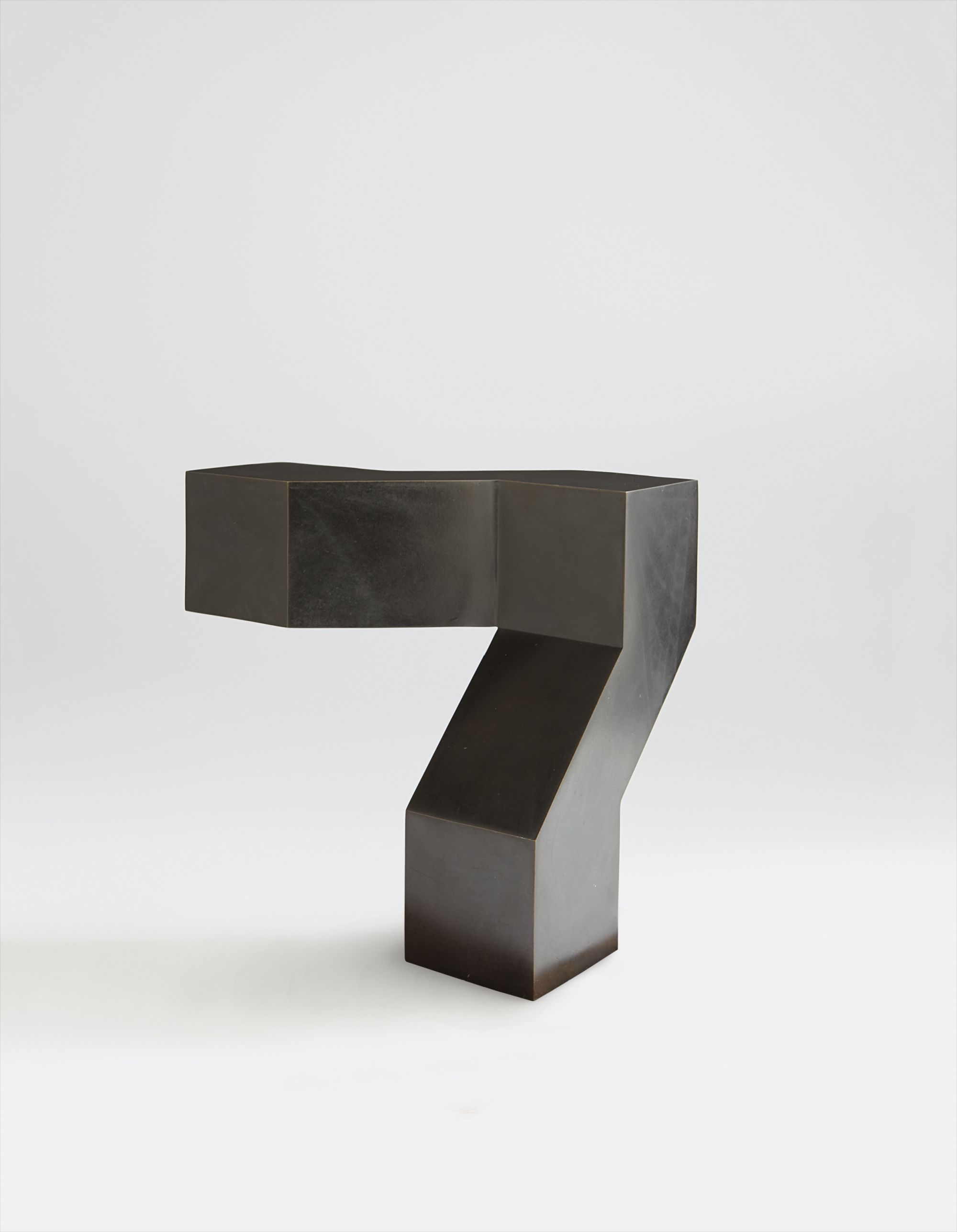
Works such as Die, a six foot steel cube completed in 1962, confronted the viewer with an almost confrontational simplicity. The dimensions were not arbitrary. Smith reportedly chose them because they matched the scale of a person standing with arms outstretched, making Die a work about human measure as much as about geometric form. New Piece from 1966, rendered in bronze with a black patina, exemplifies his ability to make a modular system feel both inevitable and surprising, the angles shifting the work's silhouette as the viewer moves around it.
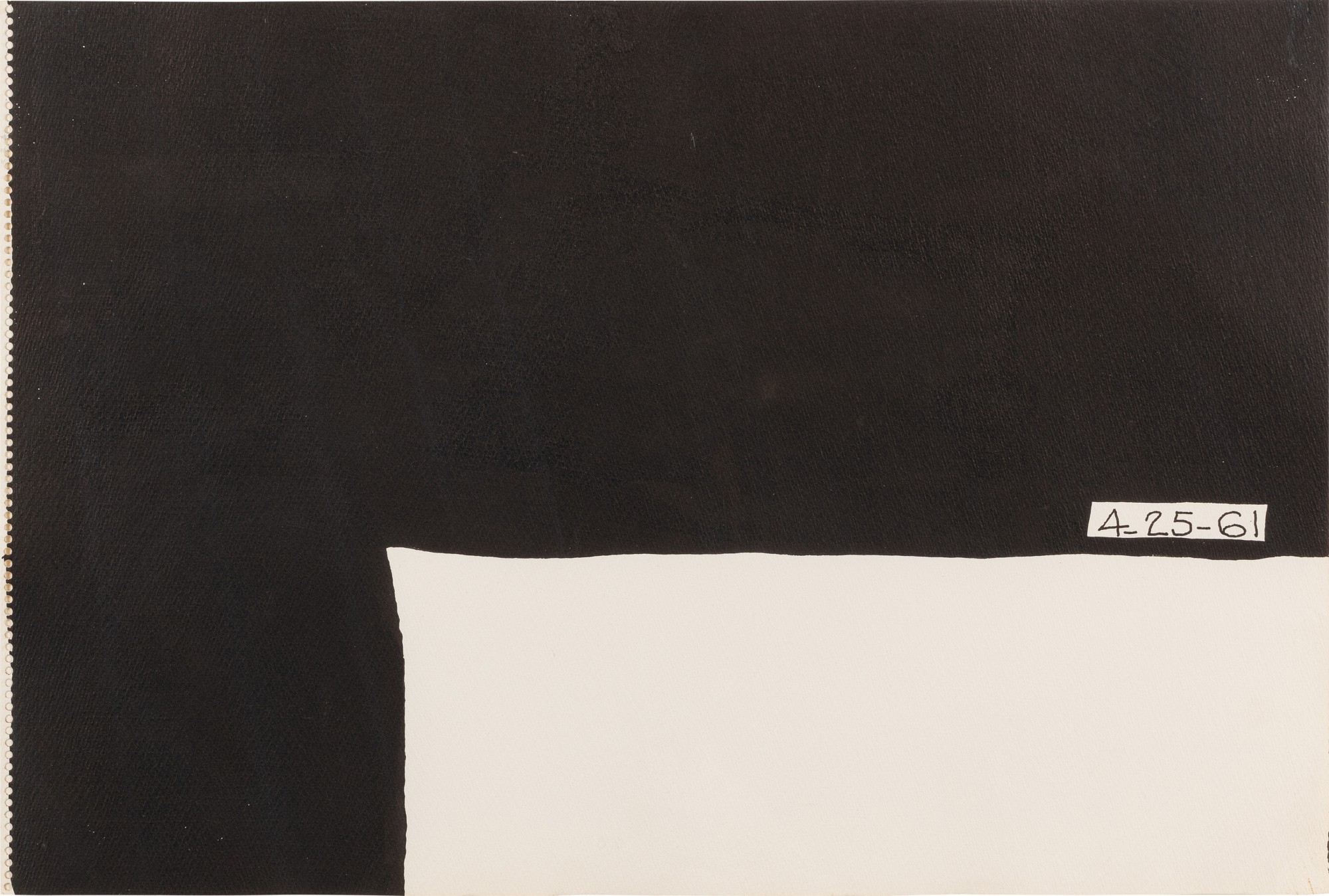
Spitball, realized in 1970, extended Smith's vocabulary into something more playful and biomorphic. While still rooted in his geometric logic, the work has a looseness that speaks to his range. His works on paper, including the 1961 ink drawings available through The Collection, reveal the thinking behind the sculpture, a mind that worked through spatial problems with a draftsman's precision and an artist's instinct. Light Box from 1961, cast in bronze with a black patina, demonstrates how Smith was able to compress his architectural understanding into intimate, collectible scale without losing any of the conceptual force that animates his monumental pieces.
Tony Smith
Untitled, 1961
These smaller works offer collectors a rare and direct point of entry into one of the great sculptural minds of the twentieth century. For collectors, Tony Smith represents a compelling convergence of art historical importance and market distinction. His place in the canon is secure. Major institutions including the Museum of Modern Art in New York, the National Gallery of Art in Washington, and the Tate Modern in London hold his work in their permanent collections.
Smith is frequently positioned alongside Carl Andre, Donald Judd, and Robert Morris as a defining figure of Minimalism, though his background in architecture and his embrace of organic geometries gave him a profile quite distinct from the more austere formalism of some of his peers. Collectors who are drawn to Richard Serra's command of space, or to the structural poetry of Isamu Noguchi, often find Smith to be an essential and deeply satisfying presence in their collections. His bronzes and steel works have appeared at major auction houses and have demonstrated consistent appeal among both institutional and private buyers who prize intellectual depth alongside visual impact. The legacy of Tony Smith is, at its core, a legacy of generosity toward the viewer.
His works do not close themselves off behind difficulty or irony. They invite the body into a conversation about scale, about form, about the strange dignity of geometric abstraction in a world of contingency and noise. He died in 1980, but the sculptures he left behind continue to metabolize attention and reward it. His daughter Kiki Smith has gone on to become a celebrated artist in her own right, and his other daughters Seton and Beatrice have worked to steward his estate with care, ensuring that his work is understood in its full complexity.
To encounter Tony Smith now, whether in a museum forecourt or through the works available on The Collection, is to understand why the Minimalist moment was not a cold withdrawal from feeling but rather a bold reimagining of where feeling in art could live.
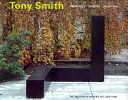
Explore books about Tony Smith