Tomás Saraceno
Tomás Saraceno Builds a Better Sky
Artist Spotlight · The Collection Editorial
“We need to reimagine how we cohabit with the atmosphere, with the planet, with each other.”
Tomás Saraceno, interview with Artforum
In the spring of 2023, visitors to the Serpentine Gallery in London encountered something that defied easy categorisation: a vast, shimmering network of spider silk and human breath, a living architecture that seemed to pulse with its own quiet intelligence. Tomás Saraceno had once again managed to make the air itself feel like a medium. It was a reminder that few artists working today operate with such consistent ambition across so many registers at once, touching ecology, philosophy, architecture, and the deepest questions of how we might live together on a warming planet. Saraceno was born in 1973 in San Miguel de Tucumán, Argentina, a city in the foothills of the Andes with a particular intensity of light and sky.
Tomás Saraceno
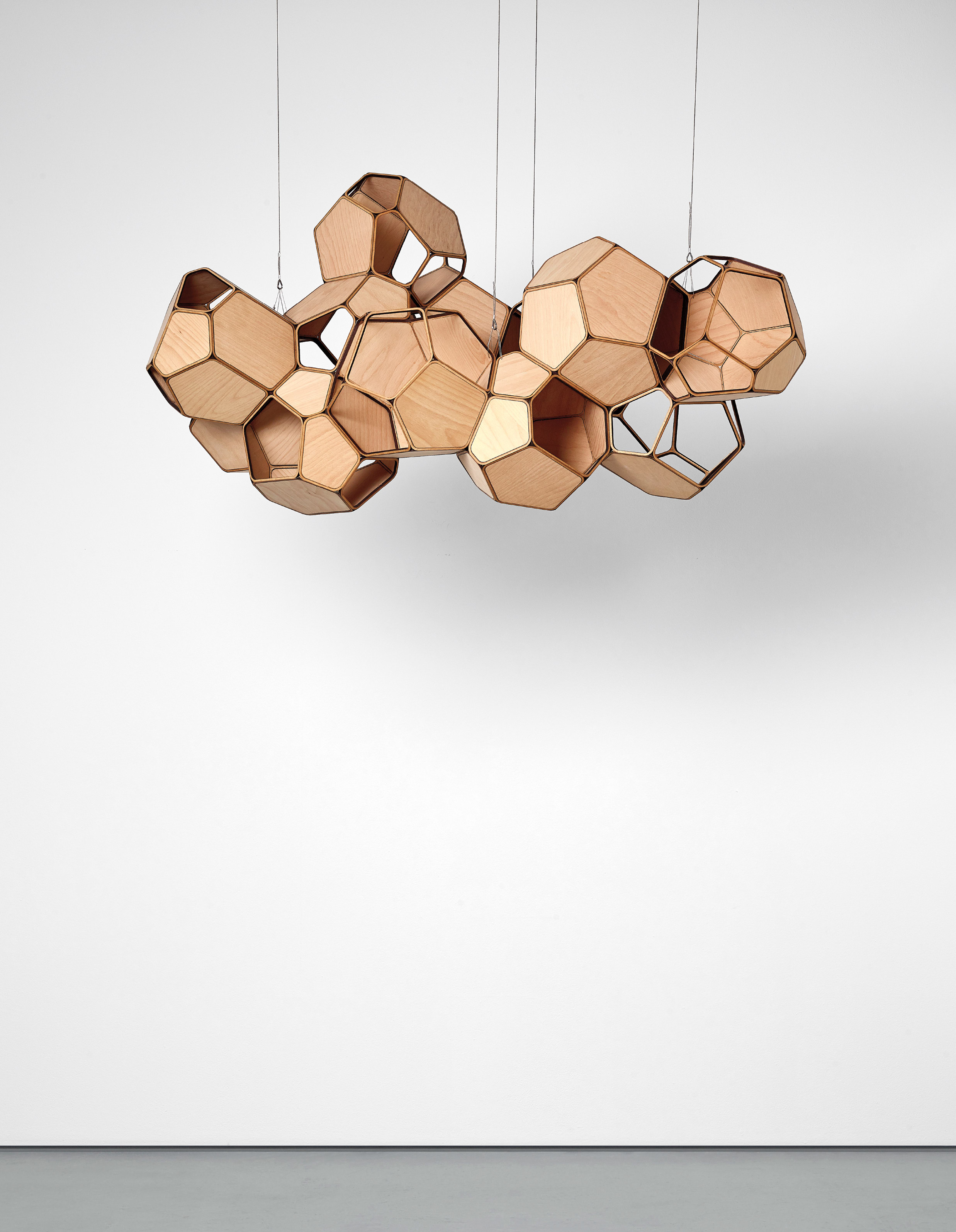
Air-Port-City/Cloud-City/12 Cloud Modules, 2011
He trained as an architect in Buenos Aires before relocating to Europe, eventually completing postgraduate studies at the Städelschule in Frankfurt, where he encountered the theoretical rigour and conceptual freedom that would define his mature practice. The move from architecture to art was less a break than an expansion: Saraceno never stopped thinking like someone who builds, but he began asking what kinds of buildings might serve not just human beings but entire ecosystems. His early years in Europe brought him into contact with the legacy of utopian modernism, the floating structures of Buckminster Fuller, the pneumatic architectures of the 1960s and 1970s avant garde, and the cloud fantasies of Yves Klein. But Saraceno absorbed these influences without being captured by them.
Where Fuller dreamed of efficiency and Klein of pure immateriality, Saraceno was drawn to interdependence, to the idea that the most sophisticated structures in the world are not human inventions but biological ones. The discovery that would change everything came from studying arachnids. Spider webs, he understood, are not just traps or shelters. They are instruments of perception, communication, and collective intelligence.
Tomás Saraceno
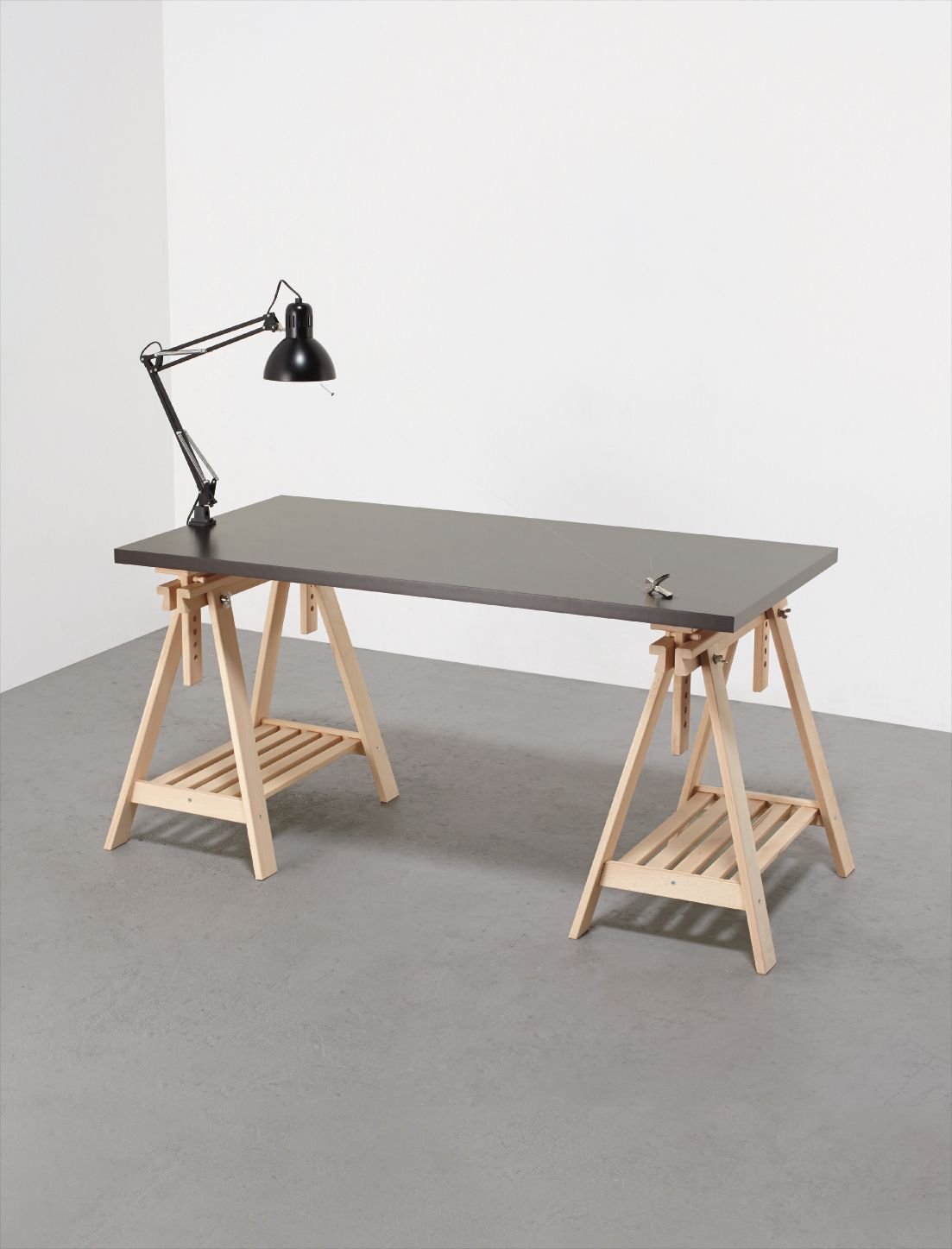
Ladies and Gentlemen we're floating in space
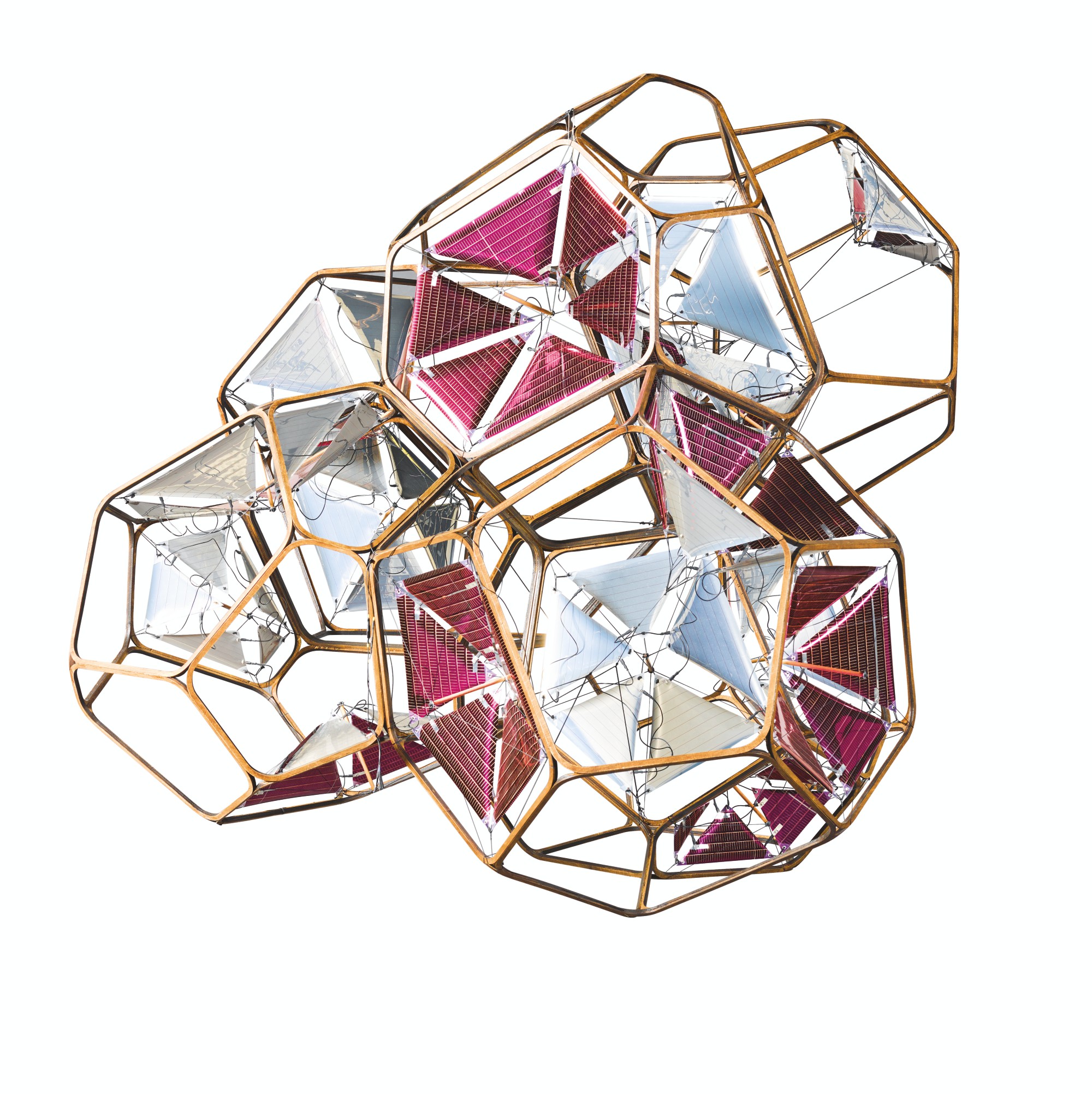
The breakthrough came with his ongoing Air Port City and Cloud City series, ambitious modular installations built from interconnected geometric forms that seem to hover somewhere between a molecule, a city, and a dream of flight. The 2011 work Air Port City and Cloud City and 12 Cloud Modules brought this vision to its most spectacular public realisation at that point, a constellation of transparent spheres and tensile structures that invited viewers to walk among and sometimes within the forms themselves. The work asked a genuinely radical question: what if architecture were not rooted in the ground but suspended in the sky, powered by sunlight, shaped by wind? By 2013, the Airport City and Cloud City and 6 Cloud Modules 60 Solar had refined this inquiry further, incorporating beech plywood, solar panels, nylon and polyester rope into structures that functioned as both poetic objects and working propositions about renewable living.
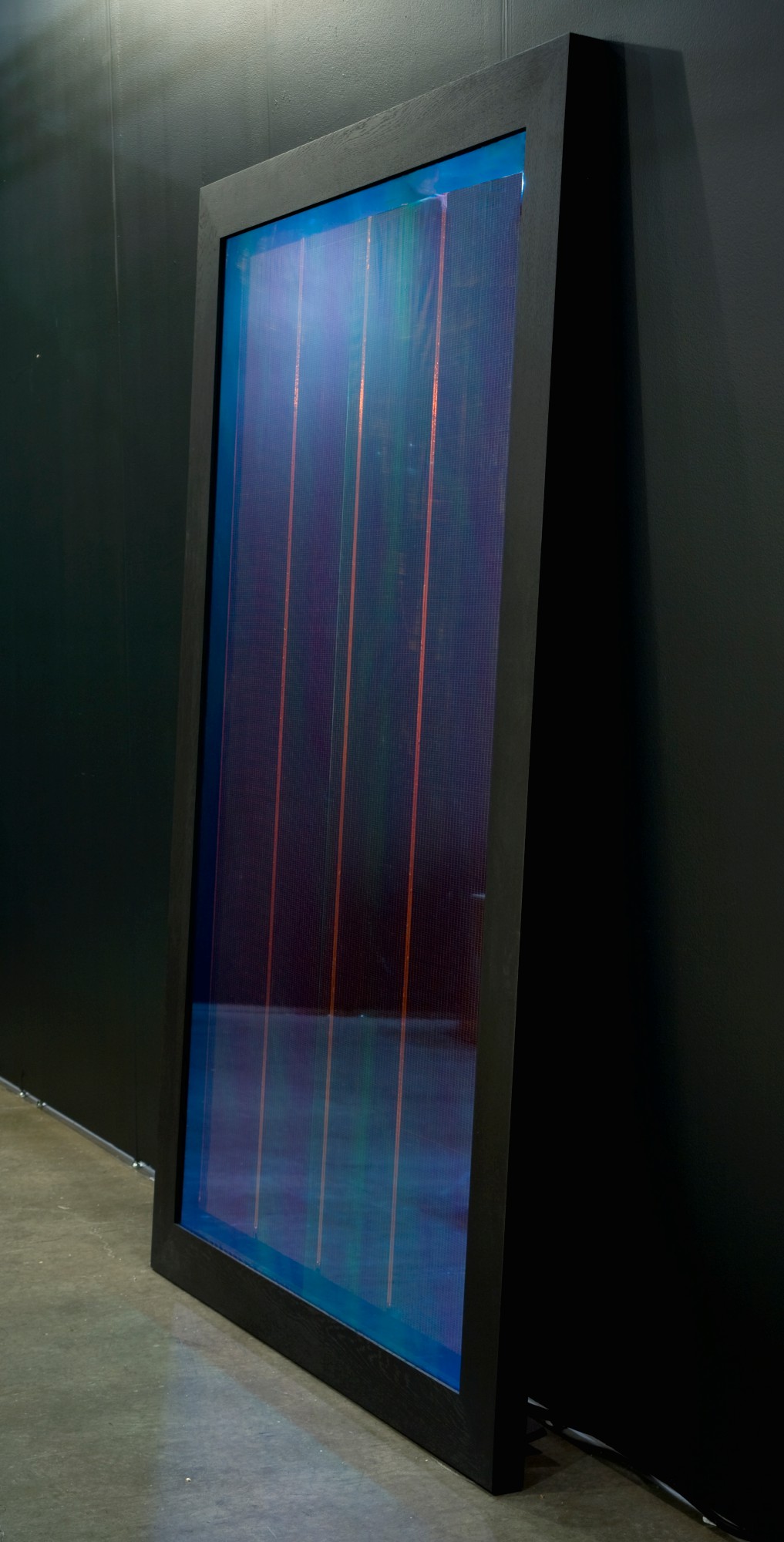
For collectors, works on paper and in photography offer an intimate window into this expansive vision. The series of chromogenic prints, flush mounted to aluminium, translate the luminous weightlessness of his installations into a collectable and domestic scale without sacrificing their sense of wonder. Solar Collect Call Medium from 2009, made with iridescent foil, a solar panel, and a power box, is characteristic of his ability to make technology feel tender, the hardware of renewable energy transformed into something that shimmers and breathes. Endless Big from 2006, a c print mounted on Plexiglas, captures the infinite quality of his imagined atmospheres with the stillness of photography.
Tomás Saraceno
Airport City/ Cloud-city/ 6 Cloud Modules 60 Solar, 2013
These works reward close attention and reveal new details over time, a quality that experienced collectors find essential in works intended for long term relationships. The market for Saraceno has strengthened steadily over the past decade, reflecting growing institutional confidence in his practice. Major museums have made his work central to their programming not as a gesture toward environmental relevance but because the work genuinely delivers on both aesthetic and intellectual terms. His installation at the K21 Düsseldorf, where the work On Space Time Foam filled the museum's vast glass cupola, became one of the defining experiences of contemporary installation art in Germany.
The Metropolitan Museum of Art and the Palais de Tokyo in Paris have both presented his work to wide audiences, and each presentation has reinforced the sense that Saraceno is not simply responding to an ecological moment but helping to define how art can think about the future without despair. Collectors drawn to Saraceno often find themselves in distinguished company. His work sits naturally alongside that of Olafur Eliasson, whose practice similarly moves between studio art and environmental advocacy with rigorous beauty. There are also meaningful connections to the legacy of Arte Povera, particularly in Saraceno's insistence that humble and natural materials, spider silk, air, sunlight, can carry the weight of serious philosophical inquiry.
Tomás Saraceno
Solar Collect Call Medium, 2009
Like James Turrell, he is interested in perception itself as a subject, in making people aware of how they inhabit space and light. But Saraceno's ecological urgency gives his practice a contemporary charge that places him squarely in the present tense. What makes Saraceno genuinely important, and what will ensure his place in the history of this period, is the coherence between his art and his values. He founded Aerocene, a nonprofit foundation dedicated to the development of solar powered flight, and he has collaborated with scientists, urban planners, and indigenous communities in ways that treat art not as illustration of ideas but as a method of generating them.
The 302p/l/p from 2014, made from Dacron, carbon fibre, fishing line, and mirror foil, and the lyrical elastic rope works demonstrate the range within his practice, from the technically precise to the almost playful, always held together by a consistent poetic intelligence. To collect Saraceno is to invest in a vision of the world that is not nostalgic or nihilistic but genuinely, carefully hopeful. In an art market often accused of looking backward, that feels like something worth reaching for.