Tim Hawkinson
Tim Hawkinson Makes the Body Sing
Artist Spotlight · The Collection Editorial
When the Whitney Museum of American Art mounted its sweeping retrospective of Tim Hawkinson's work in 2005, visitors encountered something genuinely difficult to categorize. Here was an artist who had fashioned a working organ from plastic bags and a self portrait from his own fingernail clippings, who had mapped the entire surface of his body and reassembled it into something uncanny and tender at once. The exhibition traveled to the Los Angeles County Museum of Art and the Akron Art Museum, introducing tens of thousands of new eyes to a practice that had been quietly astonishing the contemporary art world for more than two decades. It remains one of the most talked about one person exhibitions of its era, a genuine cultural moment that cemented Hawkinson's reputation as one of the most inventive sculptors working in America today.
Tim Hawkinson
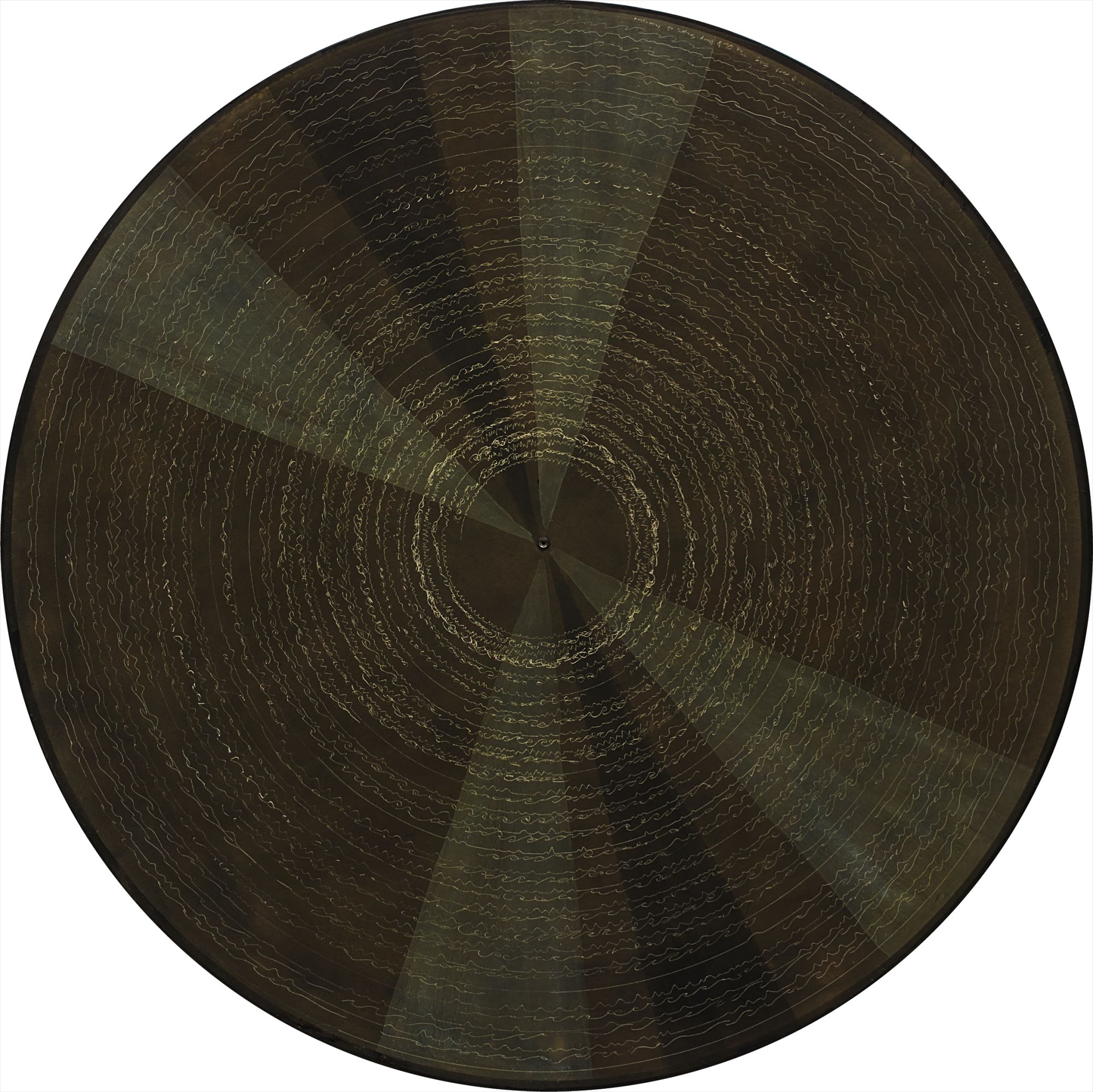
Old Harp Singing - The Old Harp Singers of Tennessee
Tim Hawkinson was born in 1960 and grew up in the San Francisco Bay Area, a landscape and cultural environment that rewarded independent thinking and a certain hands on ingenuity. He studied at San Jose State University before earning his MFA from the University of California, Los Angeles in 1989, where he developed the rigorously self referential approach that would define his mature practice. Los Angeles in the late 1980s was a crucible of experimentation, and Hawkinson absorbed its energy while remaining stubbornly his own person, more interested in the mechanics of perception and the strangeness of the human form than in the slick commodity objects that populated many of the city's commercial galleries at the time. His artistic development unfolded through a sustained investigation of the body as both subject and material.
From his earliest mature works, Hawkinson turned to himself as the primary source, casting his skin, collecting his hair and nails, and using photographic documentation of his own anatomy as raw data to be processed, distorted, and reimagined. This was never narcissism but rather a kind of rigorous phenomenological inquiry, asking what it means to inhabit a physical form and how that form relates to time, mechanism, and mortality. Works from the late 1980s and early 1990s, including pieces like Vertebrae from 1989, reveal an artist already fully committed to a vocabulary that was entirely his own. Among the works that have come to define Hawkinson's reputation, Uberorgan stands as perhaps the most spectacular.
Tim Hawkinson
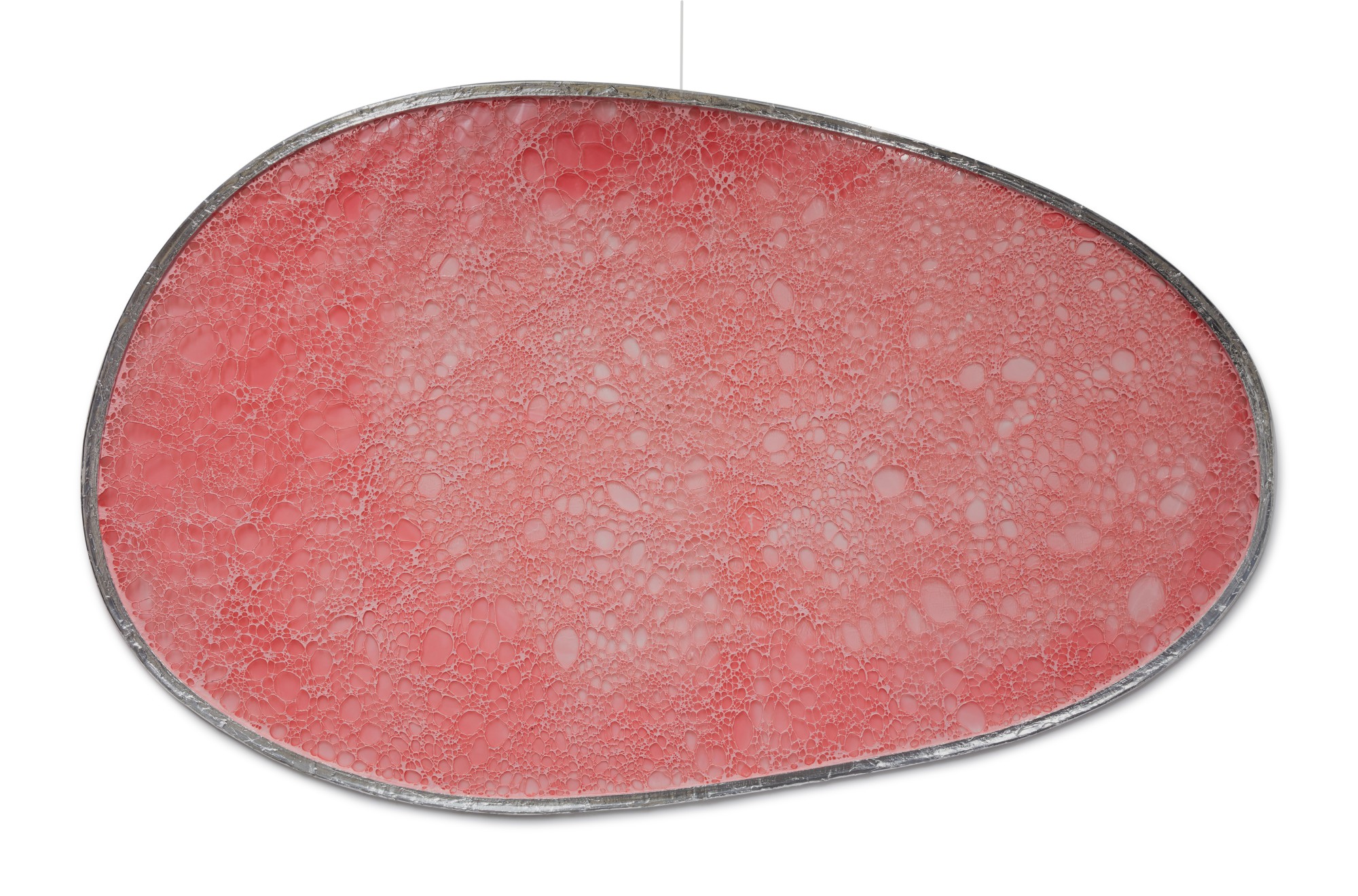
Egg, 2007
Created in 2000 and installed at the Massachusetts Institute of Technology's List Visual Arts Center before traveling internationally, it was a massive inflatable musical instrument the size of a stadium, driven by a player piano mechanism and filling entire galleries with low, moaning sound. It demonstrated Hawkinson's extraordinary ability to think at multiple scales simultaneously, from the microscopic detail of a hair casting to an architecture filling pneumatic marvel. His piece Emoter, which used motors to manipulate a photographic self portrait into dozens of different emotional expressions, brought the same logic to bear on the intimate register of the human face, producing something by turns comic and deeply unsettling in the best possible way. The works available through The Collection offer collectors a genuinely representative cross section of Hawkinson's practice across different periods and mediums.
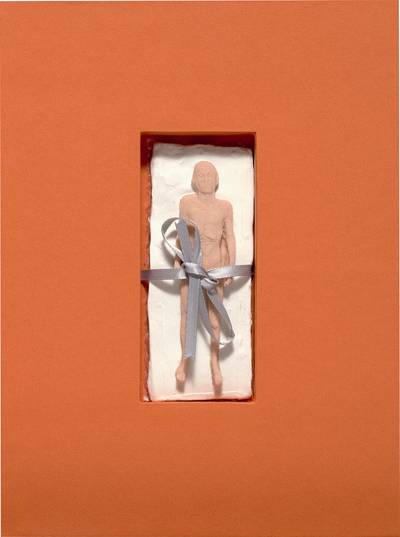
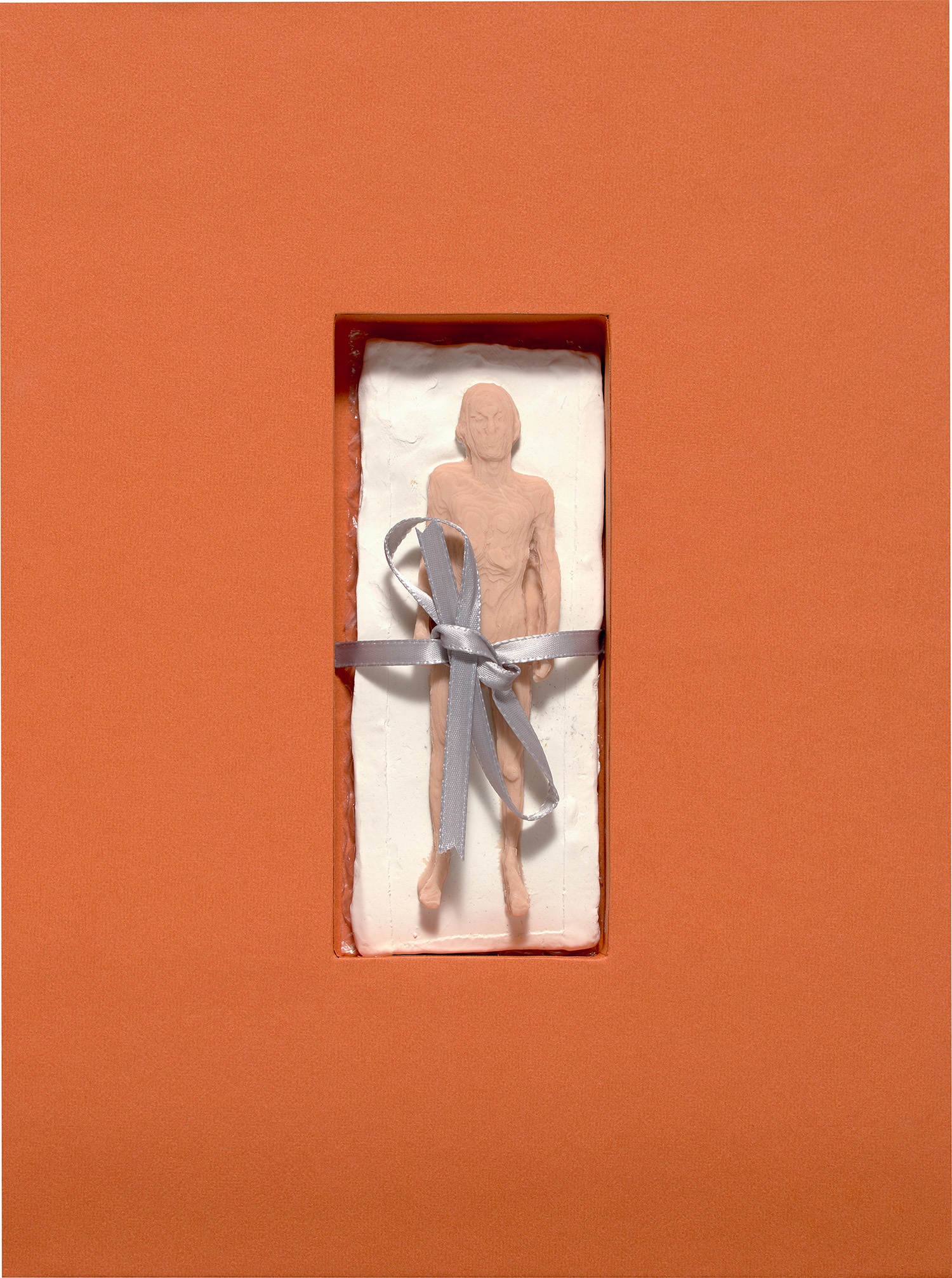
Egg from 2007, rendered in mixed media and aluminum, speaks to his enduring fascination with biological forms translated through industrial or mechanical means. Lens from 2002, made from aluminum foil on Styrofoam on panel, exemplifies his ability to conjure optical phenomena from the most humble and accessible of materials. Homunculus, a cast polymer resin figurative sculpture presented in its original silver paper covered box with an exhibition catalogue, is a rare and collectible object that encapsulates his intimate engagement with the diminutive and the bodily. Paint Drip Mosaic from 1993 reveals his attention to process and accumulation, studio acrylic drips arranged on canvas and laid on panel in a gesture that is both systematic and beautifully accidental.
Tim Hawkinson
Homunculus
From a collecting perspective, Hawkinson occupies a particularly compelling position in the contemporary market. His work has been championed by major institutions including the Museum of Contemporary Art in Los Angeles and the San Francisco Museum of Modern Art, lending institutional credibility that supports long term value. Works on paper and panel, like Study for Veil and the gesso, wax, ink, and shellac mixed media piece Old Harp Singing, offer collectors an opportunity to acquire intimate works that reflect the same conceptual rigour as his large installations but at a scale suited to private living. The relative scarcity of his works on the secondary market, combined with strong museum interest, makes each available piece a meaningful acquisition.
In terms of art historical context, Hawkinson is best understood alongside a generation of artists who transformed the sculptural object into a site of biological and mechanical inquiry. He shares certain affinities with Robert Gober in his uncanny treatment of the body, with Bruce Nauman in his restless self examination as artistic method, and with Rube Goldberg as a cultural ancestor whose delight in elaborate, purposeful absurdity runs through everything Hawkinson makes. He is also in conversation with the long tradition of automata and mechanical theater, from Renaissance clockmakers to Marcel Duchamp, though he arrives at this tradition from a distinctly West Coast, late twentieth century sensibility that is pragmatic, humorous, and profoundly human. What makes Tim Hawkinson matter today, more than three decades into a practice that shows no signs of slowing, is precisely his refusal to be easily absorbed.
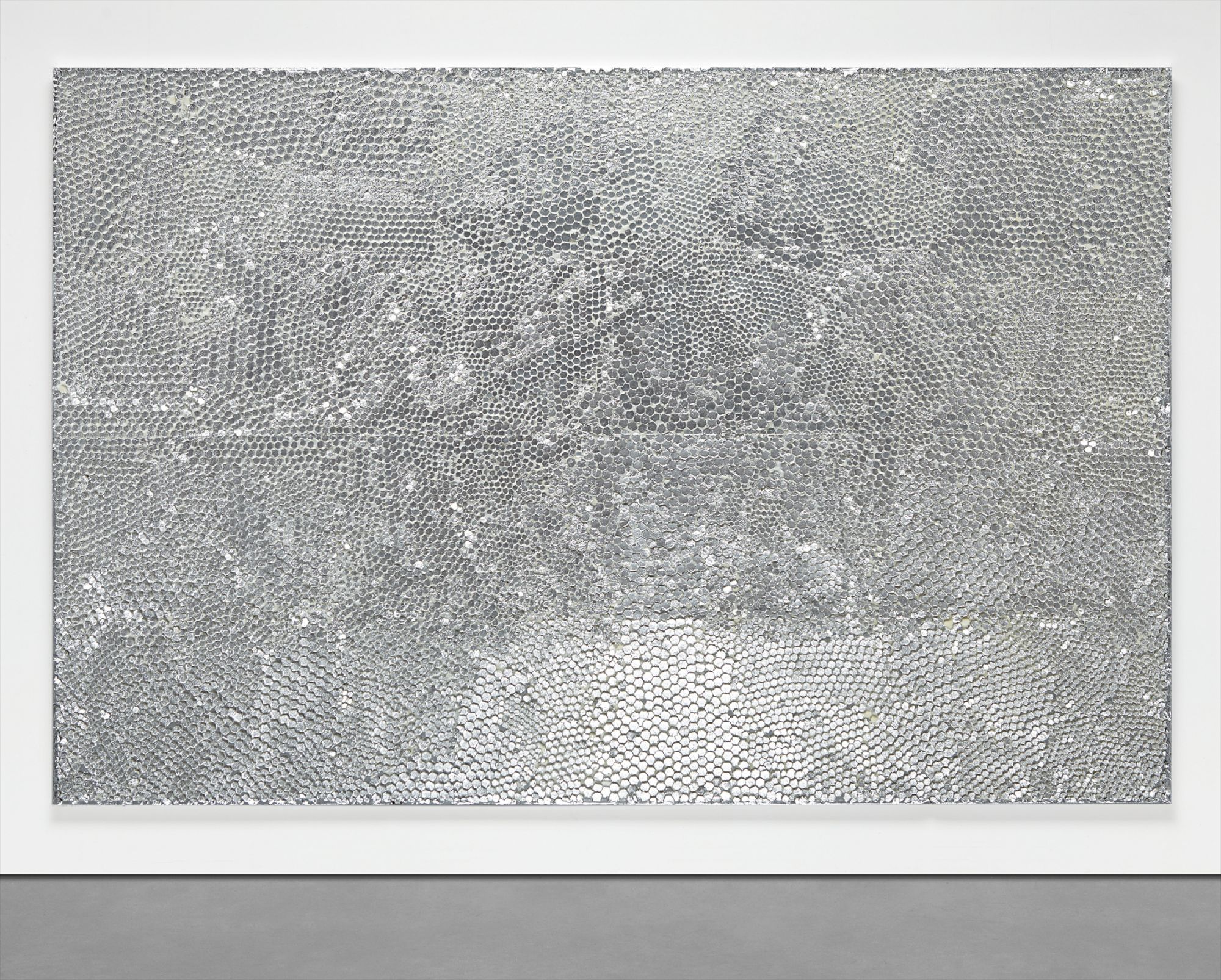
Tim Hawkinson
Lens, 2002
In an art world that frequently rewards legibility and brand consistency, he continues to produce work that surprises, that asks genuine questions about what bodies are and what they do, that treats the studio as a laboratory and the viewer as a fellow curious person rather than a passive consumer of aesthetic experience. His is an art of genuine wonder, made by someone who seems endlessly amazed that the world works the way it does and equally determined to build new versions of it. For collectors who value intelligence, craft, and a warm but unsettling originality, his work is among the most rewarding available today.
Explore books about Tim Hawkinson