Ted Polomis
Ted Polomis Finds Beauty in the Everyday
Artist Spotlight · The Collection Editorial
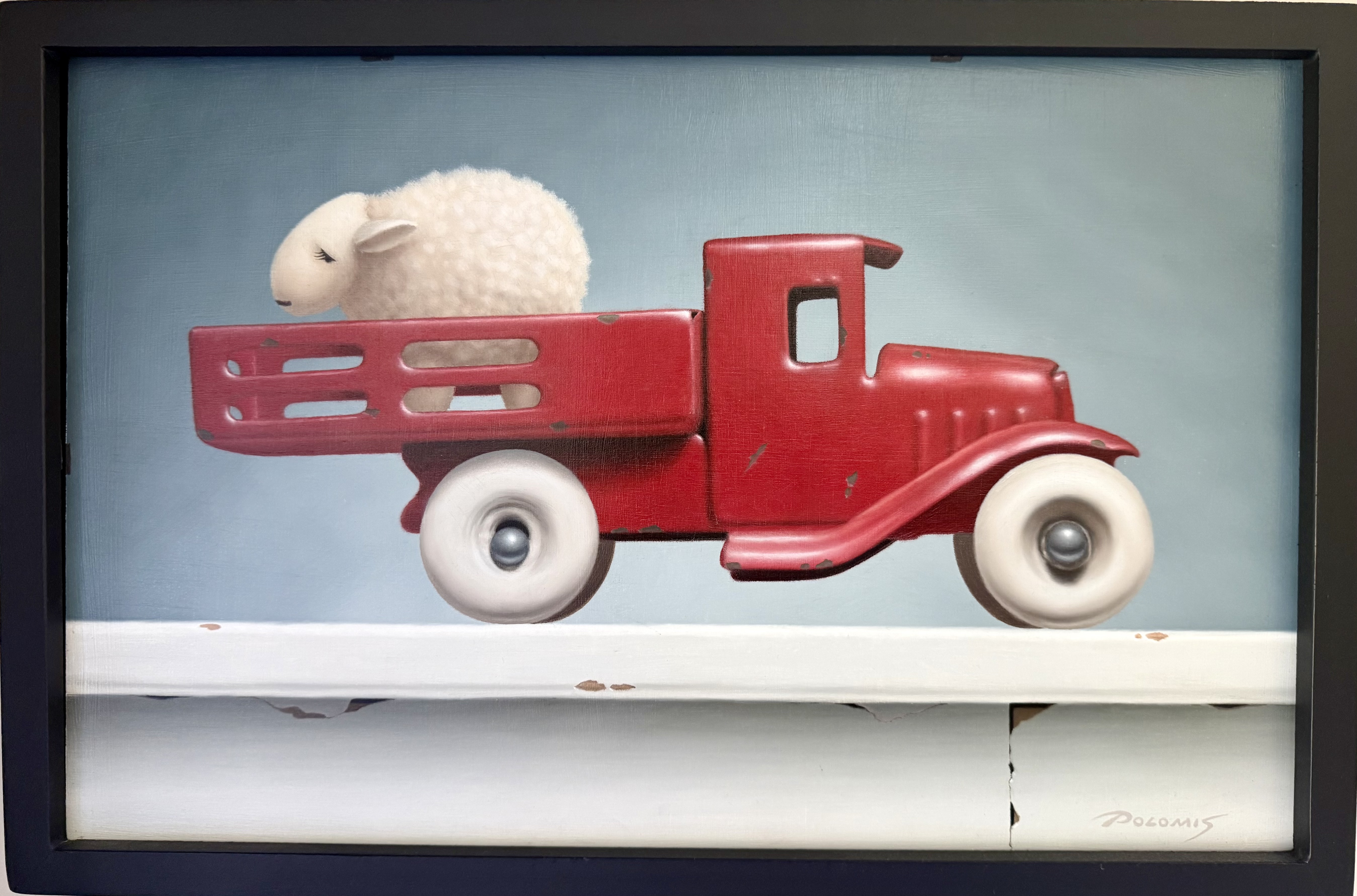
There is a particular kind of quiet that settles over the work of Ted Polomis, a stillness that feels less like absence and more like held breath. In recent years, collectors and curators with a discerning eye for American figurative painting have been drawn increasingly to his intimate compositions, recognizing in them something rare in contemporary art: a genuine attentiveness to the textures of ordinary life, rendered with painterly intelligence and emotional restraint. Polomis has built his reputation not through spectacle but through sustained looking, and the art world is catching up to what his most devoted admirers have long understood. Polomis works within a tradition of American figurative painting that prizes observation over assertion.
Ted Polomis
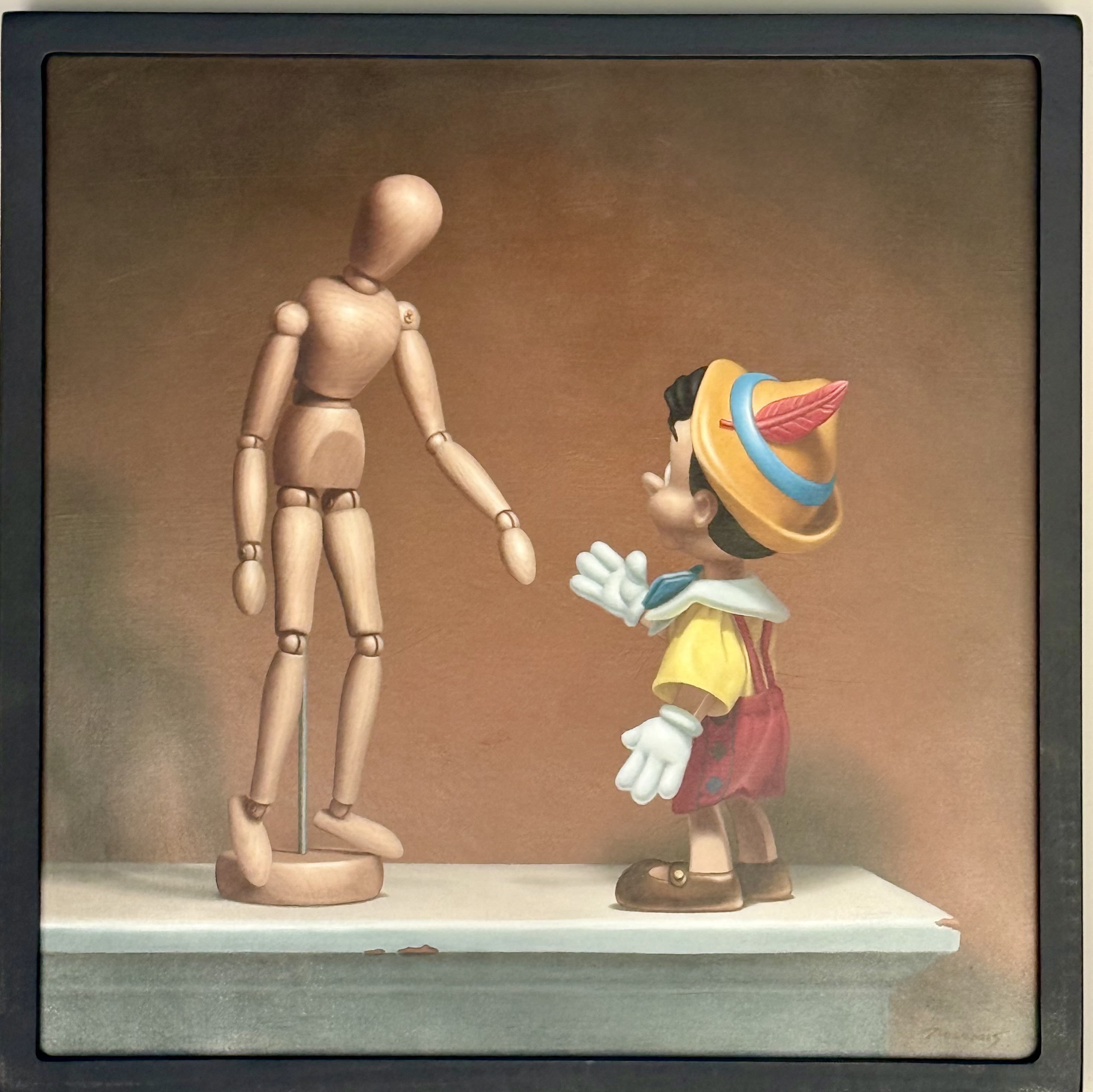
Age of Innocence, 2018
His formation as an artist reflects a deep engagement with the domestic and the personal, the kind of subject matter that rewards patience and punishes haste. He came to his practice shaped by the visual culture of the American interior, that particular world of rooms, objects, and light that has animated so many of the country's most enduring painters. From the beginning, his sensibility leaned toward the intimate rather than the monumental, toward suggestion rather than declaration. The development of his practice over time reveals an artist who has been willing to sit with difficult questions about what painting can do.
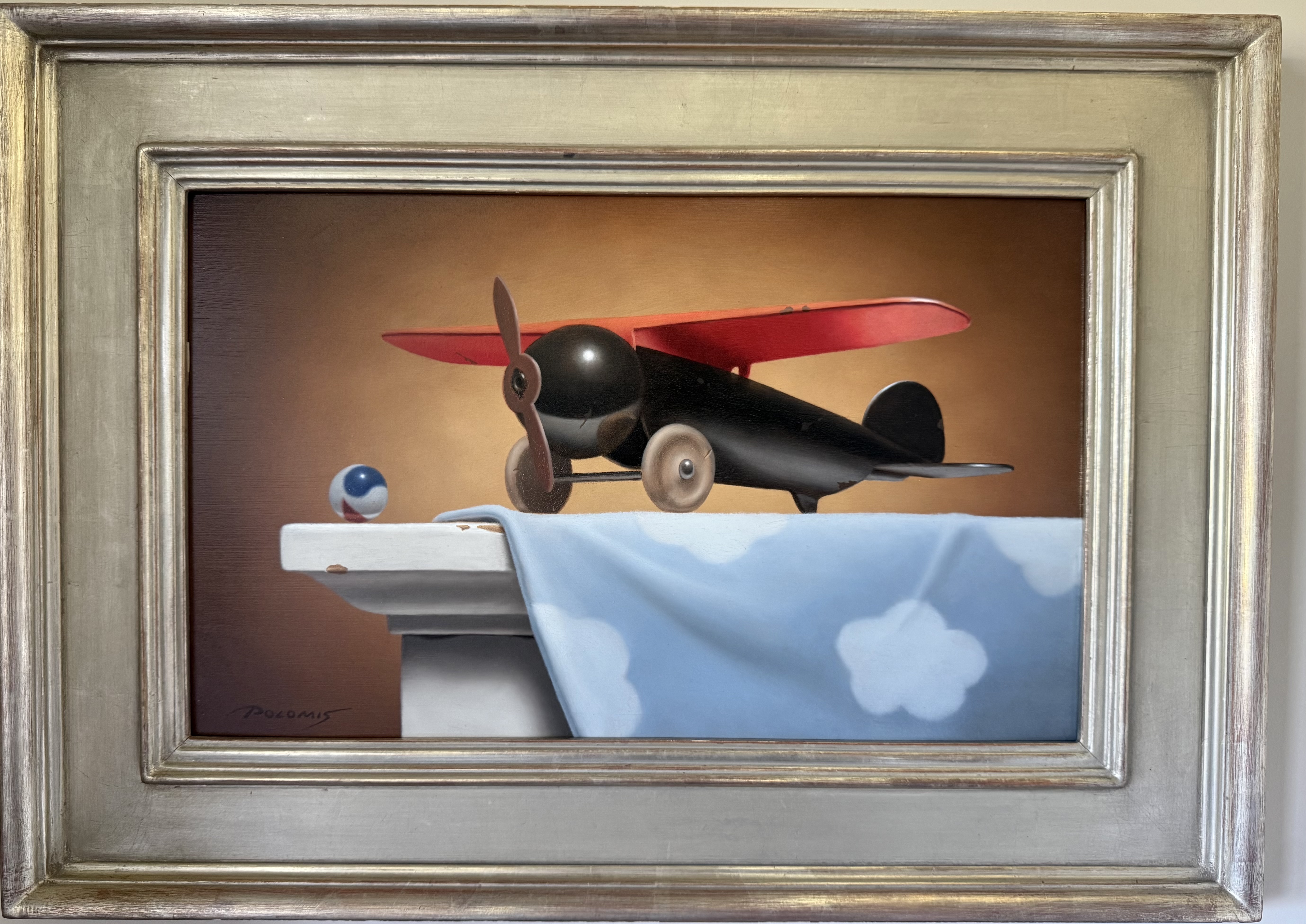
Working primarily in oil on panel and oil on canvas, Polomis has cultivated a muted, sophisticated palette that feels neither nostalgic nor clinical but something more elusive and precisely observed. His figurative compositions carry the weight of memory without collapsing into sentimentality, and his gestural passages of paint create a productive tension with his more resolved representational elements. This balance between abstraction and figuration places him in productive dialogue with a long lineage of American painters who have refused to choose between the two. Among his most celebrated works is "Age of Innocence," completed in 2018 in oil on panel, a piece that exemplifies the atmospheric compression that defines his strongest output.
Ted Polomis
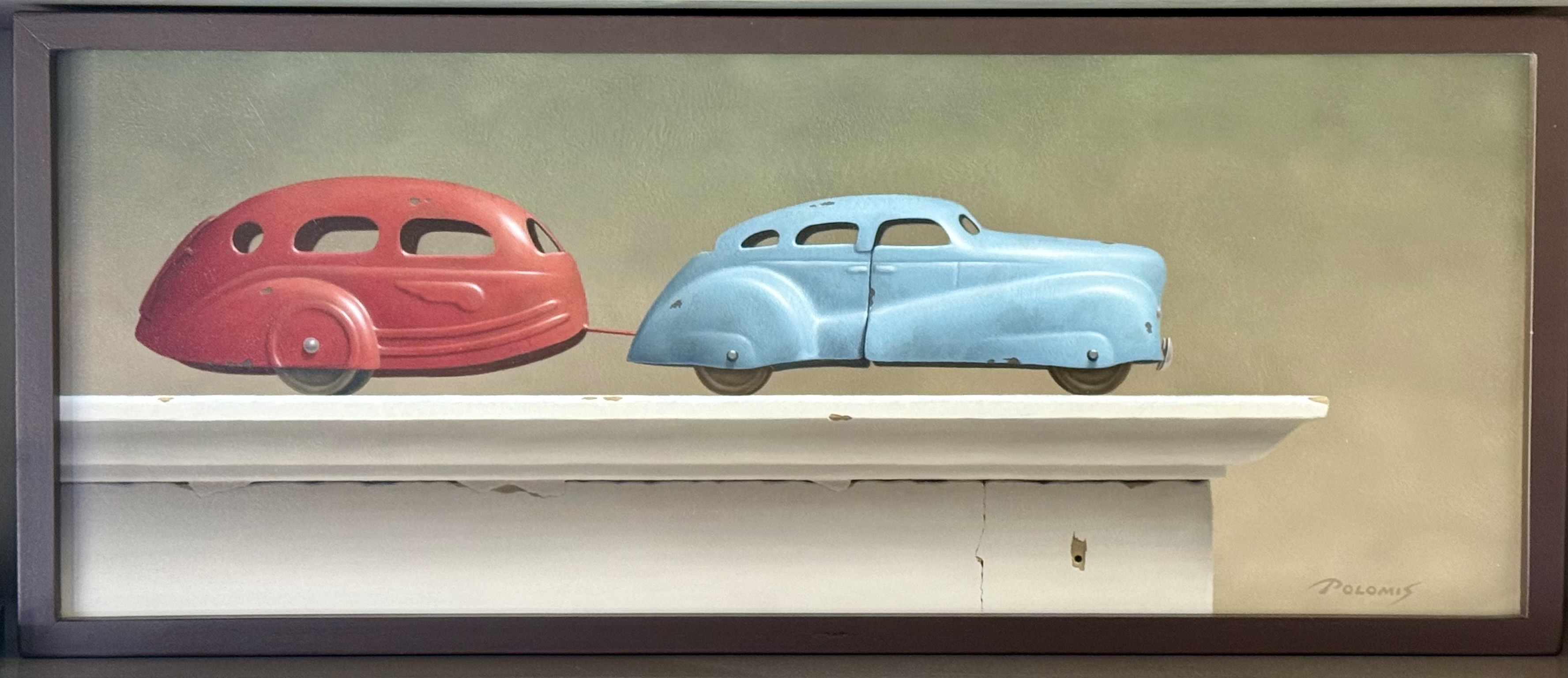
Vacation Spot, 2016
The title carries a literary resonance, evoking Edith Wharton's portrait of a world governed by surfaces and unsaid things, and Polomis honors that resonance through his own layered approach to representation. The painting draws the viewer into an interior world where the specifics of place and time become secondary to the emotional register of the scene. "Vacation Spot," from 2016, similarly demonstrates his gift for imbuing apparently ordinary subjects with a quietly charged presence. In that work, the sense of a life lived between moments, of experience caught in suspension, is palpable and affecting.
The mixed media dimension of Polomis's practice adds another layer of meaning to his compositions. He approaches drawing not as a preparatory exercise but as a fully realized mode of inquiry, using mark making to excavate ideas that paint alone might not reach. This commitment to multiple disciplines within a coherent body of work speaks to an artist who understands that meaning accumulates through method, and that the choices a painter makes about surface and material are themselves a form of argument. His works on canvas and panel feel like the product of genuine deliberation, which is precisely what gives them their authority.
Ted Polomis
Untitled
For collectors, the appeal of Polomis's work lies in its capacity to deepen over time. These are not paintings that announce themselves loudly and then recede. They are works that reward sustained attention, that seem to offer something new each time a viewer returns to them. The intimacy of his scale and subject matter makes his work particularly well suited to domestic contexts, where paintings live alongside the rhythms of daily life rather than in the ceremonial silence of a dedicated gallery.
Collectors who have brought his work into their homes consistently report that the paintings become more rather than less present with familiarity. In an art market that frequently prizes novelty and scale above all else, Polomis represents a compelling counterargument: that restraint and attentiveness are themselves a form of ambition. Within the broader context of contemporary American painting, Polomis occupies a meaningful position at the intersection of Neo Expressionism and the more meditative strand of figurative art that has flourished in recent decades. His gestural sensibility connects him to the expressive traditions that animated American painting from the mid twentieth century onward, while his commitment to domesticity and stillness aligns him with artists who have found in the quotidian a subject of inexhaustible richness.
Ted Polomis
Age of Innocence, 2018
The artists who come to mind as creative neighbors include those who have similarly navigated the terrain between representation and abstraction, between the observed world and the felt one, building bodies of work that accumulate meaning quietly and with great deliberateness. Painters working in this mode have found sustained critical and commercial attention in the twenty first century as collectors increasingly seek out work that prioritizes emotional depth over visual provocation. What Ted Polomis offers to the history of American painting is a reminder that the interior, in every sense of that word, remains a landscape worth exploring. His work attends to the passage of time not with grief but with a kind of luminous acceptance, finding in the arrangements of domestic life a subject that is simultaneously personal and universal.
At mid career, he is an artist whose practice feels fully formed and yet still expansive, capable of surprising even those who know his work well. The paintings he is making now, and those yet to come, represent one of the more quietly compelling conversations happening in American art today. For collectors positioned to follow that conversation closely, this is precisely the moment to pay attention.