Susan Vecsey
Susan Vecsey Finds Infinity in Quiet Forms
Artist Spotlight · The Collection Editorial
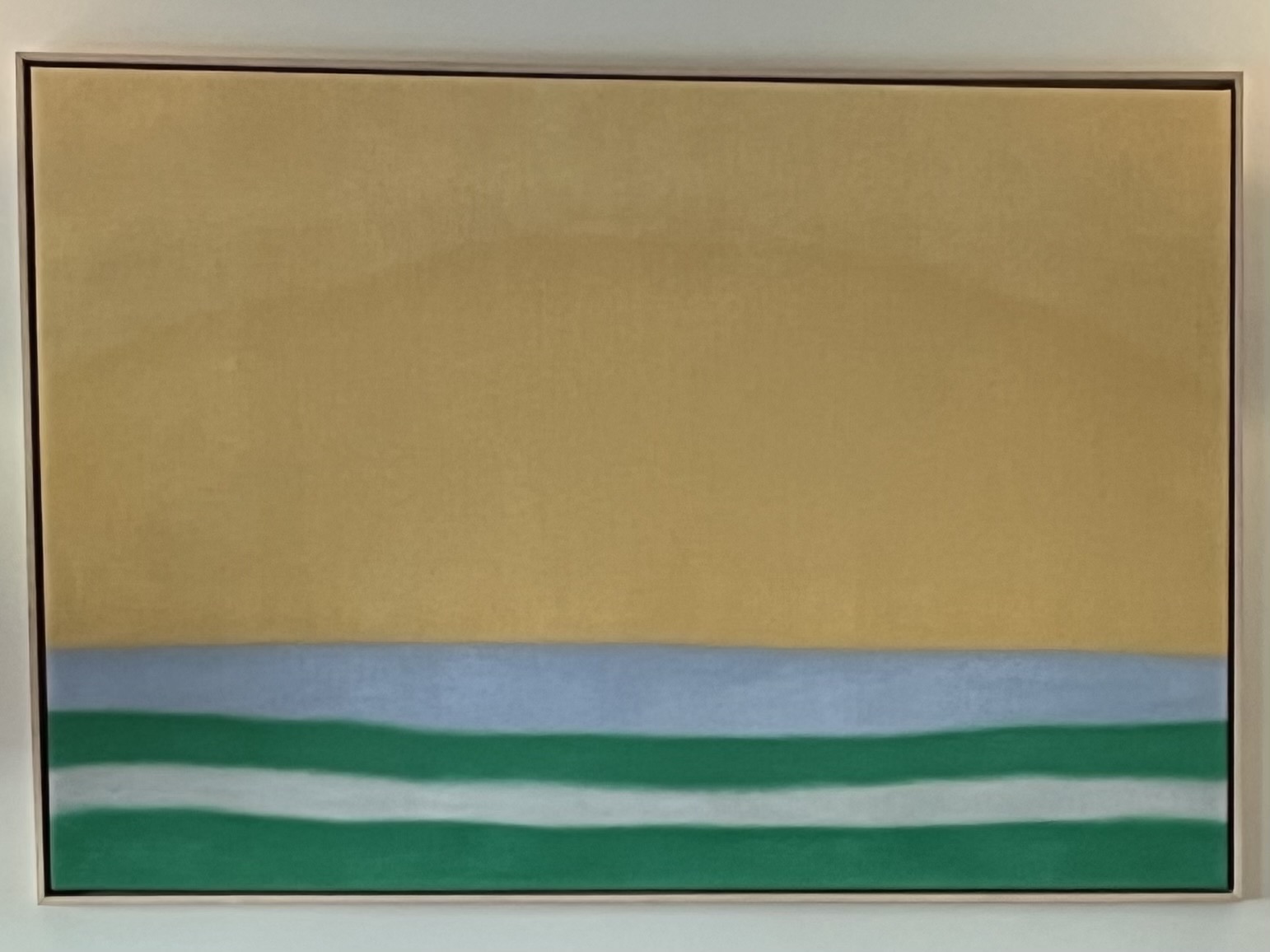
There is a particular kind of painting that does not announce itself loudly, that does not demand your attention so much as earn it slowly, completely, and on its own terms. Susan Vecsey makes that kind of painting. In recent years, collectors and curators who move through the quieter, more considered corridors of contemporary abstraction have found themselves returning again and again to her canvases, drawn by something that is difficult to name but impossible to dismiss. Her 2021 work "Untitled (Gold / Green)," an oil on linen of extraordinary subtlety, exemplifies precisely what makes her practice so compelling at this moment, when the art world seems hungry for paintings that ask something of the viewer rather than simply performing for them.
Susan Vecsey
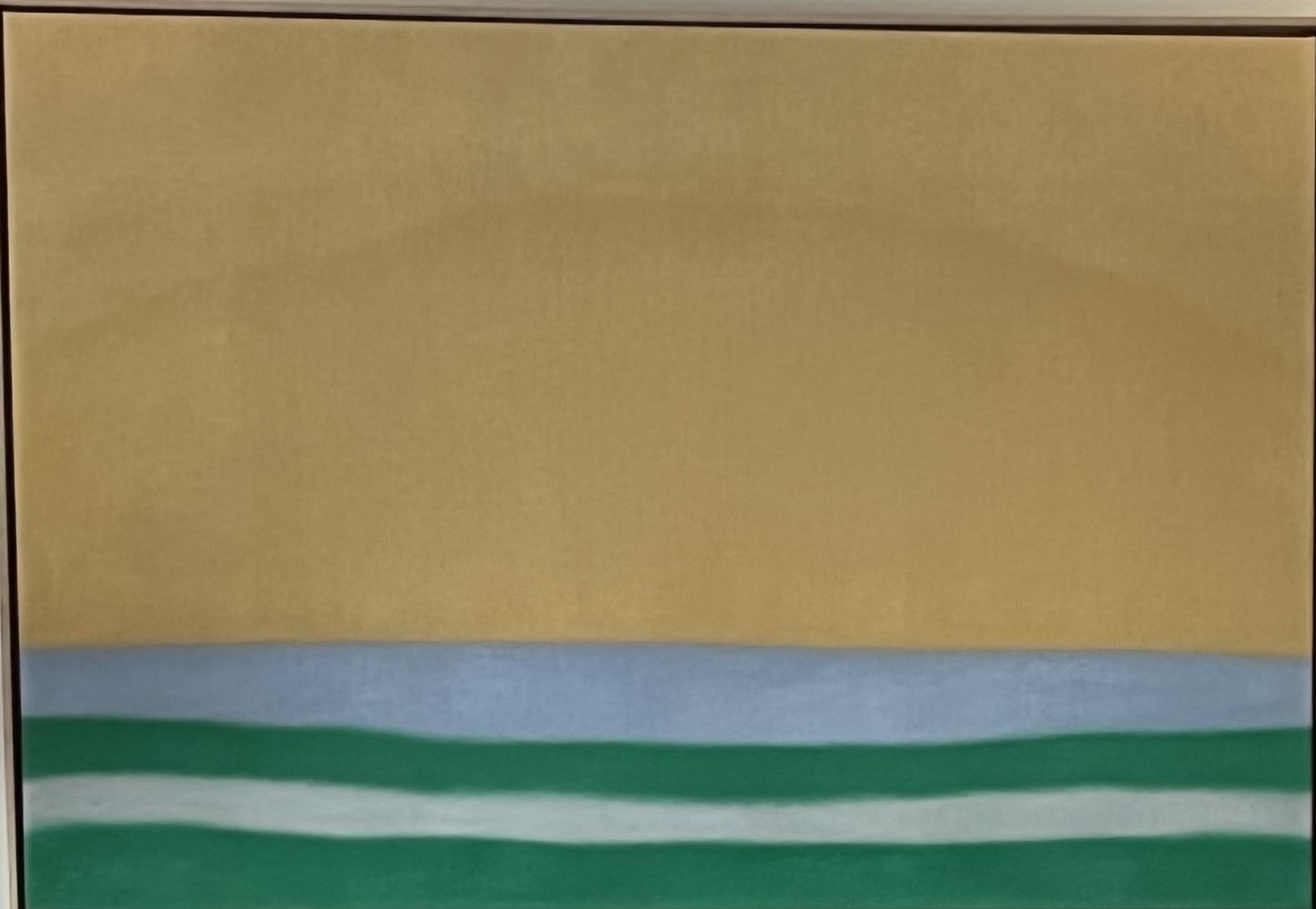
Untitled (Gold / Green), 2021
Vecsey was born in 1963, a moment in American cultural life when the legacies of Abstract Expressionism and Minimalism were beginning their long, fertile conversation. Growing up in the United States during the decades when artists like Agnes Martin and Robert Ryman were redefining what restraint could mean in painting, she absorbed an art historical atmosphere that valued the handmade mark, the carefully considered surface, and the philosophical weight of reduction. These early influences would prove formative, shaping a sensibility that is at once deeply American in its directness and quietly European in its refinement. Her artistic development unfolded through a sustained and serious engagement with the possibilities of oil on linen, a pairing she has made her own.
Linen, with its subtle warmth and weave, is not merely a support for Vecsey but an active participant in the work. It contributes texture and a faint organic presence that softens the geometry without undermining it. Over time, she developed a vocabulary of forms that is deliberately limited: circles, rectangles, arcs, and curved shapes that appear to float within or settle gently against their backgrounds. The restraint is not poverty of imagination but rather the opposite, a rigorous commitment to exploring how much can be communicated through how little.
The palette Vecsey employs is one of the most immediately recognizable aspects of her work, and one of its greatest pleasures. She works frequently in soft grays, luminous whites, and rich blacks, occasionally allowing warmer tones to enter the conversation. "Untitled (Gold / Green)" represents one of those moments when warmth breaks through, the gold and green existing in a relationship that feels neither decorative nor arbitrary but somehow inevitable, as though these two tones had always been waiting to find each other on this particular expanse of linen. Color in her hands is never merely descriptive.
It carries emotional weight, spatial information, and a kind of quiet argument about how we perceive the world. What separates Vecsey from painters who work in superficially similar territory is the quality of attention she brings to edges, transitions, and the spaces between forms. A circle in her work is never simply a circle. It exists in a specific relationship to the ground behind it, and that relationship is modulated with extraordinary care.
The edge where form meets field may be crisp or softly blurred, and this decision changes everything about how the painting feels, whether the form advances or recedes, whether the composition breathes or holds its breath. This level of painterly intelligence is what collectors who know her work return to again and again, finding new information each time. For collectors approaching Vecsey's work, several things are worth understanding. Her paintings reward close, sustained looking in a way that makes them exceptional in domestic settings.
Unlike work that delivers its full impact at a glance, a Vecsey painting reveals itself differently at different times of day, in different seasons of light, after different moods. This is not accidental. Her engagement with light as both subject and condition of the work means that natural and artificial illumination actively participate in how the painting exists in a room. Collectors who live with her work often report that it seems like a different painting depending on the hour.
This relationship to lived experience is rare and genuinely precious. Within the broader arc of contemporary abstraction, Vecsey occupies a considered and important position. Her work invites comparison with the legacy of Agnes Martin, whose grid paintings explored transcendence through repetition and reduction, and with painters like Marcia Hafif and Olivier Mosset, artists who took seriously the question of what remains when image is stripped away. There is also a relationship to the work of Callum Innes and the tradition of process oriented abstraction that emerged from European contexts in the 1980s and 1990s.
Yet Vecsey is not derivative of any of these reference points. She has absorbed them and moved through them toward something genuinely her own, a practice that feels both historically aware and stubbornly present tense. The market for carefully considered geometric abstraction has grown significantly over the past decade, as collectors have sought alternatives to the noise and spectacle that dominated certain corners of the contemporary art world. Painters who work with seriousness, consistency, and a long view of their practice have found renewed appreciation among sophisticated buyers who understand that the most meaningful collecting often happens in spaces of quiet confidence rather than hype.
Vecsey fits this profile with precision. Her work represents the kind of investment, intellectual as much as financial, that deepens in value over time as the broader cultural conversation catches up to what the painter already knew. Susan Vecsey matters today because she is practicing a form of painting that insists on its own terms at a moment when such insistence takes real courage and real conviction. The art world offers many rewards to artists who adapt to its rhythms and demands, and fewer rewards, at least in the short term, to those who remain faithful to an inner logic that may take longer to find its full audience.
Vecsey has chosen the more demanding path, and the paintings that have resulted from that choice are among the most genuinely satisfying works in contemporary American abstraction. To spend time with her paintings is to be reminded that slowness is not absence, that silence is not emptiness, and that the space between two forms on a canvas can hold more meaning than a great deal of art that surrounds them.