Sol LeWitt
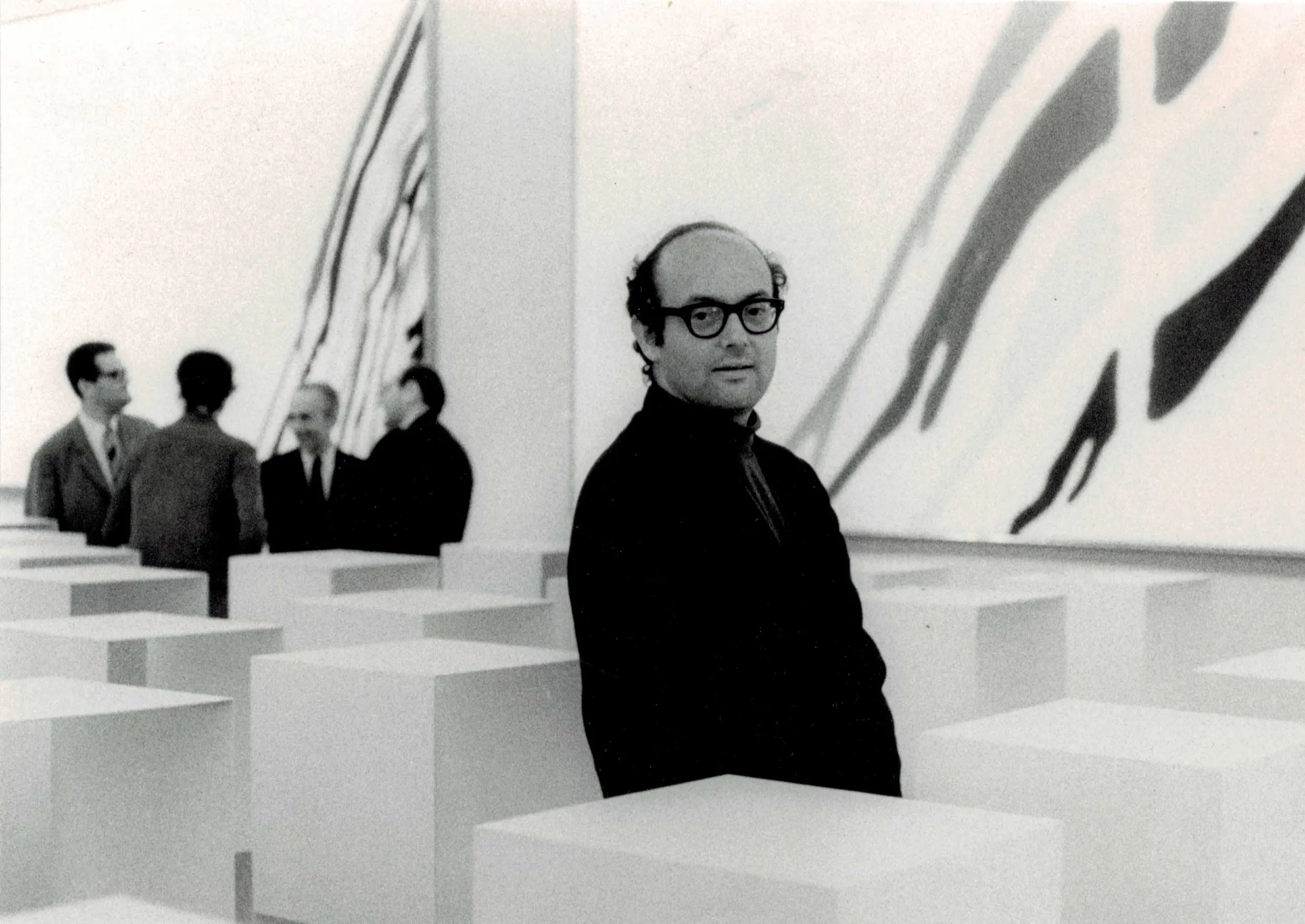
Sol LeWitt: The Man Who Set Art Free
Artist Spotlight · The Collection Editorial
“The idea becomes a machine that makes the art.”
Paragraphs on Conceptual Art, Artforum, 1967
There is a particular kind of electricity in the air whenever a major Sol LeWitt wall drawing is installed. Trained draftspeople gather at dawn with pencils, ink, and instructions, and over the course of days they bring into being something vast and luminous that could not exist without the artist's original idea, yet would not exist without the hands of strangers. This paradox, beautiful and deliberate, sits at the heart of everything LeWitt made. It is why, decades after his landmark 1978 retrospective at the Museum of Modern Art in New York, his work continues to feel less like a relic of Conceptual Art's golden age and more like a living proposition about what creativity can be.
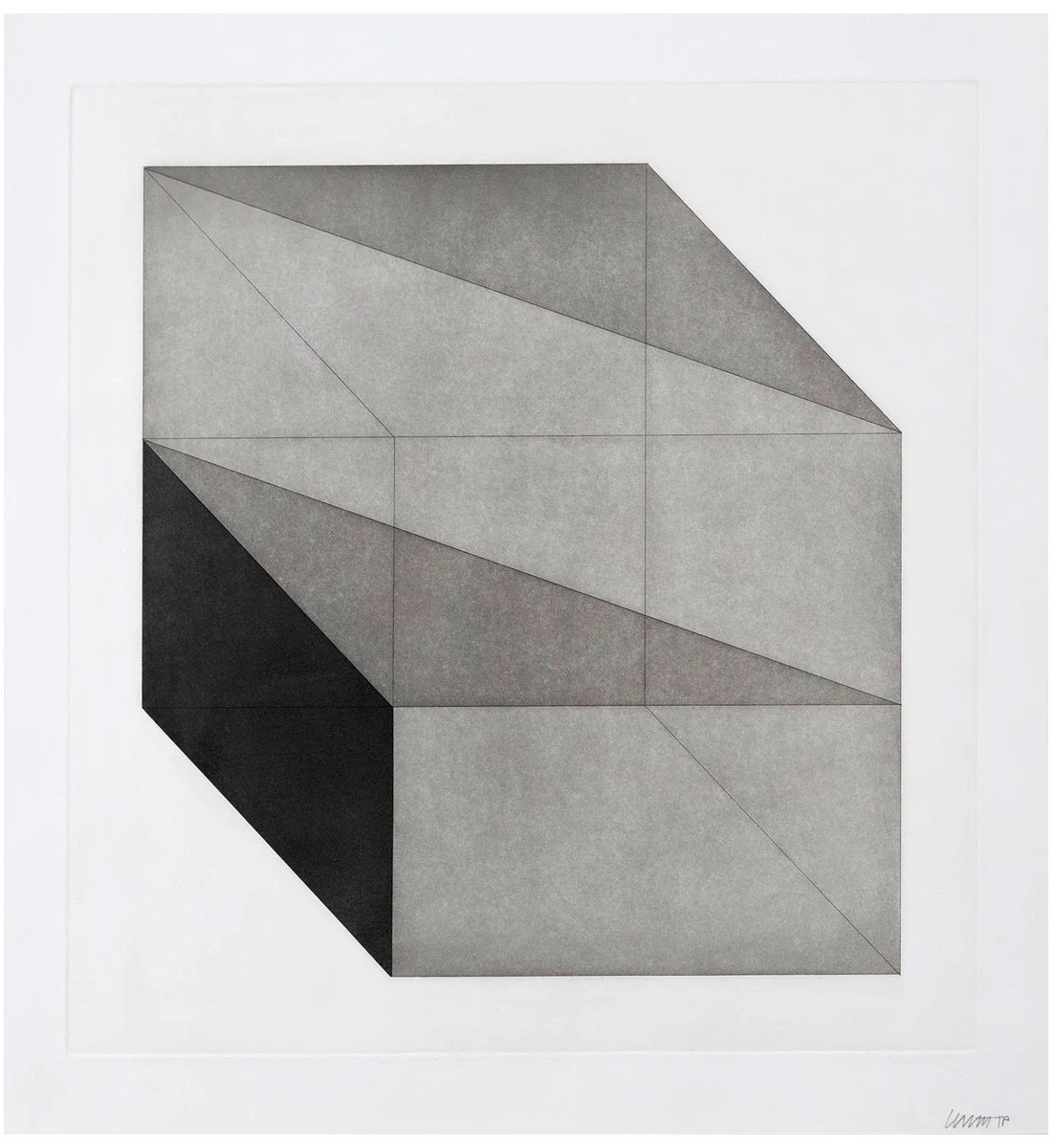
Sol LeWitt
Derived from a Cube 5, 1982
Sol LeWitt was born in Hartford, Connecticut in 1928, the son of Jewish immigrants from Russia. His father died when LeWitt was six years old, and he was raised by his mother, a woman who encouraged his early interest in art. He studied at Syracuse University, graduating in 1949, and after a period of military service in Japan and Korea, he settled in New York City, the only place in the world where the conversation he needed to join was already underway. A formative stint working in the graphic design department of the Museum of Modern Art in the late 1950s gave him direct, daily contact with the masterworks of European modernism, and the structured clarity of figures like Paul Klee and Josef Albers left a permanent imprint on his thinking.
New York in the early 1960s was a pressure cooker of competing ideas, and LeWitt found his closest intellectual community among artists including Robert Ryman, Dan Flavin, and Donald Judd, all of whom were wrestling with the legacy of Abstract Expressionism and searching for something more rigorous and impersonal. LeWitt's answer arrived with extraordinary confidence. In his 1967 essay Paragraphs on Conceptual Art, published in Artforum, he articulated a position that would define a generation: the idea itself, the concept or the set of instructions, is the artwork. Execution was almost beside the point.
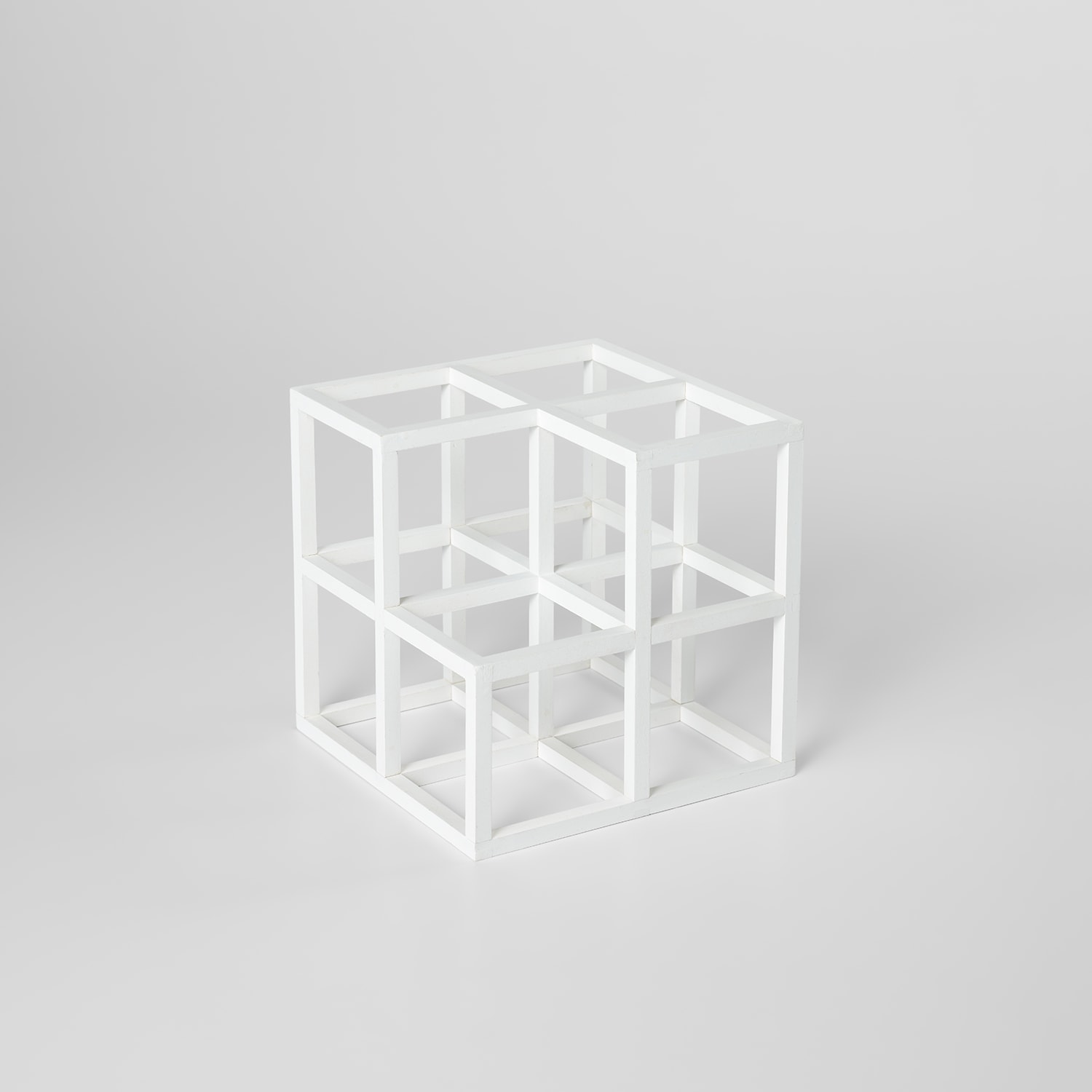
Sol LeWitt
Cube Without a Cube
This was not a provocation for its own sake but a deeply felt philosophical conviction, and LeWitt spent the next four decades proving that conviction could generate inexhaustible beauty. His early structures, the open modular cubes that began appearing in the mid 1960s, were among the first works to establish his signature visual language. Fabricated in white painted steel or wood, they were built according to strict mathematical logic, each unit a permutation of a simple geometric rule. They filled gallery floors and climbed walls, and they made the process of their own making transparent and legible.
“When an artist uses a conceptual form of art, it means that all of the planning and decisions are made beforehand.”
Paragraphs on Conceptual Art, Artforum, 1967
At the same time LeWitt was developing his wall drawings, which he first exhibited at the Paula Cooper Gallery in New York in 1968. These works exist primarily as certificates of instruction, a set of directions that any sufficiently skilled draftsperson can execute. The drawings have been installed in museums, private homes, and public spaces on every continent, each time slightly different, always unmistakably his. Works on paper and print portfolios, including the richly colored etchings and screenprints that make up a substantial portion of his output from the 1970s onward, brought this same combinatorial logic to intimate scale, and they are among the most beloved works in the collections of serious print enthusiasts worldwide.
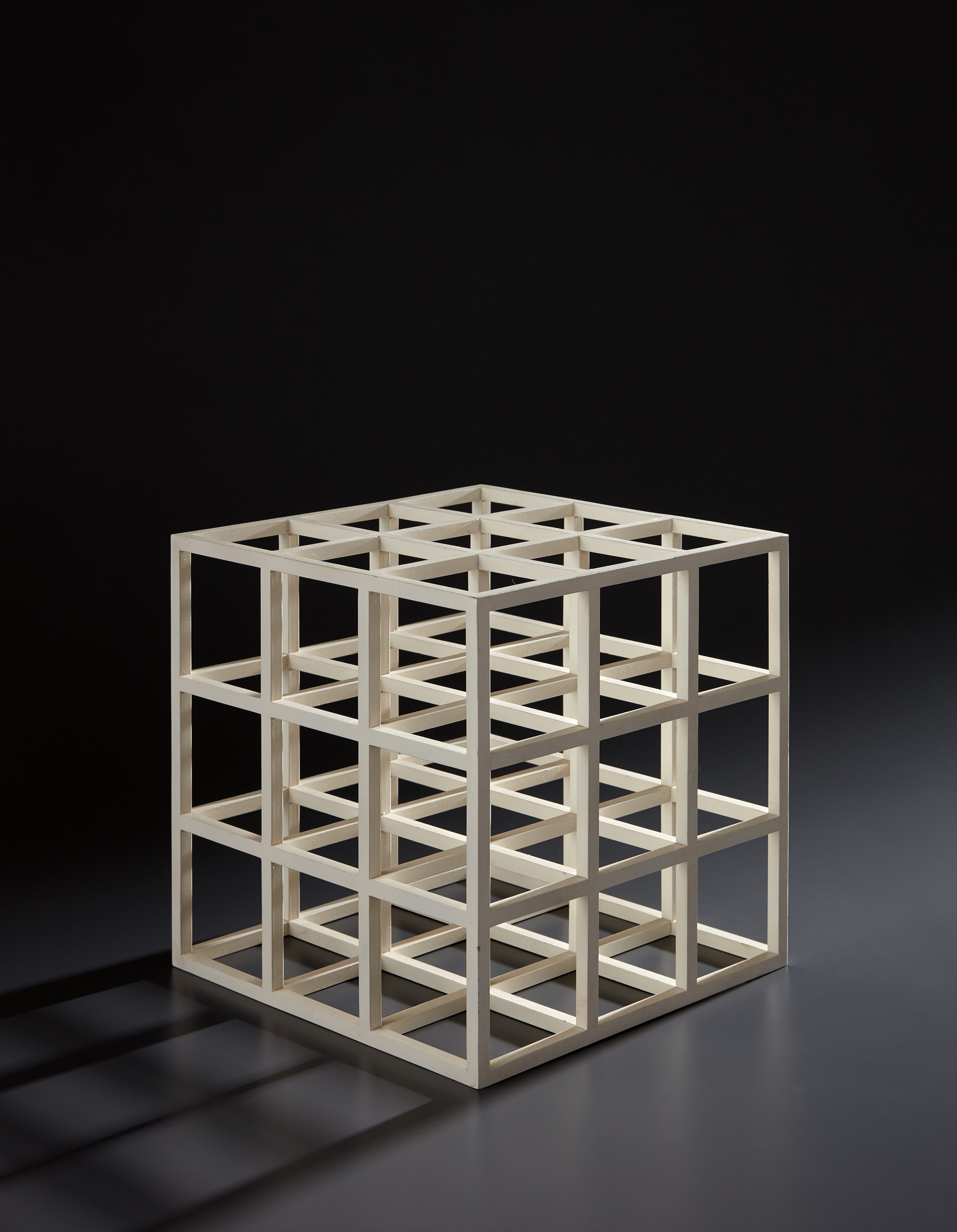
Sol LeWitt
Cube
The works that appear most frequently in distinguished private collections offer a wonderful range of entry points into LeWitt's universe. His maquettes and multiples, such as the white painted wood structures made as proposals for large public projects, distill his architectural ambitions into objects of quiet authority. Print series like Four Part Combinations of Geometric Figures in Four Colors and the Brushstrokes portfolios of the early 1990s reveal a more lyrical side of his practice, one where the strict system unexpectedly produces something warm and sensuous. The etchings published with Parasol Press in New York are particularly prized, representing the collaboration between LeWitt's conceptual rigor and the finest printmaking workshops of his era.
“The most interesting characteristic of the cube is that it is relatively uninteresting.”
Sentences on Conceptual Art, 1969
Collectors who have lived with these works often describe the same experience: the more time spent looking, the more the underlying system recedes and the sheer pleasure of color, line, and geometry takes over. In the auction market, LeWitt's work occupies a position of genuine blue chip solidity. Major works on paper and prints change hands regularly at Christie's, Sotheby's, and Phillips, and the wall drawing certificates, when they appear, attract serious institutional as well as private interest. The appeal is not hard to understand.
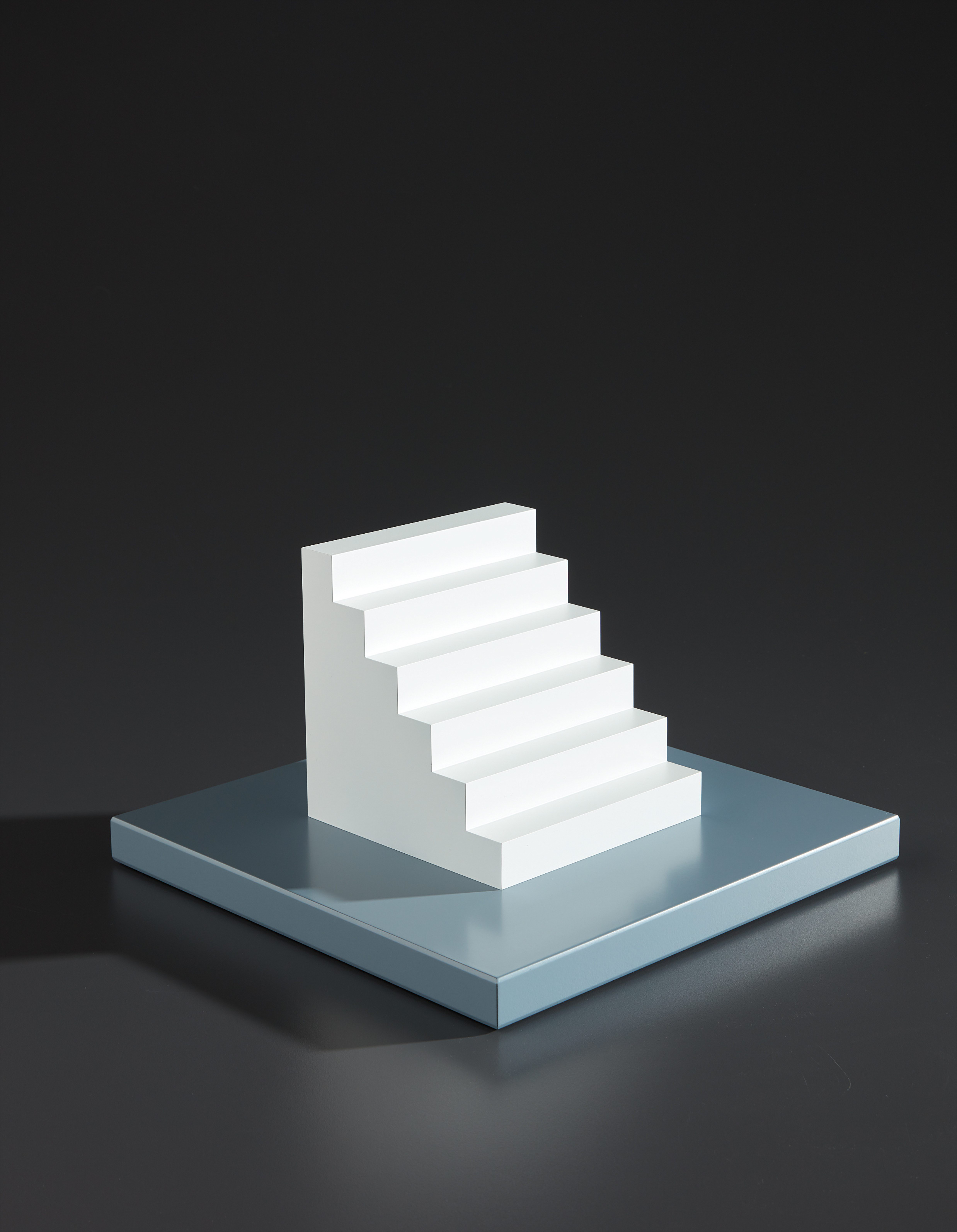
Sol LeWitt
Steps
LeWitt offers something rare in the secondary market: works that are historically important without being inaccessible, intellectually serious without being cold, and visually rewarding at every level of engagement. For the collector building a coherent post war holding, a LeWitt sits comfortably alongside Ellsworth Kelly, Frank Stella, and Agnes Martin, artists who share his commitment to geometry and seriality but arrived at their own irreducibly personal conclusions. LeWitt's particular genius is that his system, unlike those of his peers, was explicitly designed to be shared, extended, and reinterpreted, which gives his body of work an unusual openness and generosity of spirit. LeWitt remained creatively active until the end of his life, producing the exuberant Scribble drawings and the brilliantly colored gouaches on black paper that represent some of the most joyful work of his late career.
He died in New York in April 2007, leaving behind not only thousands of individual works but an entire way of thinking about authorship, instruction, and the social nature of art. The Sol LeWitt estate, managed with great care, continues to authorize new installations of wall drawings in museums and collections around the world, meaning that in a very real sense LeWitt's work is still being made, still being encountered for the first time by new audiences. Few artists of any era have constructed a legacy so deliberately designed to outlast them, and fewer still have made that outlasting feel so generous and so alive.
Explore books about Sol LeWitt
Sol LeWitt: A Retrospective
Christine Mehring
Sol LeWitt: Wall Drawings 1968-1981
Sol LeWitt
Sol LeWitt: Critical Texts
Alicia Legg
Sol LeWitt: Prints 1970-1995
Ruth E. Fine

Sol LeWitt: Incomplete Open Cubes
Gary Garrels
Sol LeWitt: 100 Views
Sol LeWitt
Sol LeWitt: Drawings
Susanna Singer