Sir Terry Frost
Terry Frost: Joy Rendered in Pure Colour
Artist Spotlight · The Collection Editorial
“I am not painting landscape, I am painting the feeling of being alive in a particular place.”
Terry Frost, interview notes, St Ives period
In the spring of 2023, Tate St Ives mounted a celebration of the artists who had shaped the Cornish coast into one of the most consequential gathering points in twentieth century British art. Terry Frost's canvases occupied their place among those walls with the confidence of works that have only grown more vital with time. Bold, singing, unashamed in their pleasure, they reminded a new generation that abstraction in postwar Britain was not always a cerebral or austere pursuit. For Frost, it was something closer to gratitude made visible.
Sir Terry Frost
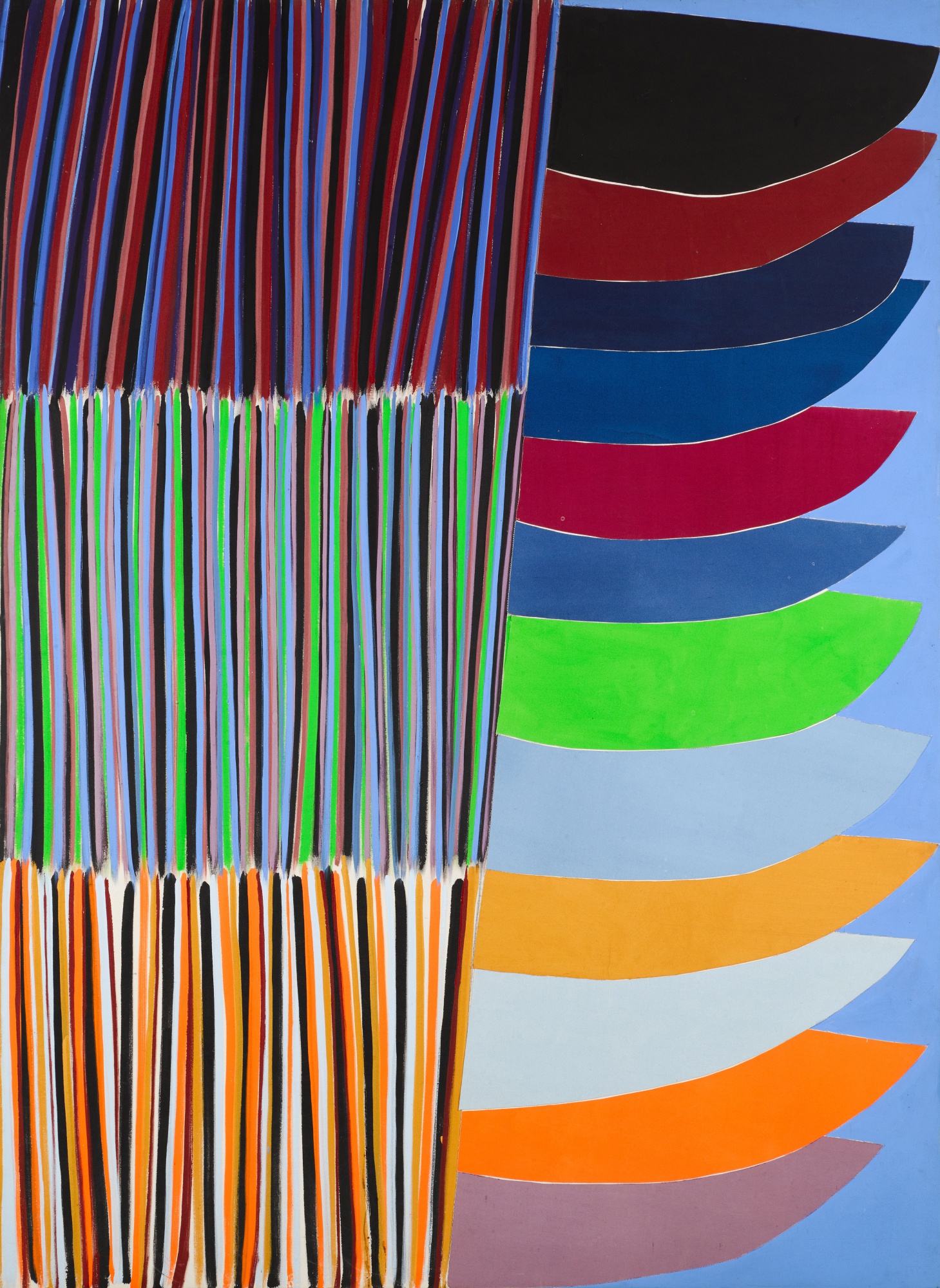
Colour Down the Side, 1968
Frost was born in Leamington Spa in 1915, into modest circumstances that gave little hint of the creative life ahead. His formal education was unremarkable, and by the time the Second World War arrived he was working in a variety of trades. What transformed him was captivity. Taken prisoner by German forces in 1941 following the fall of Crete, Frost spent years in prisoner of war camps, including Stalag 383 in Bavaria.
It was there, surrounded by barbed wire and the grey monotony of confinement, that he began to draw and paint seriously for the first time, encouraged by fellow prisoner Adrian Heath, himself a painter of significance in the British abstract tradition. The irony is not lost: one of the most colour soaked careers in British art germinated in one of its darkest settings. On his return to England, Frost pursued his vocation with urgency. He studied at the Birmingham College of Arts and Crafts before moving to London, where he attended the Camberwell School of Arts and Crafts in the late 1940s.
Sir Terry Frost
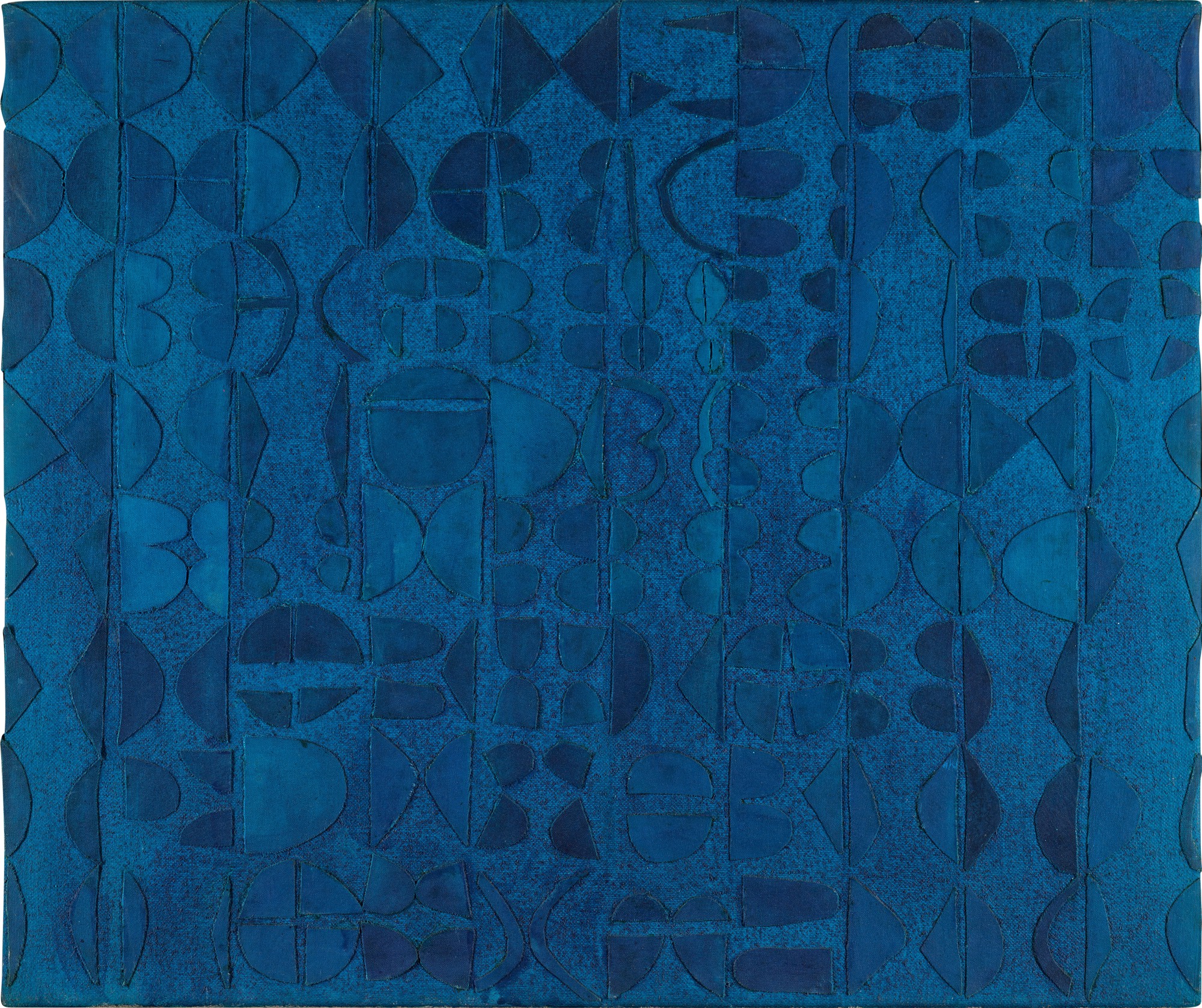
Blue Collage, 1969
There he encountered Victor Pasmore, a pivotal figure whose own conversion from naturalistic painting to pure abstraction was then underway and who recognised in Frost a kindred sensibility. Frost subsequently moved to St Ives in Cornwall, that salt aired colony of painters, potters, and sculptors that had drawn Barbara Hepworth and Ben Nicholson before him and would shape his vision permanently. He studied briefly under the American abstract painter Hans Hofmann in Provincetown, Massachusetts, in 1950, sharpening his understanding of colour as a structural force rather than a decorative one. What emerged from those years of formation was a visual language entirely Frost's own.
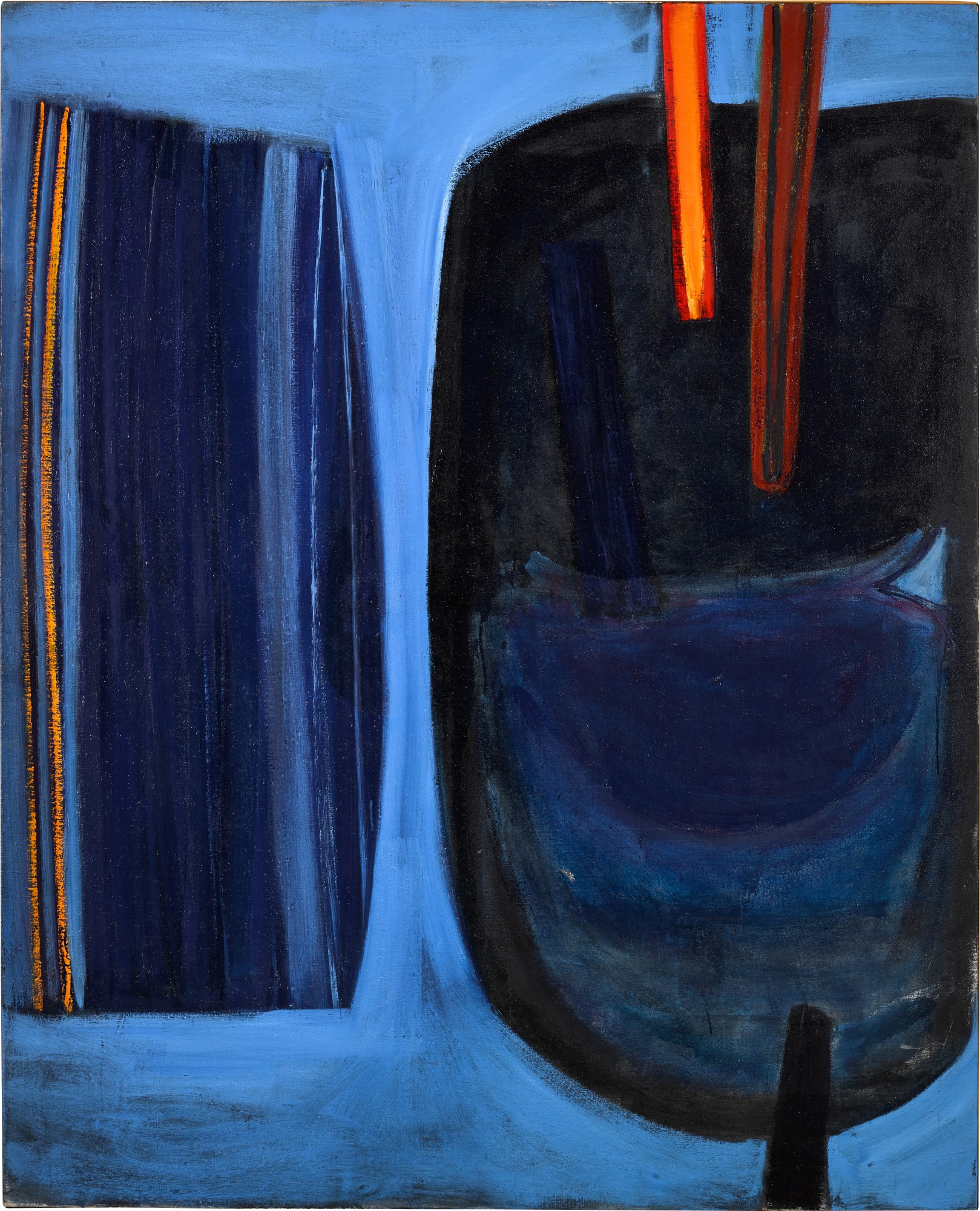
He became known for sweeping arcs, suspended circles, and rhythmic arrangements of form that seem to hover between landscape memory and pure sensation. Works from the late 1950s such as Blue Image from 1959 and Orange and Ochre from the same year show a painter in exhilarating command of his means, using oil and mixed media to build surfaces that pulse with contained energy. Red, Black, and White from 1958 demonstrates his instinct for tonal drama, the three elements locked in a relationship that feels simultaneously resolved and alive. These paintings owe something to the harbour views and tidal rhythms of St Ives, but they are never literal.
Sir Terry Frost
Blue Image, 1959
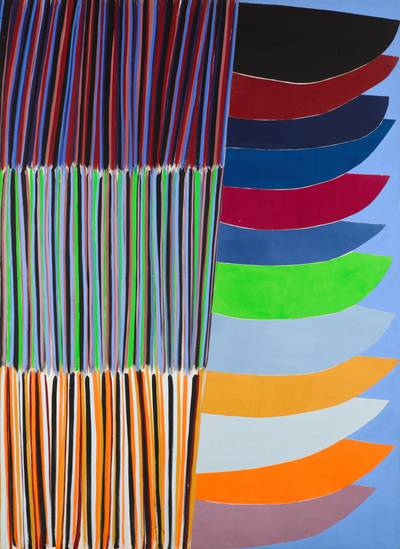
Frost transformed observation into sensation, the rocking of boats in the water becoming a formal principle, the arc of a net or a wave becoming the governing gesture of a canvas. Through the 1960s and into the 1970s, Frost expanded his practice to embrace collage with increasing confidence. Colour Down the Side from 1968 and Blue Collage from 1969 exemplify his approach: layering paper, card, and paint to create works of real textural richness that feel handmade in the most generous sense of the word. Through Greys from 1976, with its oil and acrylic on canvas collage, shows him pushing further into material experimentation without ever losing sight of the joyful.
Printmaking also became central to his output. Works such as the Suspended Forms screenprint of 1986 and the Orchard Sunbursts aquatint series reveal a printmaker of rare instinct, someone who understood that the medium demanded its own logic and who met that demand with invention. Newlyn Rhythms from 1982 speaks to the enduring pull of the Cornish landscape, translated now through acrylic with a looseness and warmth that feels entirely at ease. For collectors, Frost offers something genuinely rare: a body of work that is aesthetically cohesive, historically significant, and consistently pleasurable to live with.
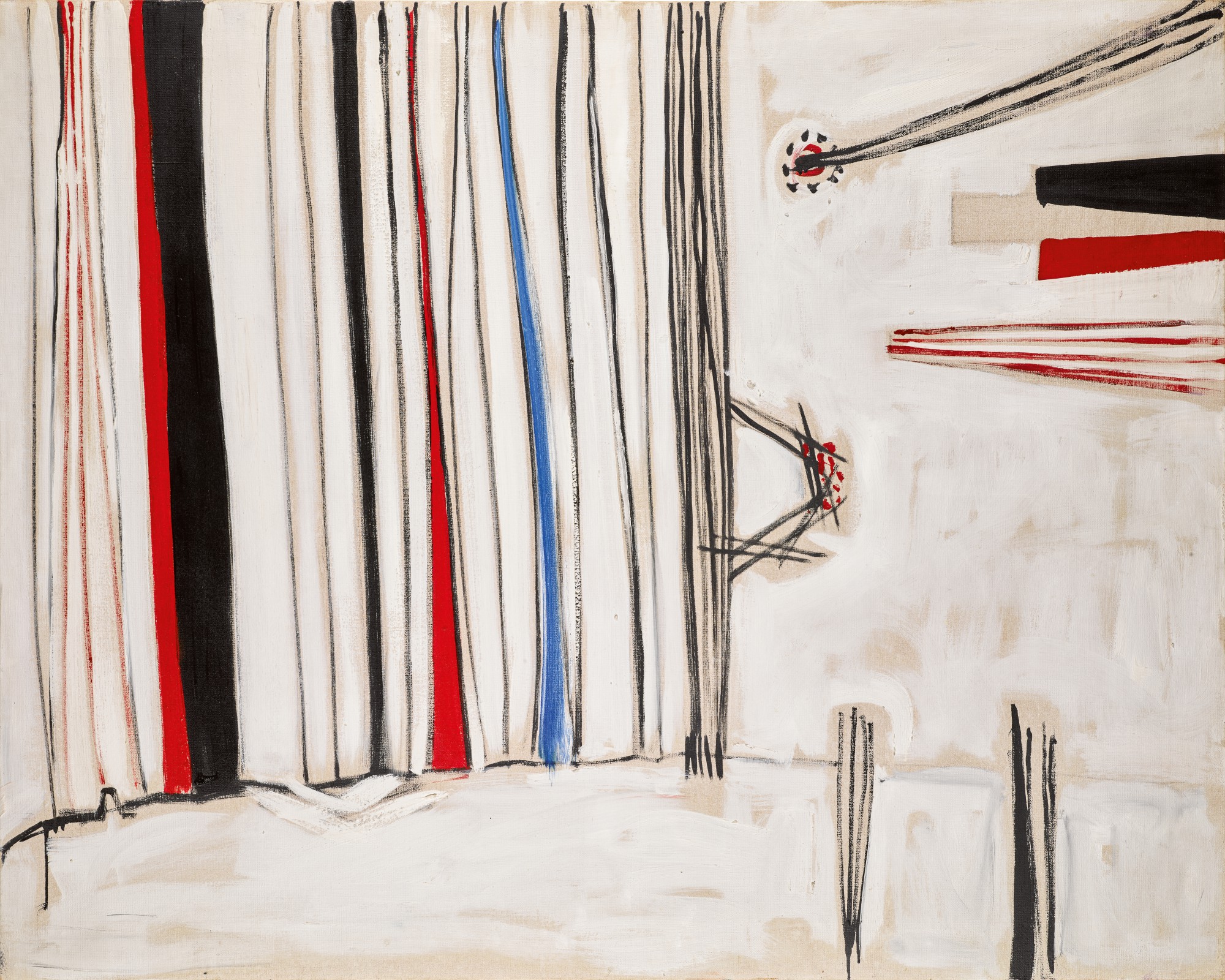
Sir Terry Frost
Red, Black, and White, 1958
His paintings do not demand struggle or unease from the viewer. They offer, instead, the sensation of looking at colour as though for the first time, of feeling geometry as something organic and warm. Works from the late 1950s and early 1960s represent perhaps the most sought after period, commanding strong results at auction when they come to market, but his printmaking editions and collage works offer remarkable entry points for collectors at various levels of engagement. Condition and provenance matter, as they always do, but Frost's works have generally been well maintained by the private collections and regional institutions that have held them.
His connection to St Ives gives works with documented Cornish provenance a particular resonance for collectors drawn to that school. Frost's place within the broader arc of British modernism is secure and richly contextualised. He belongs alongside Patrick Heron, whose own colour field investigations drew from similar Cornish roots, and Peter Lanyon, whose abstracted landscapes carry the same awareness of place transformed rather than depicted. Internationally, comparisons to Ellsworth Kelly and Josef Albers illuminate his understanding of colour relationships, though Frost's work carries a warmer, more sensory quality than either American counterpart.
The St Ives School itself, which embraced Hepworth, Nicholson, Roger Hilton, and Bryan Wynter among others, remains one of the most studied and collected movements in postwar British art, and Frost is among its most distinctive voices. Frost was awarded a knighthood in 1998, a recognition that delighted those who had followed his career across five decades and that he received with characteristic warmth. He continued to work until shortly before his death in Newlyn in 2003. His legacy is a body of work that refuses to age, that meets each new viewer with openness and with colour that insists, quietly and completely, on the value of being alive.
For those who collect his paintings and prints, the experience of stewardship is one of daily renewal. The works give back what Frost put into them: an unconditional faith in the capacity of form and colour to carry joy.
Explore books about Sir Terry Frost
Terry Frost
Mel Gooding
Terry Frost: A Painter's Progress
Andrew Causey
Terry Frost: Works on Paper
Various contributors
Terry Frost: Paintings and Drawings 1940-2000
Sarah Whitfield
Terry Frost: The Cornish Years
Peter Davies