Sigmar Polke

Sigmar Polke: The Alchemist Who Remade Painting
Artist Spotlight · The Collection Editorial
“I let myself be guided by the material. The material knows more than I do.”
Sigmar Polke, interview with Benjamin Buchloh, 1977
When the Museum of Modern Art in New York staged its landmark retrospective of Sigmar Polke in 2014, the exhibition felt less like a survey and more like an initiation. Titled "Alibis: Sigmar Polke 1963 to 2010," the show moved through seven decades of restless, shape shifting genius and left visitors with the unmistakable sense that they had encountered one of the most genuinely unpredictable minds in postwar art. Four years after his death, the work crackled with the same irreverence, wit, and strange beauty that had made Polke so impossible to categorize during his lifetime. For collectors and curators alike, that retrospective confirmed what many had long suspected: Polke was not simply an important artist.
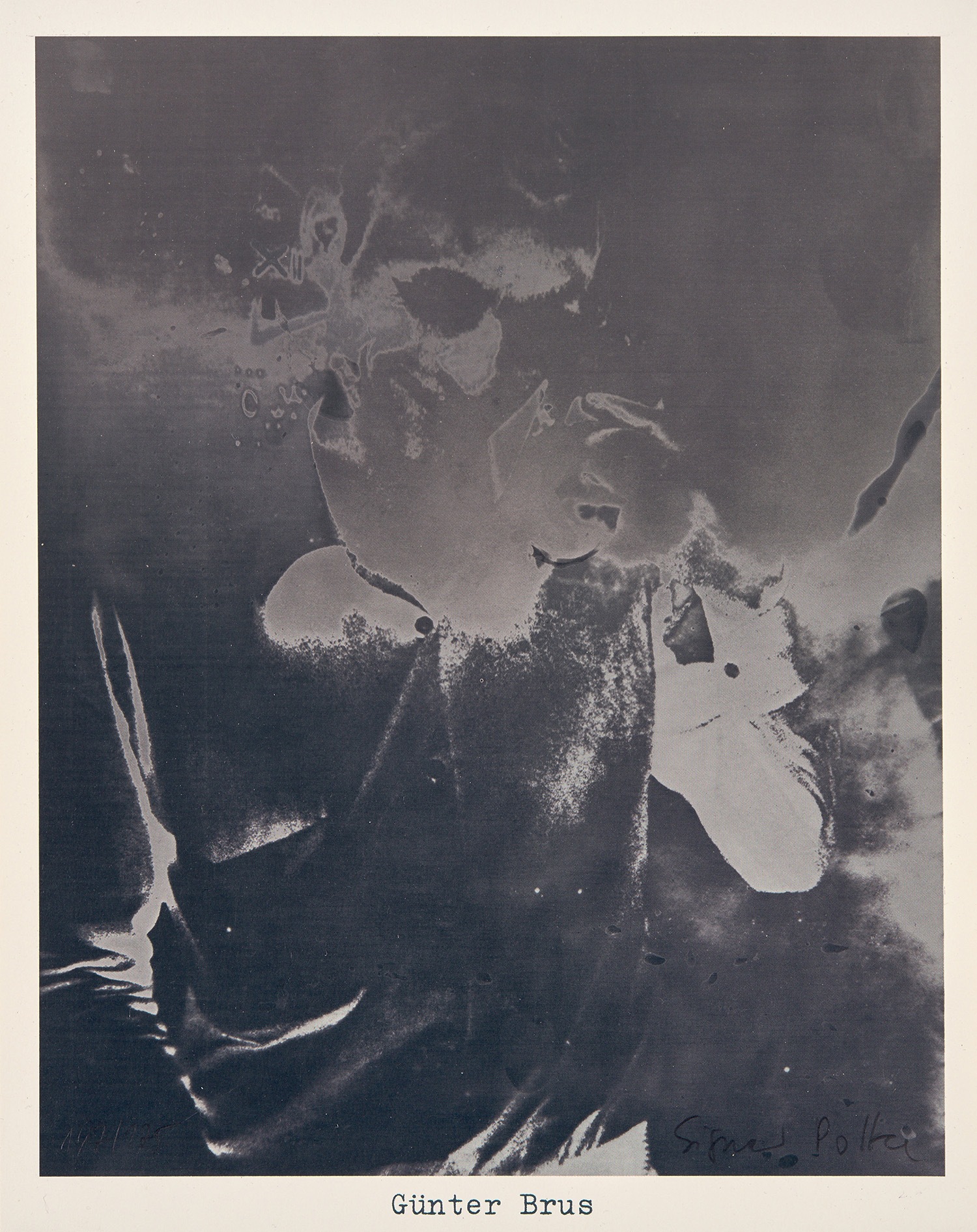
Sigmar Polke
Günter Brus, from Menschenbilder 3 (B. & O. 33)
He was essential. Sigmar Polke was born in 1941 in Oels, in what was then Lower Silesia, a region that is now part of Poland. His family fled westward as the Soviet advance reshaped the map of Europe, eventually settling in East Germany before making a second crossing to the West in 1953, landing in Düsseldorf. That experience of displacement, of borders redrawn and realities overturned, left a permanent imprint.
Polke grew up in a Germany rebuilding itself beneath the twin pressures of Cold War ideology and American consumer culture, a collision he would spend his career turning into art. He enrolled at the Kunstakademie Düsseldorf in 1961, studying under the painter Karl Otto Götz before gravitating into the orbit of Joseph Beuys, whose expansive ideas about what art could be gave an entire generation of German artists permission to think without limits. It was at the Kunstakademie that Polke met Gerhard Richter and Konrad Fischer, and in 1963 the three staged an exhibition at a Düsseldorf furniture showroom that announced the arrival of Kapitalistischer Realismus, or Capitalist Realism. The movement was in part a sardonic response to American Pop Art, but it carried a sharper, more destabilizing edge, rooted in the specific absurdity of West German consumer society and the propaganda aesthetics that surrounded it on all sides.
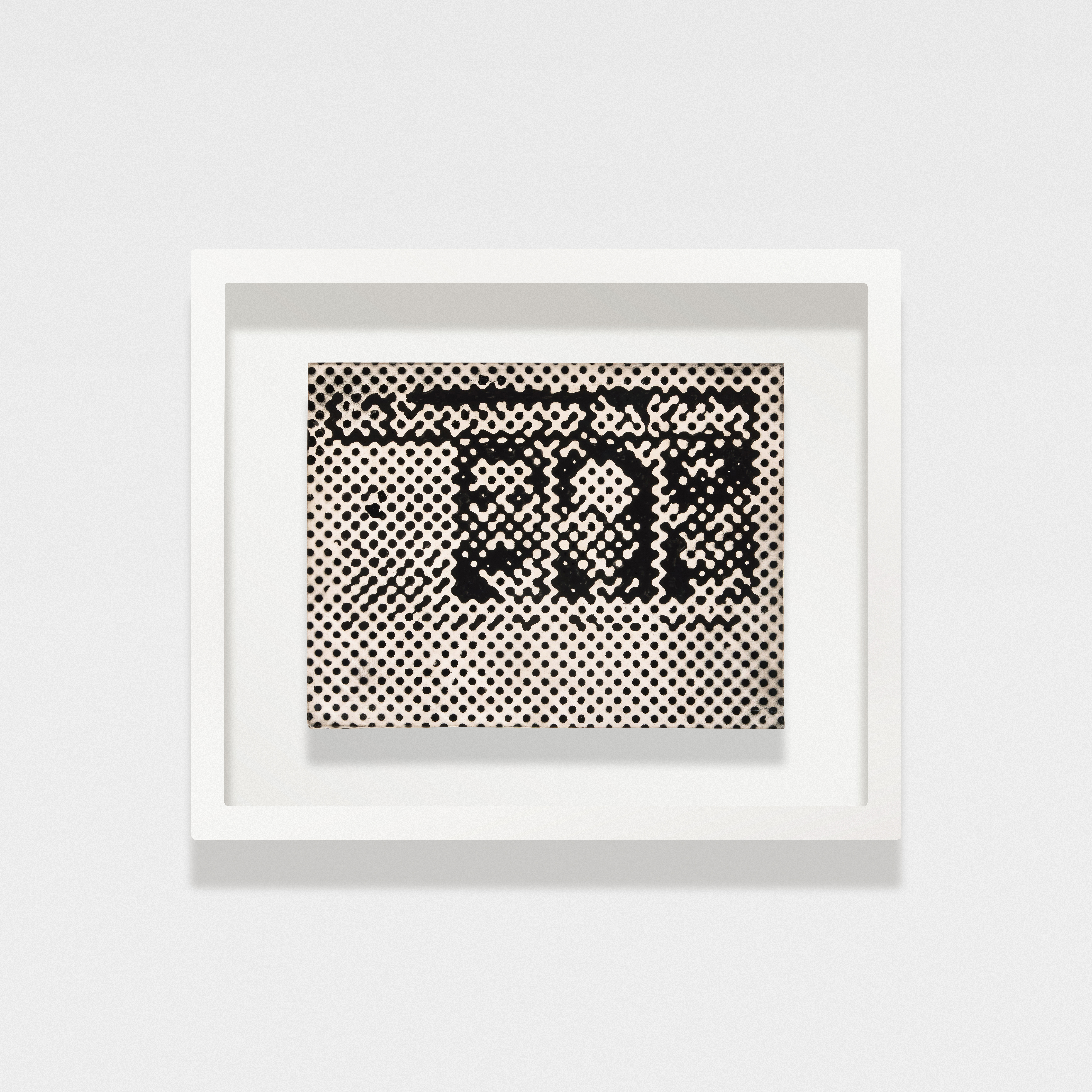
Sigmar Polke
The Three Astronauts Conquer the Moon, 1968
Where Andy Warhol celebrated the commodity, Polke turned it into something queasy and funny and faintly menacing. His paintings of biscuits, sausages, and palm trees from this period have an almost hallucinatory quality beneath their deceptively casual surfaces. Polke's development across the 1960s and 1970s was marked by a sustained interrogation of the materials and conventions of painting itself. His celebrated Rasterbilder, large canvases built from enlarged halftone dot patterns borrowed from newspaper and magazine printing, looked at first like technical exercises in reproduction.
“Higher beings commanded: paint the upper right corner black.”
Sigmar Polke, canvas inscription, 1969
They were something far more subversive: meditations on how images are constructed, how perception is manipulated, and how mass media encodes reality for passive consumption. "Rasterbild mit Palmen" from 1966 is a beautiful and deeply strange example, a palm tree dissolved into its own mechanical substrate, tropical fantasy and industrial process held in impossible suspension. These works sit in direct conversation with Roy Lichtenstein's dot paintings, but where Lichtenstein refined and aestheticized the Benday dot, Polke weaponized it. By the 1980s, Polke had moved into territory that few painters had dared to explore.
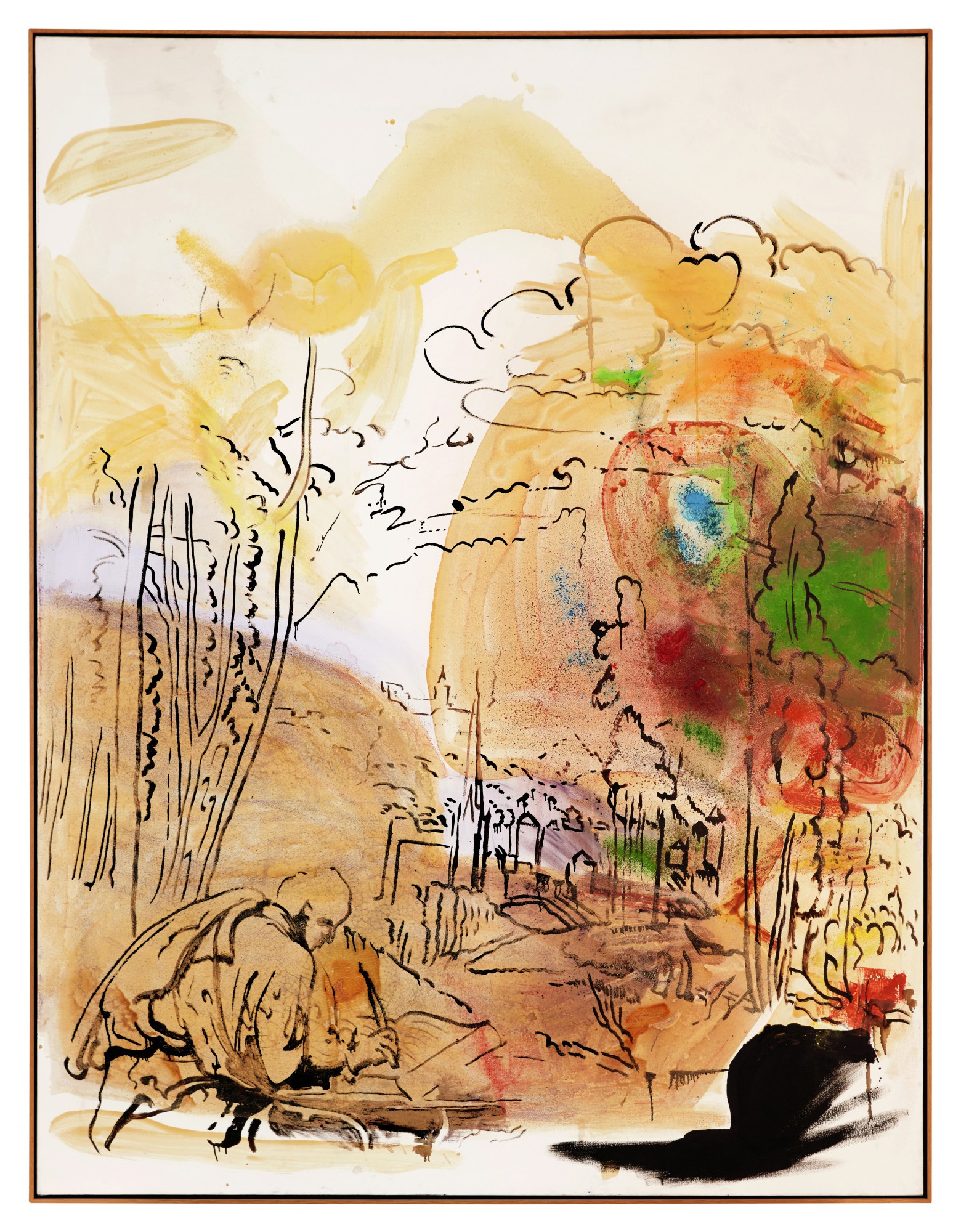
Sigmar Polke
The Copyist
His experiments with unconventional and reactive materials produced canvases that were genuinely alchemical in their ambition. He used polyester resins that shifted color in different lighting conditions, arsenic compounds, lacquer, and meteorite dust, creating surfaces that seemed to breathe and change. "Sibirische Glasmetoriten I" from 1988 is a defining work from this period: artificial resin and acrylic on plastic and cotton, the surface shimmering between opacity and translucence, its cosmic imagery echoing the actual geological material embedded within it. Polke was not merely painting pictures of transformation.
He was encoding transformation into the physical substance of the work itself. The range of Polke's practice extended well beyond painting. His printmaking was prolific and inventive, encompassing offset lithography, granolithography, and screenprint with the same experimental spirit he brought to canvas. Works like the "Kölner Bettler" plates published by Edition Staeck and the tender, lyrical "l'enfant à la colombe" watercolour from 1994 reveal an artist equally at home in the intimate registers of works on paper.
![Sigmar Polke — Sibirische Glasmetoriten I [Siberian Glass Meteorites I]](https://rtwaymdozgnhgluydsys.supabase.co/storage/v1/object/public/artwork-images/auction-lots/N10951-20220519-lot121.jpg)
Sigmar Polke
Sibirische Glasmetoriten I [Siberian Glass Meteorites I], 1988
His photographs, films, and drawings mapped a practice that refused to settle into a single discipline or a single style. This refusal was not inconsistency. It was a philosophical position, a commitment to perpetual reinvention that he maintained from his Düsseldorf student days until his death in Hamburg in June 2010. For collectors, Polke represents one of the great postwar opportunities, a figure of undisputed canonical importance whose market, while significant, has not yet reached the stratospheric levels commanded by some of his contemporaries.
Works on paper and prints offer genuine points of access, and the quality and range of Polke editions produced over several decades means that meaningful engagement with his ideas is available at multiple price levels. Major paintings from his Rasterbilder period and his alchemical canvases of the 1980s command serious attention at auction, with institutions and serious private collections competing for examples when they come to market. The key for collectors is to focus on works where Polke's conceptual intentions are fully realized in the physical object, where the surface itself is doing intellectual and aesthetic work simultaneously. To understand Polke fully it helps to place him within a constellation of related sensibilities.
His relationship to Gerhard Richter illuminates the different paths that could be taken from the same starting point: where Richter moved toward an almost philosophical melancholy, Polke embraced absurdity and material risk. His engagement with Joseph Beuys's mythologies gave way to something more skeptical and satirical. Internationally, his dialogue with artists like Cy Twombly, whose surfaces also confound easy reading, and with the Neo Expressionist painters who followed in the 1980s, helps locate his singular achievement. Polke absorbed influences voraciously and returned them transformed beyond recognition.
The legacy of Sigmar Polke is still being fully reckoned with. His influence on younger painters who have embraced material experimentation, conceptual humor, and a skeptical relationship to image making is profound and ongoing. He showed that painting could be simultaneously critical and sensuous, rigorously intellectual and genuinely funny, historically engaged and thrillingly strange. In a period when questions about images, their origins, their reliability, and their power feel more urgent than ever, Polke's lifelong investigation of exactly those questions seems less like art history and more like urgent contemporary practice.
To spend time with his work is to be reminded of what painting at its most ambitious and most alive can actually do.
Explore books about Sigmar Polke
Sigmar Polke
Christos M. Joachimides
Sigmar Polke: Retrospective
Museum of Modern Art
Sigmar Polke: Photoworks
Ulrich Loock
Sigmar Polke: Works on Paper 1965-1974
Jablonka Galerie
Sigmar Polke
Michael Semff
Sigmar Polke: Alchemist
Okwui Enwezor
Sigmar Polke
Walter Dahn