Shio Kusaka
Shio Kusaka: Beauty Lives in the Quiet
Artist Spotlight · The Collection Editorial
In the spring of 2023, the Museum of Contemporary Art Los Angeles presented a survey of work by Shio Kusaka that stopped visitors in their tracks. Not because of scale or spectacle, but because of something rarer: a kind of stillness that asked you to slow down, to look closely, and to feel the presence of a hand in every line. Kusaka's vessels, arranged with careful breathing room throughout the galleries, demonstrated why she has become one of the most quietly influential ceramicists working anywhere in the world today. The show confirmed what collectors and curators had long suspected, that her practice occupies a singular position at the crossroads of craft, contemporary art, and meditative tradition.
Shio Kusaka
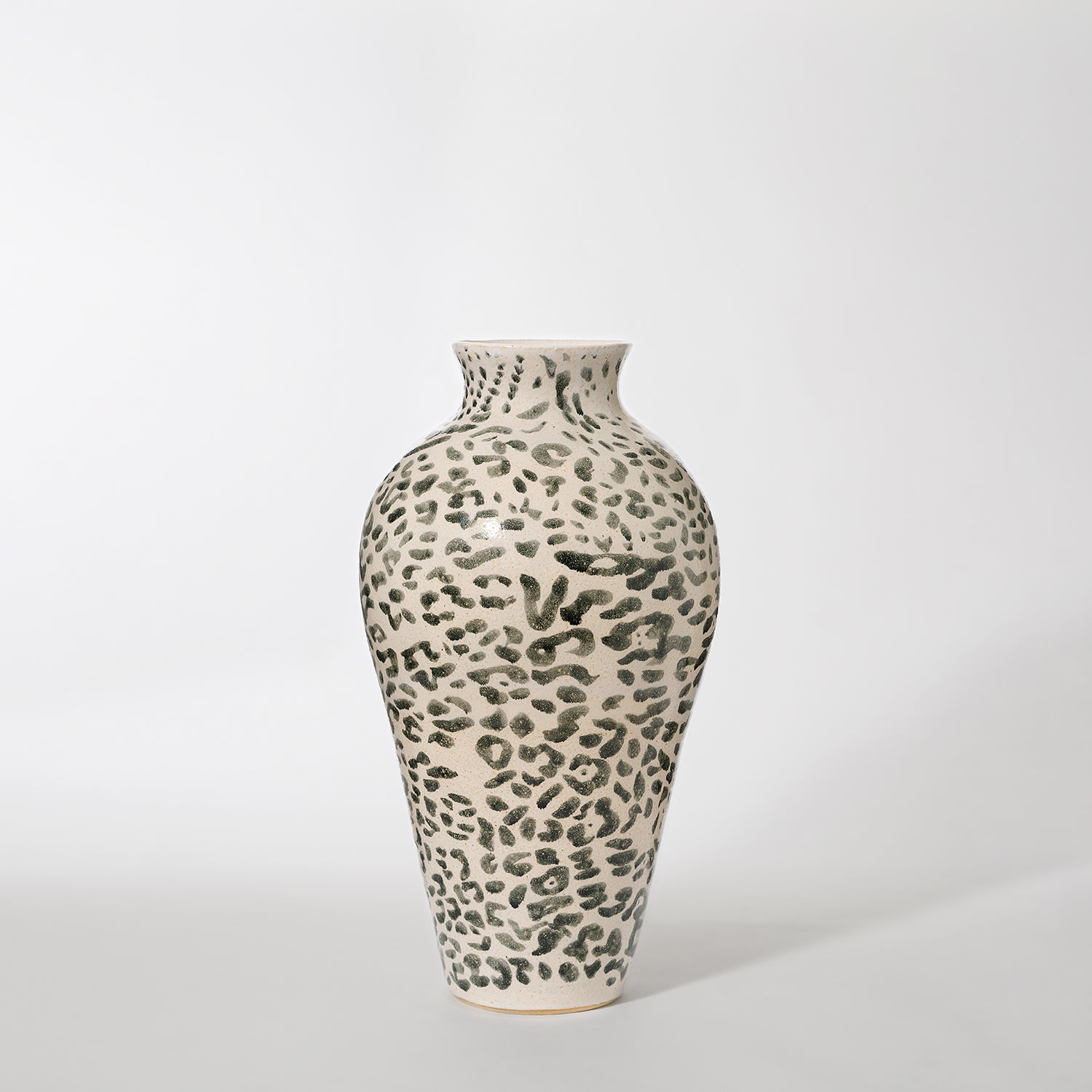
(animal 3), 2014
Kusaka was born in Japan in 1972 and came of age absorbing the deep cultural inheritance of Japanese ceramic tradition, a lineage that stretches back millennia and carries within it a profound respect for material, process, and restraint. She later relocated to the United States, where she studied at the University of Colorado and went on to earn her MFA from the University of California, Los Angeles. It was in Los Angeles that her practice truly took shape, in a city whose light and expansiveness seemed to encourage a certain openness in her forms. Her background gave her a dual fluency, rooted in the meditative sensibility of Japanese aesthetics while remaining fully engaged with the conversations of the Western contemporary art world.
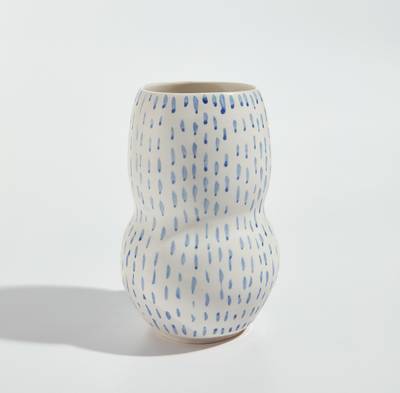
The development of Kusaka's artistic voice has been a study in patient accumulation. Early in her career she worked through the foundational vocabulary of wheel throwing, learning the discipline that would eventually allow her extraordinary freedom. What emerged over time was a practice built on a deceptively simple structure: a clean, elegant vessel form drawn from the wheel, its surface then animated by hand drawn imagery applied in slip before firing. The imagery ranges from animals rendered with almost childlike directness to geometric patterns of considerable precision, from scattered dots to densely worked diamond configurations.
Shio Kusaka
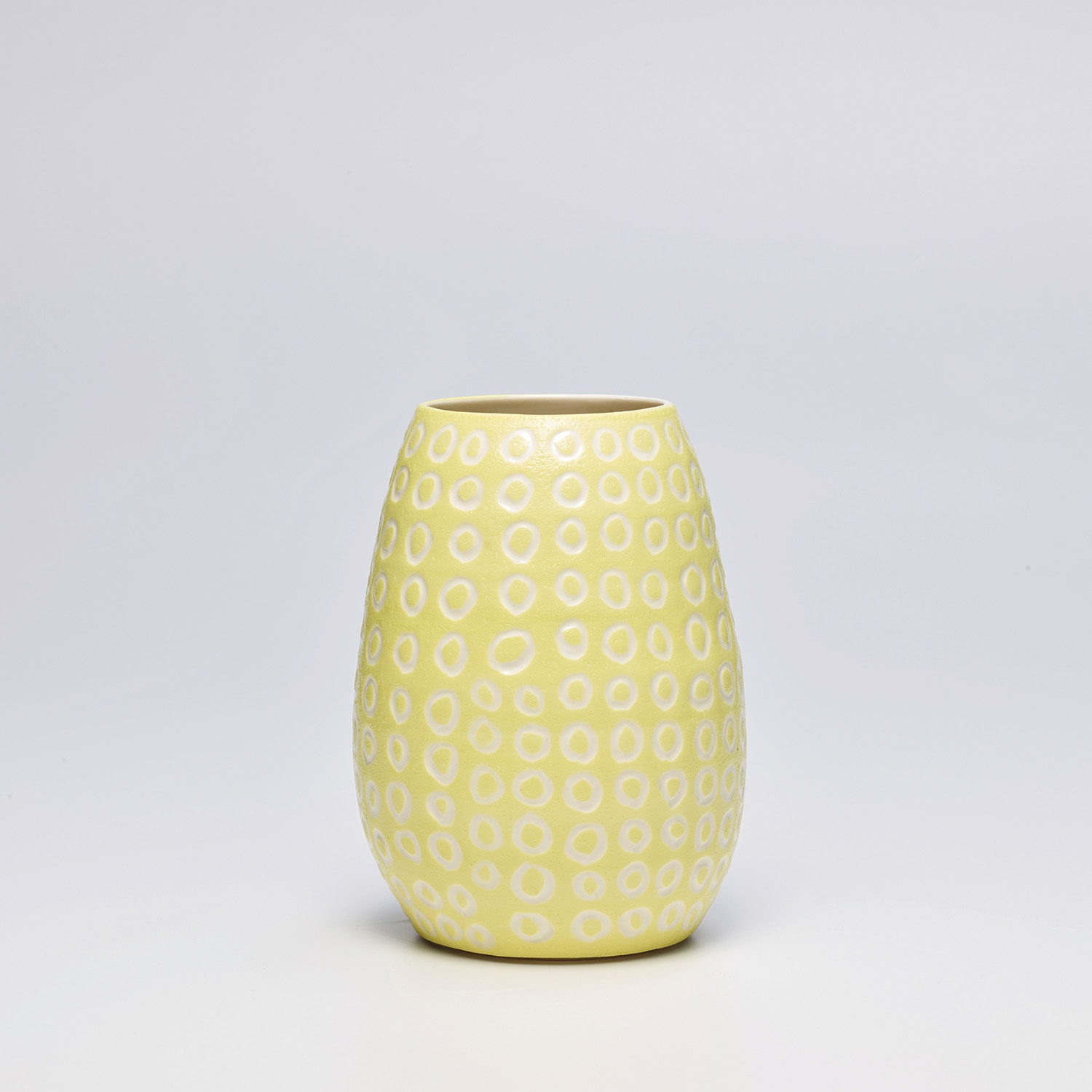
incised with the artist's monogram on the underside, 2014
Each series represents a sustained exploration of a single motif, pursued with the kind of focused attention that transforms repetition into revelation. Among the works that have defined her reputation, the pieces from her animal and pattern series stand out as particularly beloved by collectors and critics alike. Works such as her stoneware vessels from the animal series, including pieces like the 2014 work known simply as "(animal 3)", demonstrate her gift for imbuing a simple thrown form with narrative warmth without ever tipping into sentimentality. Her porcelain pieces from the mark and dot series, including "(mark 8)" from 2010 and "(dot 2)" from 2011, show a more austere sensibility, the surface treated almost like a field of contemplation.
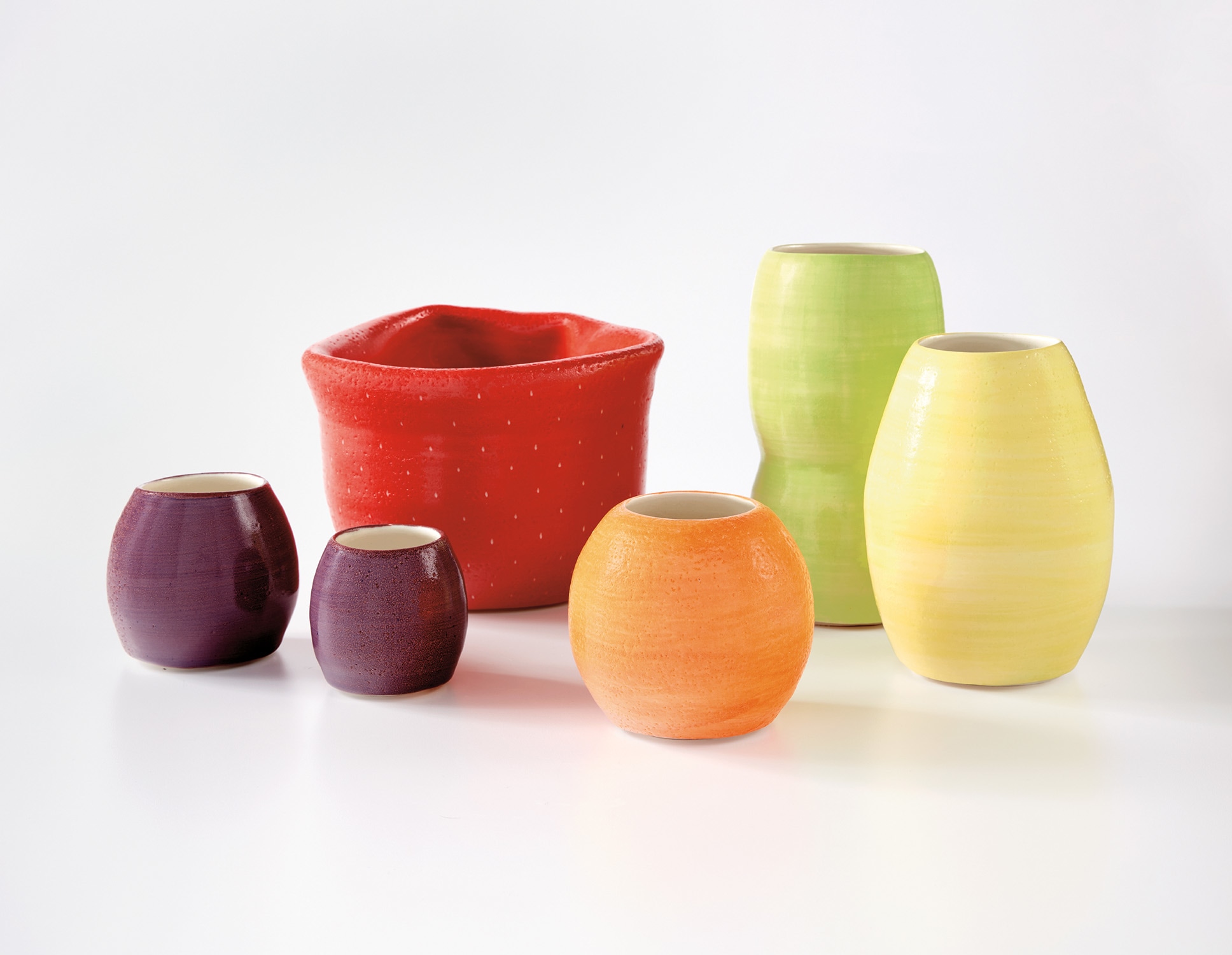
The fruits series, rendered in porcelain and sometimes presented as grouped ensembles, speaks to the Japanese still life tradition while feeling entirely contemporary. What unites all of these works is the insistence on the handmade mark as something irreducibly human, a signature of presence and care. Kusaka's relationship with the gallery world has been shaped significantly by her long association with David Kordansky Gallery in Los Angeles, which has championed her work and helped bring it to the attention of major institutional and private collectors. Her work has been acquired by significant museum collections and has appeared in group exhibitions alongside artists from both the ceramics and fine art worlds.
Shio Kusaka
(fruits 7), 2014
She is also well known as the partner of the painter Jonas Wood, and while their practices are distinct, there is a sympathetic conversation between their bodies of work, both attentive to pattern, domesticity, and the quiet poetry of everyday objects. This context has placed Kusaka within a community of artists thinking seriously about decoration, craft, and the boundaries between them. From a collecting perspective, Kusaka's work offers something genuinely rare: a combination of aesthetic rigor and emotional accessibility that appeals equally to seasoned collectors and those encountering serious ceramics for the first time. Her pieces are typically modest in scale, which makes them suited to intimate domestic environments where they reward prolonged looking.
Collectors are drawn to the specificity of each work within a series, the way a single motif can yield endlessly different results depending on the density of the drawing, the quality of the clay, or the particular atmosphere of the firing. Works on paper and print portfolios by Kusaka also exist and offer an entry point for collectors at a range of price levels. The secondary market for her ceramics has shown consistent strength, reflecting a broad consensus that her work holds both aesthetic and lasting cultural value. In the wider context of art history, Kusaka's practice invites comparison with a distinguished lineage of artists who have challenged the hierarchy between craft and fine art.
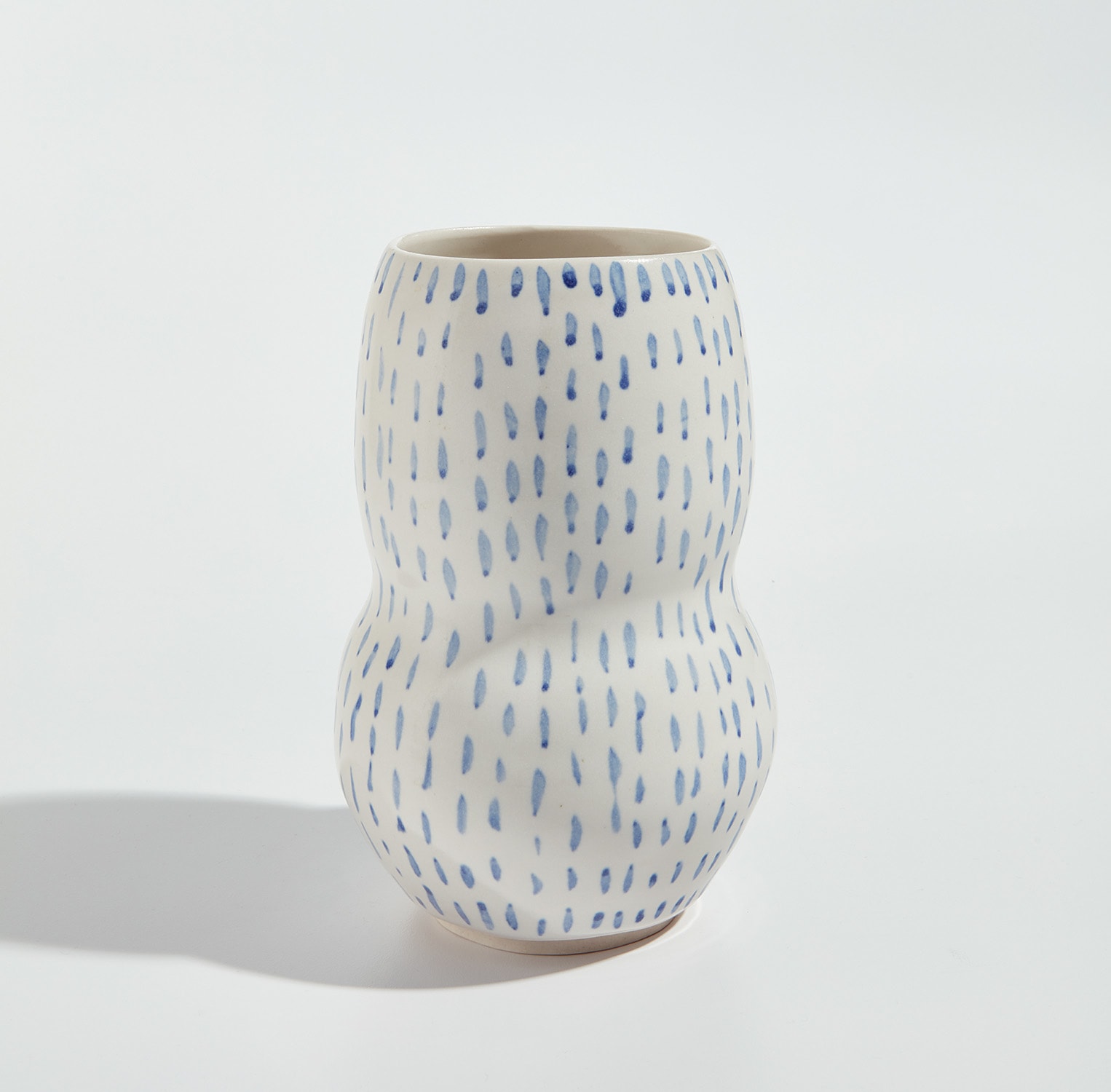
Shio Kusaka
(mark 8), 2010
The influence of Japanese mingei folk craft traditions is evident, as is an awareness of the European studio pottery movement and the legacy of figures such as Lucie Rie, whose own refined stoneware and porcelain vessels share something of Kusaka's combination of formal clarity and surface sensitivity. Among her contemporaries, her work sits in meaningful dialogue with ceramicists such as Ken Price, whose sculptural vessels pushed ceramics firmly into gallery space, and with painters attentive to pattern and repetition such as Celia Birtwell or Yayoi Kusama. Yet Kusaka is not derivative of any of these precedents. Her voice is wholly her own.
What makes Kusaka matter in the present moment is precisely the quality her work has always embodied: a commitment to slowness in an era of relentless acceleration. Her vessels do not shout. They do not demand. They offer themselves to whoever is willing to give them time, and in return they give back something genuine, a sense of contact with a thoughtful, skilled human presence.
For collectors building collections that they hope will endure, that speak to lasting values rather than fleeting trends, Kusaka's work represents an investment not only in material beauty but in a way of being in the world. That is a rare thing to find, and it is worth celebrating.