Sherrie Levine
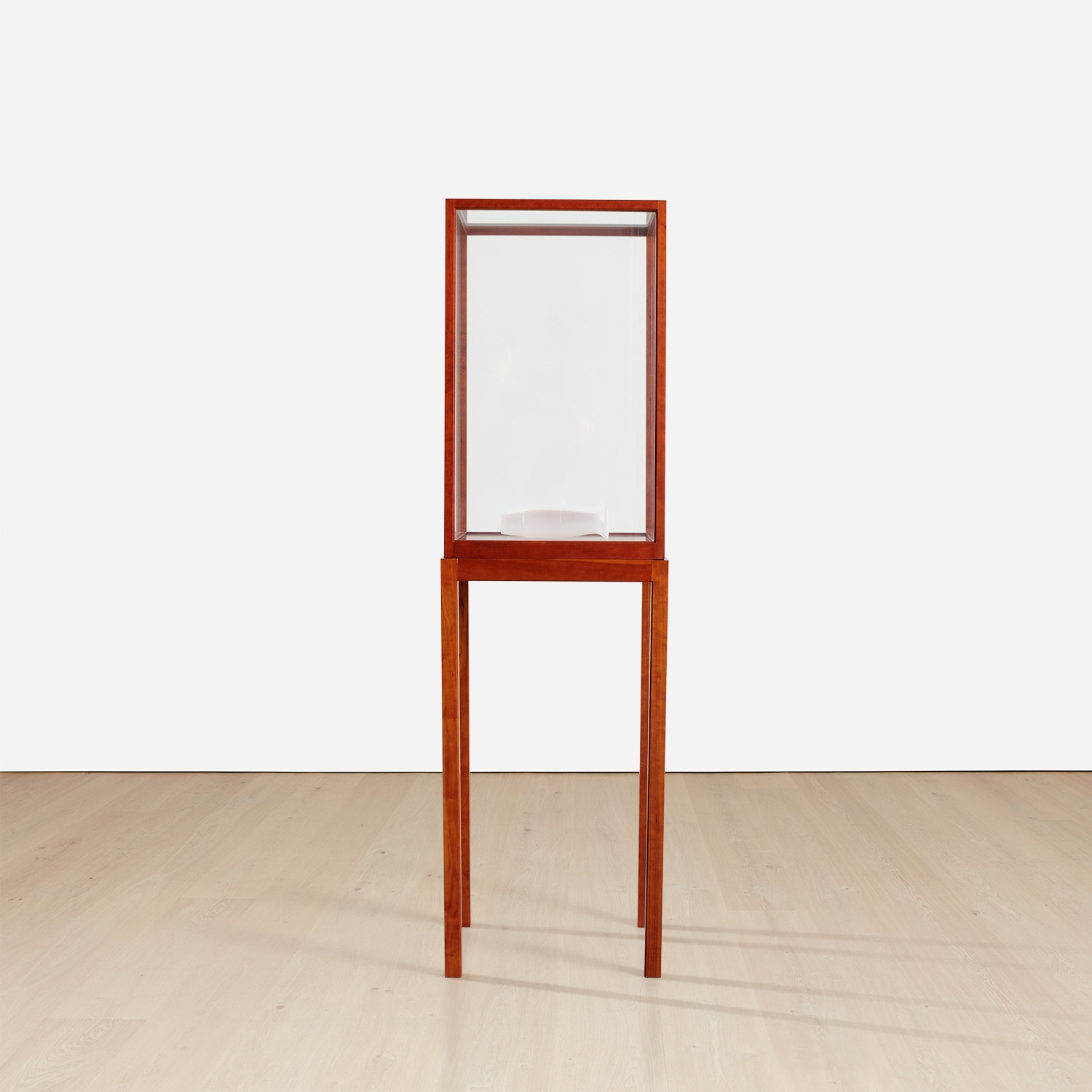
Sherrie Levine Remakes the World Anew
Artist Spotlight · The Collection Editorial
“I wanted to make work that questioned who has the right to make images, who owns them, and who benefits.”
Sherrie Levine
When the Museum of Modern Art mounted a landmark survey of the Pictures Generation in 2009, one artist stood at the very center of the conversation with an almost gravitational pull. Sherrie Levine, whose work had been reframing the nature of images, authorship, and desire since the late 1970s, was recognized not merely as a participant in a movement but as one of its most searching and philosophically rigorous architects. That exhibition, which drew together the defining voices of a generation, confirmed what serious collectors and curators had long understood: Levine is among the most consequential American artists of the past five decades, and her influence continues to deepen with each passing year. Levine was born in 1947 in Hazleton, Pennsylvania, a modest working town in the anthracite coal region of the state.
Sherrie Levine
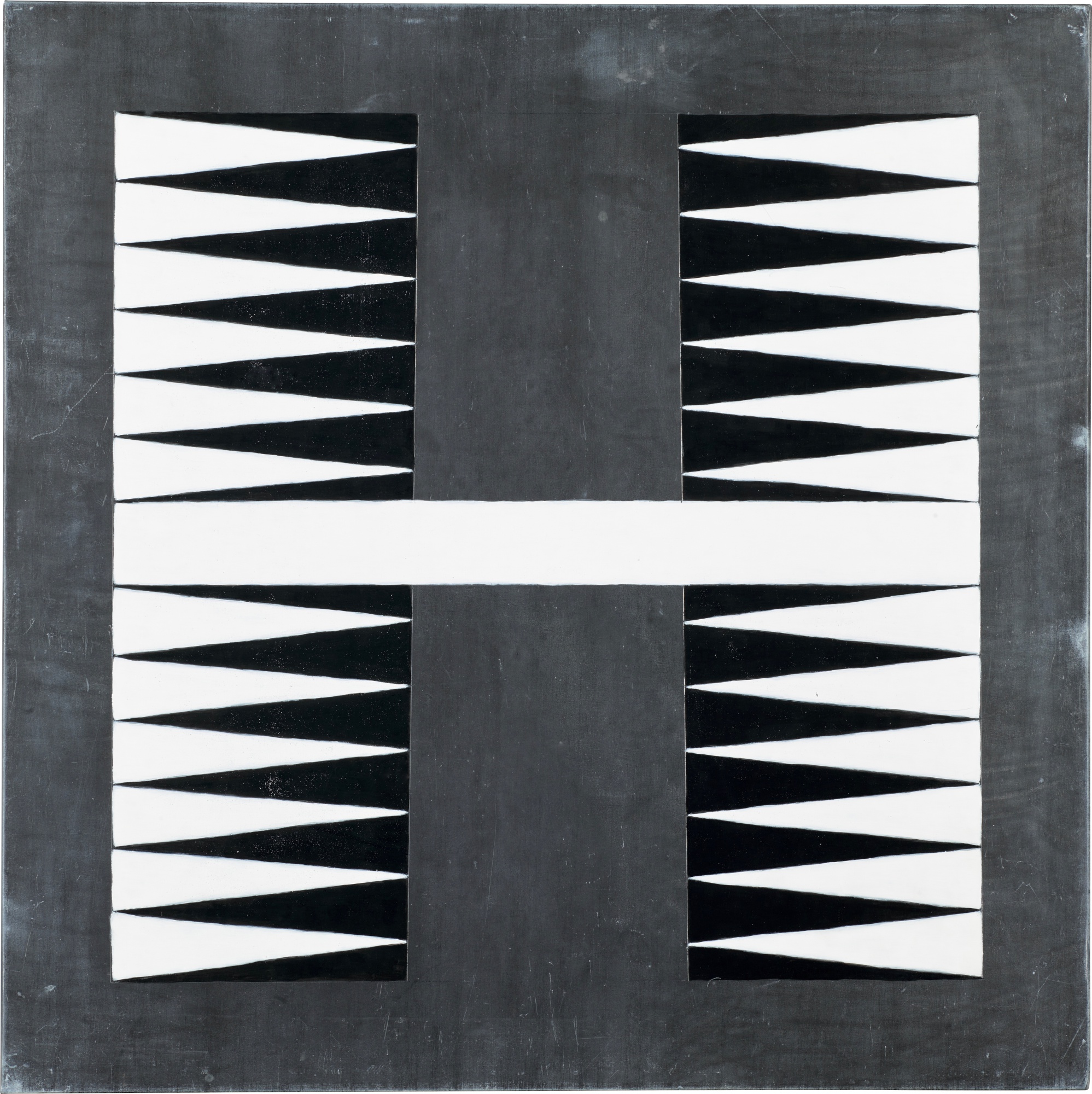
Untitled (Lead Chevron: 9)
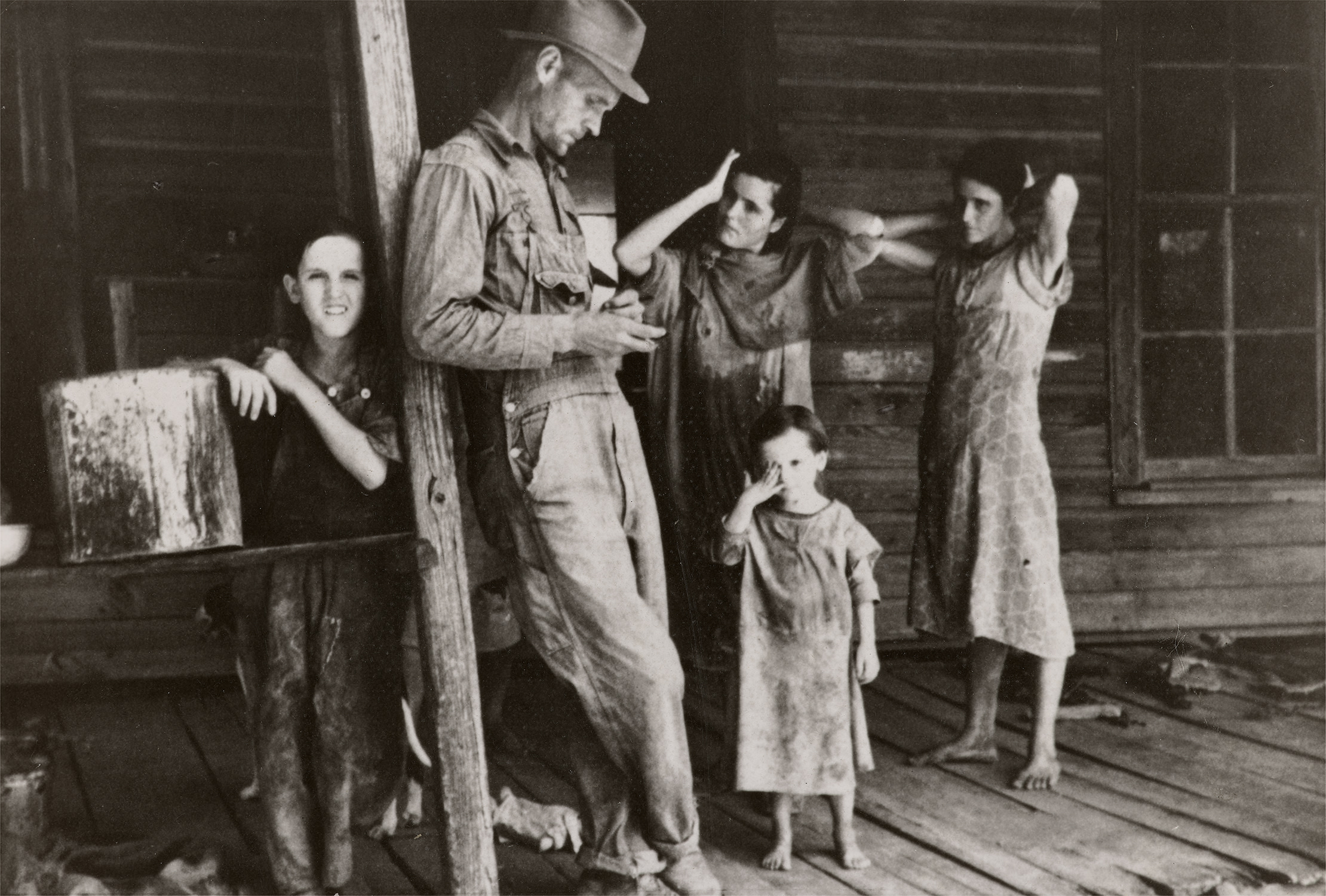
She studied at the University of Wisconsin, Madison, earning her MFA in 1973, and subsequently relocated to New York City at a moment when the art world was undergoing a profound transformation. The city in the late 1970s was electric with theoretical energy, and the critical conversations surrounding semiotics, feminist theory, and the deconstruction of representation found in Levine an artist of unusual intellectual seriousness and formal precision. She arrived not as a student of these ideas but as someone who would help author them through her practice. Levine first drew widespread attention with a series of photographs she began making around 1981 in which she rephotographed the canonical images of Walker Evans, the celebrated documentary photographer whose pictures of Depression era America had achieved near sacred status in the cultural imagination.
By simply re presenting his images under her own name, Levine posed a set of questions that were as elegant as they were devastating: Who owns an image? What does originality mean in a culture saturated with reproductions? What role does the masculine genius myth play in the construction of artistic value? These were not merely academic provocations.
Sherrie Levine
Sherrie Levine
They arrived with the cool, precise force of well made objects, and they changed the way a generation thought about pictures. From photography, Levine expanded her practice into painting, sculpture, and installation, each new body of work carrying forward the same conceptual commitments while discovering fresh formal territory. Her series of paintings after Mondrian, Malevich, and Egon Schiele extended the logic of appropriation into the painted surface itself, insisting that even the most rarefied gesture in art history is already a copy of something. In the 1990s and 2000s, she turned to three dimensional work with striking results, producing cast bronze sculptures after Marcel Duchamp's readymades and African ceremonial objects, such as her series of bronze masks titled African Masks After Walker Evans from 2014.
Works like The Three Furies from 2006 and Large Cradle from 2009 demonstrate her sustained capacity to invest familiar forms with entirely new layers of meaning and weight. Her material choices are always deliberate: lead, bronze, casein, silver all carry their own histories and connotations, and Levine deploys them with the care of someone who understands that every surface is already an argument. Among her most celebrated individual works, After Walker Evans remains the touchstone, a gelatin silver print that continues to generate scholarly debate and collector enthusiasm in equal measure. Her Silver Mirror series, which transforms the painted canvas into a reflective surface that literally returns the viewer's own image, is among the most poetically precise expressions of her central theme: that looking at art is always also an act of self regard.
Sherrie Levine
After Walker Evans
The Mother of Us All, a digital pigment print that engages the traditions of modernist painting and reproductive media simultaneously, exemplifies the maturity and confidence of her later practice. These works are not ironic at a distance. They are deeply felt engagements with the history of images and the emotional stakes of seeing. For collectors, Levine's work occupies a position of rare stability and growing significance.
Her auction record reflects the sustained institutional and critical support she has received over decades, with major works appearing at Christie's, Sotheby's, and Phillips and commanding serious attention from collections both private and institutional. The breadth of her output means that there are meaningful points of entry across a range of media and scale, from intimate prints and postcard collages to substantial bronze sculptures. What collectors consistently report is that the works reward long acquaintance: they are not exhausted by a single encounter but continue to open up over time as references accumulate and the cultural landscape shifts around them. Artists such as Barbara Kruger, Cindy Sherman, Richard Prince, and Louise Lawler share the critical terrain that Levine helped map, and understanding her work enriches the appreciation of each of them.
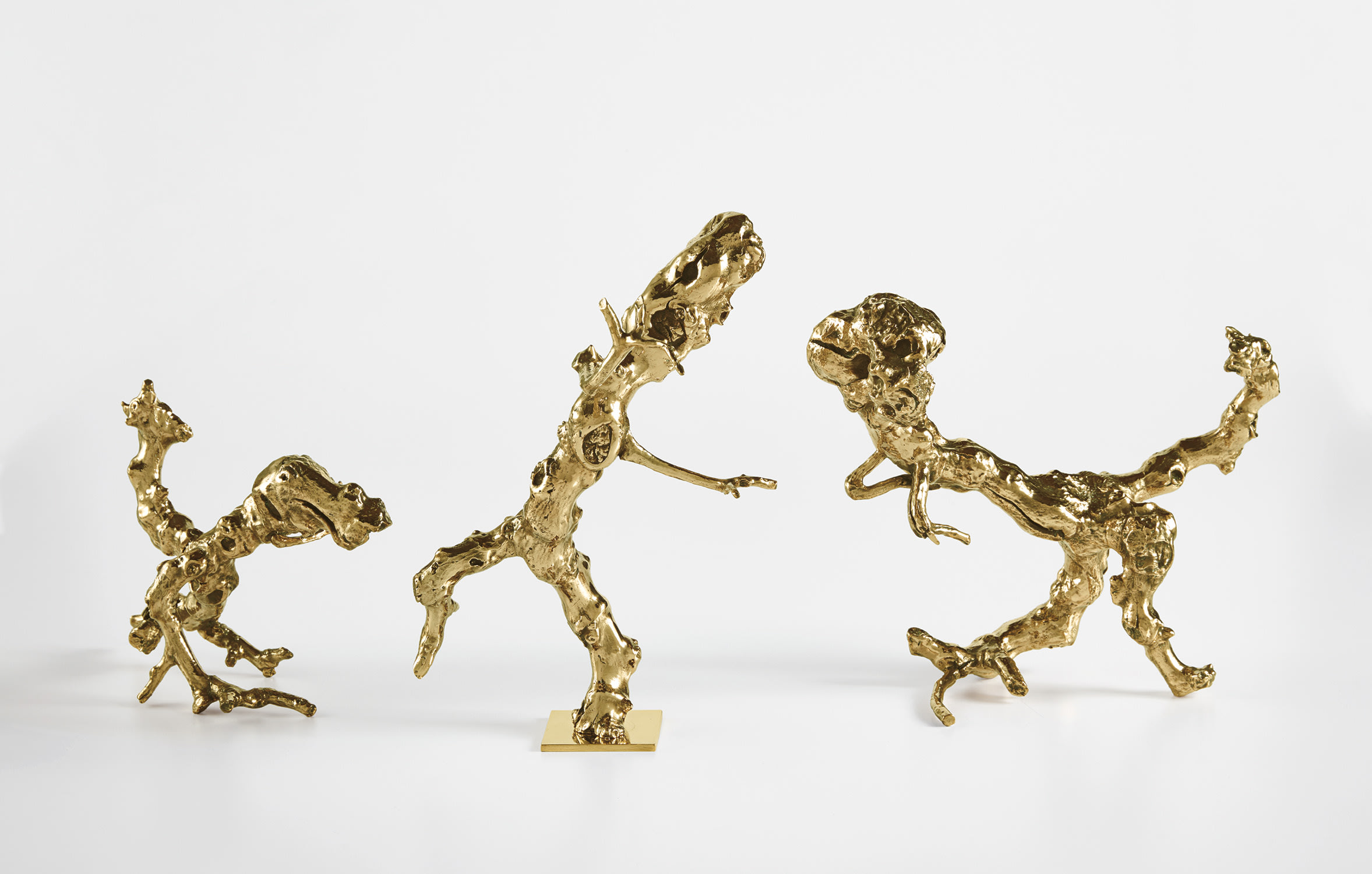
Sherrie Levine
The Three Furies, 2006
She is the connective tissue of an entire era of American art. The legacy Levine has built is one of the most durable in contemporary art precisely because it was never fashionable in the pejorative sense. Her questions about authorship and originality, which once seemed confined to avant garde debates, have become central to how we understand everything from digital culture to intellectual property to the politics of representation. At a moment when questions of who gets to tell which stories, and who profits from whose image, are urgent matters of public discourse, Levine's decades of careful, rigorous, formally beautiful work feel not historical but prophetic.
She did not follow the culture. She anticipated it, and she gave that anticipation an enduring aesthetic form. To collect Sherrie Levine is to own a piece of the argument that the present is still having with itself.